Switchgear and Panel Brands in the UAE and Saudi Arabia: LV, MV and Approvals
Which switchgear and panel brands Gulf projects specify, what IEC 61439 design verification and forms of separation mean, how heat affects ratings, and the UAE and Saudi rules.
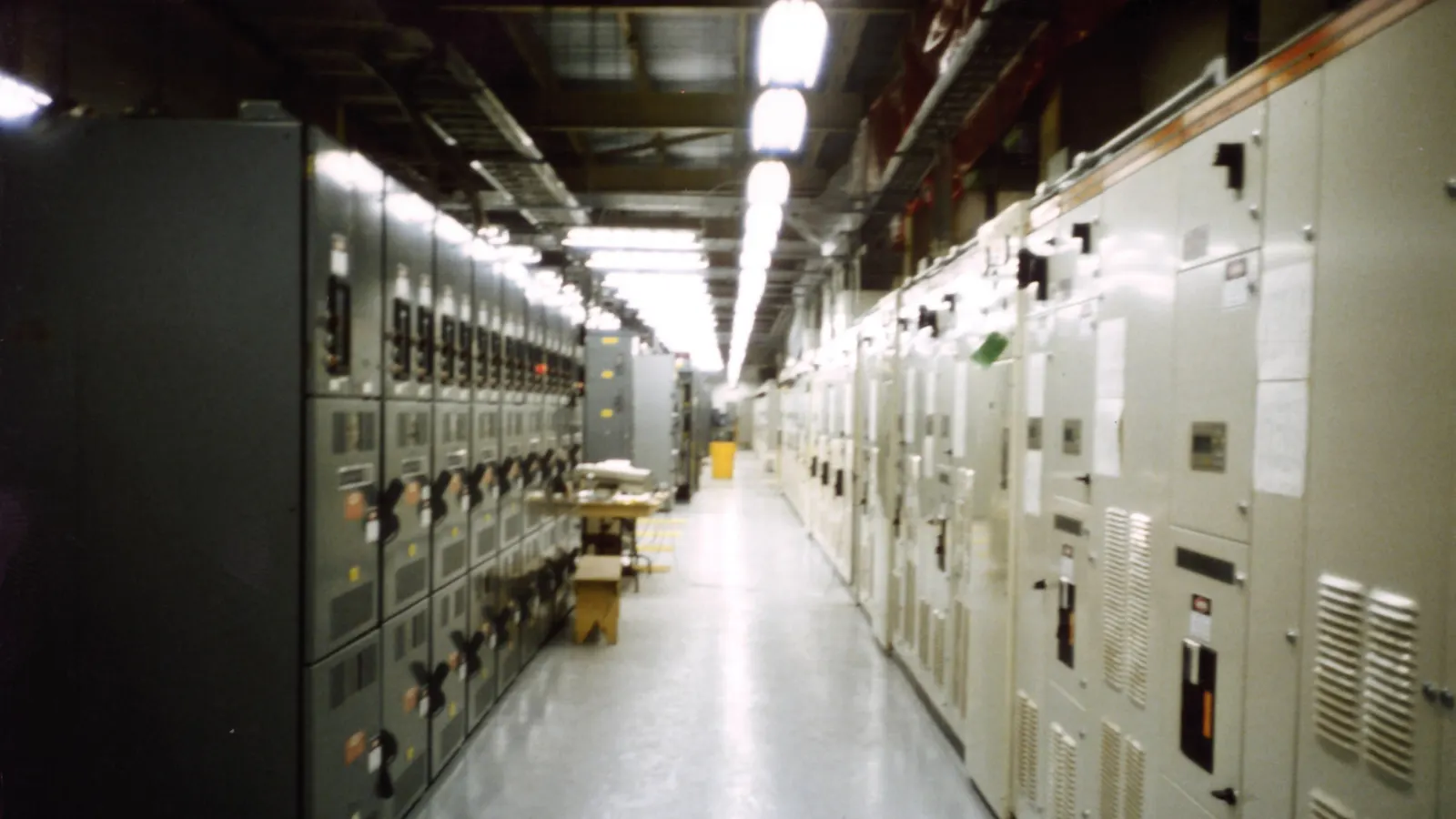
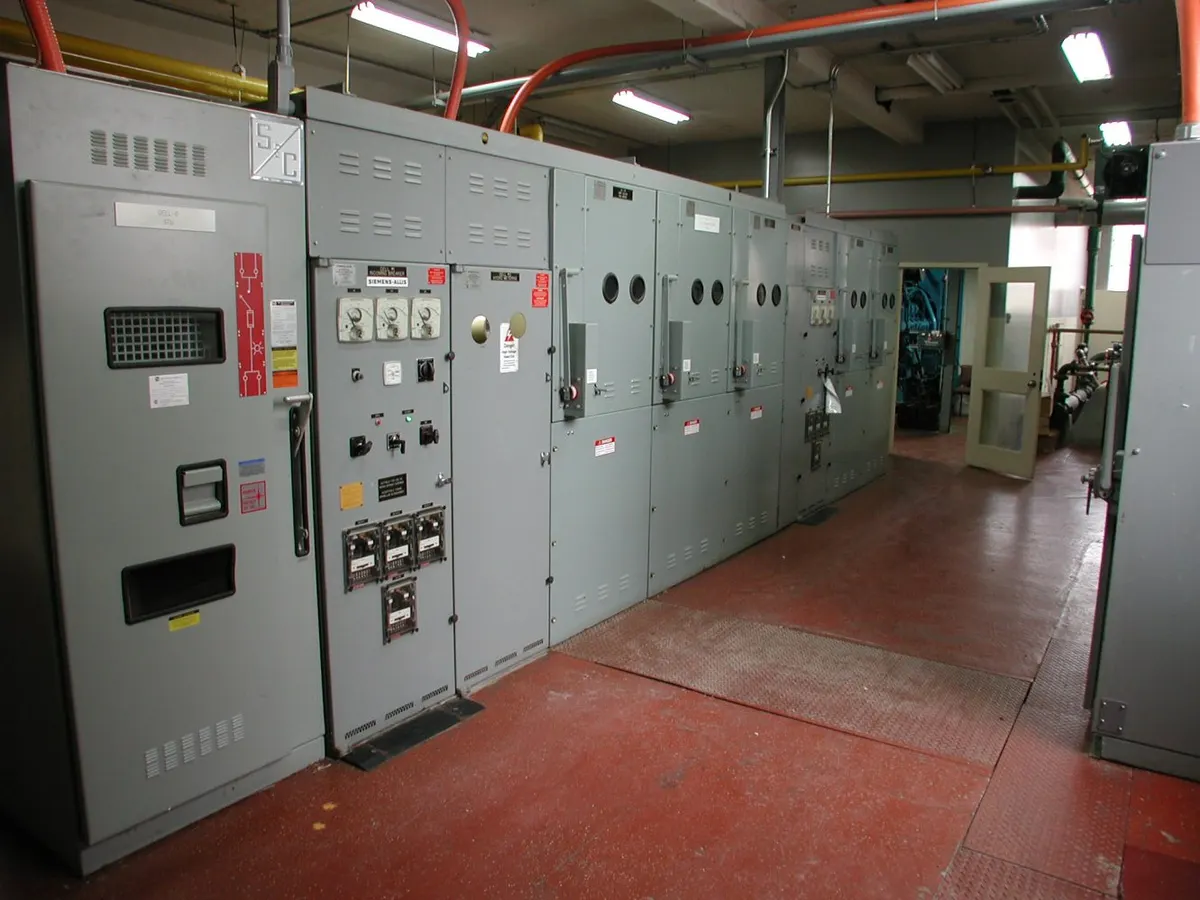
Switchgear specifications in the UAE and Saudi Arabia usually name Schneider Electric, ABB, Siemens or Eaton for switchboards and MCCs, Hager, Legrand, LS Electric, Mitsubishi Electric or Chint for breakers and boards, and Lucy Electric or Ormazabal for ring main units. Many panels are built locally, so compare switchgear and panel suppliers in the UAE on IEC 61439 design verification and ratings at Gulf temperatures, not the logo alone.
This guide is for MEP contractors, consultants, procurement teams and facility engineers buying main LV switchboards, sub-main and final distribution boards, MCC panels, transfer switches and medium-voltage switchgear. It covers the standards, forms of separation, OEM versus panel-builder assemblies, heat derating, internal arc testing, what each brand makes, the rules in each country and the RFQ. Buyers in the Kingdom can use the same checklist with switchgear and panel suppliers in Saudi Arabia.
Low voltage or medium voltage: which switchgear do you need?
The voltage decides the standard, the construction and often the supplier. Low-voltage (LV) assemblies are covered by the IEC 61439 series, which applies to assemblies rated up to 1,000 V AC or 1,500 V DC. Medium-voltage (MV) metal-enclosed switchgear is covered by IEC 62271-200, which applies to prefabricated assemblies rated above 1 kV and up to and including 52 kV, for service frequencies up to 60 Hz.
IEC 61439: what "design verified" means for LV panels
IEC 61439-1:2020 (general rules) and IEC 61439-2:2020 (power switchgear and controlgear assemblies) are the current third editions; each replaced the 2011 edition. Part 1 cannot be used on its own to specify an assembly: conformity is judged against Part 2 or another relevant part, read together with Part 1.
The standard separates two kinds of checks. Design verification (clause 10 of Part 1) proves that a design meets the requirements, covering items such as strength of materials, temperature rise and short-circuit withstand. Routine verification (clause 11) is done on every assembly built. Part 1 states that it applies whether an assembly is designed and verified as a one-off or fully standardised, and that manufacture or assembly may be carried out by someone other than the original manufacturer. That is the basis of the panel-builder model used across the Gulf.
The 2020 edition of Part 1 introduced a group rated current for circuits within a loaded assembly and refocused temperature-rise verification on it. If a tender still asks for a "type-tested assembly", ask the bidder for the IEC 61439 design verification evidence for the system offered, plus routine test records for your panel.
Forms of separation 1 to 4b
Forms of internal separation describe how busbars, functional units (each breaker or starter) and the terminals for outgoing cables are divided from each other inside the panel. Part 2 of IEC 61439 sets them out, and the 2020 edition clarified them.
Form 1: no internal separation.
Form 2 (2a, 2b): busbars separated from functional units.
Form 3 (3a, 3b): busbars separated from functional units, and functional units separated from each other.
Form 4 (4a, 4b): as Form 3, and the terminals of each functional unit are also separated from those of other units.
The "a" and "b" suffixes concern where the outgoing cable terminals sit and what they are separated from, with "b" giving more separation. Higher forms let one feeder be worked on with less disturbance to the rest, at a cost in panel size and price. State the form you need in the specification and ask the bidder to show that the form offered was covered by the system's design verification.
Medium-voltage switchgear: AIS, GIS and ring main units
IEC 62271-200:2021 is the third edition, and IEC published a consolidated version including Amendment 1 in June 2024. Its scope covers assemblies with air-insulated and fluid-filled compartments, indoors and outdoors.
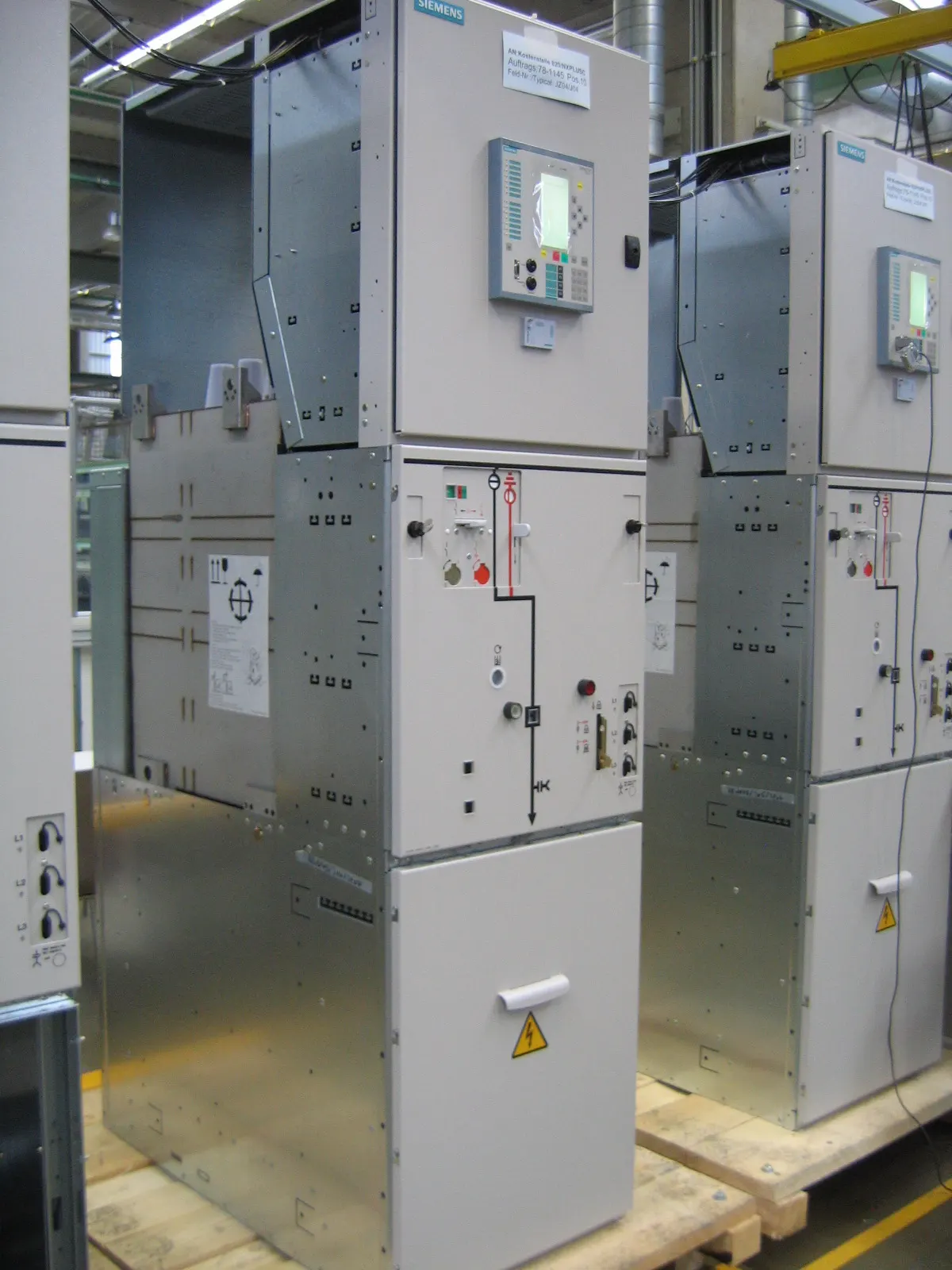
The practical split is between air-insulated switchgear (AIS) and gas-insulated switchgear (GIS). Gas insulation saves space compared with air-insulated equipment, but the equipment costs more. Many gas-insulated designs use SF6, and makers now offer alternatives: Siemens describes its NXAIR air-insulated range as using natural air instead of SF6, and its Blue GIS as using Clean Air insulation free of F-gases. Siemens lists NXAIR variants up to 36 kV and up to 4,000 A, and states that NXAIR meets IEC 62271-200.
Ring main units (RMUs) are compact MV switching units used in secondary distribution, often next to a distribution transformer. Lucy Electric lists SF6 gas-insulated RMUs up to 24 kV (Sabre, Aegis Plus) and up to 38 kV (Aegis 36), SF6-free units with synthetic air insulation at 12 kV (Aegis EcoTec, Sabre EcoTec) and an oil-insulated fuse-switch unit (Trident). Ormazabal lists gas-insulated secondary switchgear including cgmcosmos (up to 24 or 27 kV), cgm.3 (up to 40.5 kV) and the F-gas-free cgm.zero24.
Most LV switchboards in the Gulf are not shipped complete from the brand's own factory. A local panel builder assembles them using the brand's switchboard system, breakers and design data. IEC 61439 allows this: the original manufacturer carries out the design verification of the system, and the assembly manufacturer builds the panel and carries out routine verification.
Some brands run formal programmes. Siemens says that "SIVACON technology partners manufacture SIVACON S8 cubicles in your region". Schneider Electric lists a "Panel Building Systems" category on its UAE site, which includes PrismaSeT HD for harsh environments. Other brands use their own partner arrangements; ask the bidder directly.
When you compare a brand-name panel from a local builder, ask for:
the name of the switchboard system used and proof that the builder is an authorised partner for it, where the brand has such a scheme;
the design verification reports for that system covering your rated current, short-circuit rating and form of separation;
routine verification records for your actual panel;
confirmation of which components (breakers, busbar system, enclosures) come from the brand and which are local.
ACB, MCCB and MCB: the breakers inside the panel
Circuit breakers are often specified by brand separately from the enclosure, so it pays to know the three main classes.
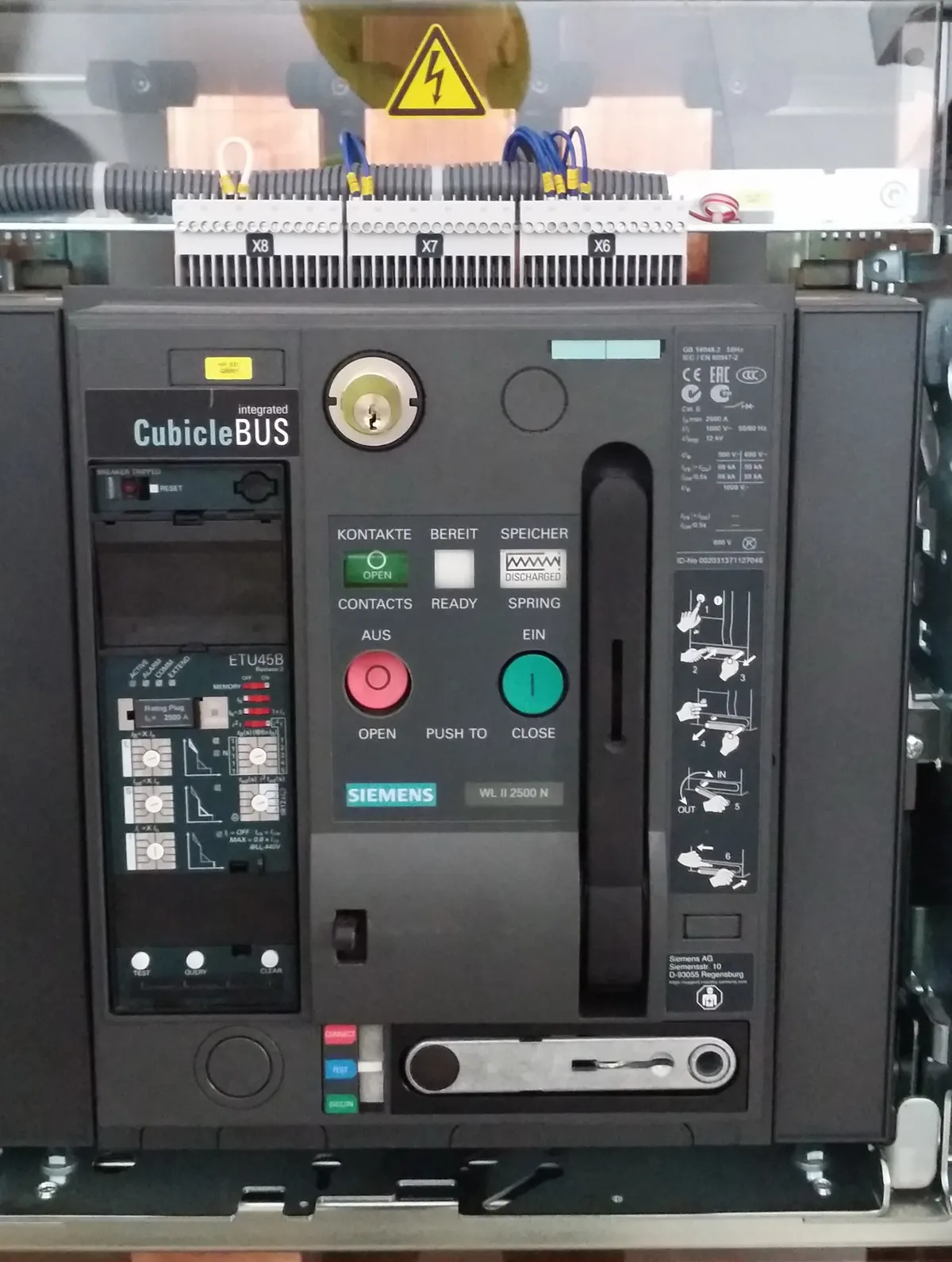
Air circuit breakers (ACBs) protect incomers, bus couplers and large feeders. Schneider Electric's MasterPact ACBs are listed "for the protection of low-voltage lines up to 6300A", and Hager lists hw+ ACBs "for projects up to 6000 A".
Moulded case circuit breakers (MCCBs) protect sub-main and motor feeders. Schneider lists its ComPacT MCCBs from 100 A to 3,200 A.
Miniature circuit breakers (MCBs), with RCCBs and RCBOs, protect final circuits in distribution boards.
For changeover between mains and standby generation, specify an automatic transfer switch. Schneider describes TransferPact units that move the supply between a main and a backup source, and Socomec makes source-changeover equipment alongside its switching and UPS ranges.
An LV switchboard's rated currents are tied to a reference ambient. Hager's installation notice for its cabinets, citing EN 61439-1, puts the limits at a maximum of 40 °C, a 24-hour mean of 35 °C and a minimum of -25 °C. Schneider Electric gives the same 40 °C maximum and 35 °C 24-hour average for indoor MV equipment under IEC 62271-1.
Gulf summers sit above those figures. Dubai's climate table shows daily mean temperatures of 35.9 °C in July and 37.0 °C in August, with mean daily maximums of 41.7 °C and 42.1 °C. Riyadh's 1991 to 2020 normals show daily means of about 36 to 37 °C and mean daily maximums of about 43 to 44 °C in July and August. Record highs at both cities are close to 49 to 50 °C. An outdoor panel in the sun, or an indoor room with failed cooling, can be hotter still.
IEC 61439-1 includes a clause on adjusting rated currents for alternative ambient air temperatures. In practice:
state the design ambient in the specification, for example 50 °C if your project specifies it for outdoor or poorly cooled rooms;
ask the bidder for rated currents of busbars, incomers and outgoing circuits at that ambient, from the manufacturer's derating data;
for outdoor kiosks and feeder pillars, ask about solar gain, shading and ventilation. Hager's notice lists siting in shade, a cover plate over the cabinet and correct trip settings as measures when the limits cannot be met;
for MV equipment, raise dust, humidity and salt too: the IEC 62271-1 normal conditions assume air without significant dust, smoke, corrosive gases or salt.
Internal arc and arc-flash protection
An internal arc fault inside a switchboard releases pressure and hot gases that can blow doors open. For LV assemblies the reference document changed in 2026: IEC TS 61641:2026, published in August 2026, replaced IEC TR 61641:2014 and IEC TS 63107:2020. It covers passive protection by mechanical construction, active protection by internal arc-fault mitigation systems and arc ignition protected zones, for assemblies built to the IEC 61439 series. Siemens, for example, states that SIVACON S8 arc-fault protection is tested to IEC/TR 61641 and IEC TS 63107, the two documents the new specification replaces.
For MV, internal arc testing is part of IEC 62271-200. Ask for the internal arc classification of the offered switchgear and the test report, and match it to the room layout (which sides of the switchgear are accessible to people). For LV, ask which edition the arc test followed and what arcing class or protection level it achieved.
Switchgear brands in the UAE and Saudi Arabia compared
What each maker lists for this category. It is not a ranking.
Brand
Origin or group
Switchgear-related ranges (from the maker or a cited report)
Electrification business covering power protection, switchgear and enclosures
Siemens
Germany (Munich)
SIVACON S8 LV switchboards and MCCs; NXAIR air-insulated and Blue GIS MV switchgear
Eaton
Ireland (Dublin)
Circuit breakers, switchgear, busway, panelboards and motor controls
Hager
Germany (Blieskastel)
MCB, RCCB, RCBO, MCCB, hw+ ACB, distribution boards
Legrand
France (Limoges)
Protection products including circuit breakers, electrical installation hardware
Socomec
France (Benfeld)
Switches, fuse switches, source changeover, UPS
Mitsubishi Electric
Japan (Tokyo)
ACB, MCCB, ELCB, MCB; medium and low-voltage switchgear
LS Electric
South Korea (Anyang)
Circuit breakers, switchgear, transformers
Chint
China (Yueqing)
Low-voltage electrical products
Lucy Electric
Lucy Group; Dubai-based group companies
Ring main units, LV distribution boards and cabinets, package substations
Ormazabal
Velatia group (linked from its site)
Gas-insulated secondary and primary distribution switchgear
Schneider Electric
Schneider Electric, headquartered in Rueil-Malmaison, France, lists a full LV switchboard family on its UAE site: Okken for power distribution and motor control up to 7,300 A, BlokSeT for distribution and motor control, and the PrismaSeT range from PrismaSeT G (up to 630 A) to PrismaSeT 6300. It also makes MasterPact ACBs and ComPacT MCCBs. It suits projects that want a single brand from main switchboard to final distribution. Saudi buyers can use the Schneider Electric page for Saudi Arabia.
ABB
ABB was formed in 1988 from the merger of ASEA of Sweden and Brown, Boveri and Cie of Switzerland and is based in Zurich. Its Electrification business covers power protection, wiring accessories, switchgear and enclosures, "from substation to socket". Ask ABB or its partners for the specific LV and MV systems offered for your job and their verification reports.
Siemens
Siemens, based in Munich, describes SIVACON S8 as a low-voltage motor control centre and power distribution board developed and tested to IEC 61439-2, built by SIVACON technology partners in the buyer's region. In MV it offers NXAIR air-insulated switchgear and Blue GIS with F-gas-free insulation.
Eaton
Eaton has its global headquarters in Dublin. Its electrical products include circuit breakers, switchgear, busway, panelboards and motor controls, and its history includes Cutler-Hammer (1978), MEM (2003) and Cooper Industries (2012).
Hager
Hager is a family-owned group based in Blieskastel, Germany. Its Middle East catalogue lists MCBs, RCCBs, RCBOs, MCCBs, distribution boards and hw+ ACBs up to 6,000 A, which makes it a common choice for distribution boards and sub-main protection in buildings. See also Hager in Saudi Arabia.
Legrand
Legrand, based in Limoges, France, makes electrical and digital building infrastructure, and its range has included protection products such as circuit breakers since it moved into wiring devices. Buyers mostly meet it in building distribution and final circuits. Saudi buyers can see Legrand in Saudi Arabia.
Socomec
Socomec is an independent family group founded in 1922 in Benfeld, Alsace. It makes switches, fuse switches, source changeover and load transfer equipment and UPS systems, so it often appears in the transfer switch and critical power sections of a specification.
Mitsubishi Electric
Mitsubishi Electric, based in Tokyo, lists air circuit breakers, MCCBs, earth leakage breakers and MCBs, including DC MCCBs up to 1,000 V DC for photovoltaic systems, and lists medium and low-voltage switchgear among its energy systems products.
LS Electric
LS Electric, based in Anyang, South Korea, took its current name in 2020 (it was formerly LS Industrial Systems). It makes circuit breakers, switchgear and transformers.
Chint
Chint was founded in 1984 in Yueqing, China, and focuses on low-voltage electrical products and photovoltaics. Its electrical subsidiary, Chint Electric, is listed on the Shanghai Stock Exchange. Buyers usually meet it on breakers and distribution components.
Lucy Electric
Lucy Electric specialises in secondary power distribution: ring main units (gas, air and oil insulated), LV distribution boards and cut-outs, and package substations. Its group has Dubai-based companies, Lucy Switchgear Dubai and Lucy Middle East.
Ormazabal
Ormazabal makes gas-insulated switchgear for secondary and primary distribution, including cgmcosmos and cgm.3, plus the F-gas-free cgm.zero24. Its site links to the Velatia group.
Rules in the UAE and Saudi Arabia
UAE
The Ministry of Industry and Advanced Technology (MoIAT) runs the ECAS conformity scheme. Its list of regulated products includes "Low Voltage Electrical Products" under Board Chairman Decision No. 26 of 2009, with requirements including IEC CB test reports and certificates, a valid UAE licence and photos of the rating plate. It also lists a G-Mark route under the Gulf Technical Regulation for Low Voltage Electrical Equipment and Appliances, BD-142004-01. Whether a given breaker, contactor or complete assembly falls inside a regulation's scope should be confirmed with the supplier and the certifying body. Our guide to ECAS and EQM product conformity in the UAE explains the process.
For anything connected to a utility network in Dubai, Abu Dhabi or the Northern Emirates, ask the consultant which utility specification and manufacturer approval applies before you shortlist brands, and get it in writing.
Saudi Arabia
Imported products are registered through SABER, which the US International Trade Administration describes as an online tool connecting importers, SASO-approved certification bodies and Saudi customs. Regulated products receive a product certificate of conformity, then each shipment receives a shipment certificate; the SABER site notes that shipment certificate validity was extended from 60 to 90 days. All products going through SABER must meet SASO technical regulations. Our guide to SASO and SABER certificates for industrial equipment covers the steps. As in the UAE, check the utility or client specification (and any approved manufacturer list) for equipment that will connect to the grid or sit in a client's plant. Buyers can browse LV switchgear suppliers in Saudi Arabia and MV switchgear suppliers in Saudi Arabia.
Switchgear RFQ checklist
Single-line diagram, panel schedule and load list, with the panel tag and location.
System voltage, earthing system, rated current of the incomer and busbars, and short-circuit rating (kA for the stated duration).
Applicable standard and edition: IEC 61439-1 and -2 (2020) for LV, IEC 62271-200 for MV.
Design ambient temperature and whether the room is air-conditioned, ventilated or outdoors; require ratings at that ambient.
Form of separation, IP rating, cable entry (top or bottom) and front or rear access.
Breaker make and type for incomers, couplers and feeders (ACB, MCCB, MCB), trip units and any metering or communication.
Internal arc requirements: IEC TS 61641 level for LV, internal arc classification for MV, with test reports.
Transfer arrangements: ATS type, interlocks and generator signals.
Verification evidence: design verification reports for the system, routine test certificate for the panel, partner authorisation where the brand has a scheme.
Conformity documents for the country (ECAS or G-Mark in the UAE, SABER certificates in Saudi Arabia) and any utility or client approval.
Drawings, spares, factory acceptance test, delivery period and warranty.
A complete RFQ gets you comparable bids. To have suppliers come to you, post a requirement on ListGCC with your single-line diagram and schedule, and panel builders and distributors in the UAE and Saudi Arabia can quote directly.
Motor Control Centres (MCC): Design, Standards and Buying: What goes inside an MCC panel, how fixed, plug-in and withdrawable units differ, how to choose starters, and what to check for heat, arc-fault protection and testing in Gulf projects.
Distribution Boards: Types, Ratings and Selection: How main, sub-main and final distribution boards differ, when IEC 61439-3 or 61439-2 applies, how to rate the incomer and busbar, and what to specify for ways, IP rating, heat and labelling.
Frequently asked questions
What are some popular switchgear brands in the UAE?
Specifications in the UAE commonly name Schneider Electric, ABB, Siemens and Eaton for LV switchboards and MCCs, Hager, Legrand, Mitsubishi Electric, LS Electric and Chint for breakers and distribution boards, Socomec for changeover switching, and Lucy Electric and Ormazabal for ring main units. Many of these panels are built by local panel builders using the brand's system, so ask for design verification evidence and partner status alongside the brand name.
Who is the biggest manufacturer of switchgear?
There is no single public ranking we could verify, so we do not name one. Several large groups make switchgear across low and medium voltage, including Schneider Electric (France), ABB (Switzerland), Siemens (Germany), Eaton (Ireland) and Mitsubishi Electric (Japan). What matters more is whether the offered system is verified for your rating and accepted by your consultant.
Which company is best for switchgear?
The best choice depends on the job. Judge offers on design verification to IEC 61439 (LV) or IEC 62271-200 (MV), rated current at your site ambient, short-circuit rating, form of separation, internal arc test evidence, local service and spares, and whether the brand is on your client's or consultant's approved list.
What is the difference between LV and MV switchgear?
Low-voltage switchgear assemblies are rated up to 1,000 V AC or 1,500 V DC and are covered by the IEC 61439 series. Medium-voltage metal-enclosed switchgear is rated above 1 kV up to 52 kV and is covered by IEC 62271-200. MV switchgear uses air, gas or other insulation media, and LV switchboards are often assembled by local panel builders using a brand's verified system.
What does Form 4b mean on a switchboard?
Form 4b is the highest form of internal separation in IEC 61439-2. Busbars are separated from functional units, each functional unit is separated from the others, and the outgoing cable terminals of each unit are separated from those of other units, with more separation than Form 4a. It costs more and takes more space than lower forms.
Does switchgear need derating in the Gulf?
Usually, yes. IEC 61439 ratings refer to an ambient of 40 °C maximum and 35 °C as a 24-hour mean, and summer daily means in Dubai and Riyadh are above 35 °C. State your project's design ambient (for example 50 °C where specified) and ask the manufacturer for busbar and breaker ratings at that temperature, using its derating data.
Do switchgear components need ECAS or SABER certificates?
Low-voltage electrical products are regulated in both countries. In the UAE, MoIAT lists low-voltage electrical products under Board Chairman Decision No. 26 of 2009 and a G-Mark route under BD-142004-01. In Saudi Arabia, regulated products are registered through SABER with a product certificate and a shipment certificate. Confirm with the supplier and certifying body which items in your order are in scope.
What is a ring main unit?
A ring main unit (RMU) is a compact medium-voltage switching unit used in secondary distribution, often next to a distribution transformer, that lets a cable ring be switched and the transformer be protected. RMUs are offered with SF6 gas, synthetic air or oil insulation; Lucy Electric, for example, lists all three types, with ratings up to 38 kV.
How VRF and chilled water systems differ, where VRF runs out of capacity, refrigerant safety in small rooms, part-load and high ambient ratings, district cooling as a third option, and an RFQ checklist.
Where LV ends and MV begins, how GIS and AIS differ in size, cost and maintenance, what SF6 rules mean for Gulf buyers, how ring main units work and how to read an MV datasheet.
Wall split, ducted split, package or window unit: how they differ, what Saudi and UAE efficiency rules require of each, how they cope at 46°C, and which suits villas, offices and warehouses.