Split, Ducted and Package AC Units: Choosing for Gulf Buildings
Wall split, ducted split, package or window unit: how they differ, what Saudi and UAE efficiency rules require of each, how they cope at 46°C, and which suits villas, offices and warehouses.
A wall split air conditioner cools one room from an outdoor condensing unit; a ducted split hides the indoor unit in a ceiling and feeds several rooms through ducts; a package unit puts the whole refrigeration circuit in one rooftop or ground cabinet for large single spaces. Pick by zoning, ceiling space and roof access, then compare suppliers on the HVAC and district cooling suppliers page for the UAE.
This guide is for villa developers, fit-out contractors, facility managers and procurement teams choosing direct expansion (DX) equipment for buildings that do not justify a chiller plant. It goes deeper on one question: which unitary system suits which Gulf building, and what to check at 46°C. For chillers, VRF, refrigerants and the brand overview, read our guide to chillers and air conditioning in the UAE and Saudi Arabia.
What is the difference between split, ducted, package and window AC?
All four are DX systems: refrigerant cools the air directly, with no chilled water loop. They differ in where the parts sit and how air reaches the room.
System
Where the parts sit
How air is delivered
Size examples from Gulf makers' published ranges
Usual fit
Window unit
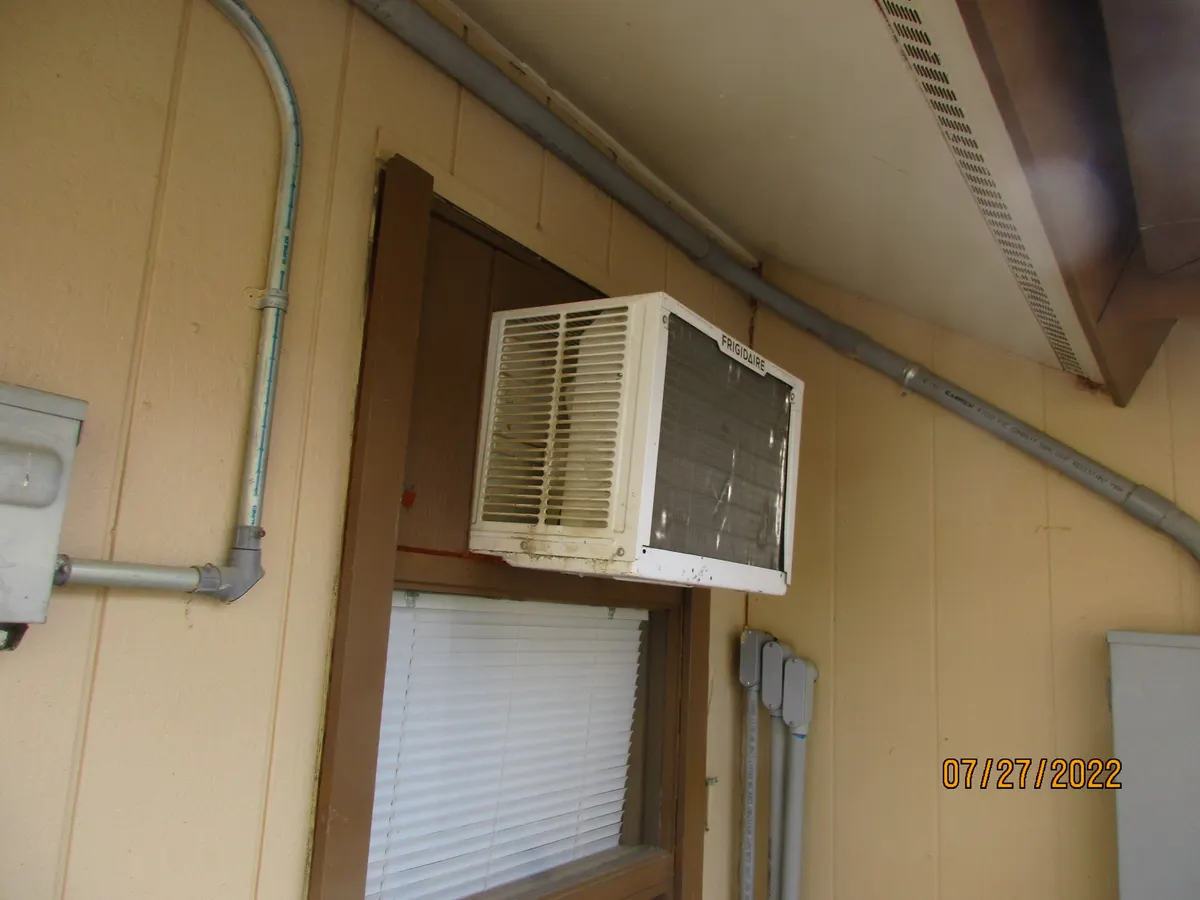
Everything in one box set through a wall or window opening
Directly into one room
Zamil lists window units at 18,000 and 24,000 Btu/h (1.5 and 2 tons)
Single rooms, staff accommodation, retrofit where no pipe route exists
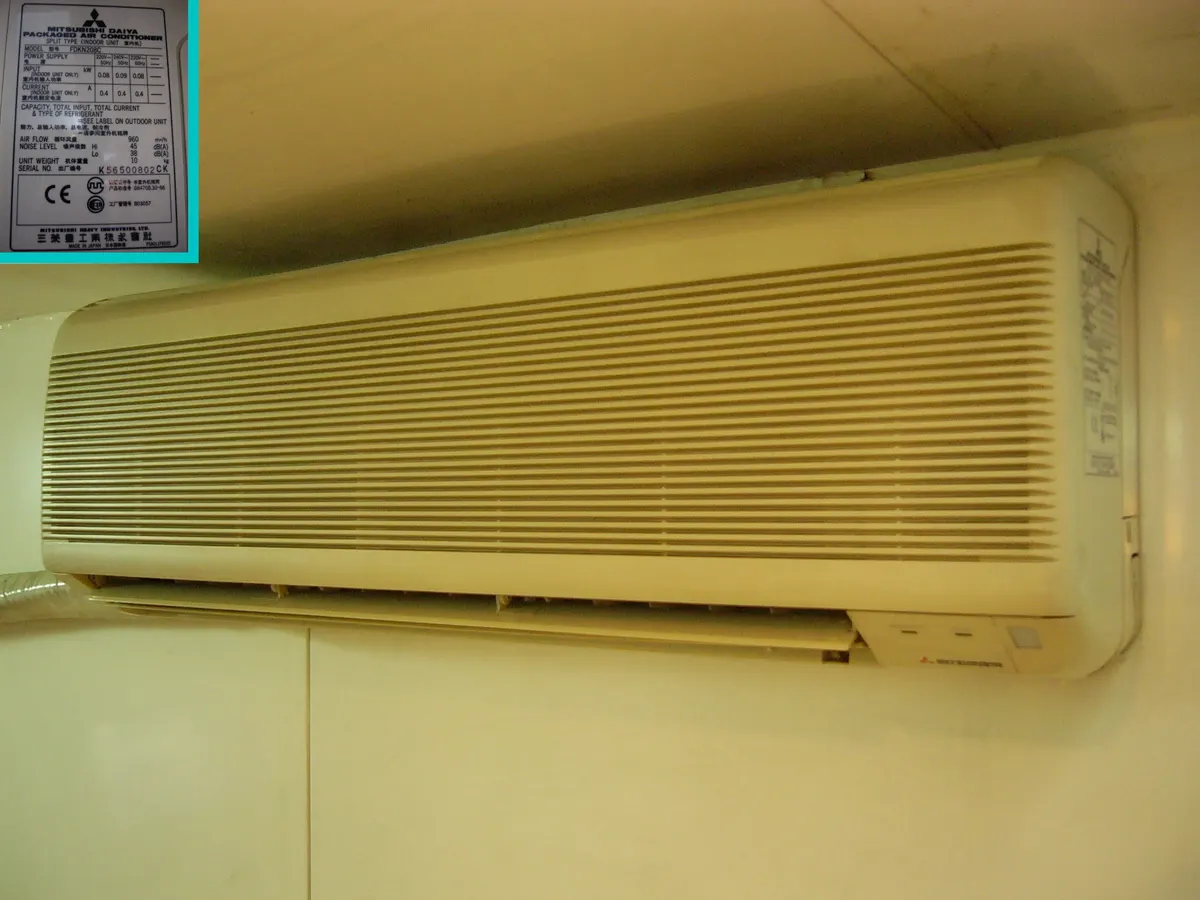
Wall split (non-ducted)
Indoor wall unit plus outdoor condensing unit, joined by refrigerant pipes
Directly into one room
Zamil lists split units from 12,000 to 36,000 Btu/h (1 to 3 tons)
Bedrooms, small offices, shops, majlis rooms
Ducted split
Concealed indoor fan coil in the ceiling plus outdoor condensing unit
Through ducts and grilles to several rooms or one large room
SKM lists ducted mini splits from 1.5 to 5 TR
Villas, apartments, offices, retail units
Package unit
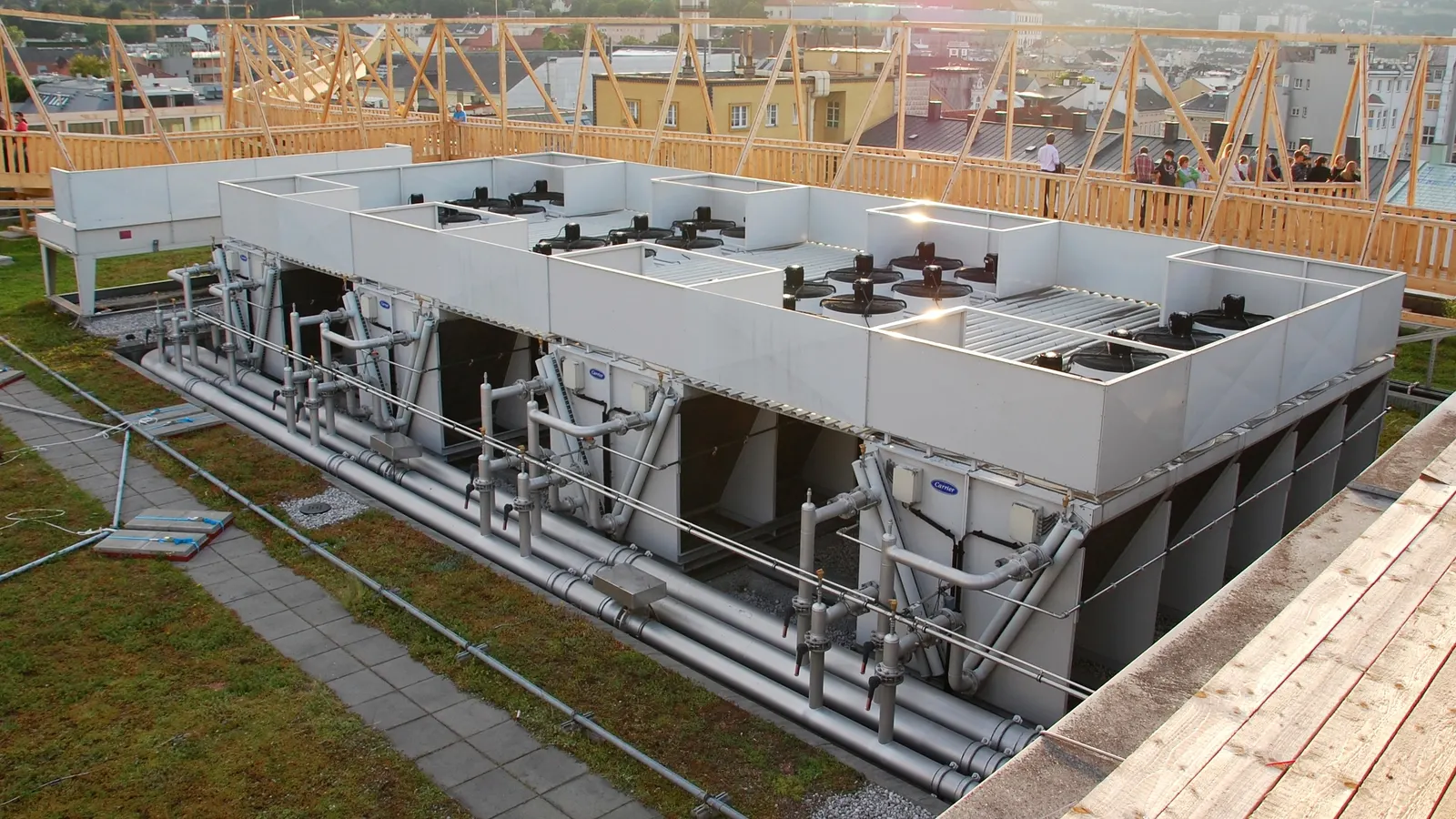
Compressor, condenser, evaporator and fans in one cabinet on the roof or at grade
Through supply and return ducts
SKM lists packaged units from 4 to 125 TR, with individual series from 8 to 117 TR
Warehouses, large halls, schools, mosques, single-storey retail
"TR" is a refrigeration ton, 12,000 Btu/h. The ranges above are what each maker publishes on its own site, not market limits; other brands make larger and smaller units.
Which is more efficient: window, split, ducted or package?
The Saudi minimum efficiency rules answer this better than any brochure, because they set a separate floor for each type. Under SASO 2663:2025, which covers window and split units up to 65,000 Btu/h, the minimum rated EER at the T1 condition (35°C outdoor) is 9.80 Btu/W.h for window units up to 24,000 Btu/h and 9.00 for larger window units, against 11.80 for split units. At the T3 condition (46°C outdoor) the floors drop to 7.20 and 6.40 for window units and 8.40 (ducted) or 8.50 (non-ducted) for splits.
The same standard introduces a seasonal (SEER) minimum for the first time. Fixed-speed split units must reach 10.10 (ducted) or 10.30 (non-ducted), while two-stage, multi-stage and variable capacity (inverter) splits must reach 12.80. The practical reading: a window unit is allowed to use noticeably more power per unit of cooling than a split, and an inverter split is held to a higher seasonal bar than a fixed-speed one.
Package units larger than 65,000 Btu/h fall under the large air conditioner standard, SASO 2874:2025. Its minimum rated EER for air-cooled units (rated under AHRI 340/360) is 11.2 up to 135,000 Btu/h, 11.0 from 135,000 to 240,000 Btu/h, 10.0 from 240,000 to 760,000 Btu/h and 9.7 above that, with part-load IEER or SEER now required as well. SASO notes these values apply to units with no heating section or an electric heating section.
In the UAE the same split applies at 65,000 Btu/h (19 kW). According to TÜV Rheinland's summary of the draft regulations, UAE.S 5010-1 covers ducted and non-ducted air conditioners up to that capacity, while UAE.S 5010-5 covers larger units and all VRF and multi-split systems regardless of size. Cabinet Resolution No. 157 of 2025 made the 2025 editions of both mandatory from 15 November 2025.
How do they perform at 46°C?
Every DX unit loses capacity and efficiency as outdoor temperature rises, because the condenser has to reject heat into hotter air. That is why Saudi and UAE rules test at T3: 29°C dry bulb indoors and 46°C dry bulb outdoors in SASO's test table. Compare bids on capacity and power input at T3, not the nominal tonnage on the model name, or you can end up a size short on the hottest afternoons.
Also check the maximum outdoor temperature at which the unit keeps running. SKM, for example, lists its ESMA-compliant ducted mini splits for cooling up to 52°C ambient and its SASO 60 Hz ducted model up to 55°C, and gives 52°C for its PACV-D packaged series. A condenser in a hot roof corner or a light well recirculating its own discharge air can see more than the weather-station figure, so leave clearance and ask for the derated capacity at your design ambient.
A wall split cools and filters the air already in the room. It does not bring in outdoor air, so offices and classrooms with wall splits still need a separate fresh air system to meet the ventilation rates in the local code. In a villa bedroom that may be acceptable; in a meeting room it usually is not.
Ducted splits and package units can carry fresh air
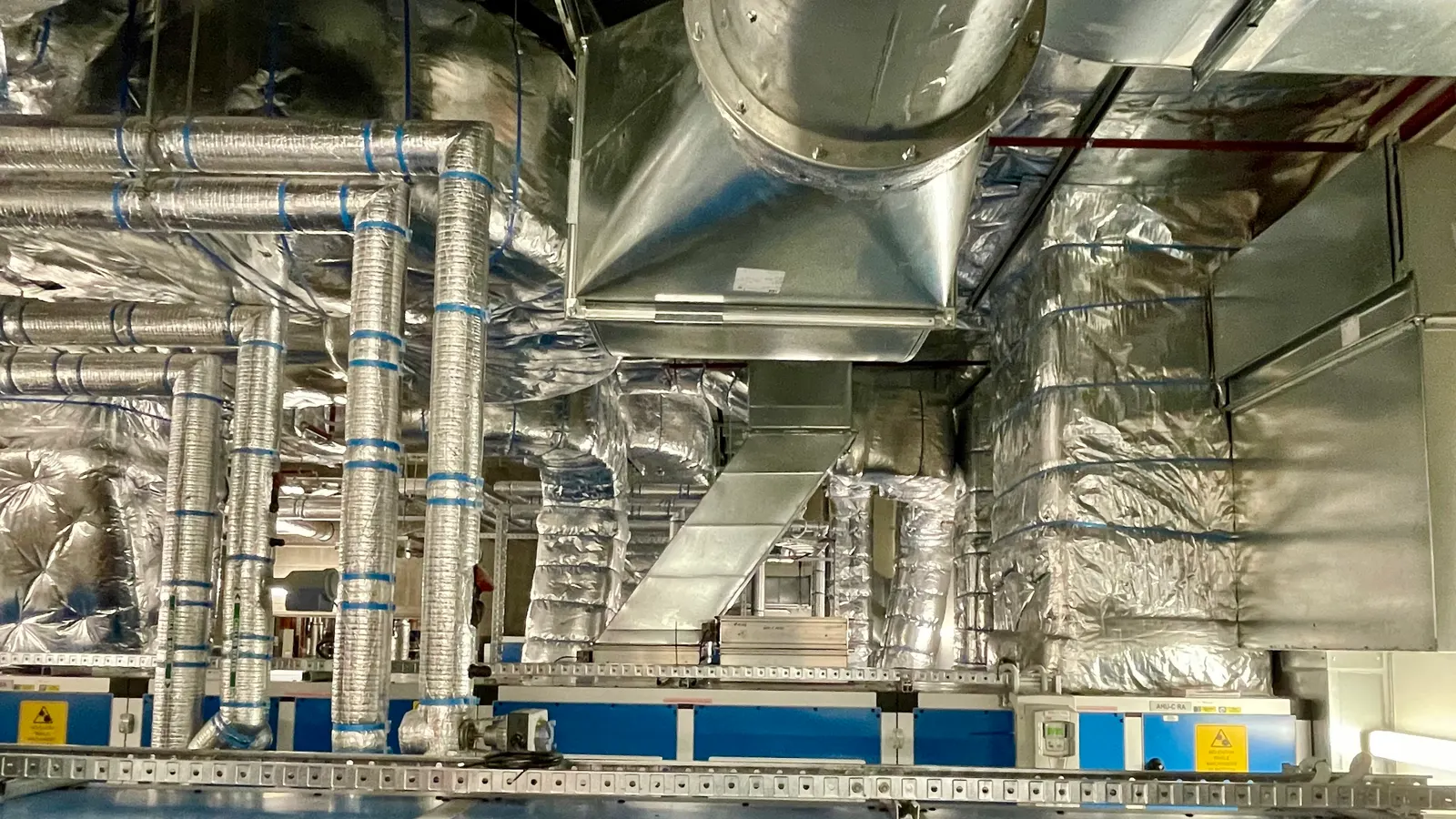
Because a ducted split or package unit already moves air through ducts, a fresh air connection can be added to the return side. Where the outdoor air load is large, makers offer dedicated equipment: SKM's PAC4A series is a packaged unit designed for 100% fresh air, with filtration and dehumidification of the outside air. For larger central systems, air handling units do this job on chilled water. Ducts also need to be insulated and sealed; leaky return ducts in a hot ceiling void pull in hot, humid air and cut real capacity. Specify the duct and insulation package with the unit, from ductwork and insulation suppliers.
Noise follows the compressor
A wall split keeps the compressor outdoors, so the room hears only the indoor fan. A ducted split puts its fan in the ceiling, where it can be placed over a corridor or store rather than the bedroom. A window unit puts the compressor in the wall of the room it cools, which is why it is the noisiest choice for sleeping areas. With package units the noise is on the roof, and the concern becomes neighbours and rooms directly below. Ask for sound data from the manufacturer for the exact model.
The table below is a starting point for the design brief, not a rule. The consultant's load calculation and the authority's approvals decide.
Building
Usual choice
Why
What to watch
Villa
Ducted splits per floor or zone, wall splits for majlis and maid's rooms
Hidden indoor units, one thermostat per zone, fresh air can be ducted
Ceiling void depth, access panels for filters, condenser space on the roof
Apartment block
Wall or ducted splits per apartment, or a central system
Each tenant controls and pays for their own cooling
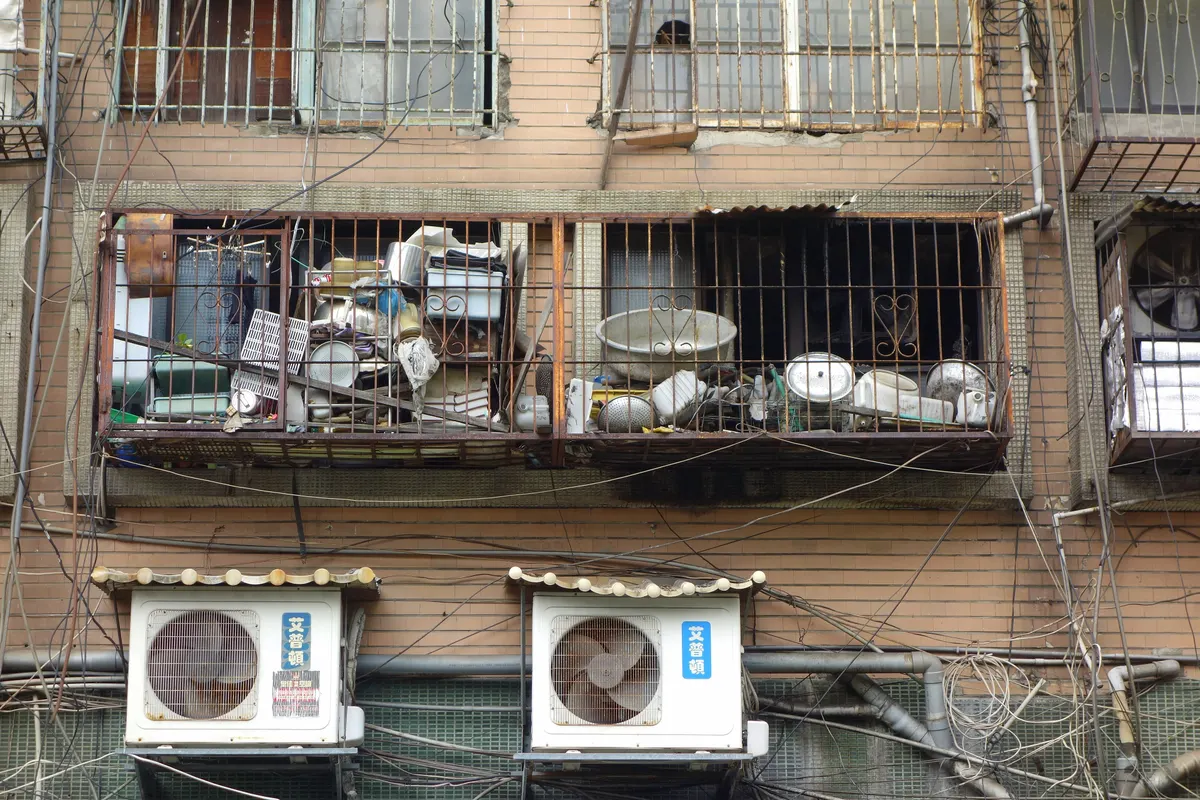
Facade appearance, condensate drainage, outdoor unit ventilation in light wells
Small office or retail unit
Ducted splits, or VRF for many zones
Ceiling grilles suit fit-out, units can be added per tenancy
Fresh air for occupants, after-hours zoning
Warehouse, large hall, mosque, school hall
Package units on the roof or at grade
One cabinet per zone, large airflow, no plant room
Roof loading, duct runs, capacity at peak ambient
Labour or staff accommodation
Wall splits or window units
Simple, room by room
Window unit efficiency floor is lower; check running cost over the contract
Once a building has dozens of zones or several floors with varied occupancy, compare the unitary option with VRF and VRV systems, which serve many indoor units from one outdoor unit.
Maintenance differences
Every DX type needs the same basic care: clean filters, clean condenser and evaporator coils, a clear condensate drain and tight electrical connections. The difference is access and count.
Wall splits: filters are easy to reach, but a large building may have hundreds of units, each with its own outdoor coil to wash.
Ducted splits: fewer units, but the indoor unit, filter and drain pan sit above the ceiling; specify access panels sized for the filter and coil.
Package units: one cabinet per zone on the roof, reachable without entering tenant space, but exposed to dust and sun; plan safe roof access and coil cleaning.
Sand and dust load outdoor coils quickly in the Gulf, so ask for coil coating options on coastal sites and a cleaning interval in the maintenance contract. Planned maintenance can be tendered to MEP maintenance service providers; our HVAC maintenance guide for Gulf buildings sets out a full schedule.
Brands with ranges across split, ducted and package units
These Gulf manufacturers publish ranges across all three unitary types on their own sites. They are listed by what they make, not ranked.
SKM Air Conditioning
SKM, which manufactures in Sharjah, lists ducted mini split systems from 1.5 to 5 TR in 50 Hz versions designed to ESMA, Estidama and MEW requirements and a 60 Hz version designed to SASO and GCC regulations. Its packaged range runs from 4 to 125 TR, including the PACV-S series (8 to 113 TR), the PACV-D series (8 to 117 TR) and the PAC4A 100% fresh air series, and its applications list names warehouses, large halls, schools and mosques. It suits contractors who want split, ducted and packaged equipment from one Gulf source.
Zamil Air Conditioners
Zamil Air Conditioners, which manufactures in Dammam, sells split units from 12,000 to 36,000 Btu/h, window units at 18,000 and 24,000 Btu/h, and separate ranges of ducted split and packaged HVAC units. It suits Saudi buyers who want locally made unitary equipment, from HVAC suppliers in Saudi Arabia, across all the types in this guide.
UAE and Saudi rules in brief
UAE
Units up to 65,000 Btu/h need an energy label and certificate under UAE.S 5010-1:2025; larger units and all VRF systems fall under UAE.S 5010-5:2025, both mandatory under Cabinet Resolution No. 157 of 2025. Ask for the ECAS certificate and star label for each model.
Saudi Arabia
Window and split units up to 65,000 Btu/h need a SASO 2663:2025 energy efficiency certificate; larger package units need SASO 2874:2025. SASO's enforcement plan starts enforcement of the updated standards at local manufacturers and customs on 1 December 2026, and certificates issued under the previous versions are cancelled on 29 November 2026. The main guide covers certification and SABER in detail.
RFQ checklist for split, ducted and package units
Zone list with cooling load per zone, the design ambient and the number of units.
System type per zone (wall split, ducted split, package, window) and indoor unit type.
Capacity and power input at T1 and T3, plus the maximum operating ambient.
Rated EER and SEER (or IEER for large units) with the test standard, and the compressor type (fixed or inverter).
Energy efficiency certificate: SASO 2663:2025 or SASO 2874:2025 in Saudi Arabia, UAE.S 5010-1:2025 or 5010-5:2025 in the UAE.
External static pressure available for ducted and package units, and the duct and fresh air design it must match.
Refrigerant type and charge, pipe length limits between indoor and outdoor units.
Sound data, coil coating for coastal or dusty sites, and roof or wall mounting details.
Controls: thermostats, zoning, interface to a building management system where needed.
Warranty, spares, local service and the maintenance interval assumed in the offer.
To get quotes against this list, post your AC requirement and suppliers in the UAE and Saudi Arabia can respond.
It depends on the space. A ducted split hides the indoor unit above the ceiling, serves several rooms from one unit and can bring in fresh air through the duct system, which suits villas and offices. A wall split costs less to install, needs no ceiling void and lets each room run independently. Ducted systems need well-insulated ducts and access panels for maintenance; wall splits need a place for each outdoor unit.
What is a package unit AC?
A package unit holds the compressor, condenser, evaporator coil and fans in one factory-built cabinet, installed on a roof or at ground level and connected to the building through supply and return ducts. It suits large single spaces such as warehouses, halls, schools and mosques. SKM, for example, lists packaged units from 4 to 125 TR. Units above 65,000 Btu/h fall under SASO 2874:2025 in Saudi Arabia.
Are window air conditioners allowed in Saudi Arabia?
Yes. SASO 2663:2025 covers single-package window units up to 65,000 Btu/h, so they can be sold with a valid energy efficiency certificate. Their minimum efficiency is set lower than for splits: a rated EER of 9.80 at T1 for window units up to 24,000 Btu/h, against 11.80 for split units. That means a window unit that just meets the floor uses more power per unit of cooling than a split that just meets its floor.
Does a split AC bring in fresh air?
No. A wall split recirculates and filters the room's own air; it has no outdoor air intake. Rooms that need ventilation for occupants, such as offices and classrooms, need a separate fresh air supply. Ducted splits and package units can take outdoor air through a connection on the return duct, and dedicated 100% fresh air packaged units exist for high outdoor air loads.
Is an inverter split worth it in the Gulf?
Saudi rules now push in that direction. SASO 2663:2025 sets a seasonal efficiency (SEER) floor of 12.80 for two-stage, multi-stage and variable capacity splits, against 10.10 to 10.30 for fixed-speed splits, so inverter models are held to a higher seasonal standard. Because cooling runs at part load for much of the year, compare SEER values, not just the full-load EER, when choosing between models.
Can one ducted split cool a whole villa?
Rarely. A villa normally needs several ducted units, one per floor or zone, because bedrooms, living areas and the majlis have different loads and occupancy. Published ducted split ranges, such as SKM's 1.5 to 5 TR, show the size of a single unit. Your MEP consultant's load calculation sets the number and size; ask bidders to confirm capacity at T3, not only at the nominal rating.
How VRF and chilled water systems differ, where VRF runs out of capacity, refrigerant safety in small rooms, part-load and high ambient ratings, district cooling as a third option, and an RFQ checklist.
Where LV ends and MV begins, how GIS and AIS differ in size, cost and maintenance, what SF6 rules mean for Gulf buyers, how ring main units work and how to read an MV datasheet.
What replaced the type-tested label, how duties split between the original manufacturer and the panel builder, which reports and certificates to ask for, and how to run a factory acceptance test.