Motor Control Centres (MCC): Design, Standards and Buying
What goes inside an MCC panel, how fixed, plug-in and withdrawable units differ, how to choose starters, and what to check for heat, arc-fault protection and testing in Gulf projects.
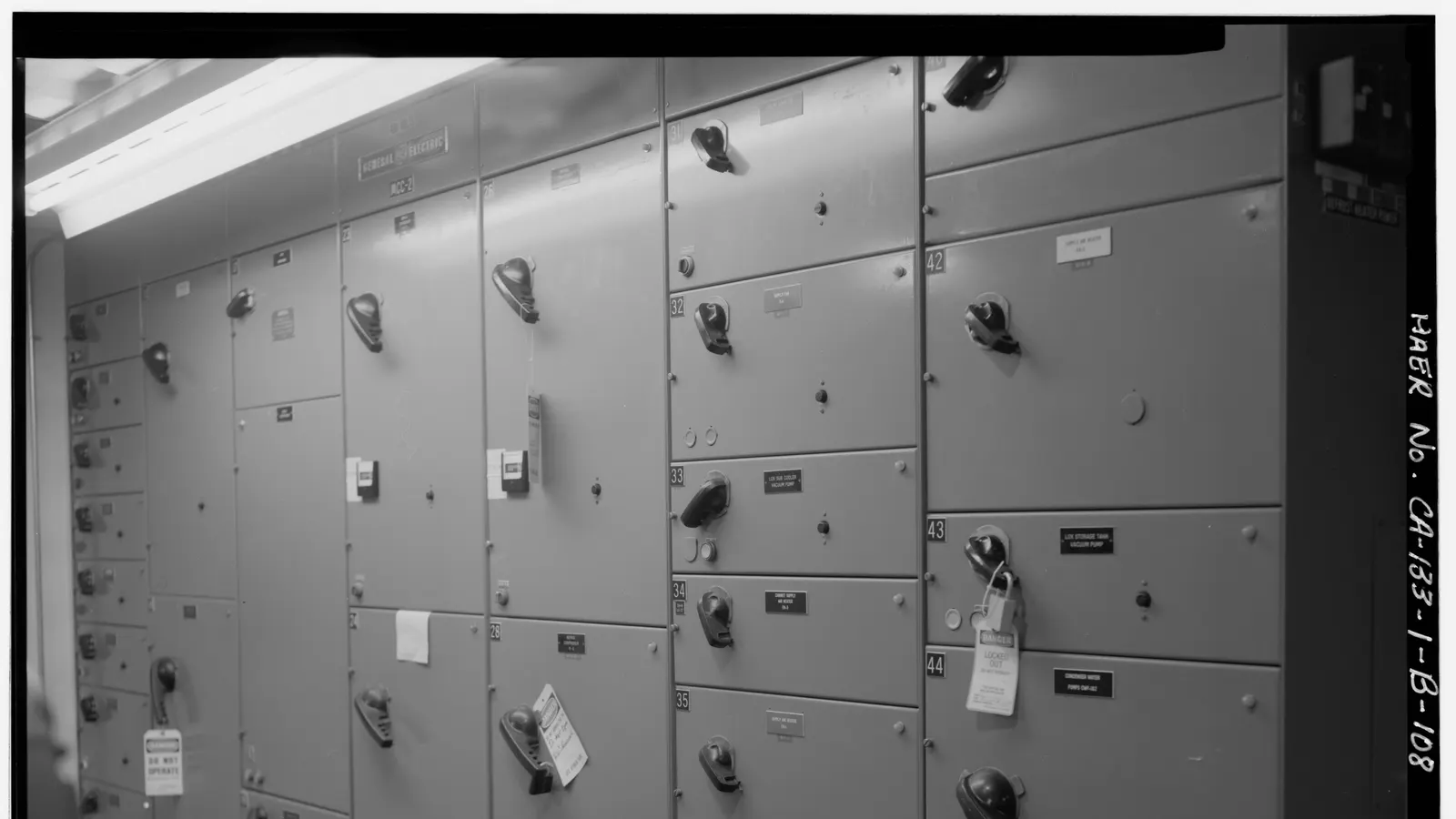
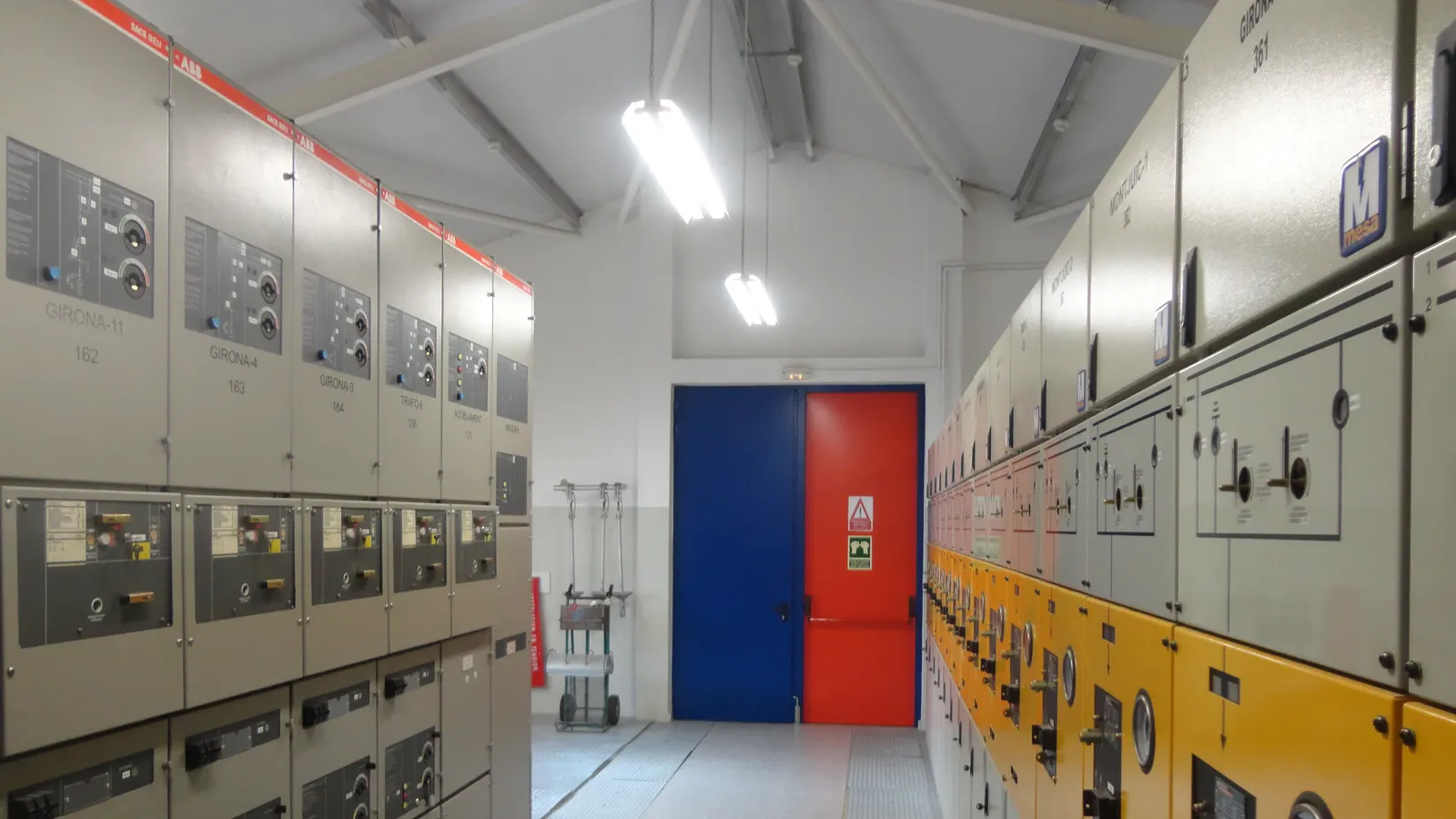
A motor control centre (MCC) is a low-voltage assembly that controls a group of motors from one place. It is built as several enclosed sections sharing a common power busbar, and each section holds starter units: a contactor or solid-state controller, overload protection, a breaker or fuses, and a disconnect. In IEC markets such as the UAE and Saudi Arabia it is built and verified to IEC 61439-2. Compare motor control centre suppliers in the UAE on unit type, starter design, heat and arc protection.
This guide is for process, utility and building services engineers specifying MCC panels for pumps, fans, chillers, conveyors and process motors. It covers the parts of an MCC, fixed versus withdrawable units, starter types from direct-on-line to variable speed drives, intelligent MCCs, heat, arc-fault protection and testing. For switchboard brands, forms of separation and approvals in general, see our guide to switchgear and panel brands in the UAE and Saudi Arabia. Buyers in the Kingdom can compare MCC panel suppliers in Saudi Arabia.
What is inside an MCC panel
The Wikipedia article on motor control centres, citing the US National Electrical Code definition, describes an MCC as "an assembly of one or more enclosed sections having a common power bus", with each section containing a combination starter. Each starter unit typically contains:
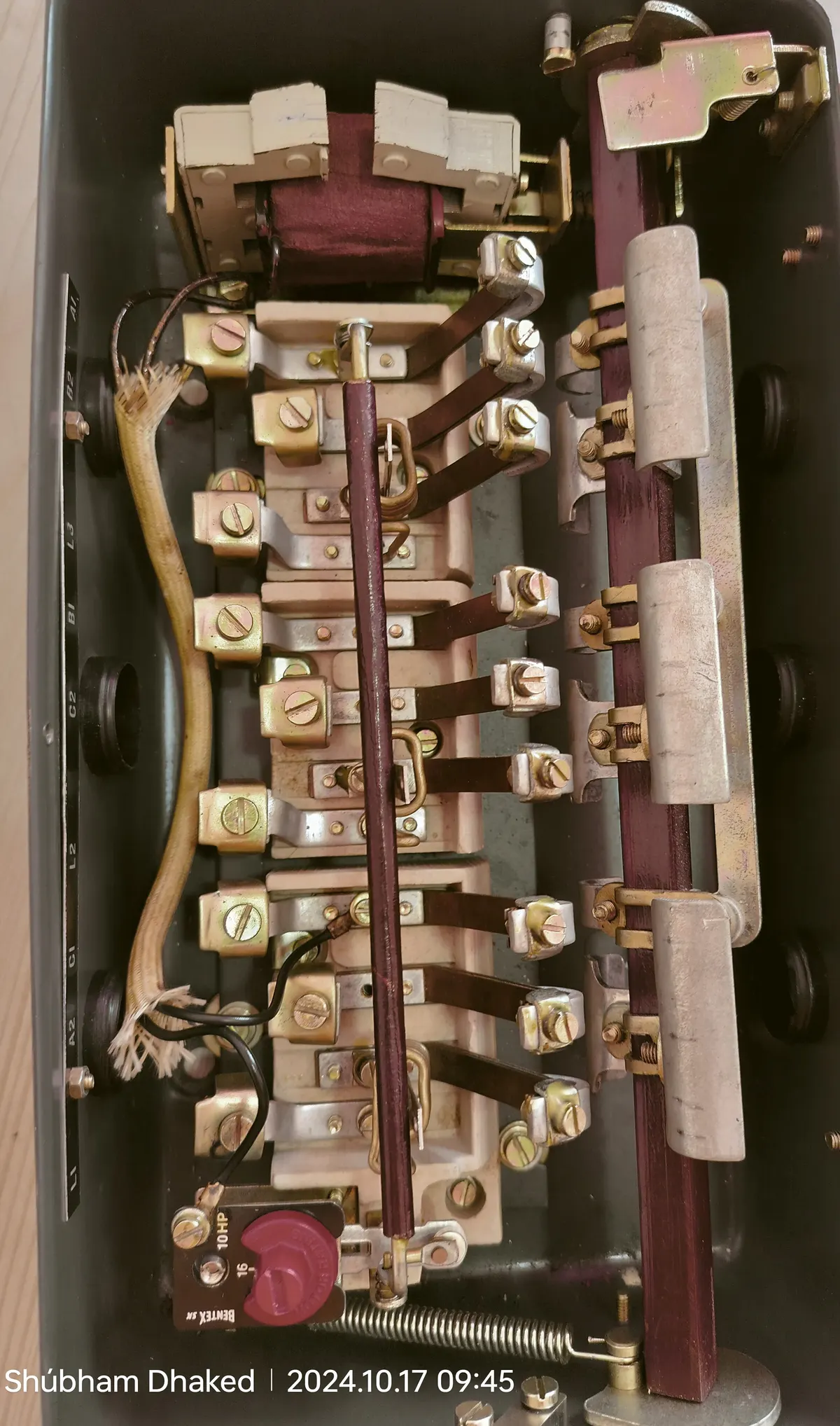
a contactor or solid-state controller to switch the motor;
overload relays to protect the motor against sustained overcurrent;
fuses or a circuit breaker for short-circuit protection;
a disconnect switch for isolation.
An MCC can also carry push buttons, indicator lights, variable-frequency drives, programmable logic controllers and metering. The protective devices themselves are explained in our guide to circuit breaker types.
The standard that matters is IEC 61439-2 for power switchgear and controlgear assemblies, read with IEC 61439-1. Contactors and motor starters are product standards in their own right: IEC 60947-4-1, whose fifth edition was published in November 2023 (with a 2026 corrigendum), covers electromechanical contactors and motor starters up to 1,000 V AC or 1,500 V DC.
Fixed, plug-in or withdrawable units
How the starter units are mounted decides how fast you can recover from a failed starter and how much the MCC costs.
Unit design
How it works
Good for
Trade-off
Fixed
Components bolted and wired in place
Simple installations, large starters, lowest cost
Replacing a unit means isolating and rewiring on site
Plug-in
Unit plugs onto the section's busbar
Medium-size starters where quicker replacement helps
Removal still involves some disconnection work
Withdrawable
Unit is drawn out of the section as a whole
Plants where a stopped motor is costly
Highest cost and more space per unit
Wikipedia notes that smaller controllers can be unplugged from the cabinet for testing or maintenance, while larger ones may be bolted in place. Siemens describes the SIVACON S8 withdrawable design as letting units be swapped without shutting down the board, which is the main reason to pay for it: a spare unit can be pushed in while the faulty one goes to the workshop.
Unit design works together with the form of internal separation (Form 1 to Form 4b), which the main guide explains. When you specify withdrawable units, also specify the form, and ask the bidder to show that the combination of form and unit type was covered by the system's design verification.
Starter types: DOL, star-delta, soft starter and VFD
The starter type follows the motor, the load and what the supply can tolerate at start. The Wikipedia article on motor controllers summarises the options.
Starter
How it starts the motor
Points to weigh
Direct-on-line (DOL)
Applies full line voltage to the motor terminals
Simplest and cheapest; induction motors draw typically 6 to 7 times full-load current at start, which can dip the supply voltage
Reversing DOL
Two DOL circuits, one for each direction
Needs mechanical and electrical interlocks so both contactors cannot close together
Star-delta
Starts with windings in star, switches to delta at about 80% of full-load speed
Current through each winding during start is 1/√3 (58%) of the line current
Soft starter
Thyristors control the voltage during the start-up phase
Reduces torque and current surges at start; controls voltage during the start-up phase; needs few user adjustments compared with a drive
Variable frequency drive (VFD)
Changes the frequency of the supply to control speed
Speed control and energy saving on fans and pumps; generates harmonics and heat; long motor cables need attention
For fans and pumps, the VFD case rests on the affinity laws: Wikipedia notes that at 63% speed a motor load consumes only 25% of its full-speed power. The costs are on the electrical side. The drive's diode rectifier creates harmonic current distortion, which raises losses in other loads on the same supply, and mitigation means filters or multi-pulse rectifiers. Pulses reflected from the motor terminals can produce overvoltages up to twice the DC bus voltage on long cable runs, so cable length and dV/dt filters matter. And at low speed a self-cooled motor cools less well and can overheat.
Contactors are rated by utilisation category. AC-3 covers starting squirrel-cage motors and switching off once the motor is up to speed; AC-4 covers inching and plugging duty, where the contactor breaks locked-rotor current. The contactor's current rating depends on the utilisation category, so state the duty in the schedule. Also ask the bidder to confirm that each starter's contactor, overload relay and short-circuit protective device have been tested together as a coordinated combination, and which coordination level the maker declares under IEC 60947-4-1.
In an intelligent MCC, digital motor management devices in each starter report to the plant control system over a communication network, instead of relying only on separate relays, meters and hard wiring.
Siemens lists SIMOCODE M-CP as a modular motor management system for low-voltage motors that links the control system to the motor feeder, and SIMARIS control for connecting the switchboard to IT, automation and cloud analysis, including real-time and temperature monitoring and predictive maintenance.
Schneider Electric lists iPMCC, an intelligent power and motor control centre for continuous and critical processes, on its UAE site.
When you specify an intelligent MCC, define the communication protocol your control system uses, which signals each starter must report, who programs and tests the network, and how a replacement unit picks up its settings. These points decide whether the system is easy to maintain ten years later.
Heat: the limit most Gulf MCCs hit first
Every contactor, overload relay, drive and soft starter turns some power into heat inside the enclosure. Wikipedia notes that the switching of the drive's IGBTs generates heat and that higher carrier frequencies increase switching losses.
IEC 61439-1:2020 handles this through design verification of temperature rise (clause 10.10), by testing, by derivation and comparison with a tested design, or by verification assessment. The verified ratings assume the reference ambient: the main guide sets out the 40 °C maximum and 35 °C 24-hour mean, and Gulf summer conditions above them. For an MCC that means:
State the design ambient of the MCC room and whether it is air-conditioned, ventilated or neither.
Give the bidder the duty of each motor (continuous, intermittent, standby), so heat is based on real loading.
Ask how large drives will be cooled: mounted inside the MCC with forced ventilation, in a separate drive panel, or wall-mounted.
Ask for temperature-rise verification evidence covering the busbar and unit ratings at your ambient, and the derating applied.
Size the room's air-conditioning for the MCC's declared heat losses, with a margin for future units.
MCC units are operated, reset and maintained while neighbouring sections stay live, so internal arc protection deserves attention. IEC TS 61641:2026, published in August 2026, sets three approaches for IEC 61439 assemblies:
passive protection through mechanical construction, such as door locks, hinges, pressure relief devices and barriers;
active protection through internal arc-fault mitigation systems that detect and reduce the arc;
arc ignition protected zones, which aim to make arc ignition an extremely remote possibility.
It replaces IEC TR 61641:2014 and IEC TS 63107:2020. Siemens, for example, describes an active, resettable arc-fault system for SIVACON S8plus using optical sensors, current transformers and evaluation units, tested to the two older documents. In the RFQ, ask which approach and which document the offered MCC was tested to, and what the test covered (closed doors only, or with withdrawable units in the test position).
Testing and acceptance
IEC 61439-1 requires routine verification of every assembly built. For MCCs, the clause to watch is 11.10, wiring, operational performance and function, because an MCC is mostly control wiring. A factory acceptance test (FAT) is the buyer's chance to see this:
dielectric and protective circuit checks on the complete line-up;
function tests of each starter type: start, stop, trip, reset, interlocks and reversing;
racking each withdrawable unit through connected, test and disconnected positions;
for intelligent MCCs, a communication test of every starter to a test PC or the actual control system;
a check of drive parameter settings against the motor list.
Ask for routine test certificates with serial numbers matching the delivered sections, plus the design verification evidence for the system.
MCC brands
Siemens describes SIVACON S8 as a low-voltage motor control centre and power distribution board developed and tested to IEC 61439-2, with withdrawable units and SIMOCODE motor management, built regionally by SIVACON technology partners. Schneider Electric lists Okken for power distribution and motor control up to 7,300 A, BlokSeT for distribution and motor control up to 6,300 A, PrismaSeT I (up to 3,200 A) for applications including MCCs, and iPMCC; Saudi buyers can see Schneider Electric in Saudi Arabia. Other makers in ListGCC's MCC category include ABB, Eaton, Larsen and Toubro, Rockwell Automation and WEG; check each maker's current MCC system and its verification reports. Many MCCs in the region are assembled by local builders on a brand's system, so the questions in the main guide on partner status apply here too.
UAE and Saudi rules
UAE: MoIAT regulates low-voltage electrical products; confirm with the supplier and certifying body which MCC components are in scope. Consultants' specifications on building and infrastructure projects normally fix the standard, form, unit type and approved makes.
Saudi Arabia: imported MCCs and components go through SABER under SASO technical regulations, as the main guide explains. Industrial clients often have their own MCC specification and approved manufacturer list, which take precedence over a general specification. LV switchgear suppliers in Saudi Arabia and switchgear and panel builders can quote against either.
MCC RFQ checklist
Motor list: kW, voltage, full-load current, duty, starter type (DOL, reversing, star-delta, soft starter, VFD) and any bypass.
Incomer rating, busbar rating, short-circuit rating (kA for the stated duration), system earthing.
Standard and edition: IEC 61439-1 and -2 (2020); IEC 60947-4-1:2023 for contactors and starters.
Unit design (fixed, plug-in or withdrawable), form of separation, IP rating, cable entry and access.
Contactor utilisation category, coordination of each starter with its protective device.
Intelligent MCC requirements: protocol, signals per starter, integration testing.
Design ambient, room cooling and heat loss declaration.
Internal arc protection approach and test document (IEC TS 61641:2026 or earlier documents).
Spare units and spare space, drawings, FAT scope, routine test certificates and design verification evidence.
Country conformity documents and client approval.
With the motor list and single-line diagram ready, you can post a requirement on ListGCC and receive quotes from MCC builders and suppliers in the UAE and Saudi Arabia.
A motor control centre is a low-voltage assembly that controls a group of motors from one location. It is made of enclosed sections sharing a common power busbar, with each section holding starter units that contain a contactor or solid-state controller, overload protection, a breaker or fuses and a disconnect. In IEC markets it is built and verified to IEC 61439-2.
What is the difference between an MCC and a PCC?
A power control centre (PCC) or main switchboard distributes power to feeders, sub-mains and other boards, mostly through ACBs and MCCBs. An MCC is dedicated to motors, with starter units that switch, protect and often control each motor. Both are LV assemblies under the IEC 61439 series, and some switchboard systems, such as Siemens SIVACON S8 and Schneider Okken, cover both roles.
When should I choose withdrawable MCC units?
Choose withdrawable units when a stopped motor is costly, for example in process plants, water utilities or critical HVAC. A spare unit can replace a faulty one quickly while the rest of the MCC stays in service. For simple installations with few critical motors, fixed or plug-in units cost less and take less space.
Is a star-delta starter better than a soft starter?
Neither is better in general. Star-delta is a contactor arrangement that starts the motor in star, where the current through each winding is 58% of the line current, then switches to delta at about 80% speed. A soft starter uses thyristors to control the voltage during start-up and needs little setting up. For speed control while running, you need a VFD.
Why do VFDs need special attention in an MCC?
VFDs produce heat from switching losses, create harmonic currents on the supply, and send voltage pulses that can reflect from the motor and produce overvoltages on long cables. Each affects the MCC design: cooling and temperature-rise verification, harmonic filters or multi-pulse rectifiers, and output filters or cable limits. Decide early whether drives go inside the MCC or in separate panels.
What tests should be done on an MCC before delivery?
Every MCC needs routine verification under IEC 61439-1, which includes dielectric tests, protective circuit checks and a check of wiring, operational performance and function. Buyers usually add a factory acceptance test with function tests of every starter, racking of withdrawable units and communication tests for intelligent MCCs, and should receive routine test certificates matching the delivered sections.
How VRF and chilled water systems differ, where VRF runs out of capacity, refrigerant safety in small rooms, part-load and high ambient ratings, district cooling as a third option, and an RFQ checklist.
Where LV ends and MV begins, how GIS and AIS differ in size, cost and maintenance, what SF6 rules mean for Gulf buyers, how ring main units work and how to read an MV datasheet.
Wall split, ducted split, package or window unit: how they differ, what Saudi and UAE efficiency rules require of each, how they cope at 46°C, and which suits villas, offices and warehouses.