LV vs MV Switchgear, and Gas-Insulated vs Air-Insulated Explained
Where LV ends and MV begins, how GIS and AIS differ in size, cost and maintenance, what SF6 rules mean for Gulf buyers, how ring main units work and how to read an MV datasheet.
Gas-insulated switchgear (GIS) keeps its live parts inside sealed metal compartments filled with an insulating gas, traditionally SF6, while air-insulated switchgear (AIS) relies on air at atmospheric pressure. GIS is smaller and shrugs off dust, humidity and salt, but costs more; AIS is cheaper, easier to inspect and extend. Both are medium-voltage equipment above 1 kV, so compare medium-voltage switchgear suppliers in the UAE on insulation medium, ratings and service conditions.
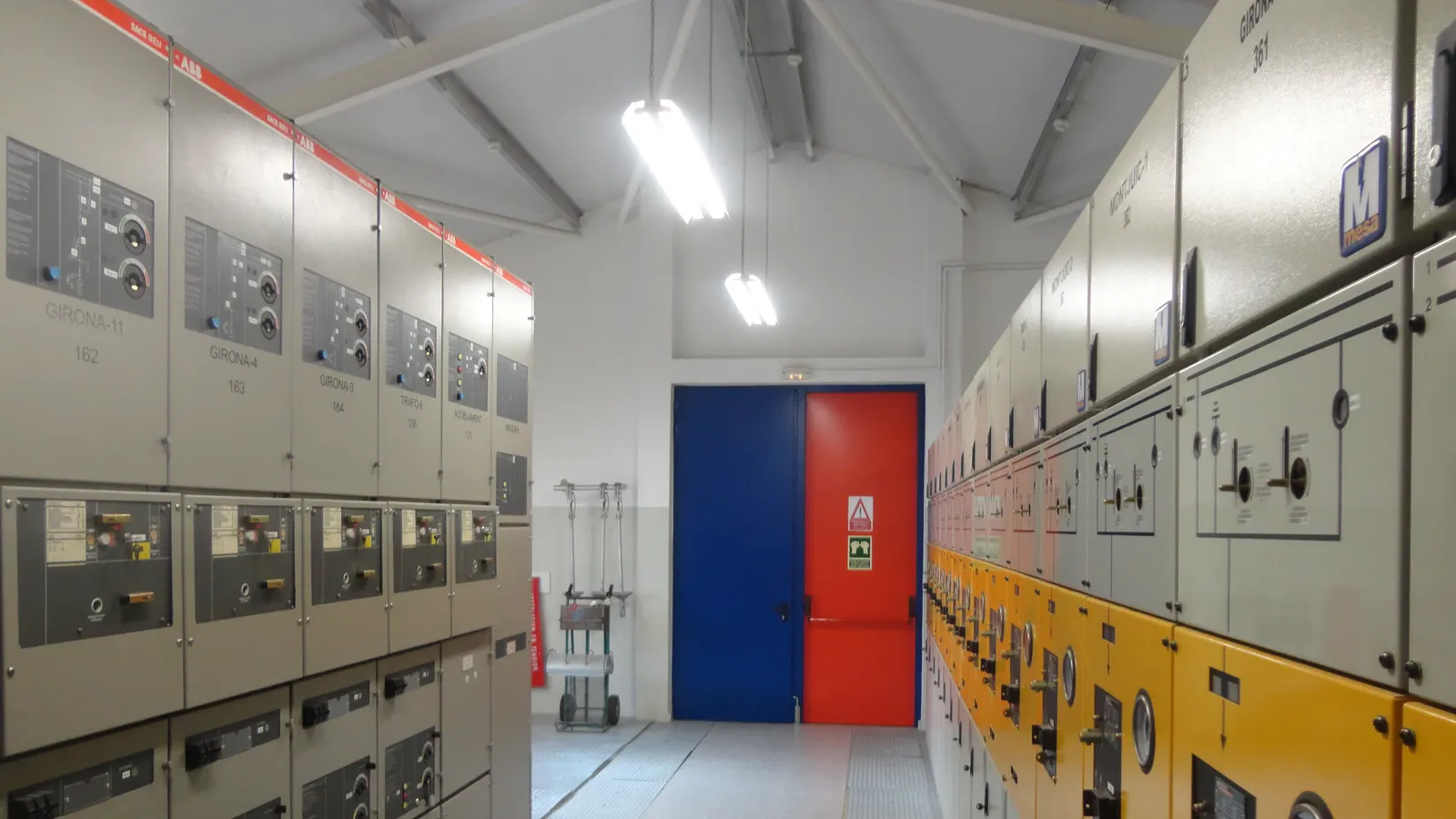
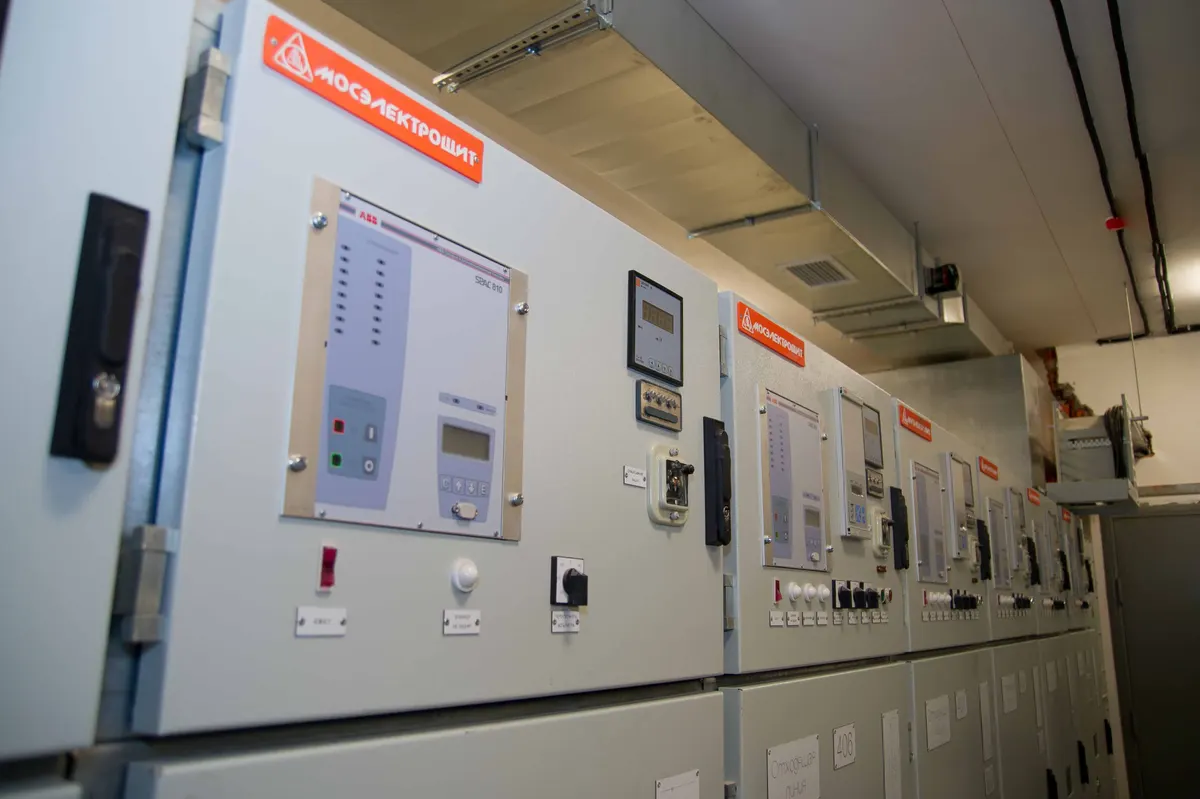
The boundary is 1 kV. Low-voltage assemblies are built to the IEC 61439 series, up to 1,000 V AC. Medium-voltage metal-enclosed switchgear is built to IEC 62271-200:2021 (third edition, consolidated with Amendment 1 in 2024), which covers AC assemblies above 1 kV up to and including 52 kV, for service frequencies up to 60 Hz, indoors and outdoors, with air-insulated compartments, fluid-filled compartments or both. Above 52 kV, gas-insulated switchgear moves to a separate standard, IEC 62271-203.
Air (AIS) or gas or other fluid in sealed compartments (GIS)
Switching devices
ACBs, MCCBs, switch-disconnectors
Vacuum or gas circuit breakers, load-break switches, switch-fuse combinations
Internal arc reference
IEC TS 61641 for LV assemblies
Internal arc classification (IAC) within IEC 62271-200
The LV side, including breaker types, is covered in our guide to circuit breaker types. The rest of this page is about MV.
What gas-insulated switchgear is
IEC 62271-203:2022, the standard for GIS above 52 kV, describes it as metal-enclosed switchgear in which the insulation is obtained, at least partly, by an insulating gas other than air at atmospheric pressure. In MV, GIS falls under IEC 62271-200, which covers fluid-filled as well as air-insulated compartments.
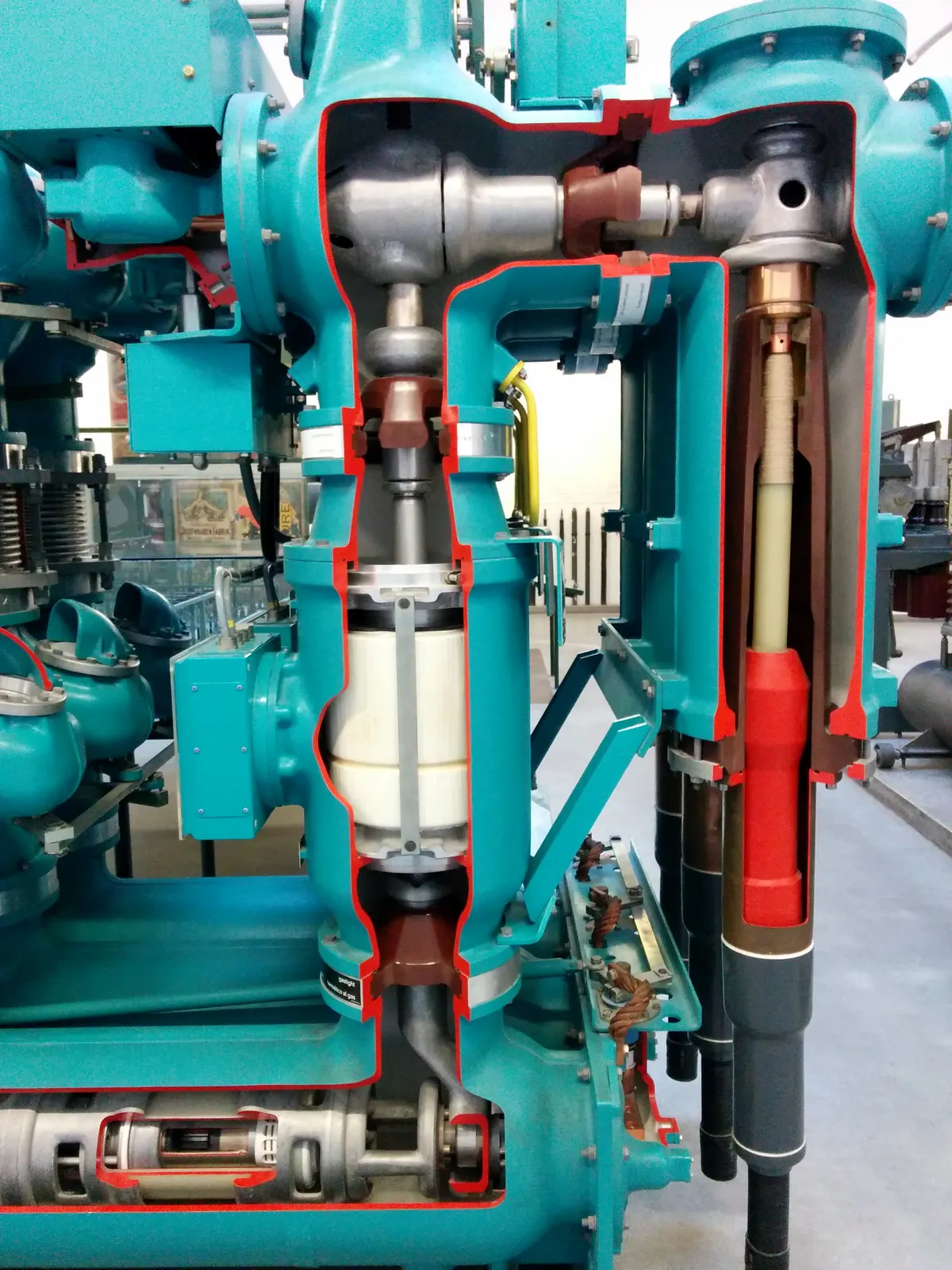
Siemens' 8DJH datasheet is a typical example of MV GIS for secondary distribution. It describes a three-pole gas-insulated switchgear vessel for the switching devices and busbar, a sealed pressure system with SF6 filling for the entire service life, and a hermetically sealed welded stainless steel vessel that makes the high-voltage parts "insensitive to salty air, air humidity, dust and condensation". It is type-tested to IEC 62271-200 for voltages from 7.2 to 24 kV.
Cutaway model of fully insulated, metal-enclosed SF6 switchgear showing the cable entry, disconnector, current transformer and circuit breaker inside the gas compartments. Photo: wdwd, CC BY-SA 4.0, via Wikimedia Commons
AIS vs GIS compared
Point
Air-insulated (AIS)
Gas-insulated (GIS)
Insulation
Ambient air
Gas in sealed compartments: SF6 or an alternative such as synthetic or "clean" air
Size
Larger
More compact for the same rating
Cost
Lower equipment cost
Higher equipment cost
Environment
Live parts exposed to room air, so dust, humidity and condensation matter
Live parts sealed off from dust, humidity and salt
Maintenance access
Withdrawable breakers can be racked out and serviced
Sealed tanks; makers describe them as maintenance-free, with gas pressure monitoring
Typical use
High-current primary distribution boards; outdoor substations above about 66 kV
Compact secondary distribution, ring main units, space-limited substations
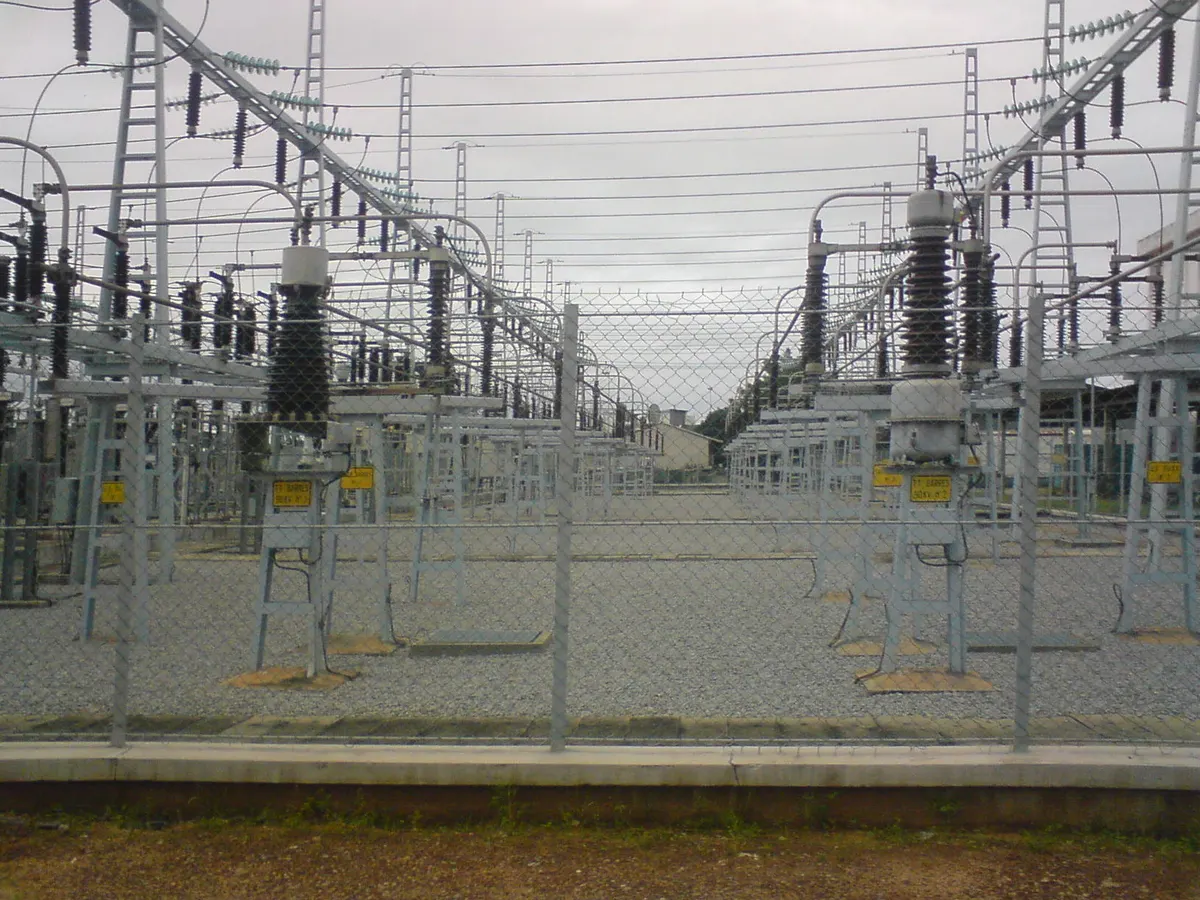
The Wikipedia overview of switchgear sums up the trade-off: gas insulation saves space compared with air-insulated equipment, but the equipment cost is higher, and above about 66 kV switchgear is usually outdoor and air-insulated, which needs a large amount of space. It also notes that SF6 equipment is invariably fitted with alarms and interlocks that warn of pressure loss and prevent operation at low pressure.
Siemens lists its air-insulated NXAIR family from 17.5 kV with 40 or 50 kA and 4,000 A up to NXAIR H at 36 kV, 31.5 kA and 2,900 A, using vacuum circuit breakers and a withdrawable design that it says makes servicing quick. Its gas-insulated 8DJH, by contrast, has panel widths of 310 to 500 mm for ring-main and circuit-breaker feeders and a standard depth of 775 mm, with feeder currents of 250 to 630 A.
The two do different jobs. SF6 is used in switchgear for insulation and for arc quenching. Vacuum is a breaking medium: the contacts of a vacuum circuit breaker (VCB) open inside a sealed vacuum interrupter. Many modern MV designs combine the two. Siemens' 8DJH, for example, is SF6-insulated but offers a vacuum circuit breaker with a three-position disconnector inside the gas tank, and NXAIR combines air insulation with vacuum interrupters.
So the real choices are:
Breaking medium: vacuum circuit breakers are used in medium-voltage gear up to 40.5 kV, according to the Wikipedia switchgear article, and both Siemens ranges cited here use vacuum interrupters for their circuit breakers.
Insulation medium: air (AIS), SF6 (conventional GIS) or an SF6-free gas (newer GIS). This drives size, sensitivity to the room environment and, increasingly, regulatory risk.
SF6 and its alternatives
SF6 is a very effective insulator, but it is also a potent greenhouse gas. Germany's Federal Environment Agency (UBA) gives its global warming potential as 24,300, citing the IPCC's Sixth Assessment Report.
The European Union has acted on this. Regulation (EU) 2024/573 entered into force on 11 March 2024. Finland's environment institute, Syke, summarises the switchgear restrictions in Article 13:
from 2026, new MV switchgear for primary or secondary distribution up to and including 24 kV may not contain F-gases;
from 2028, HV switchgear from 52 kV to 145 kV with short-circuit current up to 50 kA may not use gases with a GWP of 1 or more;
from 2030, MV switchgear above 24 kV up to 52 kV may not contain F-gases;
from 2032, HV switchgear above 145 kV, or with short-circuit current above 50 kA, may not use gases with a GWP of 1 or more.
Derogations allow equipment with gases below a GWP of 1,000 when no compliant bids are received. UBA adds that from 2035 only reclaimed or recycled SF6 may be used to service switchgear in the EU.
The EU rule does not apply in the UAE or Saudi Arabia, and we did not find an equivalent Gulf ban. It still matters to Gulf buyers, because the makers who supply the region are launching SF6-free ranges, as the examples below show, and product lines follow the largest markets. IEC 62271-203:2022 already reflects this: it adds alternative gases alongside SF6 and introduces two gas classes, GWP up to 1,000 and above 1,000, with a tighter leakage limit in type tests (0.1% per year per compartment instead of 0.5%) for gases above 1,000.
Examples of SF6-free options from the makers' own pages:
Siemens: NXAIR uses natural air instead of SF6, and Blue GIS uses Clean Air insulation with no F-gases and a GWP below 1.
Lucy Electric: Aegis EcoTec and Sabre EcoTec ring main units at 12 kV use synthetic air instead of SF6.
Ormazabal: cgm.zero24 is described as F-gas-free insulated gas switchgear.
For a project with a 25 to 30 year horizon, ask bidders to quote an SF6-free alternative where one exists at your voltage, and to state gas handling and end-of-life recovery arrangements for any SF6 equipment.
Ring main units on utility networks
A ring main unit (RMU) is compact MV switchgear for secondary distribution, used to switch a cable ring and feed a distribution transformer. Siemens' 8DJH datasheet shows the arrangement as ring-main feeders and transformer feeders combined in blocks such as RRT, and lists the switching functions: a three-position switch-disconnector (open, closed, earthed), a switch-fuse combination for distribution transformer protection, and a vacuum circuit breaker with three-position disconnector, with the earthing function generally make-proof.
Why is SF6 so common in RMUs? The makers' own descriptions point to compactness and sealing. Siemens lists 8DJH as compact and maintenance-free, and the sealed-for-life pressure system and a vessel insensitive to salt, humidity and dust, as Siemens describes for 8DJH, suit that job. Lucy Electric says its gas-insulated Sabre, Aegis Plus and Aegis 36 RMUs suit sites where "harsh weather conditions are a factor", and lists Trident, an oil-insulated fuse-switch RMU up to 15.5 kV, for remote and rural network locations.
RMU
Insulation
Rated voltage (maker's page)
Lucy Electric Sabre, Aegis Plus
SF6
Up to 24 kV
Lucy Electric Aegis 36
SF6
Up to 38 kV
Lucy Electric Aegis EcoTec, Sabre EcoTec
Synthetic air
12 kV
Lucy Electric Trident
Oil
Up to 15.5 kV
Ormazabal cgmcosmos, ga/gae630
Integral gas insulation
Up to 24 kV (cgmcosmos up to 27 kV)
Ormazabal cgm.3
Integral gas insulation
Up to 40.5 kV
Siemens 8DJH
SF6
7.2 to 24 kV
Utility RMUs are usually bought to the utility's own specification, which fixes the rating, the number of ways, the cable connection and often the approved makers. If the RMU will be handed over to DEWA, ADDC or SEC, get that specification before you shortlist.
Reading an MV switchgear datasheet
Three classifications from IEC 62271-200 appear on every MV datasheet and are easy to misread.
Loss of service continuity (LSC). Schneider Electric's FAQ defines it as the possibility of keeping other high-voltage compartments or functional units energised when one accessible compartment is opened. With LSC1, other functional units must be switched off. With LSC2, at least one set of busbars can stay live and all other functional units stay in service. LSC2A and LSC2B say whether the cables must be dead when another compartment in the same unit is opened. 8DJH, for example, is LSC2; Siemens lists NXAIR C as LSC2.
Partition class. 8DJH, for example, is listed as metal-enclosed, partition class PM. Ask the bidder what the stated class means for access to each compartment.
Internal arc classification (IAC). Schneider explains the code: accessibility type A means access restricted to authorised personnel, type B means unrestricted access including the general public, and type C means installed out of reach above a public area. The letters F, L and R name the front, lateral and rear sides that passed the arc test. "IAC AFL 20 kA, 0.5 s" means type A access, front and sides tested, at 20 kA for 0.5 seconds. Siemens offers 8DJH with IAC A FL or A FLR at 21 kA for 1 s.
Match IAC to the room. If people can walk behind the switchgear, you need the rear (R) classified too, or the layout must keep people out of unclassified sides.
IEC 62271-1's normal service conditions for indoor equipment, as summarised by Schneider Electric, assume an ambient that does not exceed 40 °C with a 24-hour average of 35 °C or less, relative humidity averaging no more than 95% over 24 hours, and air "not significantly polluted by dust, smoke, corrosive and/or flammable gases, vapours or salt". The manufacturer assumes no such contaminants unless the user specifies otherwise. Schneider also notes that condensation can be expected where sudden temperature changes occur in periods of high humidity, and that switchgear for such conditions should be specially designed against insulation breakdown and corrosion.
Coastal UAE and Saudi sites break those assumptions: fine dust, salt-laden air and condensation when air-conditioning cycles in humid weather. That pushes the choice towards:
GIS or sealed RMUs for coastal, outdoor kiosk and dusty industrial locations, because the live parts are sealed;
AIS in a controlled room where you want withdrawable breakers and high busbar currents, with filtered, conditioned air and anti-condensation heaters;
a written statement of site conditions in the RFQ (maximum ambient, dust, salt, humidity) so the maker designs and derates for them instead of assuming normal conditions.
UAE and Saudi rules
UAE
MV switchgear that connects to a utility network is bought to that utility's specification and approval list (DEWA in Dubai, ADDC or AADC in Abu Dhabi, and the relevant authority in the Northern Emirates). Confirm with the consultant which specification applies before bids are invited.
Saudi Arabia
For equipment connected to SEC networks, or inside a client's plant, the client's specification and approved manufacturer list decide what can be offered. Imported equipment also needs SABER registration under SASO technical regulations, as the main guide explains.
MV switchgear RFQ checklist
System voltage, rated voltage, rated current of busbars and feeders, and short-time withstand current with duration.
Standard and edition: IEC 62271-200:2021 with Amendment 1:2024 (IEC 62271-203:2022 above 52 kV).
Insulation: AIS, SF6 GIS or SF6-free GIS; ask for an SF6-free option where available.
Switching devices per feeder: vacuum circuit breaker, load-break switch or switch-fuse.
LSC category, partition class and IAC classification with arc current and duration, matched to the room layout.
Site conditions: maximum ambient, dust, salt, humidity, indoor or outdoor, altitude.
For SF6 equipment: gas monitoring, handling procedures and end-of-life recovery.
Utility or client specification and approval, and country conformity documents.
Type test reports, routine test certificates, factory acceptance test and spares.
With that list and your single-line diagram, you can post a requirement on ListGCC and let MV switchgear suppliers in the UAE and Saudi Arabia quote.
Brands covered on this page
Siemens offers both sides of the choice: NXAIR air-insulated switchgear up to 36 kV, 8DJH SF6 gas-insulated secondary switchgear up to 24 kV and Blue GIS with Clean Air insulation. Lucy Electric specialises in RMUs with SF6, synthetic air and oil insulation. Ormazabal makes gas-insulated secondary switchgear up to 40.5 kV and the F-gas-free cgm.zero24. Saudi buyers can see Siemens in Saudi Arabia. For other makers and their ranges, see the main switchgear brands guide, and browse switchgear and panel suppliers.
Gas-insulated switchgear puts the busbars and switching devices inside sealed metal compartments filled with an insulating gas. That makes it much more compact than air-insulated switchgear for the same rating and protects the live parts from dust, humidity and salt. It is used where space is limited or the environment is harsh, such as compact substations, ring main units and coastal or dusty sites.
What is SF6 switchgear?
SF6 switchgear uses sulphur hexafluoride gas for insulation and, in some designs, for arc quenching. It is common in gas-insulated MV and HV switchgear and ring main units. SF6 has a global warming potential of 24,300 according to UBA, citing the IPCC, which is why the EU is phasing it out of new switchgear and makers are launching SF6-free ranges.
Which is better, SF6 or VCB?
They do different jobs. A vacuum circuit breaker (VCB) interrupts current inside a vacuum interrupter; SF6 is mainly used to insulate the switchgear and, in some breakers, to quench the arc. Many MV designs combine an SF6-insulated tank with vacuum breakers. Siemens, for example, uses vacuum interrupters in both its air-insulated NXAIR and its SF6-insulated 8DJH; the open question is whether the insulation is air, SF6 or an SF6-free gas.
Why is SF6 used in ring main units?
An RMU has to be compact enough for a kiosk or small substation and run with little maintenance. A sealed SF6 tank gives good insulation in a small space and keeps the live parts away from dust, humidity and salt. Siemens describes its 8DJH as having a sealed pressure system with SF6 filling for its entire service life. SF6-free options now exist, such as Lucy Electric's 12 kV synthetic air RMUs and Ormazabal's F-gas-free cgm.zero24.
What is the difference between LV and MV switchgear?
Low-voltage switchgear works up to 1,000 V AC and is built to the IEC 61439 series. Medium-voltage switchgear works above 1 kV up to 52 kV and is built to IEC 62271-200. MV switchgear uses vacuum or gas circuit breakers, load-break switches and fuse combinations, and is insulated by air or gas. LV switchboards use ACBs and MCCBs in air-insulated enclosures.
Is SF6 switchgear banned in the UAE or Saudi Arabia?
We did not find a ban in either country. The restrictions that make headlines are the EU's Regulation 2024/573, which stops new MV switchgear up to 24 kV containing F-gases from 2026 and up to 52 kV from 2030, within the EU. Gulf utilities and clients set their own specifications, so ask whether SF6-free equipment is preferred or required on your project.
How VRF and chilled water systems differ, where VRF runs out of capacity, refrigerant safety in small rooms, part-load and high ambient ratings, district cooling as a third option, and an RFQ checklist.
Wall split, ducted split, package or window unit: how they differ, what Saudi and UAE efficiency rules require of each, how they cope at 46°C, and which suits villas, offices and warehouses.
What replaced the type-tested label, how duties split between the original manufacturer and the panel builder, which reports and certificates to ask for, and how to run a factory acceptance test.