Transformers in the UAE and Saudi Arabia: Types, kVA Sizing, Standards and Makers
A buyer's guide to transformers in the UAE and Saudi Arabia: types, data sheet ratings, IEC 60076, DEWA and SEC specifications, losses, Gulf heat derating, makers and what to put in an RFQ.
A transformer changes AC voltage from one level to another, and in the UAE and Saudi Arabia most buyers need one of three kinds: an MV/LV distribution transformer (typically 11 kV, 13.8 kV or 33 kV down to 400 V), a larger power transformer for grid and plant substations, or an instrument transformer for metering and protection. Choose by kVA, voltages, oil or dry insulation, site ambient and the utility specification, then compare distribution transformer suppliers in the UAE on the same data sheet.
This guide is for MEP and electrical contractors, consultants, facility and plant engineers and procurement teams. It covers the main transformer types, the ratings that matter on a data sheet, the IEC 60076 series, losses and efficiency, what DEWA and the Saudi Electricity Company (SEC) ask for, how Gulf heat changes the specification, the regional and international makers, and what to put in an RFQ. ListGCC has not tested any transformer; everything below comes from standards bodies, utility specifications and the makers' own pages, listed under Sources.
Distribution transformers vs power transformers
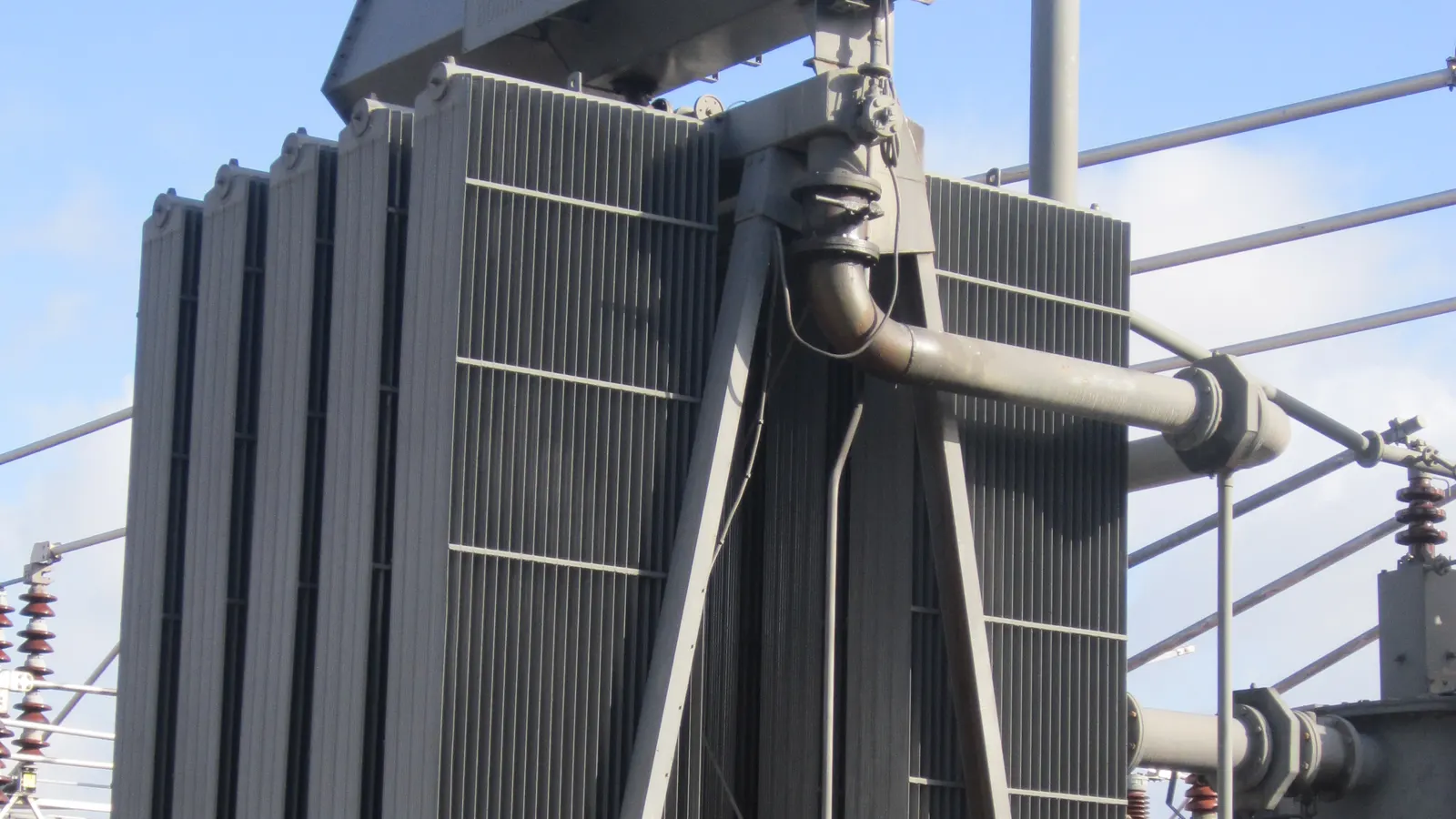
The split is by rating and job, not by technology. Both are built and tested to the IEC 60076 series, and both can be oil-immersed; distribution units can also be dry-type.
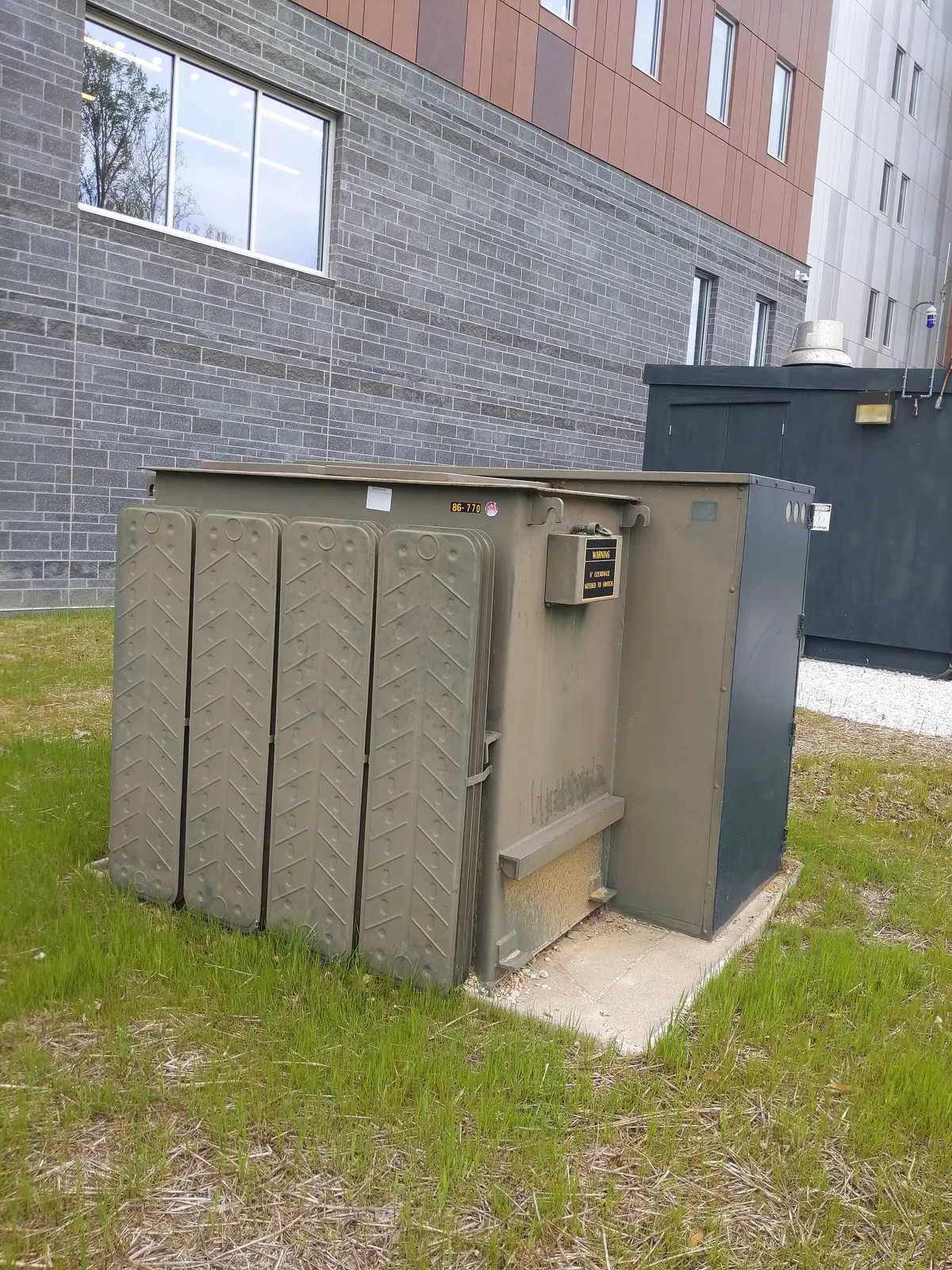
Distribution transformers make the final voltage reduction to the level a building or plant uses. Siemens Energy, for example, describes its distribution range as 10 kVA up to 10 MVA at typically 230 V to 33 kV, liquid-immersed or cast resin. In the Gulf this is the unit in a building substation, a package substation or a pad-mounted enclosure.
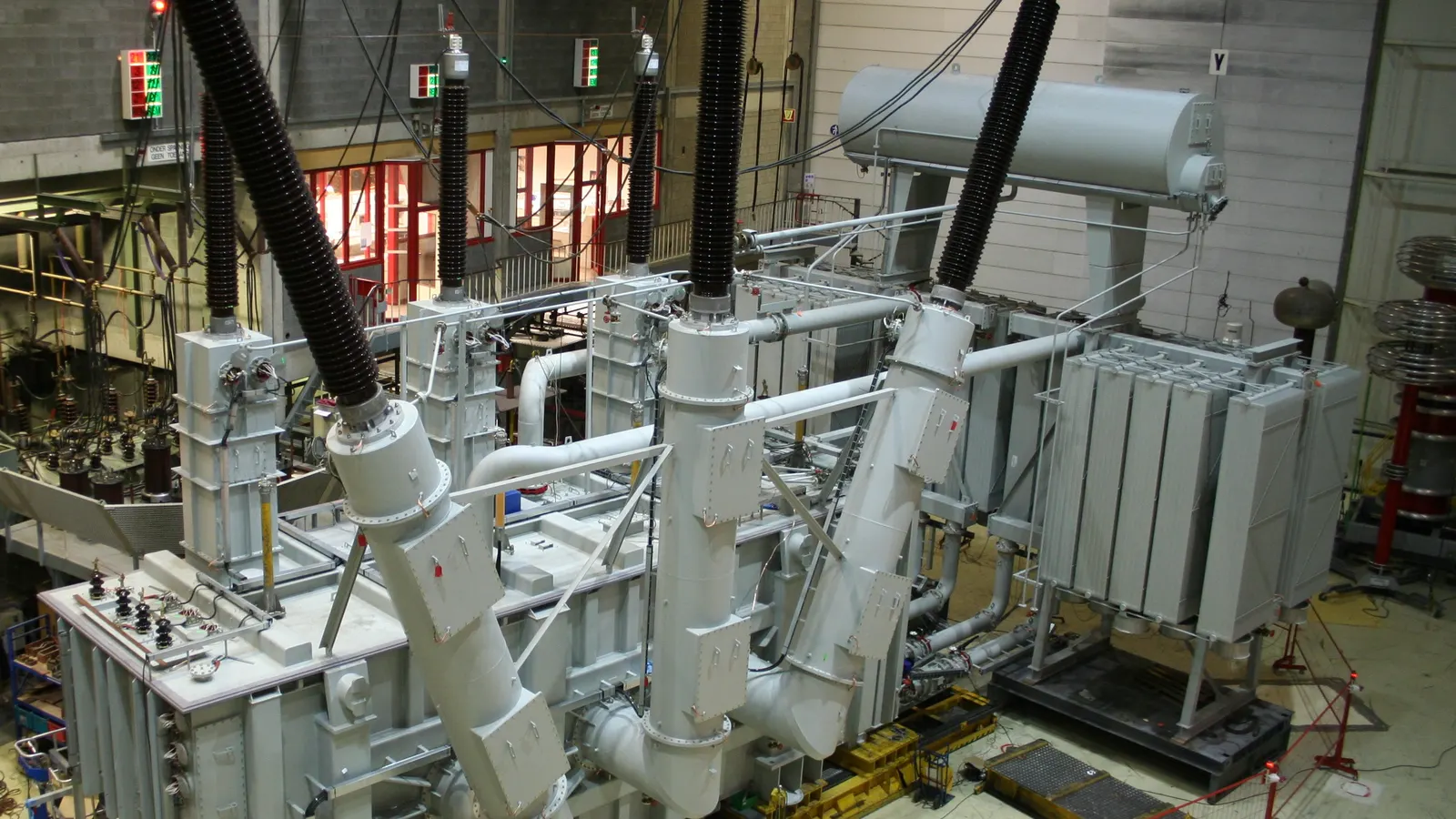
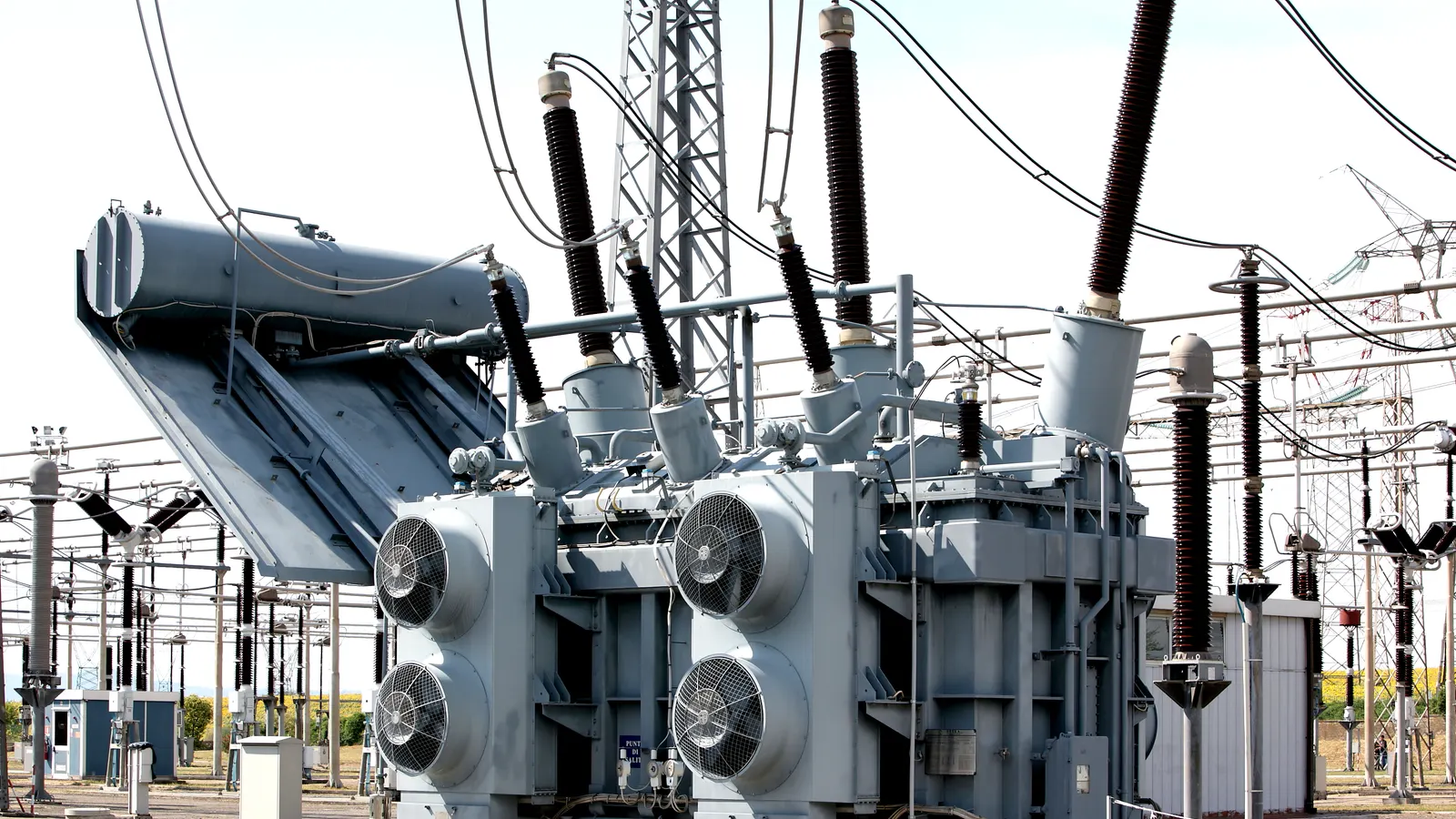
Power transformers sit at power plants and in transmission substations. Siemens Energy gives its typical power transformer range as 10 to 1,300 MVA at 10 kV to 800 kV. Buyers here are utilities, EPC contractors and large industrial sites. See power transformer suppliers.
Instrument transformers (current and voltage transformers) are small by comparison and feed meters and protection relays. They have their own standard, the IEC 61869 series, and their own spoke in this series.
Type
Typical job
Typical range (one maker's figures)
Insulation
Distribution transformer
MV to LV for buildings, plants, utility networks
10 kVA to 10 MVA, 230 V to 33 kV
Mineral oil, ester fluid or cast resin
Power transformer
Generator step-up, transmission and grid substations
10 to 1,300 MVA, 10 kV to 800 kV
Oil, with forced cooling at larger ratings
Dry-type (cast resin) transformer
Indoor substations in occupied buildings
IEC 60076-11 covers dry-type units up to 72.5 kV equipment voltage
Air and solid insulation, no liquid
Current transformer
Metering and protection
Rated by current ratio, class and burden
Resin, oil or SF6 depending on voltage
Ranges are Siemens Energy's published figures and the IEC scope; other makers publish different ranges (see the brands section).
Oil-immersed or dry-type?
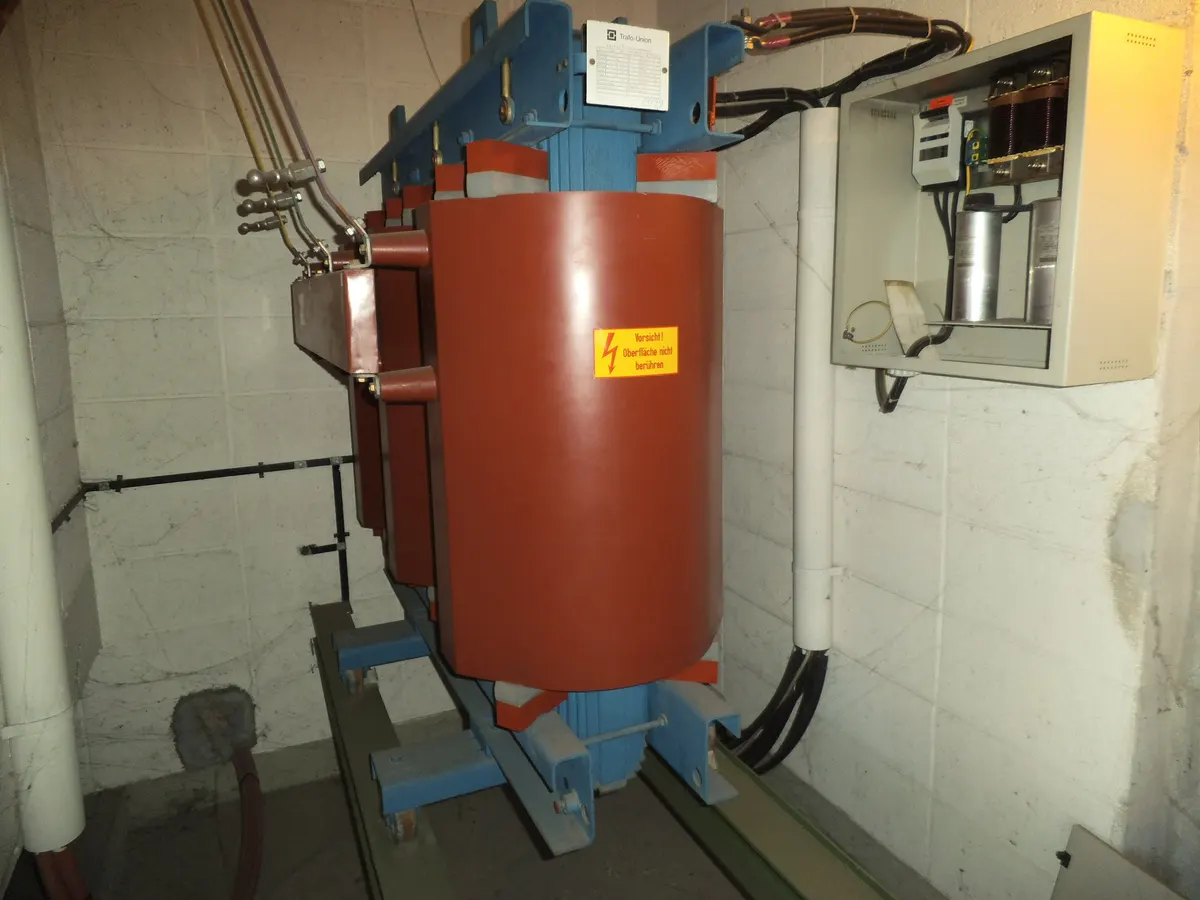
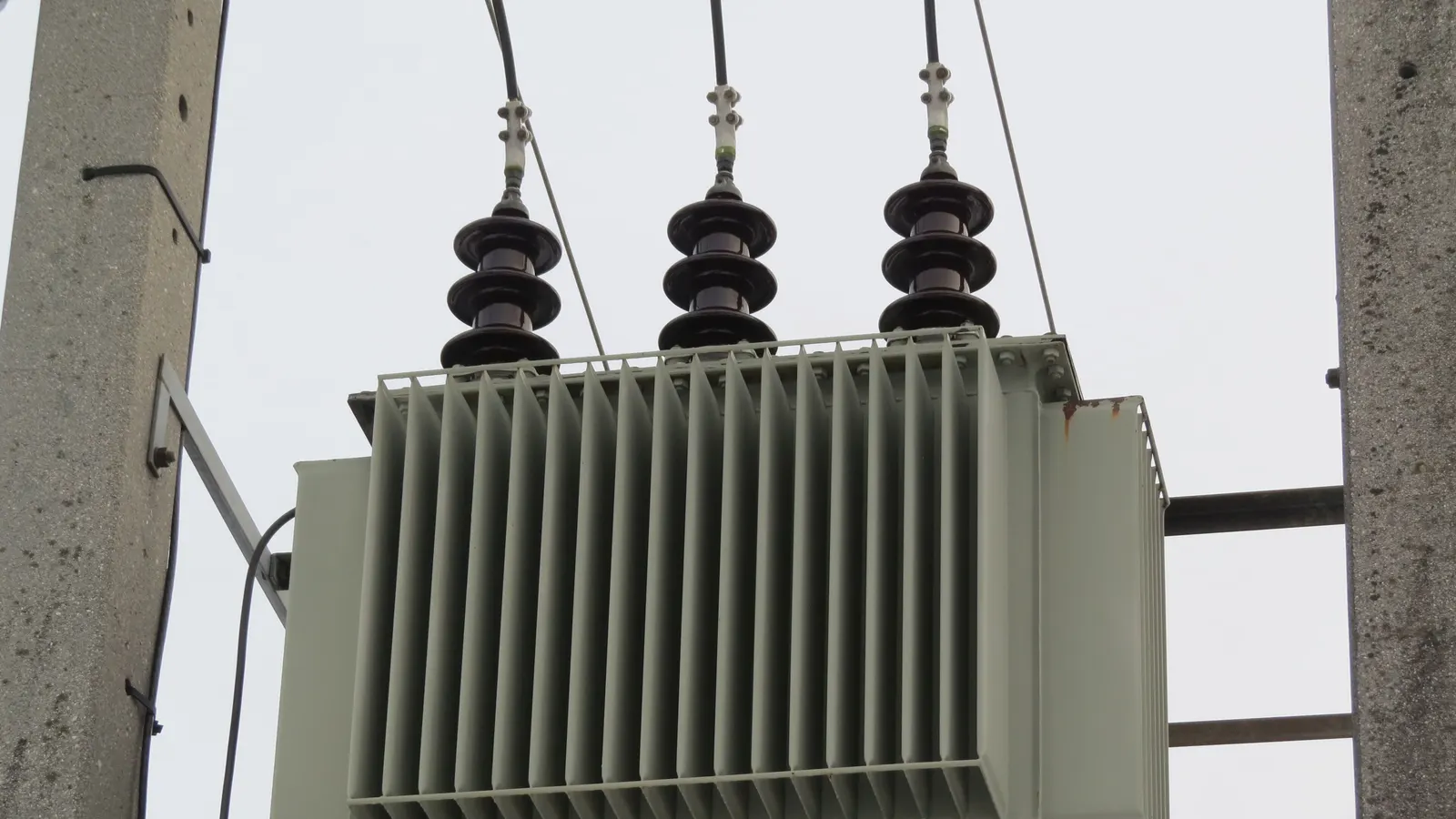
Oil-immersed transformers use mineral oil (or an ester fluid) to insulate and cool the windings. They suit outdoor package substations, pad-mounted units and most utility work: SEC's distribution transformer specification, for instance, calls for hermetically sealed, fluid-immersed units with natural oil and air cooling (ONAN). Dry-type cast resin transformers have no liquid, which is why designers choose them for substations inside hospitals, towers, malls and data centres, where an oil fire or leak is the risk to avoid. Dubai's own utility buys cast resin units for its 11/0.4 kV network (see UAE rules below).
Every quote should state the same set of values so bids can be compared line by line. SEC's specifications are a useful model because they fix most of them.
Picking the kVA is the step most often rushed. The transformer kVA sizing guide walks through the load schedule, diversity, power factor, spare capacity and heat derating, with a worked example.
Standards: the IEC 60076 series and related parts
Gulf utilities and consultants specify transformers to IEC standards. SEC's distribution transformer specification lists the parts below as applicable, and the IEC webstore gives the current editions.
Standard
Title (short)
Note
IEC 60076-1:2011
Power transformers, Part 1: General
Edition 3.0. Applies to three-phase and single-phase power transformers, including auto-transformers; this edition added DC current provisions, tank vacuum, pressure and leak tests and condition-monitoring provisions
IEC 60076-2:2011
Temperature rise for liquid-immersed transformers
Defines temperature rise limits and tests; introduced a winding hot-spot limit
IEC 60076-3
Insulation levels, dielectric tests and external clearances in air
Dielectric test levels
IEC 60076-5
Ability to withstand short circuit
Short-circuit withstand
IEC 60076-7
Loading guide for mineral oil-immersed power transformers
Overload and ageing
IEC 60076-10
Determination of sound levels
Noise measurement
IEC 60076-11:2018
Dry-type transformers
Edition 2.0, up to 72.5 kV; climatic, environmental and fire behaviour classes
IEC 60296, IEC 62770, IEC 61099
Unused mineral oil, natural esters, synthetic esters
Insulating liquids
IEC 61869-2:2012
Instrument transformers, Part 2: current transformers
Replaced IEC 60044-1 and IEC 60044-6
For maintenance, IEC 60599:2022 (edition 4.0) guides the interpretation of dissolved gas analysis, and IEC 60422:2024 (edition 5.0) gives supervision and maintenance guidance for mineral insulating oils. Ask bidders to state the edition they design and test to.
Losses and efficiency
A transformer wastes energy in two ways. No-load (core) losses come from hysteresis and eddy currents in the core, are constant at all load levels and dominate when the unit is lightly loaded. Load (winding) losses come from current heating the conductors and rise with load. Because a distribution transformer is energised around the clock, often well below full load, its no-load loss matters as much as its full-load loss over its life.
There is no single Gulf-wide efficiency label for MV transformers, so the loss limits come from the specification:
Saudi Arabia, SEC network units: 51-SDMS-04 sets maximum losses per rating and rejects any unit that exceeds them. For example, a 1,000 kVA unit is allowed 1,100 W no-load and 9,000 W load loss, and a 1,500 kVA unit 1,700 W and 14,000 W. Tendered losses are treated as guaranteed values. SEC's cast resin specification sets its own table (for a 1,000 kVA, 13.8 kV/400 V unit: 2,300 W no-load and 9,000 W load loss at 120 °C).
EU Ecodesign as a benchmark: EU Regulation 548/2014 sets maximum loss levels and minimum efficiencies for small, medium and large power transformers, with Tier 1 from 1 July 2015 and stricter Tier 2 from 1 July 2021. It is not law in the UAE or Saudi Arabia, but some makers here state compliance with it (Federal Transformers lists EU Regulation 548 among its standards), so a project specification can call it up.
Compare bids on guaranteed losses as well as price: a cheaper unit with higher losses can cost more over its life.
Gulf heat: why the ambient figure matters
Standard ratings assume a cooler site than the Gulf. Schneider Electric summarises IEC 60076 normal service conditions as ambient air between -25 °C and +40 °C, with a hottest-month average of no more than +30 °C and a yearly average of no more than +20 °C for air-cooled transformers, below 1,000 m altitude. A transformer for hotter conditions has to be designed for them.
Gulf summers exceed those figures. Dubai's mean daily maximum is about 41.7 °C in July and 42.1 °C in August, with records near 49 °C; Riyadh's August mean maximum is about 43.6 °C at its old station, with a record of 49.8 °C. Saudi practice reflects this: SEC requires suppliers to guarantee its distribution transformers operate normally at an ambient of 55 °C, sizes them on a design temperature of 35 °C yearly average, and treats surfaces in direct sun as 75 °C plus internal heating. SEC's dry-type specification rates units for natural air cooling at -5 °C to 50 °C ambient.
So state the real site conditions in the RFQ: maximum and average ambient, room temperature (air-conditioned or not), altitude, dust and coastal salt.
UAE rules and utility practice
In the UAE, the distribution utility for the emirate sets the connection rules and approves the equipment that connects to its network: DEWA in Dubai, ADDC and AADC in Abu Dhabi, SEWA in Sharjah. Points a buyer can rely on:
DEWA's own network uses cast resin 11/0.4 kV units. DEWA has awarded contracts for 1,570 cast resin distribution transformers (reported by Gulf News) and for 990 more (October 2018), rated 11/0.4 kV at 1,000 and 1,500 kVA and fitted with LV smart meters.
Utility approval is per maker and product. Emirates Transformer & Switchgear, for example, states its transformers and package substations are approved by DEWA, ADDC, SEWA, ADNOC and Aramco. Ask each bidder for the approval letter that covers the exact rating you are buying.
Federal product conformity. MoIAT runs the ECAS and EQM conformity schemes for regulated products. We did not find a MoIAT technical regulation written specifically for MV distribution transformers, so for customer substations the utility specification and the consultant's specification are what bind; confirm with the utility before ordering.
51-SDMS-04 Rev.02 (July 2019): fluid-immersed, hermetically sealed, step-down three-phase units with aluminium windings, 11 kV up to 36 kV including dual-voltage primary, 400/230 V and 230/133 V dual secondary. Mineral oil to IEC 60296 by default; natural or synthetic esters to IEC 62770 and IEC 61099 are permitted.
52-SDMS-01 Rev.0 (December 2022): enclosed dry-type cast resin units up to 36 kV for indoor use, class F, climatic class C2, environmental class E3 and fire behaviour class F1 to IEC 60076-11, IP31 enclosure, PT100 winding sensors with alarm at 130 °C and trip at 140 °C. It lists SASO-GSO-IEC-60076-11 as the Saudi adoption of the dry-type standard.
Testing: routine tests to IEC 60076-1 on every unit; type tests at SEC-approved laboratories, which SEC may ask to be repeated every five years. SEC may test 20% of each delivered batch in its own laboratory and reject the whole batch if one fails.
Guarantee: the oil-immersed specification asks for a five-year guarantee against design, manufacturing and material defects.
General requirements: both are read with 01-SDMS-01, SEC's general requirements for all equipment, which sets the service conditions.
Private industrial networks (for example inside oil and gas plants) follow the owner's own standards; confirm which specification governs before you request quotes.
Testing at the factory and on site
Routine tests are run on every unit before it leaves the factory; type tests prove a design once, on a representative unit. SEC's cast resin specification lists its routine tests as insulation test, impedance voltage, no-load loss, polarity and phase rotation, separate-source and induced AC withstand, and partial discharge measurement, with lightning impulse among the type tests. Witness the factory acceptance test (FAT) for large or critical units, and plan site acceptance tests (SAT) after installation. Oil sampling, dissolved gas analysis and thermography then carry the transformer through its life; the transformer testing and maintenance guide covers each test and when to do it.
Transformer makers with a Gulf presence
The makers below publish their transformer ranges online. They are listed by what they make and where they are based, not ranked, and ListGCC has not tested their products. Approvals are as each company states them; check them for your rating.
Maker
Based in
Transformer range (as published)
Emirates Transformer & Switchgear
Jebel Ali, Dubai
Distribution up to 5 MVA (36 kV), cast resin up to 25 MVA, package substations, power up to 300 MVA
Oil distribution, cast resin, power transformers up to 400 MVA and 500 kV
Schneider Electric
France
Trihal cast resin up to 20 MVA, 36 kV; Minera oil-immersed up to 3.15 MVA, 36 kV
Siemens Energy
Germany
Distribution 10 kVA to 10 MVA; power 10 to 1,300 MVA
Hitachi Energy
Switzerland
Power, distribution, traction and special transformers; instrument transformers
Emirates Transformer & Switchgear
Emirates Transformer & Switchgear (ETS) has manufactured in Jebel Ali since 1987 and has a technical partnership with IEO Transformatoren of the Netherlands. Its site lists distribution transformers up to 5 MVA and 36 kV, cast resin units up to 25 MVA, package substations, solar and battery-storage units and power transformers up to 300 MVA, with mineral oil and ester fluid options. It states DEWA, ADDC, SEWA, ADNOC and Aramco approvals and IEC, IEEE and UL compliance.
Federal Transformers Company
Federal Transformers Company (FTC) was established in January 1999 in Abu Dhabi as a unit of Federal Electric, and is based in Mussafah. It makes distribution transformers, cast resin dry-type transformers and package substations, and states it designs and tests to IEC 60076 and IEC 60076-11 among others, including EU Regulation 548. It reports supplying more than 37,000 transformers and package substations to utilities in several regions. Its group also includes Federal Power Transformers and Federal Switchgear.
Saudi Transformers Company
Saudi Transformers Company (STC) is part of Electrical Industries Company (EIC), a Dammam-headquartered holding company listed on the Saudi stock market whose subsidiaries also include WESCOSA, Saudi Power Transformers Company and Pauwels Transformers in Belgium. STC began producing fully integrated compact substations in 2001. EIC group companies hold SEC supply agreements for distribution transformers, so STC is a natural bidder for SEC-specification work.
Elsewedy Electric
Elsewedy Electric is an Egyptian group that makes oil-immersed distribution transformers, cast resin dry-type units and power transformers rated up to 400 MVA and 500 kV, and states it exports to more than 70 countries. In December 2025 it announced a planned Saudi investment that includes a new power transformer plant in Dammam, and a Qatar plan that includes distribution transformers.
Schneider Electric
Schneider Electric sells two transformer ranges: Trihal, a cast resin distribution transformer up to 20 MVA and 36 kV that it certifies to E4, C4 and F1 classes, and Minera, an oil-immersed ground-mounted transformer up to 3.15 MVA and 36 kV.
Siemens Energy
Siemens Energy offers liquid-immersed and cast resin distribution transformers from 10 kVA up to 10 MVA and power transformers from 10 to 1,300 MVA, plus phase-shifting, HVDC, traction and mobile units.
Hitachi Energy and ABB
Hitachi Energy lists power, distribution, traction and special application transformers, liquid-filled and dry-type, and separately instrument transformers. It grew out of ABB's Power Grids business, whose transformers segment covered power, distribution and traction transformers; Hitachi agreed in December 2018 to buy 80.1% of it. Buyers looking for "ABB transformers" on older drawings are usually now dealing with Hitachi Energy.
State the governing specification: DEWA, ADDC, SEWA or SEC (with SDMS number), the owner's standard, or the consultant's specification.
Give rated power (kVA), primary and secondary voltages, frequency, vector group and impedance voltage.
Choose oil-immersed (mineral oil or ester) or dry-type cast resin, and the enclosure IP rating.
Give the site: indoor or outdoor, maximum and average ambient, room ventilation or air conditioning, altitude, dust and salt.
Specify cooling (ONAN, AN, AN with AF fans) and temperature rise limits.
Ask for guaranteed no-load and load losses, and state whether a loss benchmark (SEC table, EU Tier 2) applies.
Specify the tap changer (off-load, number of positions, range).
List protection and monitoring: winding temperature sensors, oil temperature and level, pressure relief, gas relay where used, and BMS or SCADA interface.
List tests: routine tests on every unit, type test certificates for the design, and which tests you will witness at FAT.
Ask for the utility approval letter, the manufacturer's quality certificates and the guarantee period.
Ask for delivery, installation supervision, commissioning and the spares and service offer.
What is the difference between a distribution transformer and a power transformer?
A distribution transformer makes the final step down to the voltage a building or plant uses, for example 11 kV or 13.8 kV to 400 V, and is usually rated up to a few MVA. A power transformer works at power stations and transmission substations at much higher ratings and voltages. Siemens Energy, for example, gives 10 kVA to 10 MVA for its distribution range and 10 to 1,300 MVA for power transformers.
Which standard do transformers follow in the UAE and Saudi Arabia?
The IEC 60076 series. Part 1 (IEC 60076-1:2011) covers general requirements, Part 2 temperature rise for liquid-immersed units, Part 11 (IEC 60076-11:2018) dry-type transformers, and further parts cover dielectric tests, short circuit, loading and sound. Utility specifications such as SEC's 51-SDMS-04 add their own ratings, losses and test rules on top. Current transformers follow IEC 61869-2.
What voltages do Gulf distribution transformers use?
It depends on the utility. DEWA's reported network purchases have been 11/0.4 kV cast resin units rated 1,000 and 1,500 kVA. SEC's distribution specification covers 13.8 kV, 33 kV and 34.5 kV primaries (including dual 13.8/11 kV) with 400/230 V and 230/133 V secondaries. Always take the voltages from the utility or the project specification.
Is a dry-type transformer better than an oil-immersed one?
Neither is better everywhere. Dry-type cast resin units carry no liquid, so they suit indoor substations in occupied buildings where an oil fire or leak is the main risk. Oil-immersed units are the usual choice outdoors and at higher ratings, and are what SEC specifies for its pole and pad-mounted network units. Choose by location, fire strategy, ambient and maintenance plan.
Do transformers need special ratings for Gulf heat?
Yes. IEC normal service conditions assume ambient air up to 40 °C, a hottest-month average up to 30 °C and a yearly average up to 20 °C. Dubai and Riyadh summers exceed that, so the transformer must be designed for the real site. SEC, for example, requires its distribution transformers to operate normally at 55 °C ambient. State site ambient and room conditions in the RFQ.
What does Dyn11 mean on a transformer?
Dyn11 is the vector group: the high-voltage winding is connected in delta (D), the low-voltage winding in star (y) with the neutral brought out (n), and the clock number 11 means a phase displacement of 11 x 30 degrees (330 degrees), which is the LV side leading the HV side by 30 degrees. It is the default in SEC's distribution transformer specification and gives a neutral for single-phase loads on the 400/230 V side.
A practical guide to transformer testing: factory routine and type tests, FAT and SAT, oil breakdown voltage, water and acidity, DGA interpretation, thermography and Gulf maintenance points.
Size a transformer in kVA: formulas, load schedule, demand and diversity, power factor, harmonics, motor starting, Gulf heat derating to SEC practice, standard ratings and LV fault level.
How step-up and step-down transformers differ, where each is used at Gulf power plants, solar sites and buildings, and what isolation, auto, K-rated, earthing and instrument transformers do.