Water Tanks in the UAE and Saudi Arabia: GRP, Polyethylene and Steel, Sizes and Rules
How to choose a water tank in the UAE or Saudi Arabia: GRP sectional, polyethylene and steel compared, potable approvals, sizing from DEWA demand figures, Gulf heat, cleaning rules and what to put in an RFQ.
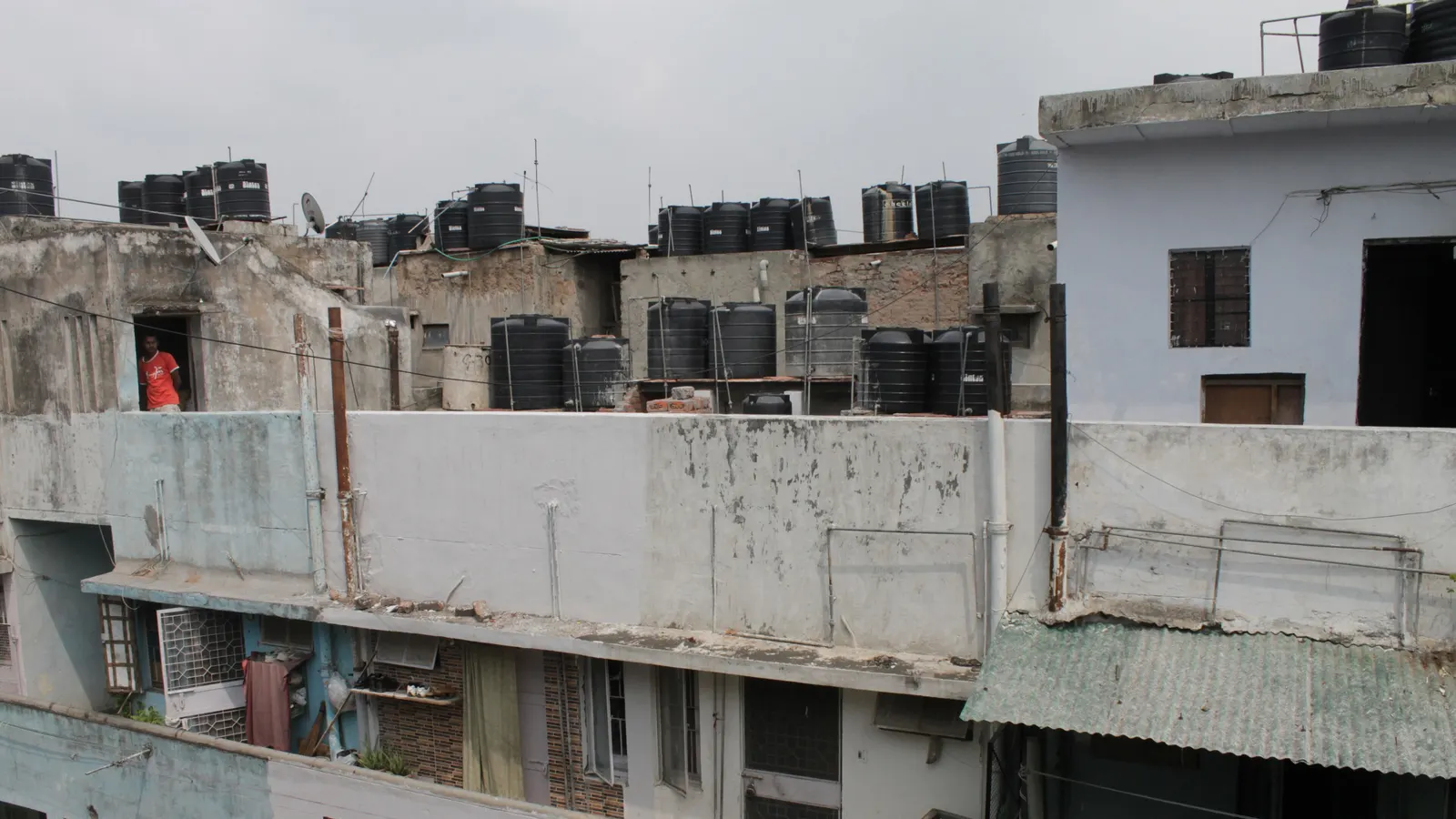
For most Gulf buildings the choice is between three tank types: GRP sectional panel tanks for larger roof and ground storage, one-piece polyethylene tanks for villas and small buildings, and coated or stainless steel for very large, fire or industrial duties. Size the tank from daily demand (DEWA asks for at least 24 hours of average demand in Dubai), insist on potable approvals, and compare suppliers of water tanks and reservoirs in the UAE or in Saudi Arabia.
This guide is for MEP consultants, contractors, facility managers and procurement teams buying storage for villas, towers, labour accommodation, schools, hotels and plants. It compares the materials, explains what WRAS, BS 6920, BS EN 13280 and the Gulf polyethylene tank standards actually tell you, shows how to size storage, sets out the cleaning and disinfection rules in Dubai and Abu Dhabi, notes what is and is not published for Saudi Arabia, and ends with an RFQ checklist. ListGCC has not tested any tank or brand; everything here comes from regulators, standards bodies and manufacturers' own pages, listed under Sources.
Which water tank material suits which job?
Start from the job, not the material. The volume, the location (roof, ground or below ground), the water (potable, fire, irrigation, process) and the access for delivery and cleaning narrow the field quickly.
Tank type
How it is built
Typical use
What to ask for
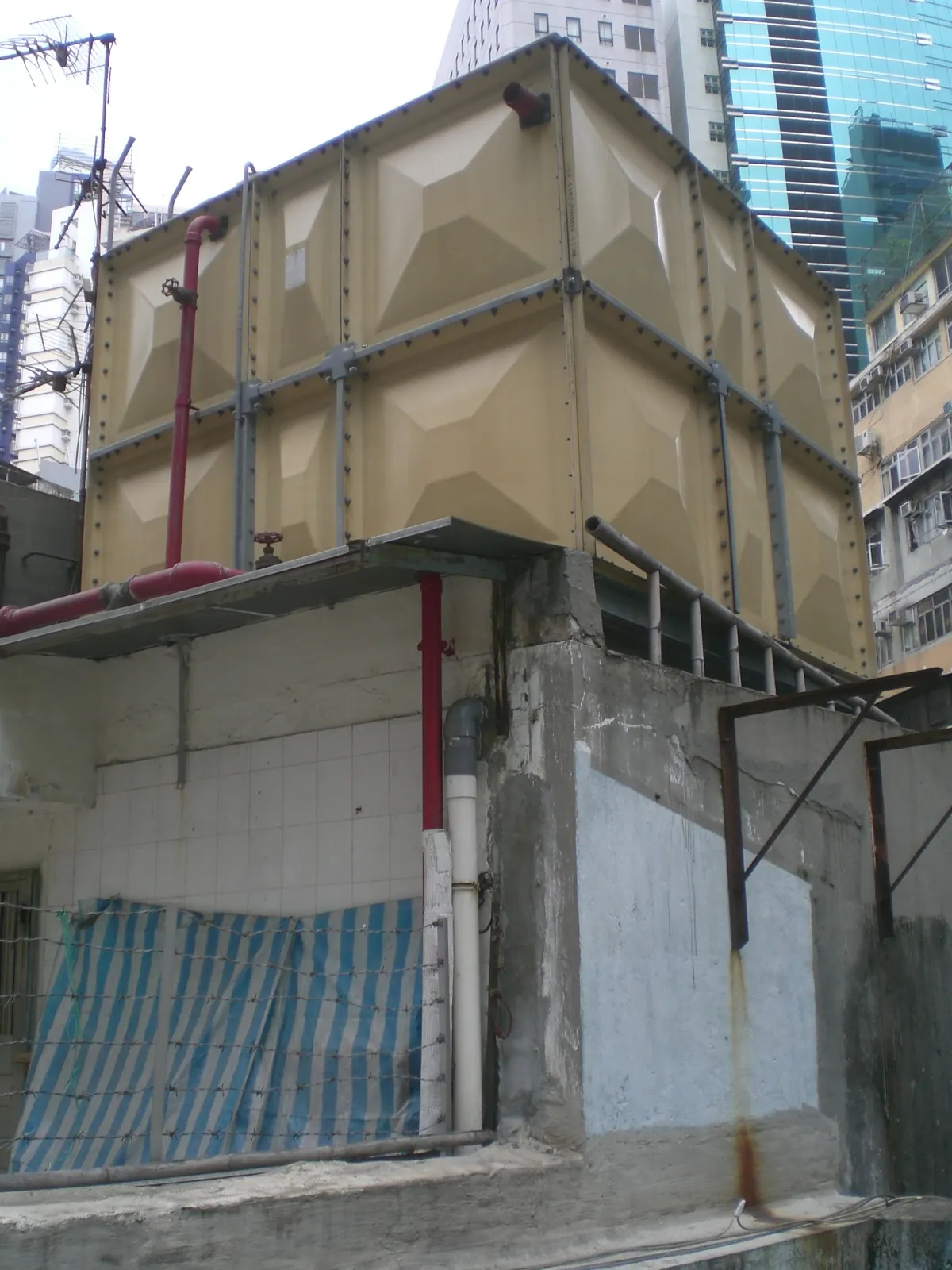
GRP sectional (panel) tank
Moulded glass reinforced plastic panels bolted together on site, braced with internal tie rods and external steel sections
Roof and ground tanks for buildings, where the tank must be carried up in pieces or built to an odd footprint
BS EN 13280 compliance, potable approval for the panel material and sealant, insulated panels for roof locations
GRP one-piece tank
Single moulded vessel, delivered whole
Small cold water storage where it can be lifted in
BS EN 13280 compliance, potable approval
Polyethylene (rotomoulded or blow moulded)
Single jointless plastic vessel, often multi-layer
Villas, small buildings, site and temporary storage
GSO 1831 (rotomoulded) or the SASO blow moulded standard in Saudi Arabia, food-grade inner layer, opacity and UV data
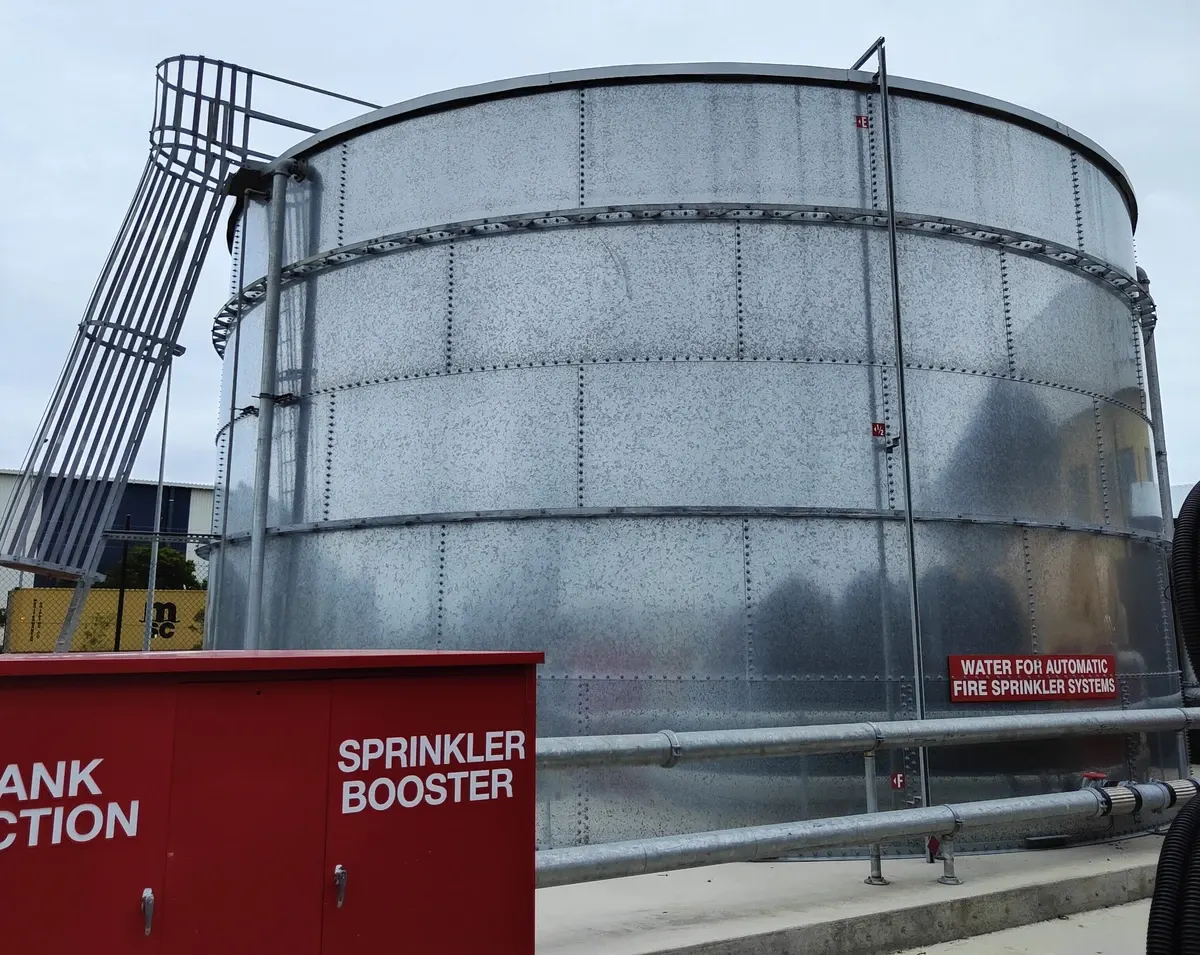
Steel panel or cylindrical tank
Bolted galvanised, epoxy coated, glass fused to steel or stainless panels
Large potable reservoirs, fire water, process and industrial water
Coating standard, potable certificate for the lining, corrosion protection details
Reinforced concrete tank
Cast in place, usually below ground or in a podium
Large building and district storage built with the structure
A lining approved for drinking water contact, joint details, watertightness test
GRP and polyethylene dominate building storage because they do not corrode. Steel wins where very large volumes or particular codes apply, and concrete where the tank is part of the structure. Our GRP vs polyethylene vs steel comparison goes through durability, heat, light and algae in more depth.
The governing European standard is BS EN 13280:2001, "Specification for glass fibre reinforced cisterns of one-piece and sectional construction, for the storage, above ground, of cold water". BSI lists it as current and under review, published 22 October 2001. Note the words "above ground": it is not a standard for buried tanks.
A manufacturer's page shows what a sectional tank specification looks like in practice. Balmoral Tanks says its GRP sectional tanks are designed and manufactured to BS EN 13280, carry WRAS approval for potable water storage, are erected to a height of 4 m in 1 m and 0.5 m increments, and are supported by stainless steel tie rods inside and galvanised box sections outside. Its insulated panels use 40 mm expanded polystyrene with a stated U value of 0.6 W/m²K. For panel sizes, bracing and assembly, see our explainer on GRP sectional panel tanks.
Polyethylene tanks
The Gulf standard for rotomoulded tanks is GSO 1831:2021 (edition 2, approved 1 July 2021). Its scope covers single and multi-layer vertical and horizontal polyethylene water tanks for use between 1 °C and 60 °C, and it excludes underground and mobile tanks. Saudi Arabia lists it as SASO-GSO-1831:2021.
For blow moulded tanks, SASO has circulated a draft update, SASO DS 2974:2025, covering above-ground tanks of 500 L to 10,000 L. The draft says layers in contact with water should be 100% virgin food-grade material, only the outer layer exposed to sunlight needs UV stabilisation, and the tank wall shall not transmit more than 0.2% of visible light. It is a draft for comment, so check whether the final version has been approved before you write it into a specification.
Steel panel tanks come with different protection systems. Balmoral, for example, sells epoxy coated steel tanks whose internal fusion bonded epoxy it says meets ISO 28765, AWWA D103-19 and NSF-61 coating requirements and is suitable for potable water, and glass fused to steel tanks that it lists for potable and fire water storage. Concrete tanks need a lining on the water side; our guide to basement and water tank waterproofing covers drinking-water linings.
Potable approvals: what WRAS, BS 6920 and the Gulf standards tell you
A tank for drinking water needs evidence that its materials do not spoil the water. Three names come up in Gulf tenders.
BS 6920 is the British test for non-metallic materials in contact with drinking water. UL describes its tests as odour and flavour, colour and turbidity (appearance), growth of aquatic microorganisms, extraction of substances of concern to public health (cytotoxicity) and extraction of metals.
WRAS approval (Water Regulations Approval Scheme, UK) gives independent evidence that non-metallic products have passed BS 6920 testing, according to UL. In the UK, Water Regs UK says non-metallic materials must conform to the current BS 6920 or an equivalent where water must be wholesome. In the Gulf it is a specification choice, not a legal requirement, but it is widely asked for.
Gulf product standards. GSO 1831 sets requirements for polyethylene tanks, and the SASO draft for blow moulded tanks references BS 6920 and FDA 21 CFR 177.1520 for food-contact materials.
Ask for the certificate itself, check that it covers the exact panel, sealant and fittings supplied, and check the expiry date. A WRAS approval for a panel does not cover a gasket from a different source.
How big should the tank be?
Size from daily demand and the storage period the authority expects, then split the volume between ground and roof tanks.
Dubai. DEWA's planning guidelines for new developments (update 2015) say local storage for individual premises should cover at least 24 hours of average demand. The same document gives reference consumption ranges, including 250 to 350 litres per capita per day for villas and residential buildings, 80 to 150 for labour accommodation, 60 to 75 for offices and 200 to 300 per hotel guest.
Abu Dhabi. The Department of Energy's Water Supply Regulations 2024 say roof tanks and/or ground storage tanks shall always be provided and that tank capacity follows the criteria in the regulations' Guide.
Saudi Arabia. No national tank storage period was found on an official page. As a dated reference, Argaam reported in August 2018 that Ministry of Environment, Water and Agriculture data put average per capita consumption at 265 litres per day in 2017, with large regional differences. Size from the project's own demand and the plumbing designer's calculation under SBC 701.
A simple Dubai example: a villa for 8 people at 300 litres each uses about 2,400 litres a day, so 24 hours of storage is at least 2.4 m³ before any allowance for supply interruptions. Fire water is sized separately by the fire engineer. The full method, with worked examples for villas and buildings, is in how to calculate water tank size.
Rooftop or underground?
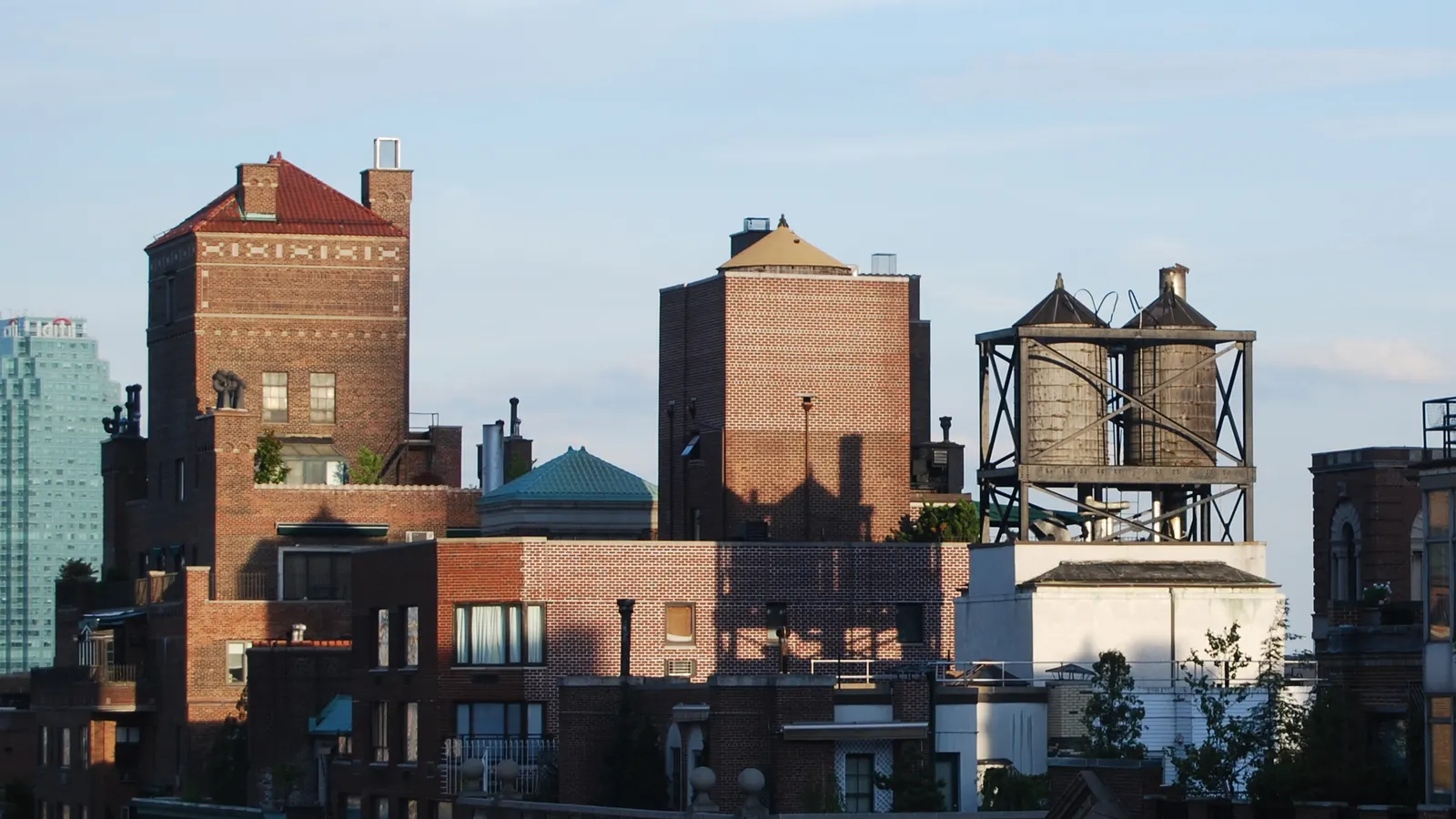
Many Gulf buildings have both: a ground or underground tank that receives the utility supply and a roof tank that feeds the floors by gravity or through a booster set. DEWA's guidelines describe the Dubai arrangement for buildings: a main meter on the inlet before the underground storage tank and sub-meters on the roof on the discharge side of the elevated tanks.
Abu Dhabi now discourages ground tanks where the network is good. Its 2024 regulations say ground storage tanks should not be considered for new low-rise buildings where adequate network pressure and supply conditions exist, and shall be mandated by the distribution company where pressure, flow or supply is inadequate. Our comparison of underground vs rooftop water tanks covers temperature, pumps, contamination risk and access. For the pumps between tanks, see booster pump sizing.
Gulf heat: insulation, shade and light
Heat is the Gulf-specific problem. Dubai Municipality's Legionella guideline says water temperatures of 20 °C to 45 °C seem to favour Legionella growth, and that cold water should be kept below 20 °C throughout the system. A thin-walled tank on a roof in summer cannot do that unaided.
Insulate roof tanks. Ask for the panel or wall U value and the insulation material. Balmoral's insulated GRP panel data, for example, gives 0.6 W/m²K and states the insulation is suitable for water storage up to 38 °C.
Shade them. A canopy or enclosure cuts direct sun on the tank and on exposed pipework.
Keep light out. Light through the wall encourages algae. The SASO draft sets a visible light transmission limit of 0.2% for blow moulded tanks; ask any tank supplier for an opacity or light transmission result.
Specify for the climate. Abu Dhabi's regulations require all field installations to suit the prevailing climatic conditions of the emirate. UV-stabilised outer layers and coatings rated for sun exposure are part of that.
Cleaning and disinfection rules
In Dubai, Dubai Municipality's Technical Guidelines for Legionella Control in Water System (version 6, issued 19 August 2025) apply to the built environment, including residential, commercial and government buildings and labour accommodation. They say all water storage tanks shall be cleaned and disinfected with 50 mg/l chlorine at least twice a year, kept clean and inspected at least monthly with all coverings intact and in place, and that the water system cleaning and maintenance company must be approved by Dubai Municipality. Premises must hold a valid tank cleaning and disinfection certificate.
In Abu Dhabi, a Khaleej Times explainer (August 2026) reports that drinking water tanks must be cleaned at least once every six months by companies licensed by the Department of Municipalities and Transport, listed on the TAMM platform. The department's Circular No. 5 of 2024 requires licensed companies to follow Administrative Decision No. 26 of 2018 on drinking water tank health and safety and to carry out approved laboratory tests and sampling.
For Saudi Arabia, no national cleaning frequency for building tanks was found on an official page; the Saudi Water Authority's licensing requirements for water filling stations call for well-sealed tanks subject to regular cleaning and maintenance. Check with the local municipality (Amana) for the project. The water tank cleaning rules guide sets out the steps, certificates and who may do the work. To find contractors, see tank cleaning services in the UAE.
Installation points that decide how a tank performs
Base. A sectional tank needs a level, load-bearing base or steel support frame sized for the full weight of water. Confirm the structural engineer has the filled weight, not the empty weight.
Covers and vents. Dubai's guideline requires coverings to be intact and firmly in place. Specify lockable, sealed access hatches and screened vents and overflows so insects and dust cannot enter.
Access for cleaning. OSHA lists tanks among confined spaces, defined as spaces with limited or restricted means for entry or exit. Plan hatches, internal and external ladders and space around the tank so a cleaning crew can work under a confined-space procedure.
Compartments. A tank split into two compartments can be cleaned one side at a time without cutting supply.
Connections. Inlet, outlet, overflow, drain and level controls should be agreed before fabrication; Balmoral notes that its flexible panel sizes allow connections to be agreed on site. Pumps and level switches are covered in our water pumps guide; see also booster pumps suppliers.
Fire water. Keep fire storage as its own volume, sized to the fire code by the fire engineer, and check whether the civil defence authority allows a combined tank.
Cosmoplast, a Harwal Group company founded in 1970, is headquartered in the UAE with manufacturing in the UAE and Saudi Arabia, according to its own and Harwal's sites. Its current pages describe it as a pipe and well casing manufacturer, with uPVC, PE, PPR, CPVC, ABS and PE-X pipes and fittings for plumbing and infrastructure. The pages we checked list pipe systems rather than water tanks, so look to Cosmoplast for the pipework around a tank, such as PPR pipes and fittings for inlet and outlet runs, and confirm any tank product directly with the company. Saudi buyers can reach it through the Cosmoplast page for Saudi Arabia.
Balmoral Tanks
Balmoral Tanks Ltd, part of the UK's Balmoral Group, lists GRP sectional tanks, GRP one-piece tanks, epoxy coated steel tanks, glass fused to steel tanks, cylindrical steel tanks and roof structures. Its one-piece GRP range runs from 180 to 4,550 litres and is described as manufactured to BS 13280:2001 and WRAS approved. ListGCC has no brand page for Balmoral.
Dubai Municipality sets the tank hygiene regime through its Legionella guideline: twice-yearly cleaning and disinfection, monthly inspection, DM-approved companies, valid certificates and laboratory testing, with violators accountable under Local Order No. 11 of 2003. Its separate guideline for water system safety in emergency situations (issued 25 March 2025) covers cleaning tanks after floods or contamination.
DEWA asks for at least 24 hours of average demand as customer storage and meters the inlet before the underground tank in buildings.
Abu Dhabi: the Department of Energy's Water Supply Regulations 2024 make the Responsible Person inspect ground and roof tanks and clean them when necessary, require tanks to be provided and sized to the Guide, and point to the Uniform Plumbing Code for the plumbing system. The Department of Municipalities and Transport licenses cleaning companies.
Saudi Arabia
SASO lists GSO 1831:2021 for rotomoulded polyethylene tanks and is updating SASO 2974 for blow moulded tanks (draft SASO DS 2974:2025).
Saudi Building Code SBC 701, the Saudi sanitary (plumbing) code, covers water supply and distribution in buildings; the plumbing designer sizes storage and pumps under it.
Saudi Water Authority licensing for water filling stations requires sealed, regularly cleaned tanks sited away from pollution sources, according to Okaz (March 2026).
For cleaning frequency and approved contractors, ask the local municipality, because no single national rule was found on an official page.
RFQ checklist for a water tank
Use: potable, fire, irrigation or process water, and whether one tank or separate compartments.
Net (working) capacity in m³, with the demand calculation and storage period behind it (for Dubai, at least 24 hours of average demand).
Location: roof, ground or below ground; the space available, access route and maximum piece size for delivery.
Material and standard: BS EN 13280 for GRP, GSO 1831 or the SASO blow moulded standard for polyethylene, the coating standard for steel.
Potable evidence: WRAS or BS 6920 certificate (or equivalent) covering panels, sealants and fittings, with expiry dates.
Heat and light: insulation type and U value for roof tanks, UV stabilisation, opacity or light transmission data.
Structure: filled weight, base or steel frame design, internal and external bracing details.
Connections and accessories: inlet, outlet, overflow, drain, vents, level indicator, lockable hatches, internal and external ladders, compartment wall.
Cleaning access: hatch size and position for confined-space entry, and the drain arrangement.
Installation, leak test, first disinfection and the certificate you will receive at handover.
Warranty terms and spare panel or seal availability.
Which is better for a villa, a GRP or a plastic water tank?
For a typical villa, a one-piece polyethylene tank is usually the simpler choice: it arrives whole, has no joints to leak and is easy to replace. GRP sectional tanks make more sense when the volume is large, the tank must be carried up in pieces or the footprint is unusual. Either way, ask for a potable approval, insulation or shading for a roof location, and evidence that the wall keeps light out.
How often must a water tank be cleaned in Dubai?
Dubai Municipality's Legionella guideline (version 6, August 2025) says all water storage tanks shall be cleaned and disinfected with 50 mg/l chlorine at least twice a year, inspected at least monthly, and handled by a company approved by Dubai Municipality. Buildings must keep a valid tank cleaning and disinfection certificate and water test records.
How often must a water tank be cleaned in Abu Dhabi?
A Khaleej Times explainer from August 2026 says drinking water tanks in Abu Dhabi must be cleaned at least once every six months, and that only companies licensed by the Department of Municipalities and Transport may do it. The owner or property management is responsible, not tenants. The department's Circular No. 5 of 2024 requires licensed companies to carry out approved laboratory tests and sampling.
What does WRAS approval mean for a water tank?
WRAS approval is a UK scheme. For non-metallic products such as GRP panels and plastic tanks, it gives independent evidence that the material passed BS 6920 testing, which checks odour and flavour, appearance, microbial growth, cytotoxicity and metal extraction. It is not a Gulf legal requirement, but many specifications ask for WRAS or an equivalent potable certificate.
Which standard applies to GRP water tanks?
BS EN 13280:2001 covers glass fibre reinforced cisterns of one-piece and sectional construction for the storage of cold water above ground. BSI lists it as current and under review. Ask the supplier for its compliance statement for the exact panel range, and remember the standard does not cover buried tanks.
How much water storage does a building in Dubai need?
DEWA's guidelines say storage for individual premises should cover at least 24 hours of average demand. Multiply the number of occupants by a consumption rate (DEWA's reference range is 250 to 350 litres per person per day for villas and residential buildings), then add any margin the consultant requires. Fire water is calculated separately.
Can a polyethylene tank be buried underground?
Not under GSO 1831:2021, the Gulf standard for rotomoulded polyethylene water tanks: its scope excludes underground and mobile tanks. A buried tank needs a product designed and certified for burial, or a concrete or other underground tank with an approved lining.
A step by step method for sizing water storage in the UAE and Saudi Arabia, using DEWA per capita demand ranges and its 24-hour rule, with worked examples for villas, apartments, labour camps and hotels.
How often water tanks must be cleaned in Dubai and Abu Dhabi, who is allowed to clean them, the chlorine disinfection steps Dubai Municipality sets out, the records to keep, and what applies in Saudi Arabia.
Ground, underground and rooftop water tanks compared for Gulf buildings: heat, roof tank pressure, when Dubai and Abu Dhabi expect a ground tank, contamination, access and waterproofing.