How to Calculate Water Tank Size for a Villa or Building in the UAE and Saudi Arabia
A step by step method for sizing water storage in the UAE and Saudi Arabia, using DEWA per capita demand ranges and its 24-hour rule, with worked examples for villas, apartments, labour camps and hotels.
To size a water tank, multiply the number of occupants by a daily consumption rate, then multiply by the storage period the authority expects. In Dubai, DEWA asks for at least 24 hours of average demand and gives reference rates of 250 to 350 litres per person per day for villas and residential buildings. Buy tanks on net capacity, size fire water separately, then compare water tank suppliers.
This how-to is for MEP designers, contractors and owners who need a defensible storage figure before asking for quotes. It works through demand, storage period, the split between ground and roof tanks, net versus brimful capacity and fire water, with worked examples. For tank materials, rules and the RFQ checklist, see our main guide to water tanks in the UAE and Saudi Arabia. The final figure for a permit is the consultant's calculation; this method shows how that figure is built.
The formula
Required storage (litres) = occupants × consumption (litres per person per day) × storage period (days)
Then add any separate allowances the project needs (fire water, irrigation, cooling make-up) and check that the tanks you buy give that volume as net capacity, not as brimful volume.
Step 1: daily consumption per person
DEWA's Guidelines for New Development Projects (update 2015) give typical consumption ranges that developers in Dubai may use as a reference, while asking consultants to calculate demand for the actual development. Selected categories:
Category (DEWA)
Litres per capita per day
Villas
250 to 350
Residential buildings
250 to 350
Mixed use residential
250 to 350
Labour accommodation / workers
80 to 150
Hotels (per guest)
200 to 300
Hotels (per employee)
60 to 80
Medical (per bed)
350 to 450
Offices
60 to 75
Commercial buildings
60 to 100
Schools
60 to 80
Mosques
10 to 60
Restaurant
10 to 15 per meal
Saudi Arabia has no equivalent published design table that we found on an official page. As context only, Argaam reported in August 2018 that Ministry of Environment, Water and Agriculture data put average consumption at 265 litres per person per day in 2017, ranging from 381 in the Eastern Province and 357 in Riyadh down to about 102 in Jazan. These are averages of actual use, not design rates, but they show why a Riyadh or Dammam villa should not be sized at the bottom of the range. Saudi plumbing design falls under the Saudi Building Code SBC 701, which covers water supply and distribution.
Step 2: the storage period
Dubai: DEWA says local storage for individual premises should be sufficient to cover at least 24 hours of average demand, and that developers should consider adequate on-site storage. DEWA's own bulk storage policy aims at two days of the system's peak demand; that figure is for DEWA's network, not for a building.
Abu Dhabi: the Department of Energy's Water Supply Regulations 2024 say roof tanks and/or ground storage tanks shall always be provided, and that their capacity follows the tank storage criteria in the regulations' Guide. Use the Guide's criteria and confirm with the distribution company.
Saudi Arabia: no national building storage period was found on an official page. Agree the period with the designer and the water company for the area, taking supply reliability into account.
Twenty-four hours is a minimum in Dubai. Where supply is intermittent or the building cannot tolerate an outage, designers often add more; record the reason in the calculation.
Step 3: split between ground and roof tanks
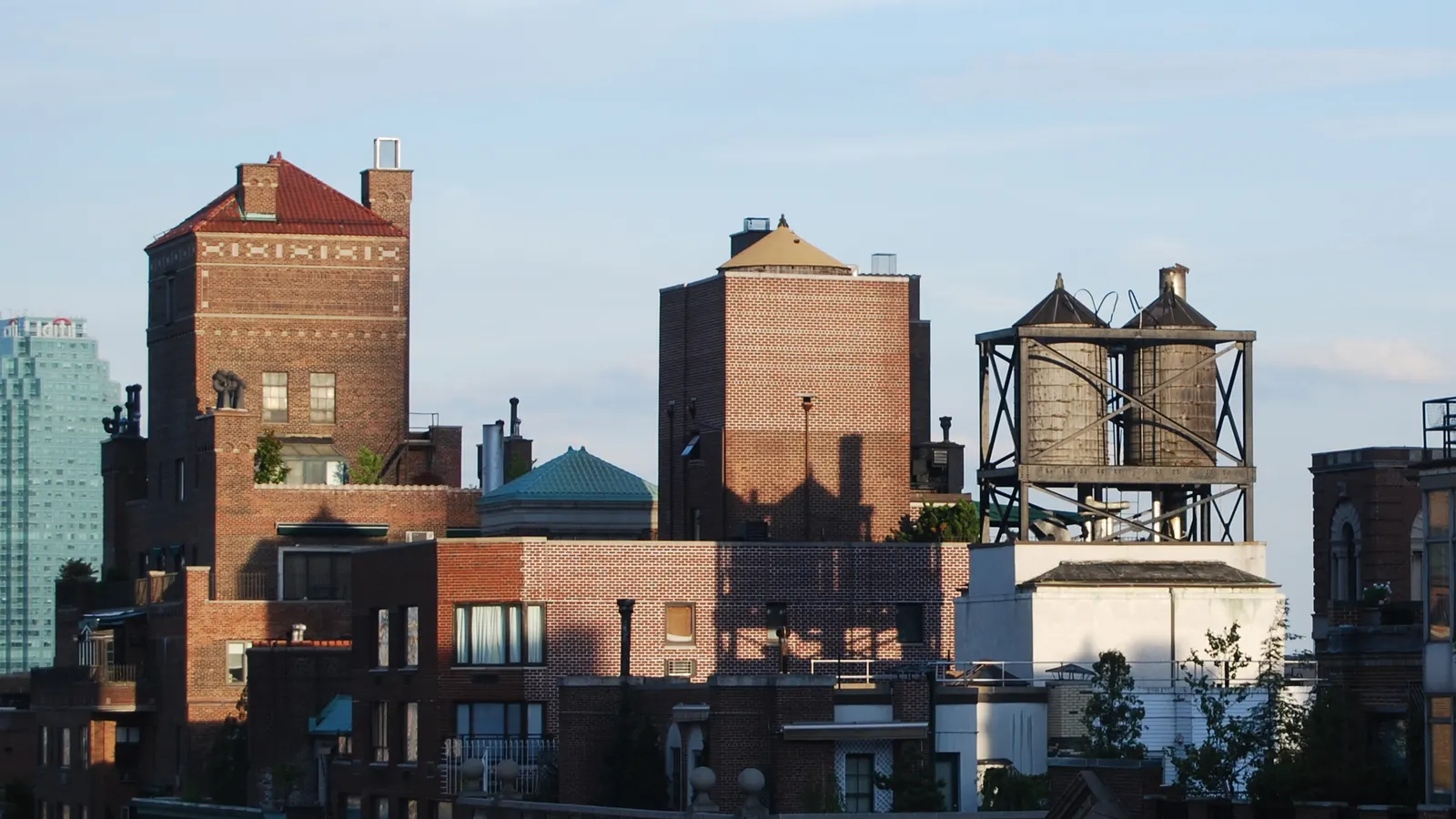
Many buildings receive the utility supply into a ground or underground tank and lift it to a roof tank. DEWA describes the Dubai building arrangement: a main meter on the inlet before the underground storage tank and sub-meters on the roof on the discharge side of the elevated tanks. Abu Dhabi's 2024 regulations say ground storage tanks should not be considered for new low-rise buildings where network pressure and supply are adequate, and shall be mandated by the distribution company where they are not, with the size of both tanks set by the Guide.
The split decides pump duty: the transfer pump fills the roof tank from the ground tank, and any booster set takes over where gravity pressure is not enough. Our guide to booster pump sizing picks up from here, and underground vs rooftop water tanks compares the two locations.
Step 4: net capacity, not brimful volume
A tank's nominal size is not the water you can use. The draft SASO standard for blow moulded polyethylene tanks defines two figures: brimful or gross capacity, the total internal volume filled to the top with no air space, and maximum filling capacity or net capacity, the volume filled to the lowest level of the overflow. Below the outlet there is also water the pumps cannot draw. Ask every supplier to state net capacity at the overflow level and the usable volume above the outlet, and size on the usable figure.
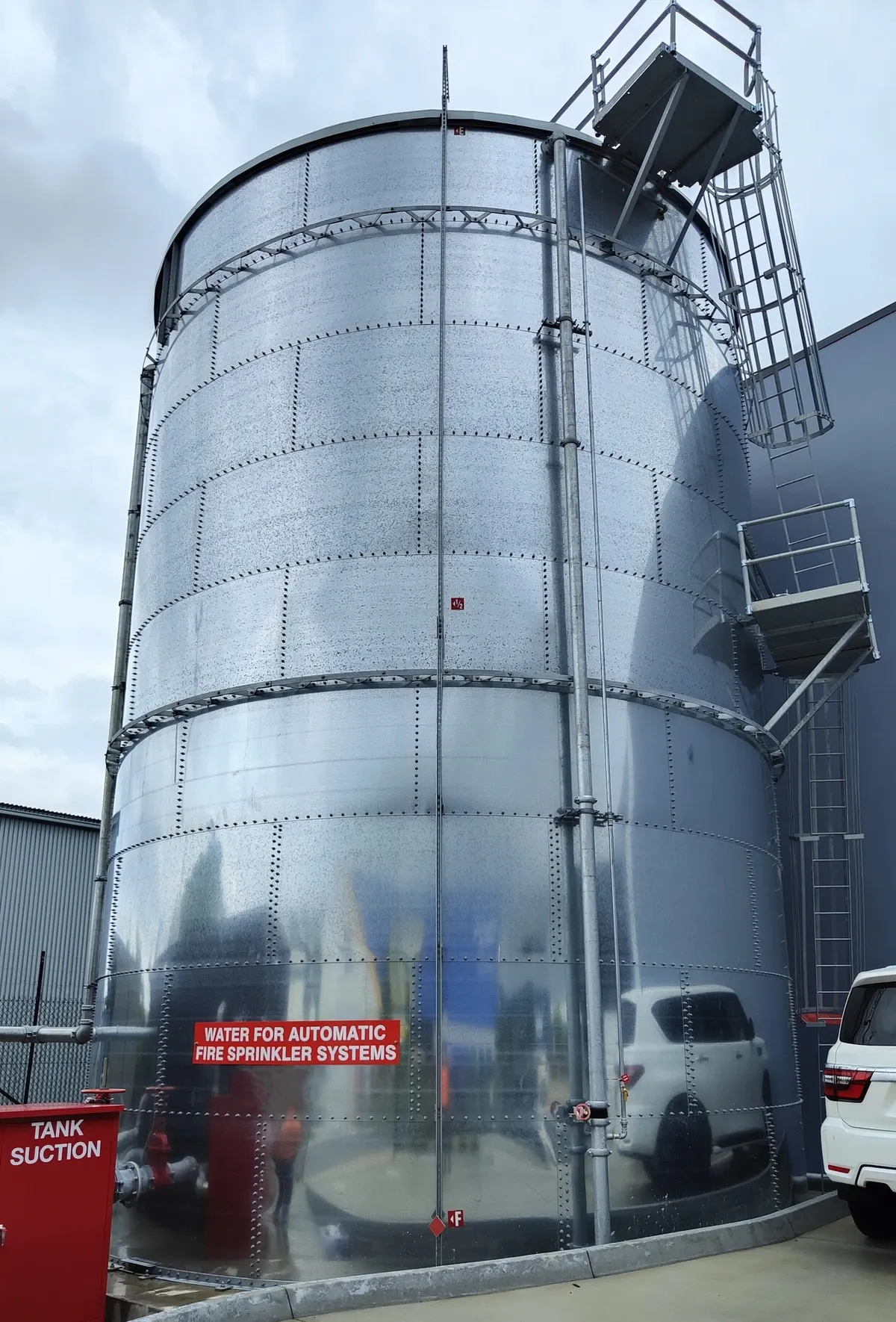
Fire storage is sized by the fire protection engineer from the fire system demand and duration in the applicable fire code, and approved by the civil defence authority. Do not count domestic storage as fire storage, or the reverse, unless the authority accepts a combined tank with a reserved fire volume. Fire pumps are covered in our fire pump and jockey pump guide.
These use DEWA's reference ranges and the 24-hour minimum. They are examples of the method, not design values for a specific project.
Building
Occupants
Rate used (L/person/day)
Daily demand
Minimum storage (24 h)
Villa
8 residents
350 (top of villa range)
2,800 L
2.8 m³
Apartment building, 40 flats
160 residents
300
48,000 L
48 m³
Labour accommodation
400 workers
150 (top of range)
60,000 L
60 m³
Office building
600 staff
75 (top of range)
45,000 L
45 m³
Hotel
300 guests and 150 staff
300 per guest, 80 per employee
90,000 + 12,000 = 102,000 L
102 m³
Fire water, irrigation and cooling make-up are added on top. Note that DEWA states it does not supply potable water for irrigation, construction, water features or district cooling under Executive Order No. 27 of 2008, so those uses need their own source and storage.
Turning volume into tanks
Polyethylene. The SASO draft for blow moulded tanks lists standard vertical tanks from 500 to 10,000 litres and horizontal tanks from 500 to 5,000 litres. A 2.8 m³ villa requirement fits one or two such tanks; a 48 m³ building requirement would need many, which is where sectional tanks take over.
GRP sectional. Panel tanks are built in modules. Balmoral, for example, builds GRP sectional tanks to a height of 4 m in 1 m and 0.5 m increments. A 48 m³ net requirement could be a 4 m × 4 m plan at just over 3 m of water depth, with the tank height chosen to give that depth below the overflow plus freeboard. Ask the supplier for the net capacity of the configuration offered. See GRP sectional panel tanks.
Two compartments. Dubai requires tanks to be cleaned and disinfected at least twice a year. Splitting the volume into two compartments, or two tanks, keeps half the storage in service during cleaning; size each half knowing that the building runs on it alone for a day.
Check the fill rate as well
A tank is only useful if it refills between peaks. The supply pipe from the meter to the tank, its float valve and the network pressure decide how quickly a tank recovers; DEWA's guidelines assume a minimum pressure of around 1.0 bar within a developer's distribution network. Ask the designer to check that the inlet can refill the tank overnight. Inlet and transfer pipework in plastic is made by firms such as Cosmoplast, which lists uPVC, PE and PPR pipes and fittings and manufactures in the UAE and in Saudi Arabia (Cosmoplast in Saudi Arabia).
Sizing checklist
Occupancy by category (residents, staff, guests, beds, meals).
Consumption rate for each, with the source (for Dubai, DEWA's reference table).
Storage period required by the authority and any extra the client wants.
Split between ground and roof tanks, agreed with the utility.
Fire water volume from the fire engineer, held separately.
Usable net capacity per tank and the number of compartments.
Inlet size and refill time; transfer and booster pump duty.
Multiply residents by DEWA's reference rate for villas, 250 to 350 litres per person per day, for at least 24 hours of storage. Eight residents at 350 litres need 2,800 litres a day, so at least 2.8 m³ of usable storage, split between ground and roof tanks as the design requires. Add more if supply is unreliable.
How much water does one person use per day in Saudi Arabia?
Argaam, reporting Ministry of Environment, Water and Agriculture data in August 2018, gave an average of 265 litres per person per day in 2017, with the Eastern Province at 381 and Riyadh at 357. Those are averages of measured use. A designer should use a design rate agreed for the project rather than the national average.
How many days of water storage are required?
In Dubai, DEWA asks for local storage covering at least 24 hours of average demand. Abu Dhabi's Water Supply Regulations 2024 refer the sizing of roof and ground tanks to the criteria in their Guide. No national figure was found for Saudi buildings, so agree the period with the designer and water company.
Should fire water be included in the domestic tank size?
No. Fire storage is a separate volume calculated by the fire protection engineer under the fire code and approved by the civil defence authority. Domestic storage is calculated from occupancy and consumption. Some authorities accept a combined tank with a reserved fire volume, but the two calculations stay separate.
What is the difference between net and gross tank capacity?
The draft SASO standard for blow moulded tanks defines gross (brimful) capacity as the total internal volume filled to the top, and net capacity as the volume filled to the lowest level of the overflow. Size on net capacity, and subtract any water below the outlet that pumps cannot draw.
How do I convert litres to tank dimensions?
One cubic metre holds 1,000 litres. Divide the required net volume in cubic metres by the water depth to get the plan area: 48 m³ at 3 m of water depth needs 16 m², for example 4 m × 4 m. Add freeboard above the overflow and confirm the net capacity with the supplier.
How to choose a water tank in the UAE or Saudi Arabia: GRP sectional, polyethylene and steel compared, potable approvals, sizing from DEWA demand figures, Gulf heat, cleaning rules and what to put in an RFQ.
How often water tanks must be cleaned in Dubai and Abu Dhabi, who is allowed to clean them, the chlorine disinfection steps Dubai Municipality sets out, the records to keep, and what applies in Saudi Arabia.
Ground, underground and rooftop water tanks compared for Gulf buildings: heat, roof tank pressure, when Dubai and Abu Dhabi expect a ground tank, contamination, access and waterproofing.