Booster Pump Sizing for Buildings: Pressure, Demand, Zones and Pump Sets
Size a building booster pump set step by step: head from the highest outlet, peak flow from loading units, pressure zones for towers, duty and standby pumps, vessel precharge, noise and the plant room.
To size a booster pump for a building, work out two numbers: the design flow (from the simultaneous demand of all outlets, not their sum) and the pressure the pump must add, which is the height to the highest outlet plus the pressure needed at that outlet plus every friction and equipment loss, minus the inlet pressure. Then choose a set of two or more variable speed pumps so one can stand by. The booster pump suppliers in the UAE on ListGCC quote against exactly these figures.
This guide is for MEP designers, contractors and facility managers sizing or replacing a booster set in a villa, tower, hotel or hospital. It goes deeper than our buyer guide to water pumps in the UAE and Saudi Arabia, which covers pump types, NPSH, motor efficiency rules and brands; here we only work through the booster calculation: pressure, demand, zoning, pump arrangement, pressure vessels, noise and the plant room.
What does a booster pump set have to deliver?
A booster set must hold a minimum flow pressure at the hydraulically worst outlet (usually the highest and furthest) at peak demand, without pushing static pressure at the lowest outlet above the limit for fittings. Both ends matter.
The European pipe sizing standard EN 806-3, Specifications for installations inside buildings conveying water for human consumption, Part 3: Pipe sizing, Simplified method, gives a convenient pair of limits for standard installations: a minimum flow pressure of 100 kPa (1 bar) at the draw-off point and a maximum static pressure of 500 kPa (5 bar), with garden and garage taps allowed up to 1,000 kPa. It adds that some draw-off points, such as thermostatic mixing valves, need a higher flow pressure. Under the International Plumbing Code the ceiling is 80 psi (about 5.5 bar) static at a fixture (IPC 604.8), above which a pressure-reducing valve is required. In Saudi Arabia the plumbing code is SBC 701, the Saudi Sanitary Code for plumbing, which covers water supply and distribution. Confirm which code your consultant designs to, because the limits drive the zoning.
How do you calculate the pressure a booster pump must add?
KSB's planning guidance expresses the check as a sum: a booster is needed when the lowest supply pressure is less than the geodetic height difference, plus water meter loss, plus pipe friction and fitting losses, plus losses through apparatus such as filters and treatment, plus the minimum flow pressure at the worst outlet. The pump's job is the difference between the discharge pressure it must hold at peak flow and the minimum pressure available at its inlet.
Static lift: height from the pump (or the low water level of the break tank) to the highest outlet. Roughly 1 bar of pressure raises water about 10 m.
Minimum flow pressure at the worst outlet: 1 bar under EN 806-3, more for mixing valves, flush valves and rain showers; take the manufacturer's figure.
Pipe friction and fittings: from the pipe sizing calculation at design flow.
Equipment losses: the Consulting-Specifying Engineer article lists typical allowances of 10 psi for a backflow preventer, 10 psi for a water meter, 5 psi for a pressurised storage tank and 25 psi for a water softener at peak flow, and advises sizing on the softener's peak loss. Filters and UV units on Gulf projects add their own losses; use the data sheets.
Minus the inlet pressure: the minimum, not the average. CIBSE Journal notes that UK water authorities only have to supply 70 kPa at the communication pipe; where the set draws from a break tank, the inlet pressure is just the water level above the pump at low level.
Worked example: a residential tower
The figures below are illustrative assumptions to show the method, not design values. Take a tower whose booster set sits in the basement, drawing from a ground-level break tank, with the highest outlet 60 m above the pump. Suppose the worst outlet needs 1.5 bar (15 m) because it serves a thermostatic shower mixer, and the pipe sizing gives 8 m of friction and fitting losses at design flow, plus 4 m through a filter and meter. The inlet contributes nothing useful once the tank is at low level.
Required pump head = 60 + 15 + 8 + 4 = 87 m, roughly 8.7 bar at the pump discharge. That immediately breaks the static limit on the lower floors: a ground floor outlet would see close to 8 bar at no flow, well above the 5 bar EN 806-3 ceiling. The building needs pressure zones or pressure-reducing valves.
How do you split a tall building into pressure zones?
EN 806-3 gives the logic: the head available for elevation within one pressure section is the static pressure allowed at the lowest outlet minus the flow pressure needed at the worst outlet, reduced by the friction losses. With a 5 bar static ceiling, 1.5 bar at the top outlet and 1 bar of losses, one zone can span only about 25 m of height, around eight floors at a 3 m floor-to-floor height. A 60 m riser therefore needs two or three zones.
There are three common ways to do it:
Separate booster set per zone from a common basement tank. Each set is sized for its own zone's flow and pressure, which keeps pumps efficient.
One high-pressure set with pressure-reducing valves on the lower zones. Simpler plant, but the pump works at full pressure all the time and PRVs need maintenance.
Intermediate tanks and transfer pumps on technical floors, with booster or gravity zones below them. This is the usual answer in supertall towers.
Burj Khalifa shows the approach at its extreme. Xylem states that its Lowara brand supplied six water transfer sets and seven pressure booster sets for the tower, with pumps in the basement and on two technical floors about one third of the way up, and Hydrovar variable speed drives on the booster sets. Xylem gives the booster sets' delivery to the top floor as 1,000 m³ per day.
How do you estimate peak flow from loading units?
Never size a booster by adding the flow of every tap. Simultaneous demand methods weight each fixture by how much water it draws, for how long and how often. In EN 806-3, one loading unit (LU) equals a draw-off flow of 0.1 l/s, and Table 2 assigns:
Draw-off point
Assumed flow QA (l/s)
Minimum flow Qmin (l/s)
Loading units
Washbasin, hand basin, bidet, WC cistern
0.1
0.1
1
Domestic kitchen sink, washing machine, dishwasher, sink, shower head
The loading units are added along each pipe section and the design flow is read from the standard's Annex B curve, which converts total flow to probable flow. As an example of why this matters: 80 apartments each with a washbasin, WC cistern, shower, kitchen sink and washing machine total 640 LU, a theoretical 64 l/s if every outlet opened at once. The design flow from the curve is a small fraction of that, and the booster is sized on it.
US-based consultants use IPC fixture units and UK practice uses the CIPHE loading units in CIBSE Guide G; KSB adds that building type changes peak flow. Whatever method the consultant uses, put the design flow and the method in the RFQ so every supplier sizes on the same basis.
Duty, assist and standby: how many pumps?
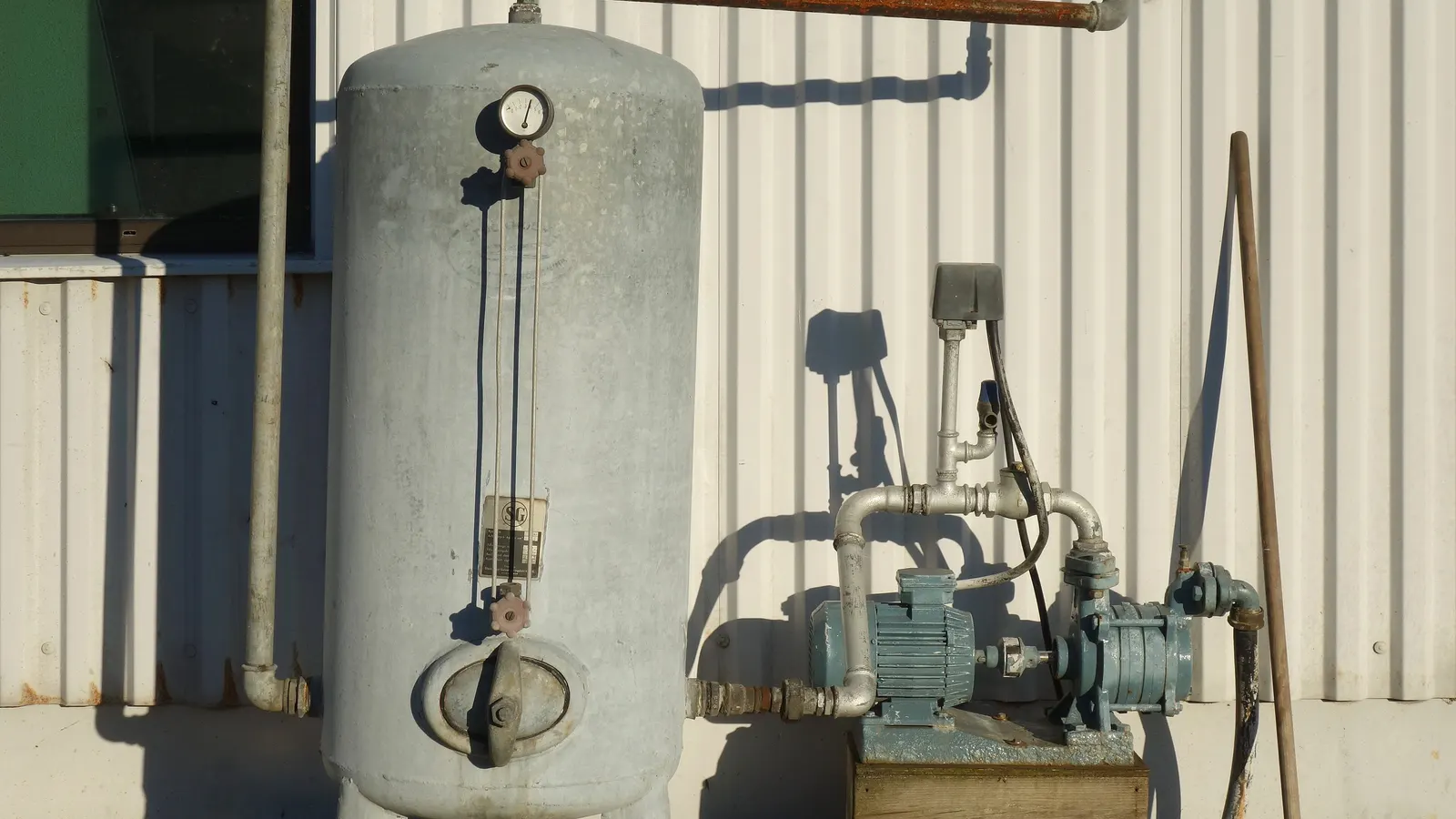
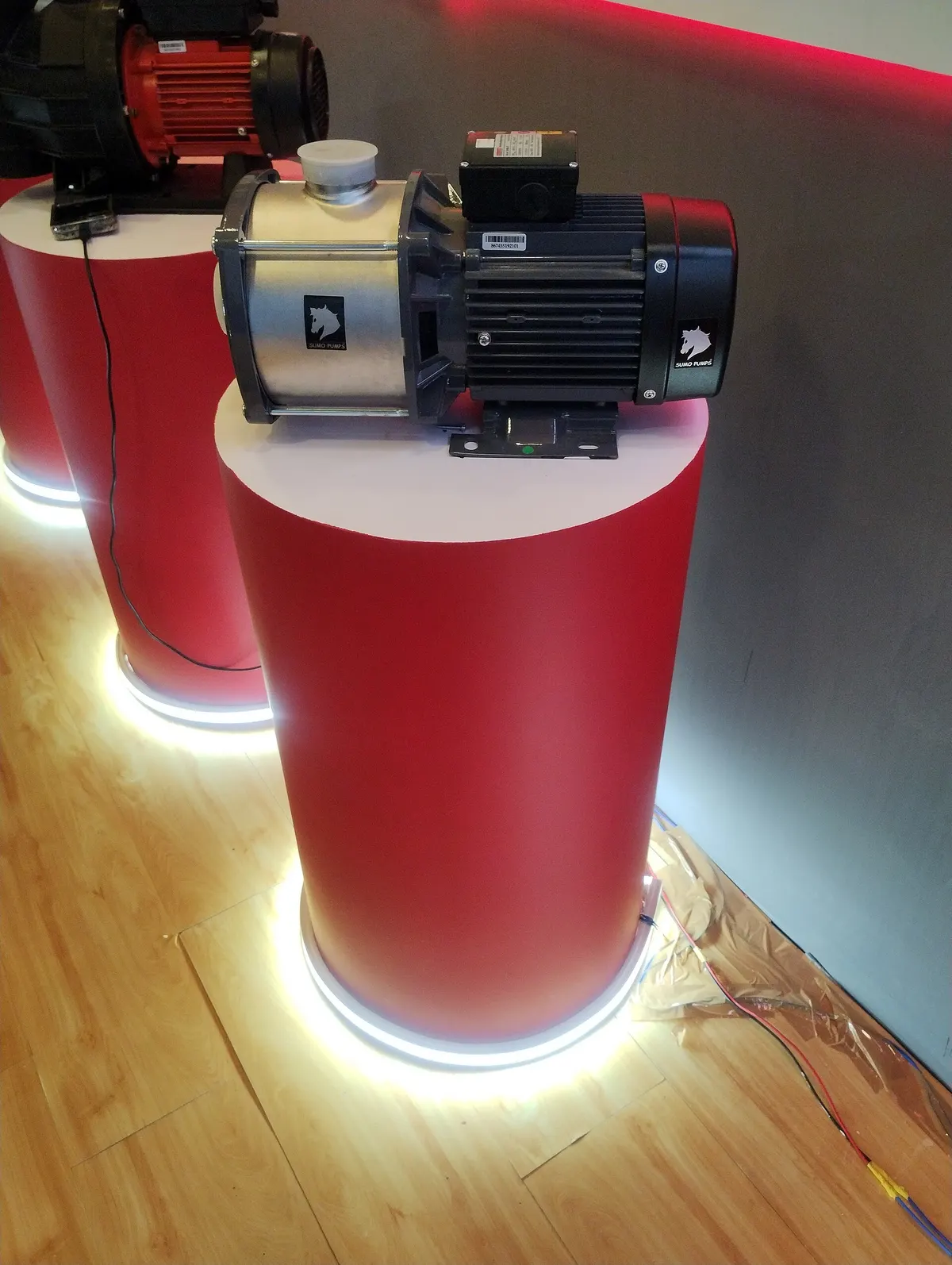
A booster set is normally two to six identical vertical multistage pumps on a common base and manifold. The rules of thumb from the sources:
Always a standby. KSB notes that DIN 1988 recommends a standby pump, so even small sets need at least two pumps (single and two-family houses excepted). The Consulting-Specifying Engineer article describes this as N+1, where N is the number of pumps needed to meet demand.
More than one spare for critical buildings. CIBSE Journal notes that one standby is typical but critical duties may need allowance for more than one failure, and that multi-pump arrays give higher redundancy with smaller pumps and valves that are easier to maintain.
Check each pump's minimum flow. At night, demand may fall below the minimum flow of one large pump. CIBSE Journal suggests a smaller lead pump where necessary; a pressure vessel also helps (below).
Rotate the duty. KSB describes controllers that start the pump with the fewest operating hours next and stop the one with the most, which spreads wear.
The split between duty, assist and standby pumps is a design choice; ask suppliers to show the pump curve with one, two and three pumps running against your system curve.
Why use variable speed (constant pressure) sets?
A variable speed set measures discharge pressure with a transmitter and changes pump speed to hold it constant, adding pumps as demand rises. KSB states that DIN 1988 Part 500 covers booster sets with frequency inverters and that cascade-controlled (fixed speed, on-off) systems are to be avoided. CIBSE Journal lists the reasons: on-off control causes fluctuating flows, pressure surges, noise and frequent starts that wear switchgear, while variable speed drives give soft starts and stops and let pumps run nearer their best efficiency point. It advises selecting pumps that work efficiently across roughly 25 to 100 percent speed. The energy logic of the affinity laws is set out in our main pump guide; for drives as products, see variable frequency drive suppliers.
In the RFQ, specify whether each pump has its own drive or one drive serves several pumps. Grundfos's Hydro MPC product guide, for example, lists sets where every pump has an integrated drive, sets where two to six CR pumps share one external drive, and sets of constant speed pumps. Ask for the controller functions too: duty rotation, dry-run protection, low-flow stop, alarms and BMS interface.
How big should the pressure vessel be?
A diaphragm pressure vessel on the discharge stops the pumps reacting to every tap, damps pressure surges and provides a start and stop delay at very low flow. CIBSE Journal notes that vessels on variable speed sets are smaller than on fixed speed sets, because they only store water for very low flows. Wilo's SiBoost Smart 1 Helix VE, for instance, ships with an 8 litre diaphragm vessel on the discharge side.
The precharge (the gas pressure in the empty vessel) must suit the control method:
Variable speed sets: a Grundfos pressure tank datasheet recommends a precharge of 70 percent of the set point.
Fixed speed sets on a pressure switch: Grundfos's Hydro Solo-S instructions set the precharge at 0.9 times the cut-in pressure, recommend nitrogen, and advise checking the precharge at least once a year, measured with the system depressurised.
Grundfos lists an incorrect precharge and a leaking diaphragm among the causes of a pump starting and stopping too often.
Villas and roof tanks: small booster pumps
Where a villa feeds from a roof tank, Grundfos's roof tank guidance makes four points that suit Gulf conditions:
A pump on the roof must withstand temperature extremes, wind, rain and dust; one under the roof sits closer to occupants, so it must be quieter.
Roof tanks can hold air, debris and dirt, so the pump should handle air and ideally have an inlet filter.
Tanks can run dry, so dry-run protection is recommended.
Gravity plus a booster can give high pressure on lower floors, so choose the pump by its maximum pressure or use one with adjustable set pressure to protect fittings.
Grundfos also fits leakage alarms and a maximum runtime (30 minutes on the SCALA2) so a burst pipe is not pumped indefinitely. For a compound, size the set with loading units like a small building.
Noise, vibration and the plant room
Isolate the set. Wilo's SiBoost sets stand on a galvanised base frame with height-adjustable vibration absorbers. Add flexible connectors on suction and discharge headers.
Avoid on-off hammering. Variable speed control removes most of the surge noise CIBSE Journal attributes to fixed speed sets.
Keep the water cool. KSB warns that the installation room must not raise drinking water temperature to 25 °C or above during stagnation. In a Gulf basement plant room next to chillers or transformers, that means ventilation or cooling, insulated pipework and short dead legs.
UAE and Saudi points for booster sets
UAE
Specify the drinking water material approval named in the consultant's specification; motors fall under the UAE motor efficiency rules in our main guide. Confirm the accepted tank and connection arrangement with the water authority (DEWA in Dubai, or the utility in your emirate) before fixing the layout.
Grundfos makes the Hydro MPC booster sets. Its product guide describes sets of two to six CR multistage pumps in seven control variants, from sets where every pump has an integrated drive to sets with one shared external drive or constant speed pumps, with constant pressure control, automatic cascade control and pump changeover.
Wilo
Wilo makes the SiBoost Smart Helix VE sets: factory-assembled, ready-to-connect units built on Helix VE multistage pumps with stainless steel impellers, integrated air-cooled drives, dry-run detection and a 16 bar operating pressure (25 bar optional).
KSB
KSB publishes booster planning guidance and offers the DeltaPrimo, DeltaBasic and DeltaMacro sets with two to six pumps, depending on model.
Xylem (Lowara)
Xylem supplies booster sets under its Lowara brand with Hydrovar variable speed drives, the combination it reports using at Burj Khalifa.
Booster pump RFQ checklist
Design flow and the method used (EN 806-3 loading units, IPC fixture units or CIBSE Guide G), plus the minimum night flow.
Required discharge pressure per zone, with the pressure calculation: static lift, worst-outlet pressure, friction and equipment losses.
Inlet condition: break tank levels or minimum mains pressure.
Number of zones and whether each has its own set or PRVs.
Pump arrangement: duty, assist and standby count, and whether every pump has its own drive.
Controller functions, BMS protocol, dry-run and low-flow protection.
Pressure vessel size and precharge, and who sets it at commissioning.
Materials, potable water approval and maximum operating pressure of the set.
Plant room ambient temperature, noise limit and anti-vibration mounts.
Motor efficiency class and UAE or SASO conformity documents.
Add the height from the pump to the highest outlet, the minimum flow pressure that outlet needs (1 bar under EN 806-3, more for mixing valves), pipe friction at design flow and losses through meters, filters, softeners and backflow preventers. Subtract the minimum pressure available at the pump inlet. The result, in metres or bar, is the head the booster must add at design flow.
What pressure should a booster pump be set to?
Set it to the discharge pressure that gives the worst outlet its minimum flow pressure at peak demand, and no higher. Then check the lowest outlets: EN 806-3 limits static pressure at draw-off points to 500 kPa for standard installations, and the IPC caps fixtures at 80 psi. If the set pressure breaks those limits, the building needs zones or pressure-reducing valves.
How many floors can one booster pump zone serve?
It depends on the static ceiling, the pressure needed at the top outlet and friction. With a 5 bar static limit, 1.5 bar at the top outlet and about 1 bar of losses, a zone spans roughly 25 m, about eight floors at 3 m per floor. Taller buildings use several zones, each with its own set, PRVs or intermediate tanks.
What precharge pressure should the booster pressure tank have?
For variable speed sets, a Grundfos tank datasheet recommends 70 percent of the set point. For fixed speed sets controlled by a pressure switch, Grundfos sets 0.9 times the cut-in pressure. Measure the precharge with the system depressurised, use nitrogen, and check it at least once a year, because a flat vessel causes short cycling.
Can a domestic booster set also feed fire hose reels?
No. KSB states that fire-fighting lines must be separated from the drinking water system, and Wilo states its SiBoost sets must not be used for fire-fighting systems under DIN 14462. Fire pumps are specified, approved and tested under separate fire codes and Civil Defence rules; see our fire pump and jockey pump guide.
How to match a submersible pump to clear water, greywater, sewage or site water: impeller types, sump and lifting station design, level controls, alarms, duty and standby pumps, and an RFQ checklist.
How to size a deep well submersible pump from the pump test: pumping level and drawdown, total head, setting depth, check valves, cable voltage drop, protection, solar pumping and an RFQ checklist.
Centrifugal and positive displacement pumps compared: curves vs flat flow, end suction, split case and multistage pumps, gear, progressing cavity, diaphragm and peristaltic pumps, and a duty-by-duty selection table.