HVAC Maintenance for Gulf Buildings: Schedules, Contracts and KPIs
A practical HVAC maintenance scope for Gulf buildings: PPM frequencies for chillers, towers and AHUs, filters and coils in dusty conditions, duct cleaning, Dubai Legionella limits, contract KPIs and BMS.
Air conditioner maintenance in Gulf buildings comes down to four things: keep filters and coils clean against sand and dust, check refrigerant and electrical condition, control Legionella in any cooling tower to the local authority's rules, and measure the contractor on results. Start from the manufacturer's schedule, add Gulf-specific tasks, and compare HVAC and district cooling service providers in the UAE on a written scope.
This guide is for facility managers, building owners and procurement teams writing or renewing an HVAC maintenance contract for offices, residential towers, hotels, schools and malls in the UAE and Saudi Arabia. It sets out planned preventive maintenance (PPM) tasks and frequencies, duct cleaning, Dubai's Legionella requirements, the KPIs worth putting in a facilities management (FM) contract, and how a building management system helps. For choosing the equipment itself, see our guide to chillers and air conditioning in the UAE and Saudi Arabia.
Start with the manufacturer, then add a programme
The US Department of Energy's Federal Energy Management Program (FEMP) O&M Best Practices Guide, Release 3.0, is explicit: it "first directs the user to the manufacturer's specifications and recommendations" and its own checklists only supplement them. Check whether warranty terms depend on following the maker's schedule, and attach the manufacturers' O&M manuals to the contract.
For the building as a whole, ANSI/ASHRAE/ACCA Standard 180, Standard Practice for Inspection and Maintenance of Commercial Building HVAC Systems, first published in 2008, sets a minimum level of inspection and maintenance aimed at thermal comfort, energy efficiency and indoor air quality. Its approach of building a written maintenance programme for the whole system, drawing on commissioning documents, is a sound template for a Gulf FM contract; check the current edition with ASHRAE before citing it in a tender.
FEMP also notes how common the alternative is: studies it cites found more than 55% of maintenance in an average US facility was reactive ("run it till it breaks"), against 31% preventive and 12% predictive. A Gulf contract should aim the other way.
PPM schedule: what to do and how often
The frequencies below come from FEMP's checklists for chillers, cooling towers and air handling systems. Treat them as a baseline, adjusted to the manufacturer's manual and to site conditions.
Equipment
Daily
Weekly
Monthly or semi-annual
Annual
Chillers
Visual inspection, sequencing of unneeded chillers, setpoint check
Coil and tube fouling assessment, compressor motor temperature, water quality test, leak testing of fittings and relief valves, insulation and control checks
Semi-annual: vane control, motor load limit, load balance and chilled water reset settings
Clean condenser and evaporator tubes, eddy current test as required, oil analysis, electrical connections, water flows, refrigerant level and condition
Cooling towers
Visual inspection, sequencing, check water is flowing
Fan motor condition, clean suction screen, test water and adjust blowdown and chemicals, make-up float, vibration, structure, belts
Monthly: lubrication, motor supports and fan blades, alignment, drift eliminators, louvres and fill
Clean basin, fill and nozzles; bearings; motor condition
Air handling units
Visual inspection
None listed
Monthly: filters, system integrity (leaks at connections and doors), dampers
Filter racks and pressure gauges, coil fins and coil cleaning
For chillers, FEMP also quotes guidance that inspection to the manufacturer's recommendations should typically be at least quarterly, with routine checks for refrigerant leaks, compressor pressures, oil levels, motor voltages and currents, starters and contactors, and superheat and subcooling readings. For split, ducted and package units, the same logic applies at smaller scale: filters, both coils, the condensate drain, refrigerant pressures and electrical terminals.
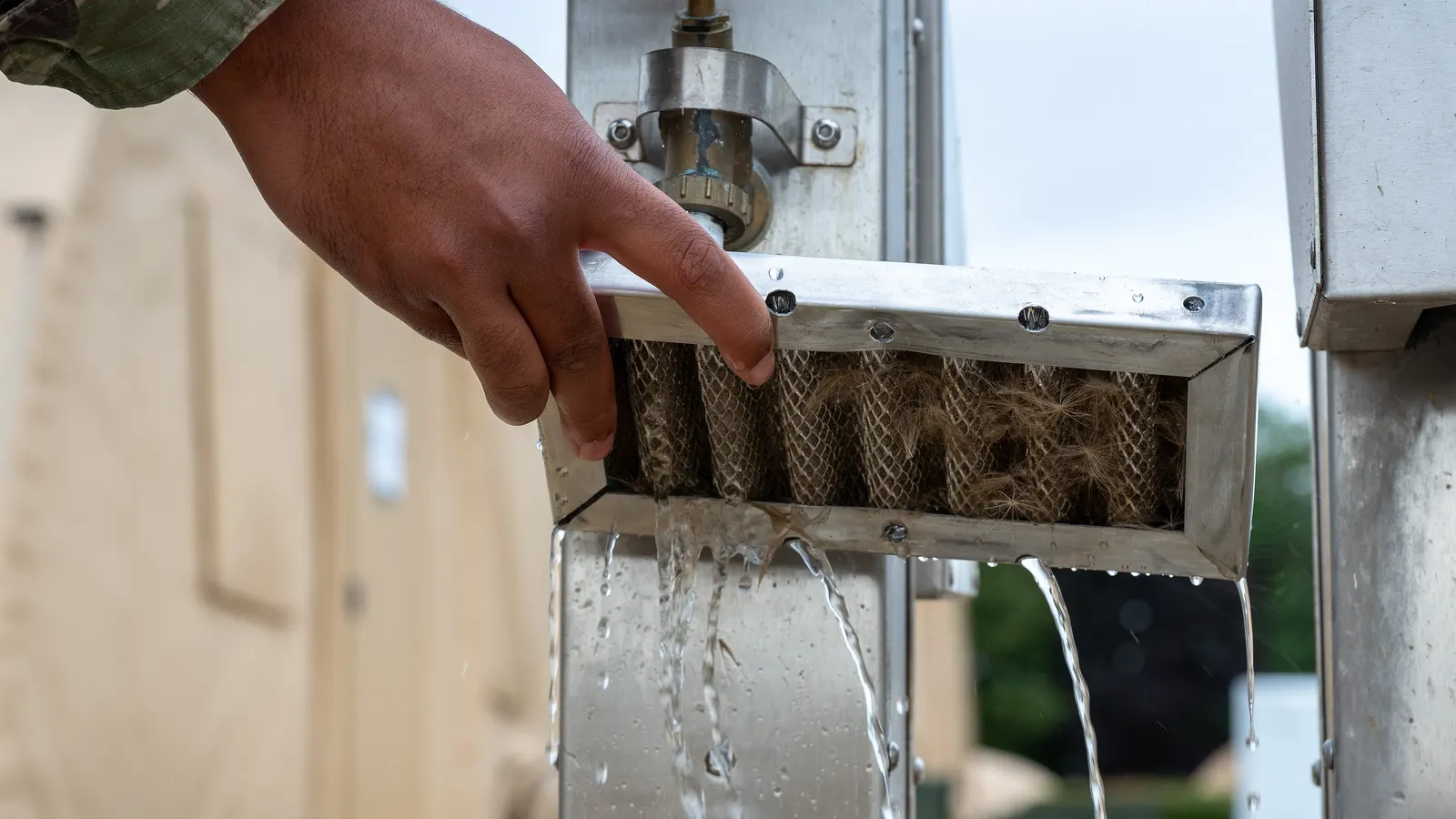
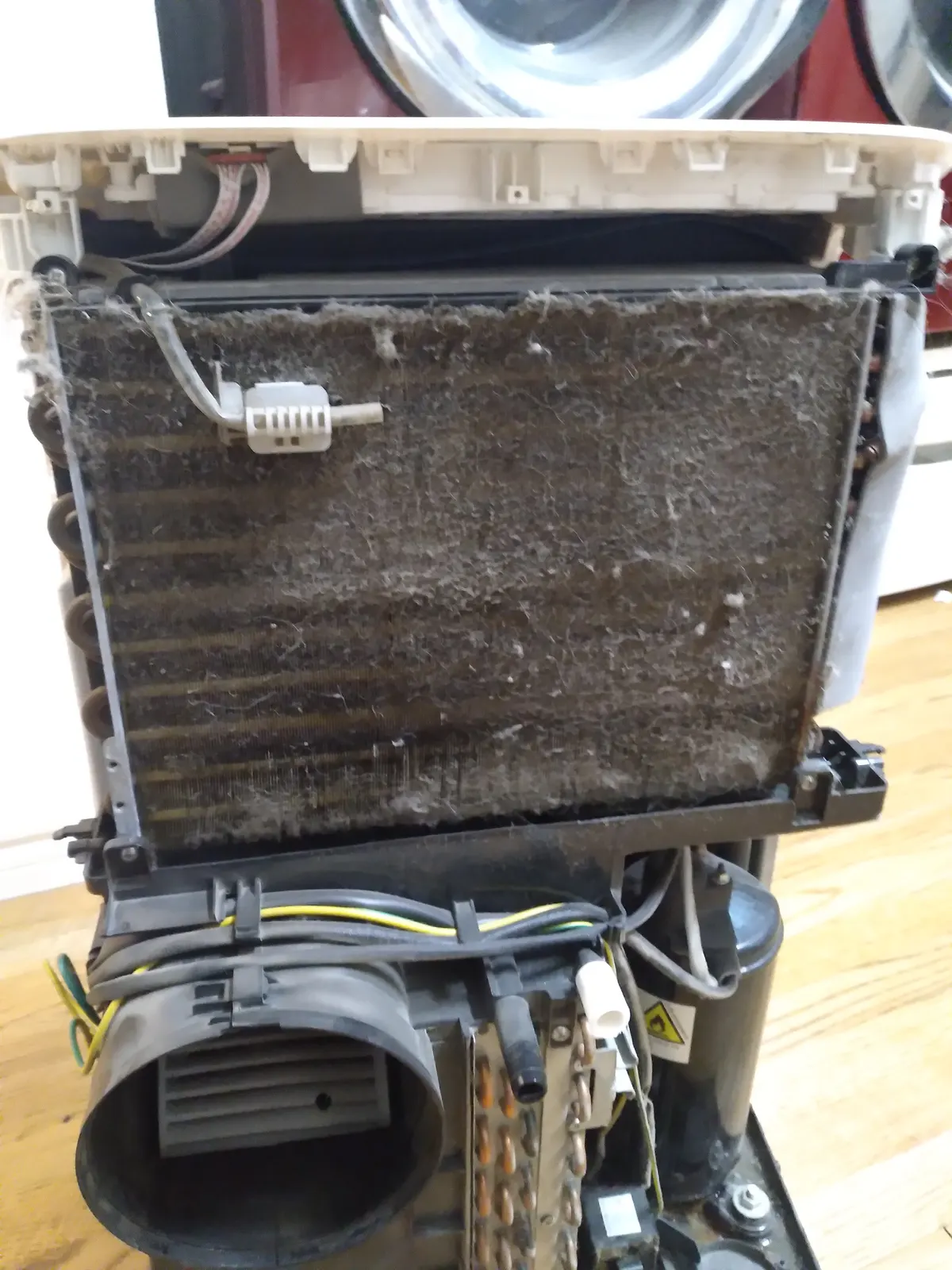
Dust load is what makes Gulf schedules shorter than temperate ones. FEMP explains the mechanism: a dirty filter lets supply air bypass it and deposit dirt on the coils, causing poor heat transfer and inefficiency, and cleaning a dirty coil is far more difficult and labour intensive than replacing filters.
Filters
FEMP recommends changing filters on pressure drop, calendar or visual inspection, with scheduled intervals between one and six months depending on dirt loading, and calls the pressure drop across the filter "the most reliable way to assess filter condition." In practice for Gulf buildings:
Fit differential pressure gauges or BMS sensors across AHU filter banks and change on pressure drop, not only on the calendar.
Set shorter intervals for fresh air intakes and units near construction sites, roads or open sand.
Check filter racks for gaps, because air that bypasses the filter goes straight to the coil.
Increase inspection frequency after sandstorms.
Condenser coils
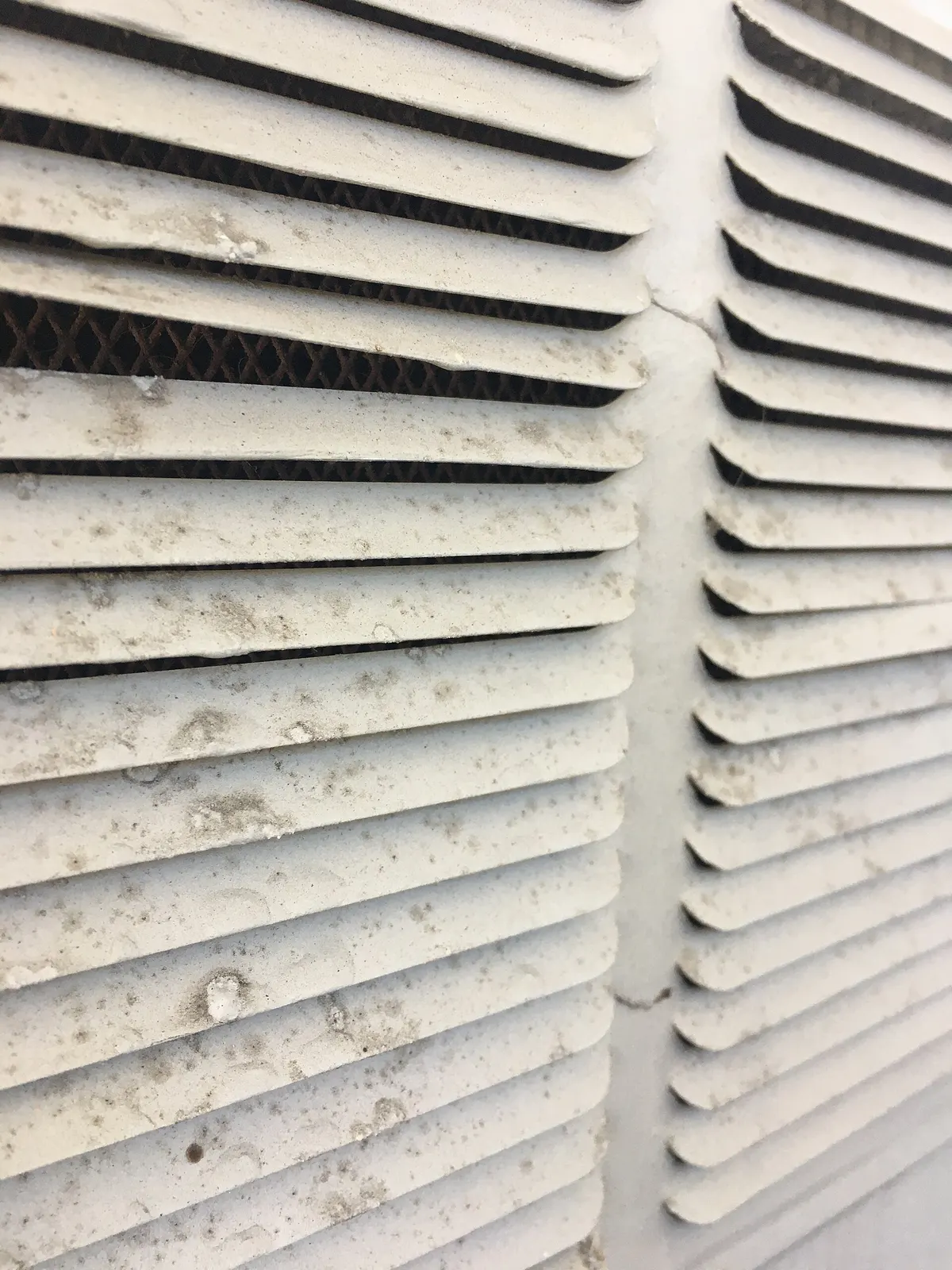
Outdoor coils on split units, package units, VRF outdoor units and air cooled chillers collect sand and dust on the air side. Fouled condenser coils raise condensing pressure, which cuts capacity and raises power draw just when ambient is highest. Put coil washing in the contract with a stated frequency for each unit type, a cleaning method approved by the manufacturer and photographs before and after. Coastal sites add salt; check coil coatings and casings for corrosion at each visit.
Refrigerant and electrical
Record suction and discharge pressures, superheat and subcooling, so a slow leak shows up as a trend rather than a breakdown. FEMP's chiller checklist asks for refrigerant to be added only as required, with amounts recorded and leaks addressed. Check and tighten electrical connections and terminals at least annually, as FEMP's chiller checklist lists.
Duct cleaning: what the standard covers
Duct cleaning is often sold on a fixed calendar. A better basis is inspection. The recognised reference is ACR, The NADCA Standard (Assessment, Cleaning and Restoration of HVAC Systems), 2021 edition, published by the National Air Duct Cleaners Association. NADCA describes it as setting minimum performance and procedural requirements for air duct cleaning, covering how to assess new and existing systems, evaluate and verify the cleanliness of components, protect workers and occupants from hazards and prevent cross-contamination. NADCA offers it as a free download.
For a tender, that means:
Require an inspection report on representative duct sections and AHU components before any cleaning order.
Specify cleaning to ACR 2021 and post-cleaning verification of cleanliness, with photos of the same sections.
Require containment so dust is not released into occupied areas during cleaning.
Clean the source as well: dirty coils, drain pans and fan sections re-contaminate a clean duct.
Legionella control in cooling towers: Dubai's rules
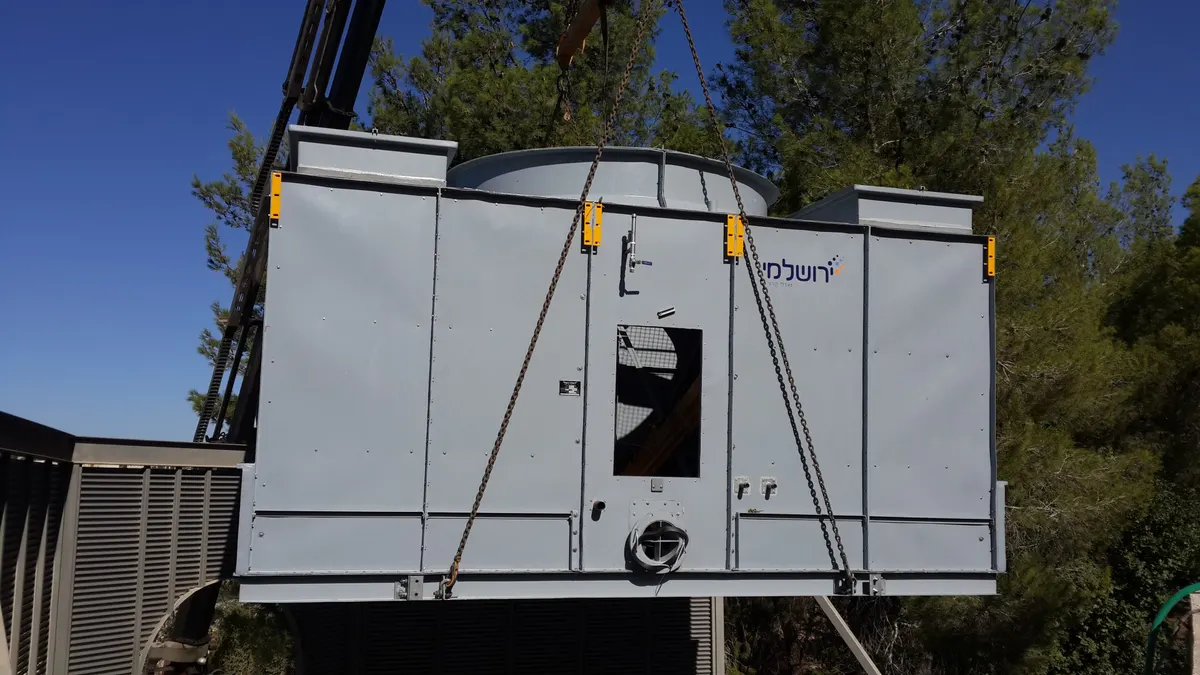
Cooling towers, evaporative condensers and evaporative coolers are among the water systems where Legionella can grow and spread in spray. Dubai Municipality's Technical Guidelines for Legionella Control in Water System (document DM-HSD-GU44-LCWS2, version 6, issued 19 August 2025) set out what it expects. Key requirements for cooling water systems:
Risk assessment of water systems at least once a year, with a schematic of the system, the controls in place, competence and training of staff, and a sampling point layout.
Design and treatment: automatic biocide dosing on any cooling water system including its make-up tanks, working all year; drift eliminators on every tower; towers located so drift is directed away from air intakes, opening windows and entrances.
Cleaning: all cooling water systems, including tanks, pumps, pipes, filters and fittings, emptied, cleaned and disinfected at least every six months, and whenever Legionella is detected.
Monitoring: Legionella testing quarterly and aerobic bacteria counts monthly for cooling water, with a minimum each quarter of one sample per make-up water tank and one per collection basin; testing by culture to ISO 11731, sampling to BS 7592, in a laboratory accredited by the Emirates International Accreditation Centre (EIAC), with results available to Dubai Municipality inspectors.
Limits: Legionella not to exceed 1,000 cfu per litre and aerobic count not to exceed 10,000 cfu per ml in cooling water.
The guideline also states that, where biocides have been effective, continuous free chlorine residuals of 0.5 to 1 mg/l or bromine residuals of 1 to 2 mg/l indicate that microbial activity has been under control since the previous cleaning.
Action levels after testing
Aerobic count (cfu/ml)
Legionella (cfu/l)
Action under the Dubai guideline
Below 5,000
Not detected
Acceptable
5,000 to 10,000
100 or less
Continue routine maintenance and inspection
10,000 to 100,000
100 to 1,000
Review dosing, biocide, pH, risk assessment and controls; resample; if repeated, clean and disinfect the tower and resample until Legionella is below 100 cfu/l and aerobic count below 10,000 cfu/ml
Above 100,000
Above 1,000
Turn the tower off; clean and disinfect immediately; review controls; add an alternative biocide; restart only when resampling shows Legionella below 100 cfu/l and aerobic count below 10,000 cfu/ml
Outside Dubai, check the rules of the local municipality or health authority; the Dubai guideline is a sound minimum to write into a contract anywhere in the region. Treatment chemicals and dosing equipment come from water treatment chemical suppliers, and our comparison of air cooled and water cooled chillers explains when a tower is worth having at all.
FM contract KPIs that actually measure maintenance
FEMP lists metrics an O&M manager can use beyond simple reliability, including work orders generated and closed out, backlog of corrective maintenance, energy use, inventory control of spares, overtime worked, safety record and environmental record. Turned into contract KPIs for an HVAC scope, with targets you set for the building:
KPI
What it shows
How to measure
PPM completion rate
Whether planned work is done on time
Scheduled PPM work orders closed in the period, from the CAFM or BMS log
Corrective maintenance backlog
Whether preventive work is working (FEMP)
Open corrective work orders and their age
Response and fix time by priority
Service to occupants
Time from call logging to attendance and to resolution
Repeat faults
Root cause fixes versus patching
Same asset, same fault, within a set period
Energy use per area or per ton-hour
Equipment efficiency and degradation (FEMP)
Utility or BMS metering, compared month on month and year on year
Temperature and humidity compliance
Comfort delivered
Share of hours zones stay within setpoint bands, from BMS trends
Water quality compliance
Legionella control
Accredited lab results against the limits above, and any action-level events
Refrigerant added
Leak control
Kilograms added per system per year, from service records
Safety and environmental record
Contractor conduct (FEMP)
Reportable incidents and non-compliances
Tie payments or penalties to a few of these, not all, and require monthly reports with the raw data. Planned maintenance can be tendered to MEP maintenance service providers in the UAE.
How a building management system helps
FEMP describes the objective of a building automation system as achieving an optimal level of occupant comfort while minimising energy use, by integrating fans, pumps, cooling equipment, dampers and thermostats. For maintenance, a building management system adds three things: alarms when a unit trips, trends that reveal drift (rising condenser pressure, falling chilled water delta T, high filter pressure drop), and data to verify the contractor's KPIs. FEMP also notes that repeated hot and cold complaint calls, validated through BMS sensor readings, can point to an air handling system in need of maintenance.
Siemens
Siemens describes its Desigo CC building management platform as an open, multi-discipline integration platform covering HVAC, lighting, fire safety, security, elevators and room booking, with a Powermanager module that collects meter data for energy and power reporting. Platforms of this kind let an FM team see HVAC alarms and energy data alongside other systems.
Carrier
Carrier operates in the UAE through UTS Carrier, a joint venture between United Technical Services and Carrier Corporation, according to Carrier. Where equipment is still under warranty, ask whether the manufacturer's own local entity must carry out or approve maintenance to keep the warranty valid.
UAE and Saudi points to check
UAE
In Dubai, the Dubai Municipality Legionella guideline above applies to cooling towers and other water systems, with records available for inspection. When replacing equipment during a maintenance contract, the new units must carry current energy efficiency certification under UAE.S 5010, mandatory under Cabinet Resolution No. 157 of 2025.
Saudi Arabia
Confirm Legionella and water system requirements with the municipality and health authority for the site. Replacement air conditioners and chillers imported or manufactured after 1 December 2026 need certificates under SASO 2663:2025 or SASO 2874:2025, so check this before approving replacement units in a maintenance contract. Saudi buyers can compare HVAC service providers in Saudi Arabia.
Maintenance contract checklist
Asset register: every chiller, tower, AHU, FCU, VRF, split and package unit, with model, location and age.
Manufacturers' O&M manuals and warranty conditions attached.
PPM schedule per asset type with frequencies, based on the manufacturer and the FEMP baseline, adjusted for dust and coastal exposure.
Filter change basis (pressure drop, calendar or inspection) and filter grades.
Coil cleaning method and frequency for indoor and outdoor coils, with photo records.
Refrigerant logging: pressures, superheat, subcooling and kilograms added.
Duct inspection and cleaning to ACR 2021, with verification.
Legionella risk assessment, dosing, six-monthly cleaning and sampling to the Dubai guideline or local equivalent, by an EIAC-accredited laboratory where required.
KPIs, reporting format and the BMS data used to verify them.
Response times by priority, spares stocking, and qualified staff on site.
To get proposals from maintenance contractors against this scope, post your HVAC maintenance requirement and providers in the UAE and Saudi Arabia can respond.
How often should AC filters be changed in the UAE?
There is no single figure; it depends on dust load. FEMP's O&M guide recommends scheduled intervals between one and six months and says measuring pressure drop across the filter is the most reliable way to judge condition. In the Gulf, intakes near roads, construction or open sand load filters fast, so use pressure drop readings to set the interval and inspect again after sandstorms.
How often should a cooling tower be cleaned in Dubai?
Dubai Municipality's Legionella guideline requires all cooling water systems, including tanks, pumps, pipes, filters and fittings, to be emptied, cleaned and disinfected at least once every six months, and whenever Legionella is detected. It also requires automatic biocide dosing, drift eliminators, an annual risk assessment, quarterly Legionella testing and monthly aerobic counts by an EIAC-accredited laboratory.
What is the Legionella limit for cooling towers in Dubai?
Under Dubai Municipality's guideline, Legionella in cooling water should not exceed 1,000 cfu per litre and the aerobic bacterial count should not exceed 10,000 cfu per ml. Where Legionella exceeds 1,000 cfu per litre and the aerobic count exceeds 100,000 cfu per ml, the tower must be turned off, cleaned and disinfected immediately, and restarted only when resampling shows Legionella below 100 cfu per litre and aerobic count below 10,000 cfu per ml.
How often should air ducts be cleaned?
Clean on the evidence of inspection, not a fixed calendar. NADCA's ACR 2021 standard covers assessing systems, cleaning to a defined level and verifying cleanliness afterwards. Inspect representative sections and the AHU periodically; clean when inspection shows contamination, after construction work, or after water damage. Fix the source too: dirty filters and coils re-contaminate clean ducts.
What KPIs should an HVAC maintenance contract include?
Use a few measurable ones: PPM completion rate, corrective maintenance backlog, response and fix times by priority, repeat faults, energy use per area or ton-hour, comfort compliance from BMS trends, water quality results for towers, and refrigerant added per system. FEMP lists work orders, backlog, energy use, inventory, safety and environmental record among useful O&M metrics.
Is preventive maintenance worth it compared with fixing breakdowns?
FEMP's guide argues it is. It describes reactive maintenance as "run it till it breaks" and lists its costs: unplanned downtime, higher labour cost, possible secondary damage and inefficient use of staff. It cites studies finding more than 55% of maintenance in an average US facility was still reactive. In Gulf heat, an unplanned chiller or AHU failure in summer also means lost occupancy and comfort complaints.
How VRF and chilled water systems differ, where VRF runs out of capacity, refrigerant safety in small rooms, part-load and high ambient ratings, district cooling as a third option, and an RFQ checklist.
Where LV ends and MV begins, how GIS and AIS differ in size, cost and maintenance, what SF6 rules mean for Gulf buyers, how ring main units work and how to read an MV datasheet.
Wall split, ducted split, package or window unit: how they differ, what Saudi and UAE efficiency rules require of each, how they cope at 46°C, and which suits villas, offices and warehouses.