Rooftop Solar Rules: Shams Dubai, Abu Dhabi and Saudi Small-Scale PV
Step by step: how rooftop solar is approved and connected under DEWA Shams Dubai, the Abu Dhabi energy netting and self-supply rules, and SEC small-scale PV net billing in Saudi Arabia.
Rooftop solar is connected under a different scheme in each place: in Dubai through DEWA's Shams Dubai net metering, with a DEWA-enrolled contractor applying for you; in Abu Dhabi under the 2017 energy netting regulation and the Department of Energy's 2026 self-supply policy; and in Saudi Arabia through SEC's small-scale PV process with net billing, for systems of 1 kW to 2 MW. All three require approved solar panels and modules and an approved installer.
This spoke is for owners, consultants and contractors who need the actual steps, documents and limits for each authority before committing to a design. It covers who may apply, how surplus energy is credited or valued, the meters, the size caps and the fees and timelines that are published. For sizing, cost and brands, see our main guide to solar panels in the UAE and Saudi Arabia. Rules change, so confirm the current version with the authority before you sign; every point below links to the authority's own page or document where one was available. For Saudi projects, see solar panel suppliers in Saudi Arabia.
The three schemes side by side
Dubai: Shams Dubai (DEWA)
Abu Dhabi (DoE)
Saudi Arabia (SEC)
Legal basis
Executive Council Resolution No. 46 of 2014
Small-Scale Solar PV Energy Netting Regulation (January 2017); Solar Energy Self-Supply Policy (February and March 2026)
Small-Scale Solar PV Systems Regulations ERD-TA-012 (V02/19), issued by the Electricity and Cogeneration Regulatory Authority (ECRA)
Who applies
DEWA-enrolled solar PV consultant or contractor, as the customer's agent
2017: projects approved by the Regulation and Supervision Bureau; 2026: DoE says procedures are streamlined
SEC-approved consultant or contractor through SEC's web portal
Surplus energy
Net metering: kWh credit, indefinite rollover, no cash
2017: credited against future use, no monetary compensation
Net billing: surplus valued financially and deducted from the next bill
Size limit
Share of total connected load (Connection Conditions, section 2.2)
Up to 5 MW on the LV network (2017, as reported)
1 kW to 2 MW; 15% of feeding transformer; 3% aggregate of previous year's peak load
Batteries
Not required; surplus goes to the grid
Explicitly allowed under the 2026 policy
Not addressed in SEC's connection guidelines
Dubai: Shams Dubai step by step
Shams Dubai is DEWA's initiative to connect solar to buildings under its Distributed Renewable Resources Generation (DRRG) programme, implementing Executive Council Resolution No. 46 of 2014. Power is used on site and the surplus exported to DEWA's network. It covers homes and commercial and industrial premises; within Shams Dubai, ground-mounted panels are not envisaged.
The connection process
Engage an enrolled consultant or contractor. Only DEWA-enrolled Electrical and DRRG Solar PV consultants and contractors may install, operate and maintain a connected system. DEWA publishes the list (the PDF on its Publications page is dated 31 July 2025). A system installed by anyone else is not eligible for connection or net metering.
Application. The consultant or contractor submits the Getting Solar Permits and Connections application with site plans, system design and details of the proposed equipment.
Design approval. DEWA issues technical design approval and an estimate of the connection fee.
Completion notice. Once installed, the contractor files the Solar PV Inspection Application. Systems above 100 kW must first pass a plant performance test.
Inspection and connection. DEWA inspects the site, the customer signs the connection agreement, and DEWA installs the meter and connects the system.
Generation. The customer generates, exports the surplus and DEWA offsets the bill.
Outside DEWA, you also need a building permit from the competent authority (DEWA names Dubai Municipality, Trakhees and Etihad Esco as examples) for the civil or structural work, and a completion certificate after its final checks. As part of the connection the customer must present a signed operation and maintenance contract with an enrolled provider. DEWA says a 10 or 20 kW system can be installed within a week once authorisations are in place, and a larger commercial or industrial system in 4 to 8 weeks.
Equipment
Modules, inverters and interface protection must meet DEWA's minimum eligibility criteria and be registered through the DRRG Equipment Portal on the List of Eligible Equipment; DEWA says its old PDF list is obsolete. Listings are by model, so check the exact part numbers. Inverter datasheets show the grid standards a model has been tested to: Huawei's SUN2000-MAP0 lists IEC 61727, IEC 62116 and EN 50549-1 among others, for example, but DEWA eligibility still depends on the listing. The main guide sets out the IEC standards DEWA requires.
Meters and fees
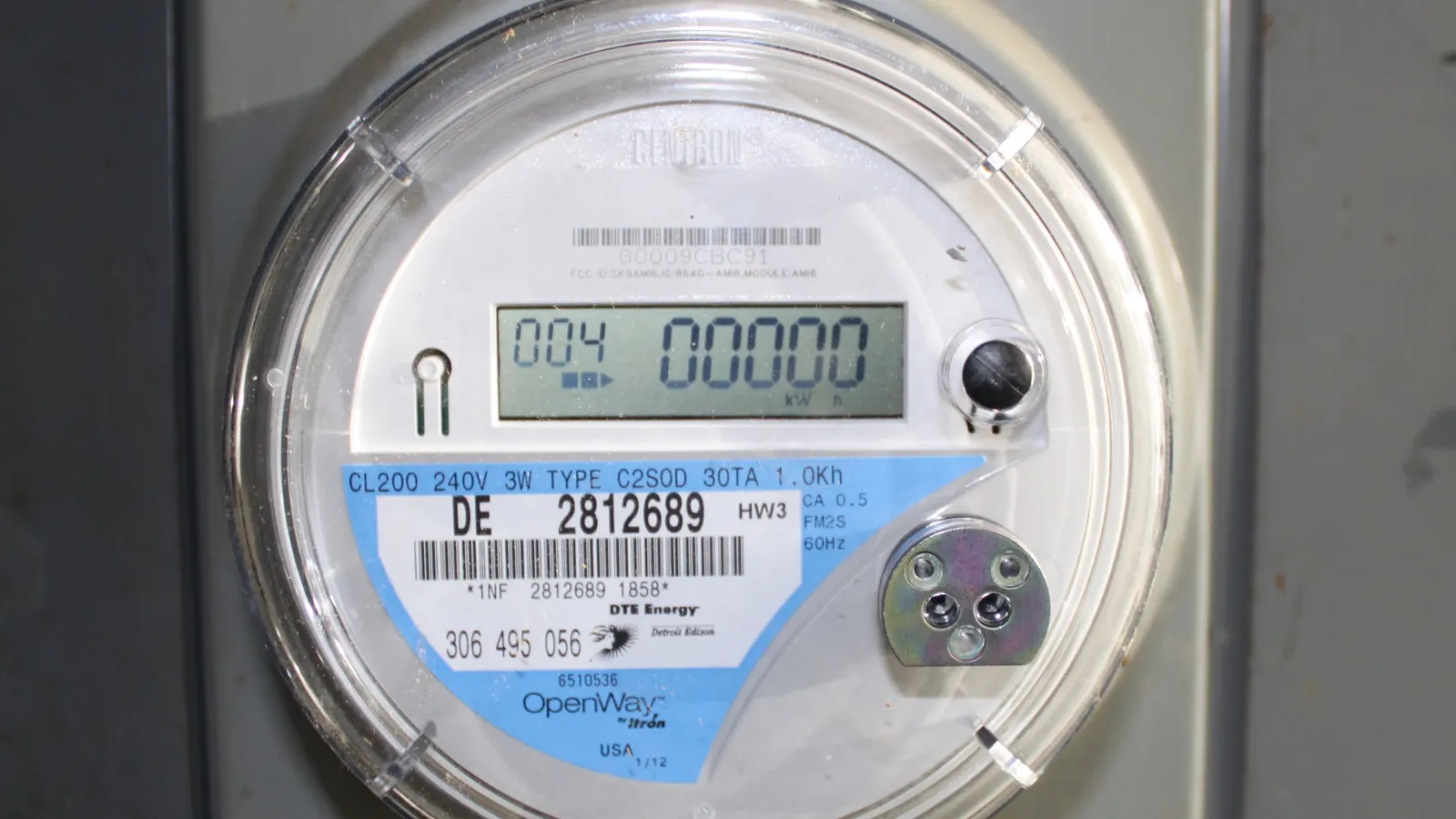
A bi-directional smart meter records import and export; DEWA fits it at no extra cost beyond normal service charges.
A generation check meter usually records PV output and is covered by the one-off connection fee, currently AED 1,500 per renewable generator. For some systems under 10 kW the check meter can be waived, in villa communities with many similar installations (a sample is metered) or where the local area is not already saturated.
Above 400 kW, DEWA may add the cost of dedicated grid integration equipment to the connection fee.
How credit works
If you export more than you import in a billing period, the bill is zero and the surplus carries forward as credit; an indefinite rollover applies. Exports and credits are deducted from imports before the slab tariff and fuel surcharge are applied, so residual consumption is billed at lower slab rates. The resolution states that the producer is not paid for excess electricity.
Several accounts on one plot: credit can offset other accounts on the same plot; the host account is offset first, then others in the order you choose.
Multi-tenant buildings: a landlord can offset only common-area consumption on meters it owns; tenants can install their own systems on their own accounts.
Selling or renting: the generator can be transferred to the new owner's or tenant's account, but accumulated credit cannot.
Capacity limit
Installed capacity cannot exceed the applicable share of the premises' total connected load under section 2.2 of DEWA's DRRG Connection Conditions (the current English edition on DEWA's site is Version 4.1, dated November 2025), and DEWA may set a lower threshold for grid reasons.
Enrolment for consultants and contractors
Companies apply for enrolment through DEWA e-services and need certified professionals on staff. DEWA's Solar PV Expert Certification involves a 3-day course of classroom and laboratory work and an exam, leading to a Junior or Senior PV Expert certificate depending on experience. Training is currently free, and certificates are issued for a limited period, after which holders take a refresher course and re-sit the exam. DEWA notes that the certificate is valid only in Dubai.
Abu Dhabi: energy netting and the 2026 self-supply policy
Abu Dhabi has two layers of rules. Under the Small-Scale Solar Photovoltaic Energy-Netting Regulation introduced in January 2017, as pv magazine reported, surplus power goes to the local grid and is credited against future consumption, and the owner is not entitled to monetary compensation. System owners must obtain municipal permits before grid connection, all projects must be approved by the Regulation and Supervision Bureau, and systems up to 5 MW connected to the low-voltage network qualify. In June 2017 the Quality and Conformity Council released a conformity assessment scheme setting safety and quality standards for small-scale PV products and installations.
In 2026 the Department of Energy added its Solar (Photovoltaic) Energy Self-Supply Policy, part of the Abu Dhabi Energy and Water Efficiency Strategy 2030:
Phase one, February 2026: customers may keep taking power from the grid or adopt flexible solutions: PV for self-supply and self-consumption, solar water heaters, and optional battery energy storage. It applied first to the agricultural sector and owners of rest houses and ranches.
Phase two, 31 March 2026: extended to villa owners and residential buildings where applicable, letting them generate and store electricity from rooftop systems and integrate their use with the grid. The DoE says this phase brings a simplified regulatory framework that streamlines installation and grid connection procedures and standardises technical requirements.
The public announcements do not set out the metering, export or settlement terms for the 2026 policy, or a residential size cap. Ask the DoE and your distribution company for the current procedure and technical requirements before you size the system or order equipment, and ask your contractor which approvals it will obtain on your behalf.
Saudi Arabia: SEC small-scale PV step by step
SEC's Connection Guidelines (Version 3) set out how consumers connect a small-scale system to its low or medium voltage network. They follow ECRA's Small-Scale Solar PV Systems Regulations ERD-TA-012 (V02/19), refer to SEC's separate Technical Standards for the technical rules, and direct users to the Saudi Building Code (SBC 401, Chapter 712) and applicable SASO or international standards. Systems range from 1 kW to 2 MW.
The connection process
Select a consultant or contractor. The consumer registers on SEC's website and picks one from SEC's approved list, provided by its qualification committee.
Supply data. The contractor asks SEC through the portal for the transformer capacity and the remaining capacity available for solar.
Initial application. The contractor submits the initial application form (Annex A of the guidelines).
Eligibility check. SEC checks the documents and the consumer's eligibility under ECRA's rules: aggregate small-scale PV capacity of 3% of the previous year's peak load, and a maximum of 15% of the rated capacity of the transformer feeding the consumer. Residential consumers get priority.
Initial fee and evaluation. The consumer pays the initial enquiry fee. SEC must notify a decision within 20 working days; a technical assessment of network hosting capacity is mandatory above 50 kW. An approval is valid for 180 days; after a rejection you have 60 days to resubmit without extra charge.
Feasibility study. The contractor runs ECRA's online economic feasibility calculator, and the consumer signs the Feasibility Study Acceptance Form.
Design approval. The contractor uploads the final design and documents (lighter requirements up to 11 kW, a full technical report above). Non-conformities must be fixed within 30 working days.
Connection fee and agreement. SEC notifies the connection fee; after payment the consumer signs the connection agreement online and SEC signs within 10 business days.
Construction and site test. The contractor builds the system and carries out the site test.
Inspection request. The contractor uploads a Declaration of Conformity, the specification of major equipment, protection arrangements and settings, safety rules, the electrical diagram, clearance and readiness for energisation, and a maintenance programme for systems above 100 kW.
Site inspection. SEC inspects; above 50 kW it may witness or repeat the site tests.
Commissioning test. The contractor runs it with SEC's inspector witnessing, in particular the interface protection test.
Meters and energisation. SEC installs the meter or meters and updates billing; the system is connected.
How net billing works
SEC describes net billing in its simplest form as the monetary difference between energy taken from and sent to the network over a billing cycle. Where the system produces a surplus, a financial valuation takes place and the amount is deducted from the next billing cycle. The guidelines do not state the rate used to value exports, so ask SEC or your contractor for it before sizing above your own daytime consumption. For comparison, the residential tariff is 18 halalas per kWh up to 6,000 kWh a month and 30 halalas above.
Shams Dubai is DEWA's initiative to connect rooftop solar on homes and buildings to Dubai's grid, part of its Distributed Renewable Resources Generation programme and based on Executive Council Resolution No. 46 of 2014. Power is used on site and the surplus exported to DEWA's network, where it is credited against future bills under net metering with indefinite rollover.
How do I apply for Shams Dubai?
Through a DEWA-enrolled solar PV consultant or contractor, who acts as your agent. They submit the Getting Solar Permits and Connections application, obtain design approval and a fee estimate, install the system, file the inspection application, and coordinate DEWA's inspection, the connection agreement and the meter. You also need a building permit from Dubai Municipality, Trakhees or the relevant authority.
Does DEWA pay for excess solar power?
No. Under Resolution No. 46 of 2014 the producer is not paid for excess electricity. Surplus is credited in kWh and used to offset future consumption, with an indefinite rollover, and exports are deducted before slab tariffs are applied. Credit stays with the account: if you sell or rent the property, the generator can be transferred but the accumulated credit cannot.
Is there net metering in Saudi Arabia?
Saudi Arabia uses net billing rather than kWh net metering. Under ECRA's Small-Scale Solar PV Systems Regulations, applied through SEC's connection guidelines, the monetary difference between energy imported and exported is settled each cycle, and any surplus is valued and deducted from the next bill. Systems from 1 kW to 2 MW qualify, subject to transformer and network limits.
Can villas in Abu Dhabi install rooftop solar?
Yes. On 31 March 2026 the Department of Energy extended its Solar Energy Self-Supply Policy to villa owners and residential buildings where applicable, allowing them to generate and store electricity from rooftop systems, with simplified installation and grid connection procedures. Confirm the current metering and settlement terms and technical requirements with the DoE and your distribution company before ordering.
How long does SEC take to approve a rooftop solar application?
SEC's guidelines commit it to evaluating the initial application within 20 working days, and an approval stays valid for 180 days. Design corrections must be made within 30 working days, and SEC signs the connection agreement within 10 business days of payment of the connection fee. Systems above 50 kW also need a technical assessment of network hosting capacity.
A step-by-step method to size rooftop solar in the UAE and Saudi Arabia from your bills, with modelled yields for five cities, roof area per kWp, DEWA and SEC caps and air conditioning examples.
A buyer guide to rooftop solar in the UAE and Saudi Arabia: yields by city, module types, DEWA, Abu Dhabi and SEC connection rules, dated cost figures, brands, warranties and an RFQ list.
Why solar panels in the UAE and Saudi Arabia produce less than their rating in summer and after dust storms, how to compare modules on heat, and how to plan cleaning and warranties.