Solar Panel Prices in the UAE and Saudi Arabia: What Drives the Cost
What a rooftop solar quote in the UAE or Saudi Arabia is made of: modules, inverter, structure, approvals and O&M, the only dated public price figures, and how DEWA and SEC tariffs set payback.
There is no list price for solar panels in the UAE or Saudi Arabia, because a rooftop quote bundles modules, inverter, structure, cabling, approvals and maintenance. The only dated figures from an authority are DEWA's: in Q2 2021 it put villa systems at AED 4,500 to 5,000 per kWp and larger systems at AED 3,500 to 4,000. Use them as a benchmark, then get itemised quotes from suppliers of solar panels and modules.
This spoke is for owners, facility managers and procurement teams who have a quote in hand, or are about to ask for one, and want to know what each line is for and whether the payback adds up. For module types, connection rules and brands, see our main guide to solar panels in the UAE and Saudi Arabia: costs, rules, sizing and brands. ListGCC does not sell systems and did not test any product; every figure below is dated and linked to its source. In Saudi Arabia, compare solar panel suppliers in Saudi Arabia the same way.
The dated price figures that are public
Few authorities publish installed prices, and the ones that exist age quickly. These are the figures we could verify, with their dates:
Figure
Value
Date
Source
What it covers
Typical installed cost, small villa systems (Dubai)
AED 4,500 to 5,000 per kWp
Q2 2021
DEWA Shams Dubai FAQ
Complete rooftop system
Typical installed cost, larger systems (Dubai)
AED 3,500 to 4,000 per kWp or below
Q2 2021
DEWA Shams Dubai FAQ
Complete rooftop system
DEWA connection fee
AED 1,500 per renewable generator
Current on DEWA's FAQ
DEWA
Mainly the generation check meter; can be reduced below 10 kWp if no check meter is needed
Operating cost
Roughly 5% of the initial investment
Current on DEWA's FAQ
DEWA
Annual maintenance: inspection, cleaning, part replacement
Global average module selling price
About US$0.10 per Wp
2025
Fraunhofer ISE Photovoltaics Report
Modules only, worldwide
Global weighted average installed cost, large PV
€595 per kWp
2025
IRENA data in Fraunhofer ISE report
Utility-scale plants, not rooftops
Two cautions. DEWA's range is five years old and module prices fell for most of that period. And Fraunhofer ISE reports that China's removal of its 9% export VAT refund in April 2026, together with rising material and shipping costs, is now pushing module and installation prices up. A 2026 quote can therefore sit above or below the 2021 range; what matters is whether each line is justified.
What a per-kWp quote is made of
Ask every bidder to break the price into the lines below. It is the only way to compare offers that use different modules, frames and service terms.
Line
What changes the cost
What to ask
Modules
Technology, wattage, brand, certification for the authority
Exact model, datasheet, and proof it is on DEWA's eligible list or carries the certificates SEC asks for
Inverter
Grid-tied or hybrid, single or three phase, kW rating
Model, efficiency, operating temperature range, grid compliance certificates
Mounting structure
Flat roof frame, penetrating fixings, raised canopy or carport
Material and coating, wind design basis, roof fixing method
Electrical balance of system
Cable lengths, DC and AC protection, interface protection, monitoring
Single-line diagram and protection schedule
Design, approvals and testing
Authority fees, design work, site and commissioning tests
Which fees are included and who submits each application
Batteries (optional)
Capacity in kWh, chemistry, backup requirement
Usable capacity, warranty years, compatibility with the inverter
O&M
Cleaning frequency, monitoring, response time, contract term
Modules are the most visible line but, with global prices near record lows, not always the largest. Fraunhofer ISE puts the 2025 global average selling price at about US$0.10 per Wp. Local prices add freight, duties, distributor margin and the cost of certification. A cheaper module that is not on DEWA's list cannot be connected in Dubai, so a low price on an unlisted model is no saving.
Inverter and batteries
The inverter choice moves the price more than many buyers expect. A plain grid-tied inverter is the lowest-cost option; a hybrid adds a battery port and backup capability, and the battery itself is a separate and substantial line. Fronius, for example, sells its GEN24 inverter with basic backup through a single "PV Point" socket of up to 3 kW in sunshine, while the Fronius GEN24 Plus adds full household backup when combined with a battery and a grid switching device. Huawei's LUNA2000-S1 batteries combine from 5 to 21 kWh, so capacity is a direct cost lever. Compare solar inverters and battery energy storage systems only once you know whether you need backup at all. The inverter spoke explains the trade-offs.
Mounting structure
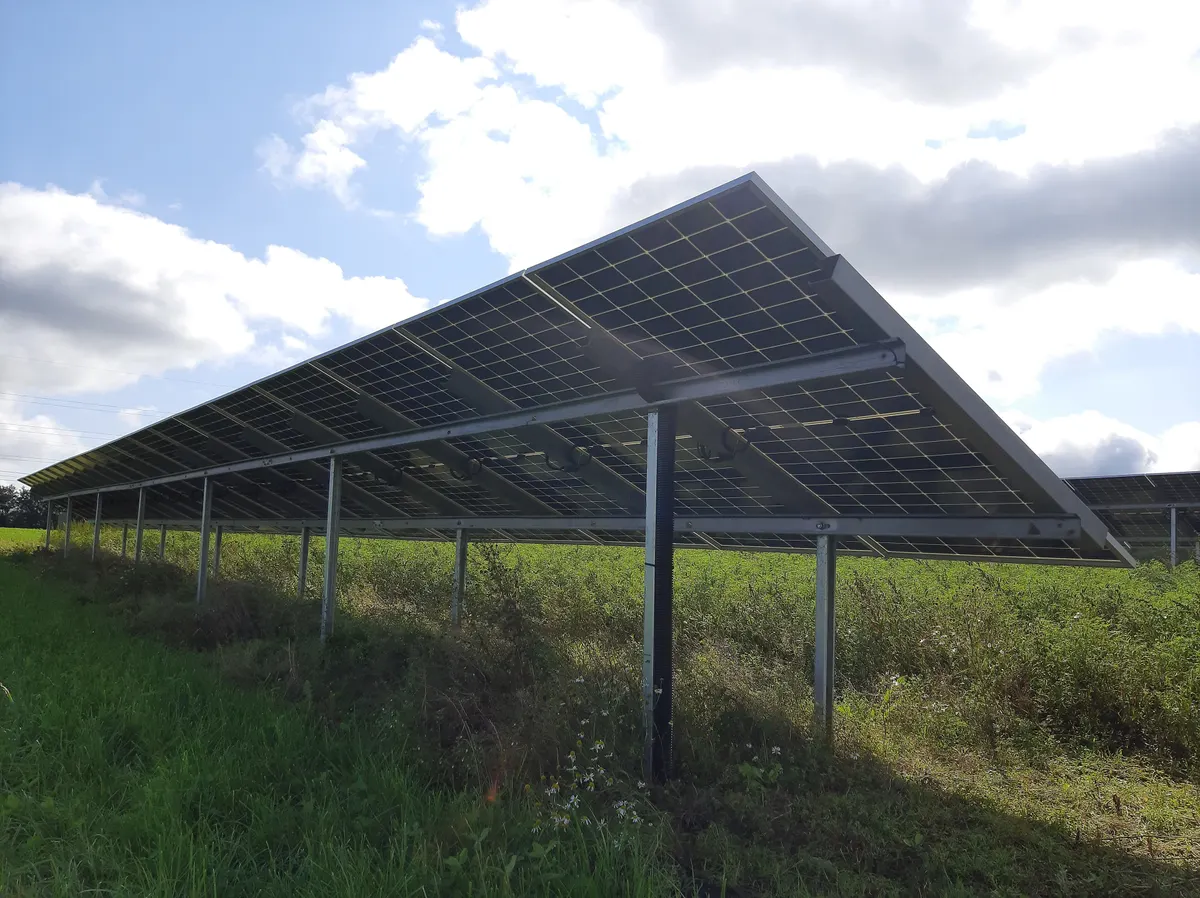
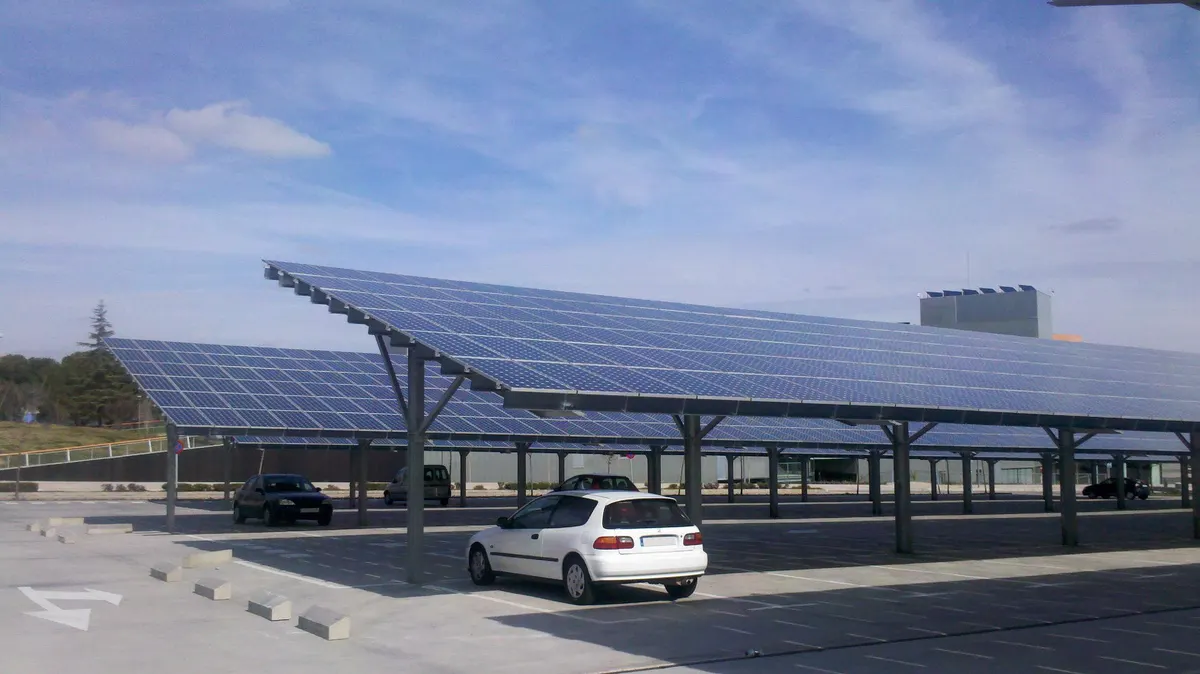
A low frame on a flat villa roof, a raised steel canopy over a car park and a penetrating structure on a factory roof cost very different amounts. Raised canopies add steel and foundations but also shade, which can justify them on commercial sites. Ask for the structure's design basis and coating, and see solar mounting systems for suppliers.
Authority costs are small but not zero, and they differ by country:
Dubai. DEWA charges a one-off connection fee, currently AED 1,500 per generator, which mainly covers the generation check meter; the bi-directional import and export meter is fitted at no extra cost beyond normal service charges. Systems above 100 kW need a successful plant performance test before connection, and above 400 kW DEWA may add the cost of dedicated grid equipment to the fee. You also need a building permit from Dubai Municipality, Trakhees or the relevant authority.
Saudi Arabia. SEC's guidelines list an initial enquiry fee, a connection fee and an inspection step, and a technical assessment of network hosting capacity for systems above 50 kW. SEC confirms each amount during the process; ask your contractor for the current figures in writing.
Operation and maintenance
DEWA requires a signed O&M contract with an enrolled company as part of the connection, and says operating costs can represent roughly 5% of the initial investment. Cleaning frequency is the main variable, because Gulf dust builds up quickly. Price O&M over the life of the system, not just the first year.
Why small systems cost more per kWp
Design, approvals, testing, mobilisation and the connection fee are largely fixed, so they weigh more on a 5 kWp villa than on a 500 kWp warehouse. DEWA's own figures reflect this, with a lower range for larger systems, and its FAQ says the business case is currently more attractive for customers with larger consumption who can install bigger systems. Larger systems do carry extra steps, such as performance tests above 100 kW in Dubai and SEC's technical assessment above 50 kW, but these are spread over far more kWp.
Payback: how tariffs set the value of each kWh
Simple payback is the installed cost divided by the net annual saving. The saving depends on how much the system produces and which tariff band it displaces.
Dubai: net metering against slab tariffs
DEWA's residential and commercial electricity slabs are 23 fils per kWh for the first 2,000 kWh a month, 28 fils to 4,000, 32 fils to 6,000 and 38 fils above, plus a fuel surcharge (6 fils per kWh for November 2026) and 5% VAT. DEWA deducts solar exports and carried-forward credits from your imports before it applies the slabs, so solar first removes your most expensive units.
A worked example, using DEWA's 2021 villa range only as a placeholder for a real quote:
A 10 kWp system in Dubai produces about 17,900 kWh a year, using the Global Solar Atlas figure of 1,790 kWh per kWp.
If all of that displaces top-slab units, each kWh saves 38 + 6 = 44 fils before VAT, or about AED 7,900 a year (about AED 8,270 with VAT).
At AED 4,500 to 5,000 per kWp, the system costs AED 45,000 to 50,000, a simple payback of about 5.4 to 6 years before maintenance.
If annual O&M runs at the 5% of investment DEWA mentions (AED 2,250 to 2,500), the net saving drops to about AED 5,800 to 6,000 and payback stretches to about 7.5 to 8.7 years.
A household that only ever reaches the first slab saves 23 + 6 = 29 fils per kWh instead, so the same system pays back far more slowly. Fuel surcharges change, so rerun the numbers with the current figure from DEWA's tariff page.
Saudi Arabia: net billing against SEC tariffs
The residential tariff is 18 halalas per kWh up to 6,000 kWh a month and 30 halalas above. A 10 kWp system in Riyadh produces about 18,500 kWh a year on the Global Solar Atlas figure of 1,853 kWh per kWp. If every kWh displaces the upper band, that is worth about SAR 5,550 a year; at 18 halalas it is about SAR 3,330. Under SEC net billing, any surplus exported to the grid is given a financial value and deducted from the next bill, so ask SEC or your contractor how exported energy is valued before you size above your own daytime use. We found no dated public installed-cost figure for Saudi rooftops, so divide your actual quote by these savings.
How to compare two quotes fairly
Convert every price to cost per kWp of DC module capacity, and check the AC inverter rating separately.
Compare the yield estimates and their assumptions (temperature, soiling and inverter losses); a bigger yield claim on the same roof needs an explanation.
Check that both offers include the same approvals, fees, tests and building permit work.
Compare O&M scope: cleaning frequency, monitoring, response times and term.
Compare warranties line by line: module product and power warranty, inverter warranty, workmanship and any battery warranty.
Ask for proof of the contractor's DEWA enrolment or SEC approval and for the exact equipment models.
DEWA's dated guidance from Q2 2021 implies about AED 45,000 to 50,000 for a villa-size system at AED 4,500 to 5,000 per kWp, plus the AED 1,500 connection fee. Prices have moved since, and Fraunhofer ISE reports module prices rising in 2026 after China removed an export VAT refund. Treat the 2021 range as a benchmark and compare itemised current quotes per kWp.
Why do quotes for the same size system differ so much?
Because the size is only one variable. Quotes differ on module and inverter models, hybrid or grid-tied design, battery capacity, mounting type (a low roof frame against a raised canopy), the approvals and tests included, and the length and scope of the O&M contract. Ask each bidder for a line-by-line breakdown so you compare like with like.
What is the payback period for solar in the UAE?
It depends on your tariff band. In Dubai, solar exports are offset before DEWA's slabs are applied, so a household in the 38 fils top slab saves more per kWh than one in the 23 fils first slab. Using DEWA's 2021 villa cost range and top-slab savings, a 10 kWp system pays back in roughly 5.4 to 6 years before maintenance, longer once O&M is included.
Does DEWA pay for solar electricity exported to the grid?
No. Under Executive Council Resolution No. 46 of 2014, surplus electricity is credited against future consumption and the producer is not paid for it. Credits roll over indefinitely, so the value of a kWh you export equals the tariff you would otherwise pay on a later bill. Credits cannot be transferred to a new owner or tenant.
What fees does SEC charge for a rooftop solar connection?
SEC's connection guidelines list an initial enquiry fee paid once the consumer is found eligible, a connection fee notified after design approval, and an inspection stage before the meter is installed. The guidelines do not publish the amounts; SEC confirms them during the application. Ask your SEC-approved contractor for the current figures in writing before signing.
Are batteries worth adding to a grid-connected system?
Only if you need backup or the tariff rewards storing energy. Under Shams Dubai, surplus is credited in kWh with indefinite rollover, so a battery adds cost without adding much saving unless you need power during outages. A hybrid inverter keeps the option open: Fronius's GEN24, for example, can add a battery later through a software upgrade.
A step-by-step method to size rooftop solar in the UAE and Saudi Arabia from your bills, with modelled yields for five cities, roof area per kWp, DEWA and SEC caps and air conditioning examples.
A buyer guide to rooftop solar in the UAE and Saudi Arabia: yields by city, module types, DEWA, Abu Dhabi and SEC connection rules, dated cost figures, brands, warranties and an RFQ list.
Why solar panels in the UAE and Saudi Arabia produce less than their rating in summer and after dust storms, how to compare modules on heat, and how to plan cleaning and warranties.