Supported, frame, birdcage, suspended, cantilever and mobile tower scaffolds compared by job, with the Abu Dhabi, Dubai, Sharjah and SASO rules for each, aluminium towers and when to use a MEWP.
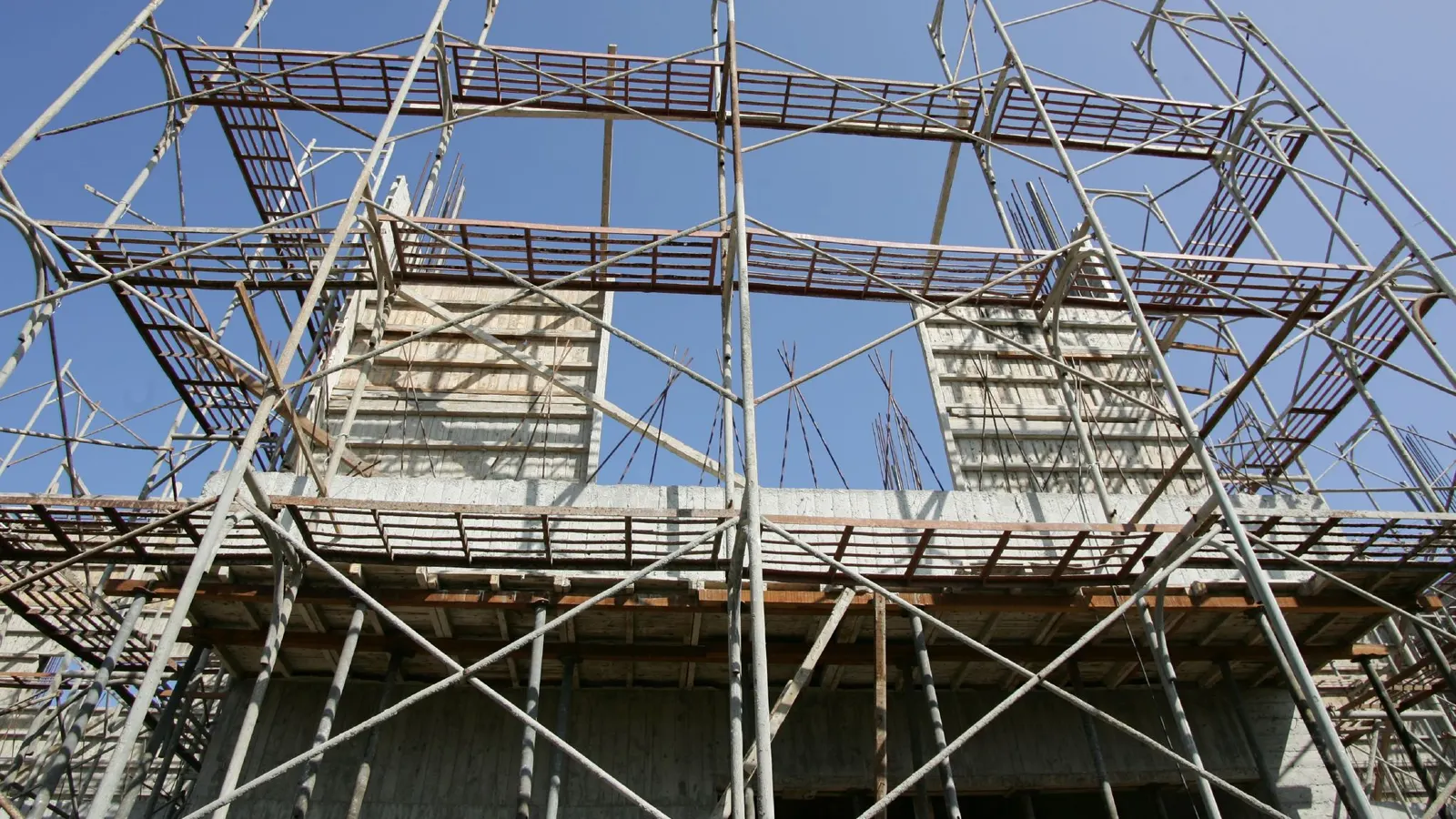
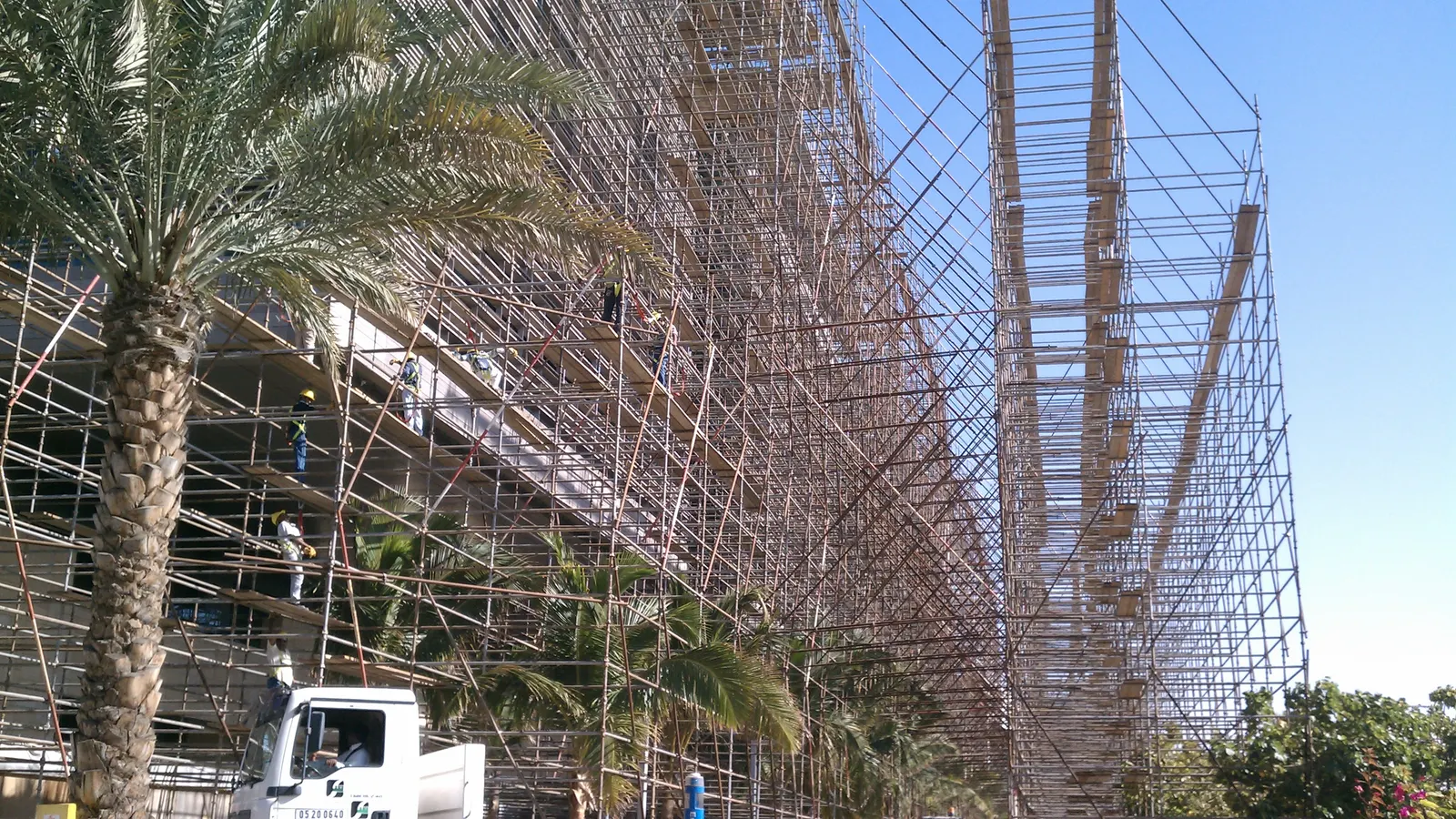
Scaffolds fall into four families. Supported scaffolds stand on the ground: independent, frame and system scaffolds, and birdcages. Suspended scaffolds hang from the roof. Cantilever and truss-out scaffolds project from the building. Mobile towers roll on castors. Pick the family from where the load can go and how long the access is needed, then choose the system, whether tube and clamp, cuplock, ringlock or frame. Compare scaffolding systems suppliers in the UAE and in Saudi Arabia once you know the type.
This guide is for project engineers, planners and buyers deciding what kind of access to specify. It covers each scaffold type, what the Abu Dhabi, Dubai, Sharjah and SASO rules say about it, and when a mobile elevating work platform is the better answer. For an overview of systems, standards and emirate codes, start with our main guide to scaffolding in the UAE and Saudi Arabia. ListGCC did not test any equipment. All rules quoted here come from the regulators' own documents.
Types of scaffolding and the jobs they fit
Type
How it is supported
Typical jobs
Rule to check first
Independent tied scaffold (tube and clamp or system)
Two rows of standards on the ground, tied to the building
Facade work, blockwork, plastering, cladding
Design over 10 m (Abu Dhabi, Sharjah). Tie pattern
Frame scaffold
Prefabricated frames on base plates and jacks
Regular, flat facades on level ground
Level, compacted base (Dubai)
Birdcage scaffold
Grid of standards across a floor area, platform on top
Ceilings, atriums, soffits, hall interiors
Load on the floor below. Freestanding design (Abu Dhabi)
Suspended scaffold or cradle
Platform hung on wire ropes from roof outriggers
Facade cleaning, painting, glazing, sealant work on towers
Third-party certificate (Dubai). Design drawing (Abu Dhabi)
Cantilever or truss-out scaffold
Projects from the structure on beams or needles
Upper floors where the ground is blocked by roads, podiums or lower roofs
Special design. Harness anchorage during erection (Sharjah)
Mobile or static tower
Prefabricated frames on lockable castors or base plates
Short tasks indoors and outdoors: MEP, ceilings, signs
EN 1004 certification and PASMA-trained erectors (Abu Dhabi)
Supported scaffolds
Dubai's Code of Construction Safety Practice groups frame, tube and clamp, system and mobile tower scaffolds as supported scaffolds. These are the default choice whenever the ground can carry the load. They come in three common forms.
Tube and clamp
Dubai describes tube and clamp scaffolds as vertical posts, runners parallel to the structure, bearers that support the platform, and diagonal bracing, joined with right-angle and swivel clamps. This form fits almost any geometry, which is why it is used for plant rooms, pipe racks, domes and irregular facades. Dubai caps tube and clamp scaffolds at 38 m unless a specialised third party designs the scaffold and the engineering office approves it.
Frame scaffolds
Dubai describes frame scaffolds as fabricated steel frames with cross bracing. They are relatively simple and fast to erect when the surface is level and access is not restricted, because every part connects at a predetermined place. They must stand on base plates with adjustable levelling screws and proper mudsills on well-compacted soil. Frame scaffolds suit villas, low-rise blocks and long, flat elevations, but not curved or stepped buildings.
System (modular) scaffolds
System scaffolds have standards with fixed connection points. Dubai's code names the cup-lock system as the most popular and notes that modular systems need less erection expertise because the connection locations are fixed. Rosette types, often called ringlock, are the other main family. Our spoke on cuplock vs ringlock vs tube and clamp compares them.
Birdcage scaffolds
A birdcage is a grid of standards covering a floor area, with a full platform at the working level. It is used for ceilings, atriums and the soffits of halls. The European standard GSO EN 12811-1:2012 names facade scaffolds, static towers and birdcage scaffolds as examples of working scaffolds. Under Abu Dhabi's code, freestanding scaffolds need a design drawing by a competent engineer. An engineer's advice is also needed before erecting on suspended floors, verandas, parapets or awnings, because the supporting structure must carry the load.
Suspended scaffolds and cradles
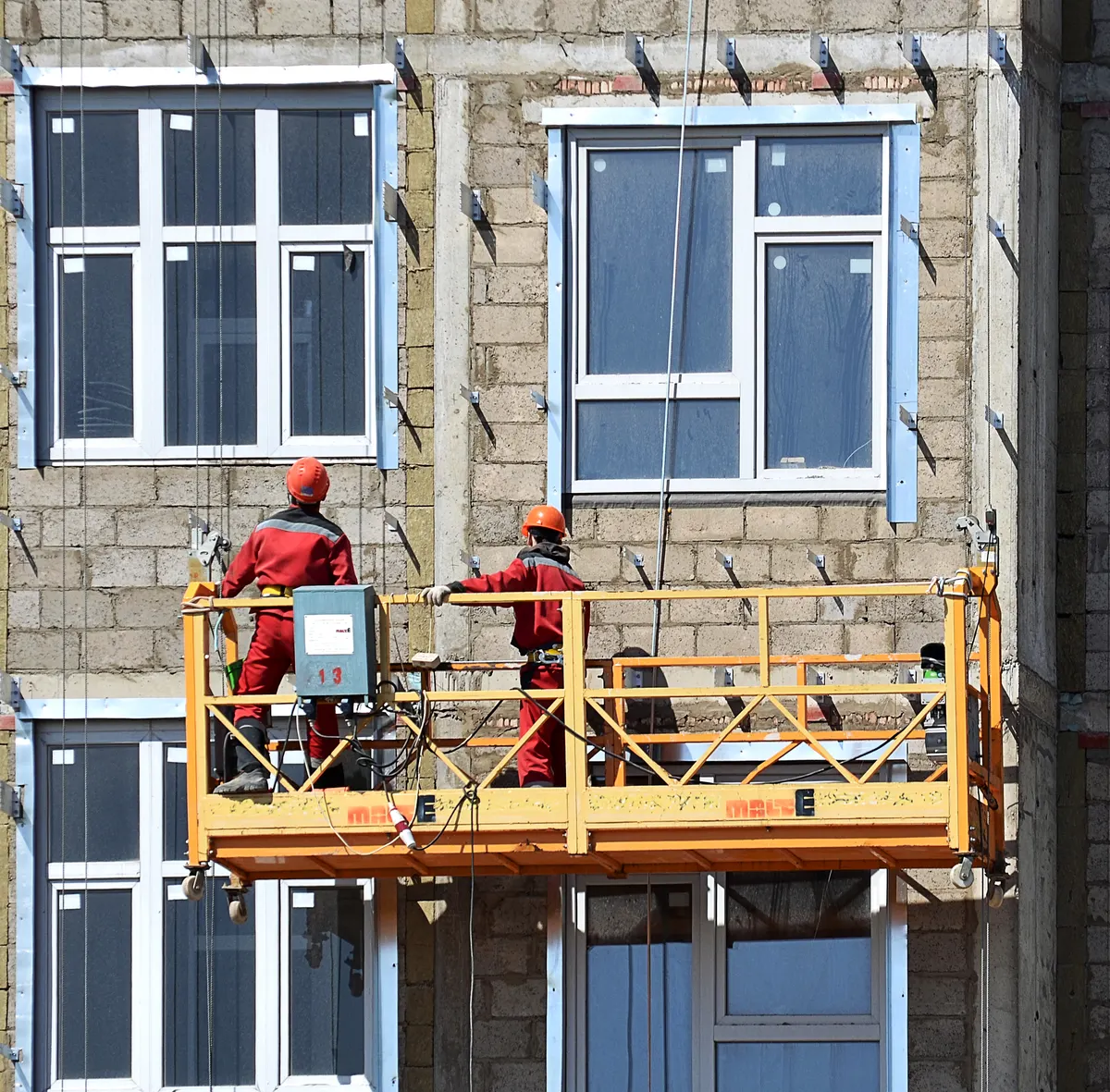
Suspended scaffolds hang from outriggers on the roof, with counterweights and hoists, and are the usual answer for work on Gulf towers. Dubai lists suspended platforms, cradles and boatswain's chairs as types. Its main requirements:
Counterweights must be at least four times the total weight of the scaffold, meaning its own weight plus capacity. Suspension ropes on non-adjustable suspended scaffolds must hold at least six times the maximum intended load.
Platforms must be at least 60 cm wide for footing only and 80 cm wide with materials, and no more than 30 cm from the building face.
Workers must wear a full body harness with lanyard, shock absorber, rope grab and lifeline.
A third-party company approved by the competent authority must inspect the scaffold and issue a test certificate, and do so again if the scaffold is moved.
Abu Dhabi requires a design drawing for all suspended scaffolds, and anyone erecting or altering one needs a Scaffolding Competency Certificate from an approved third-party trainer. SASO's guide in Saudi Arabia also requires suspension ropes to carry six times the total load plus the scaffold's weight.
Cantilever scaffolds are used when the ground below cannot take a scaffold. The usual reasons are a road, a busy entrance, a podium roof or a neighbour's property. They need a specific design. Sharjah's OSHJ-CoP-23 does not give technical detail for cantilever, truss-out or slung scaffolds. It does say that these types make it hard to provide collective protection during erection, so scaffolders need supplementary personal protective equipment and anchorages until guardrails are in place. Abu Dhabi's code lists ladder beams and non-standard ties among the features that trigger an engineer's design. Expect cantilever scaffolds to take longer to design and approve than an independent tied scaffold.
Mobile and static towers
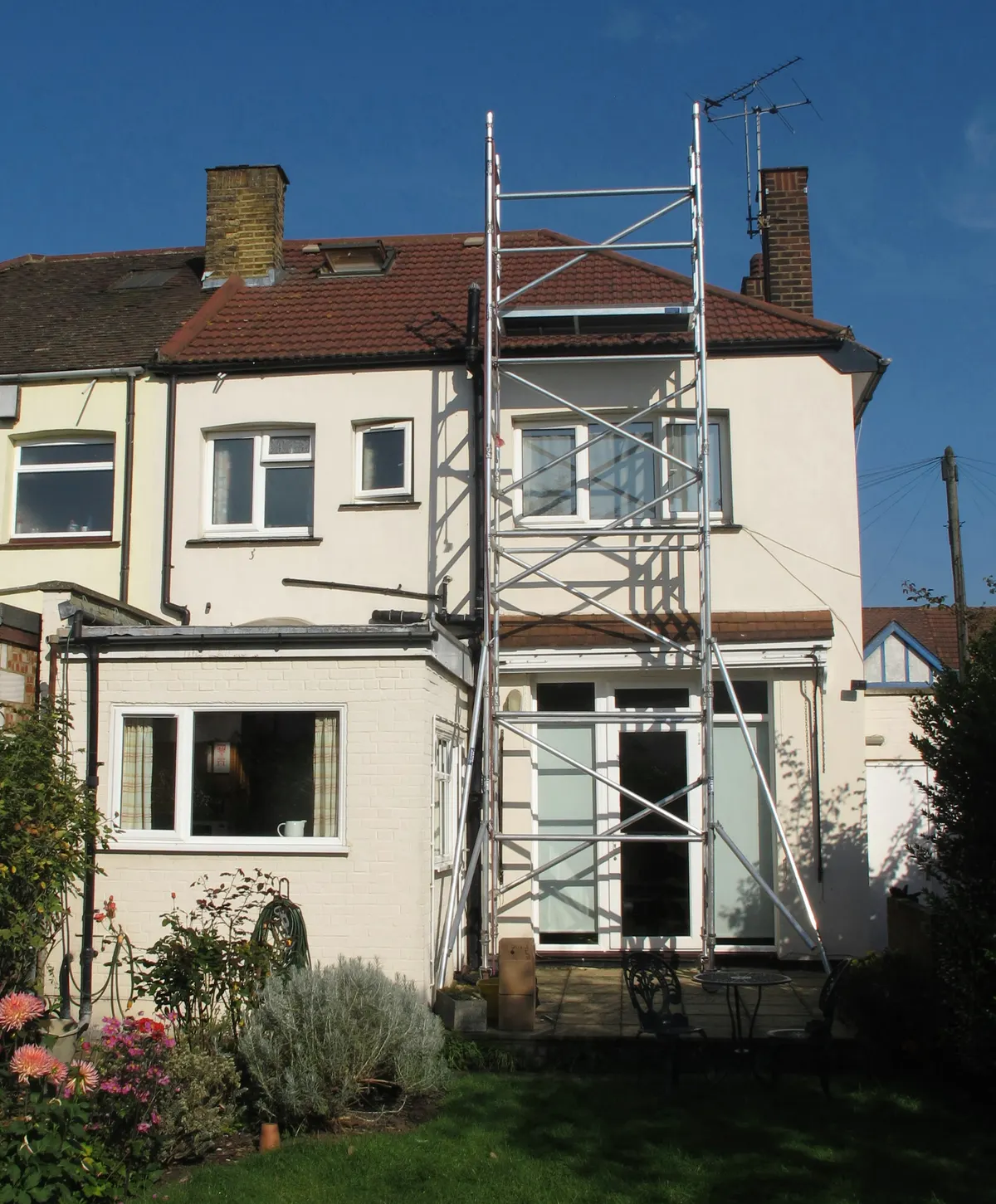
Towers are the go-to for short, low-level work. Abu Dhabi's code sets the strictest rules in the region:
Prefabricated towers, usually aluminium alloy or GRP, must have product conformity certification to BS EN 1004. Assembly must use fall prevention methods such as Through The Trap (3T) or advance guardrails.
Erectors must be trained to PASMA or an equivalent standard.
Height to the working surface must be no more than three times the minimum base dimension, unless the manufacturer, supplier or designer specifies otherwise.
Castors must be locked during erection and use. The tower must be pushed from the base, never with a vehicle, and never moved in wind or with anyone on it. A lightweight aluminium tower must never be moved with a crane.
Dubai allows a mobile tower height of up to four times the smallest base width, with outriggers for anything taller. It requires the tower to be moved on level surfaces with the force applied no more than 1.5 m above the ground, and the casters locked before anyone climbs on. Sharjah covers towers in a separate code, OSHJ-CoP-24. According to PASMA, EN 1004-1:2020 covers standard towers up to 12 m indoors and 8 m outdoors.
Aluminium is mainly used for towers and some lightweight system scaffolds. Layher's Allround system, for example, is available in steel or aluminium. Aluminium is light to carry and move, which helps on fit-out work and in occupied buildings. Abu Dhabi's code sets two limits. Aluminium and steel components must not be mixed, because steel clamps may crush aluminium tubing. A lightweight aluminium scaffold must never be moved by crane. SASO's guide prefers metal (steel or aluminium) platforms where work involves high heat, to avoid fire.
When a MEWP is better than a scaffold
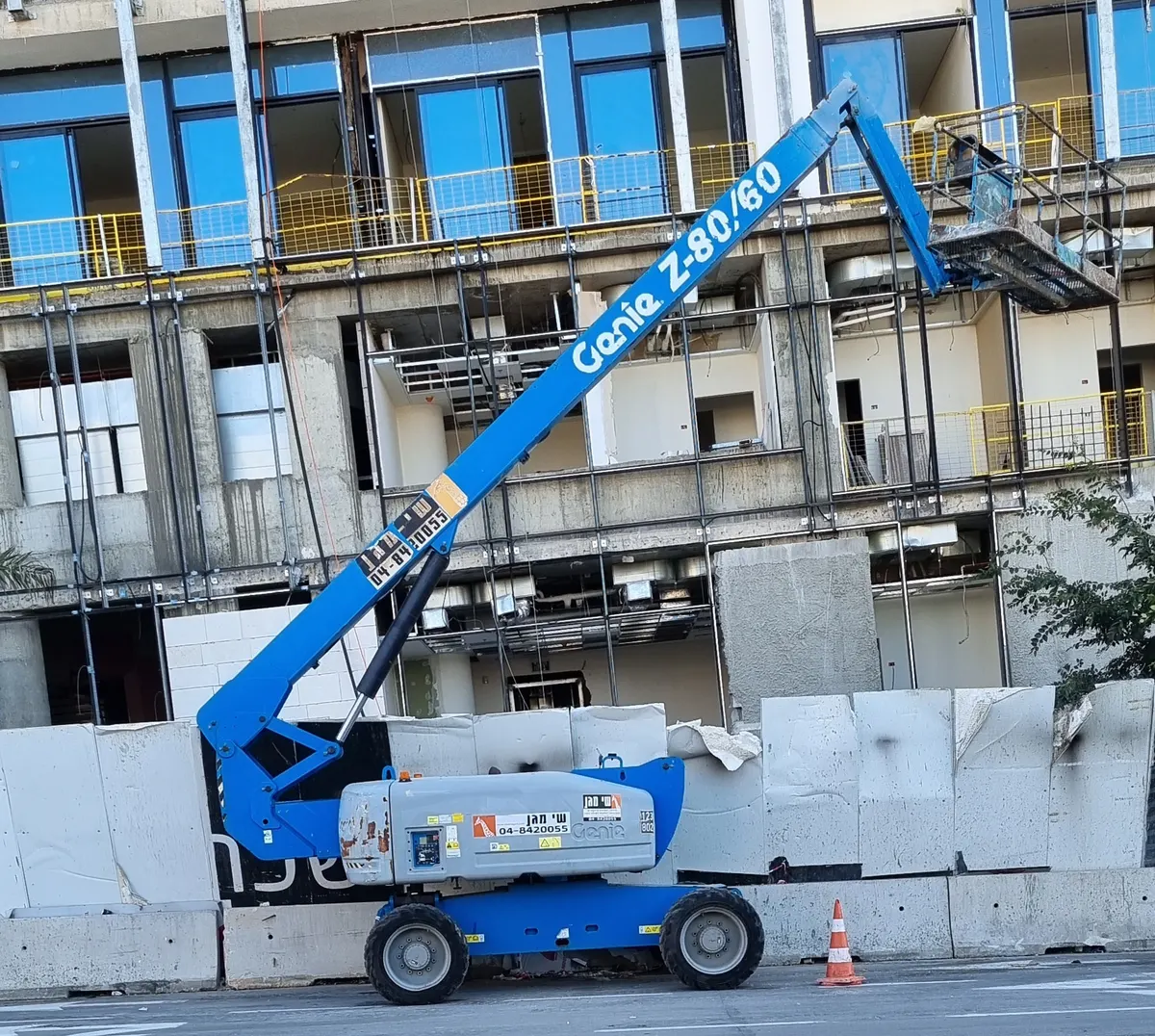
For a few hours or days at one spot, and wherever the ground is firm and level, a mobile elevating work platform often beats a scaffold on time and cost. Abu Dhabi's code says hazards should first be controlled by selecting a less hazardous form of scaffolding or access system. Scaffolds still win when many trades need the same access for weeks, when materials must be stored at height, or when the ground cannot carry a machine.
Genie
Genie, part of Terex since 2002, makes scissor lifts, articulating and telescopic boom lifts, telehandlers and vertical mast lifts. Its first scissor lift came in 1997. Its range suits indoor slab work as well as outdoor facade access.
JLG
JLG, owned by Oshkosh Corporation since 2006, makes boom and scissor lifts, vertical mast lifts and telehandlers. Its telescopic booms are often specified where reach is the main need.
Skyjack
Skyjack, a Linamar company, says its machines are designed for the rental industry, with easy-to-reach service points to keep downtime low. It builds vertical mast lifts, DC and rough-terrain scissor lifts, articulating and telescopic booms, and telehandlers.
An articulating boom lift beside a facade under renovation. For short tasks with good ground access, a MEWP can replace a scaffold. Photo: McKaby, CC0, via Wikimedia Commons
Choosing the type: a quick decision path
Can the ground at the base carry a scaffold? If not, consider suspended or cantilever scaffolds.
Is the work at one spot for a short time with firm, level access? Consider a tower or a MEWP.
Is the facade regular and flat with level ground? A frame or system scaffold will be quickest.
Is the geometry irregular, with pipes, domes or plant? Tube and clamp, or a rosette system with angled connections.
Is the work under a ceiling across a whole floor? A birdcage, after checking the floor below.
Over 10 m, or with sheeting, ladder beams or non-standard ties? Budget for an engineer's design in Abu Dhabi and Sharjah. In Dubai, get the design approved by the engineering office.
The main families are supported scaffolds (tube and clamp, frame, system and birdcage), suspended scaffolds and cradles, cantilever or truss-out scaffolds, and mobile or static towers. Dubai's Code of Construction Safety Practice names frame, tube and clamp, system, suspended and mobile tower scaffolds as the types used on construction sites.
What is cantilever scaffolding used for?
Cantilever scaffolding projects from the structure when the ground below cannot be used, for example over a road, entrance or lower roof. It needs a specific design. Sharjah's code notes that cantilever, truss-out and slung scaffolds make collective protection difficult during erection, so scaffolders need harnesses and anchorages until guardrails are fitted.
How high can a mobile scaffold tower be?
In Abu Dhabi, no higher than three times the minimum base dimension unless the manufacturer specifies otherwise. Dubai allows four times the smallest base width, with outriggers beyond that. According to PASMA, EN 1004-1:2020 covers standard towers up to 12 m indoors and 8 m outdoors. Always follow the manufacturer's instruction manual.
Is aluminium scaffolding as strong as steel?
Aluminium and steel systems are each designed to their own load ratings. Compare the manufacturer's stated capacity rather than the material. Abu Dhabi's code says the two materials must not be mixed in one scaffold, because steel clamps can crush aluminium tube. It also says lightweight aluminium scaffolds must never be moved by crane.
Do suspended scaffolds need third-party inspection in Dubai?
Yes. Dubai's Code of Construction Safety Practice requires suspended scaffolds to be inspected by a third-party company approved by the competent authority, which issues a test certificate. The inspection and certificate must be repeated whenever the scaffold is moved to a new position.
When should I use a scissor lift instead of scaffolding?
Use a MEWP for short tasks at one location where the floor or ground is firm and level and only a few people need access. Scaffolding is better when several trades need access for weeks, when materials are stored at height, or when the ground cannot carry a machine.
Scaffold systems compared, the EN and GSO standards suppliers quote, the scaffolding codes in Abu Dhabi, Dubai, Sharjah and Saudi Arabia, inspection and tags, hire or buy, and an RFQ checklist.
What green, yellow and red scaffold tags mean, what each must show, how often Abu Dhabi, Dubai, Sharjah and SASO require inspection, who the competent person is, and how to keep the register.
When to rent and when to buy scaffolding in the Gulf: the cost drivers, a break-even method with real quotes, hire clauses on minimum hire, alterations, loss, damage and insurance, and owner duties.