Solar Inverters: On-Grid, Off-Grid and Hybrid Compared
How string, micro, hybrid and off-grid solar inverters differ, what DEWA and SEC require before an inverter can connect, how heat affects them, and what to ask about batteries.
An on-grid inverter feeds solar power into your building and the grid but shuts down in a power cut; a hybrid inverter does the same and adds a battery port and backup; an off-grid inverter runs a site with no grid at all, on batteries. For most UAE and Saudi rooftops on net metering or net billing, a grid-tied or hybrid string inverter matched to your solar panels and modules is the starting point.
This spoke is for MEP contractors, facility managers and owners choosing between inverter types, and for anyone asked whether to add batteries. It compares string, micro, hybrid and off-grid designs, explains what heat does to an inverter, and sets out what DEWA and SEC check before one may connect. For sizing, rules and module brands, see our main guide to solar panels in the UAE and Saudi Arabia. ListGCC did not test any inverter: specifications are quoted from manufacturers' pages. Browse suppliers of solar inverters in the UAE or solar inverters in Saudi Arabia.
What an inverter does on a grid-connected roof
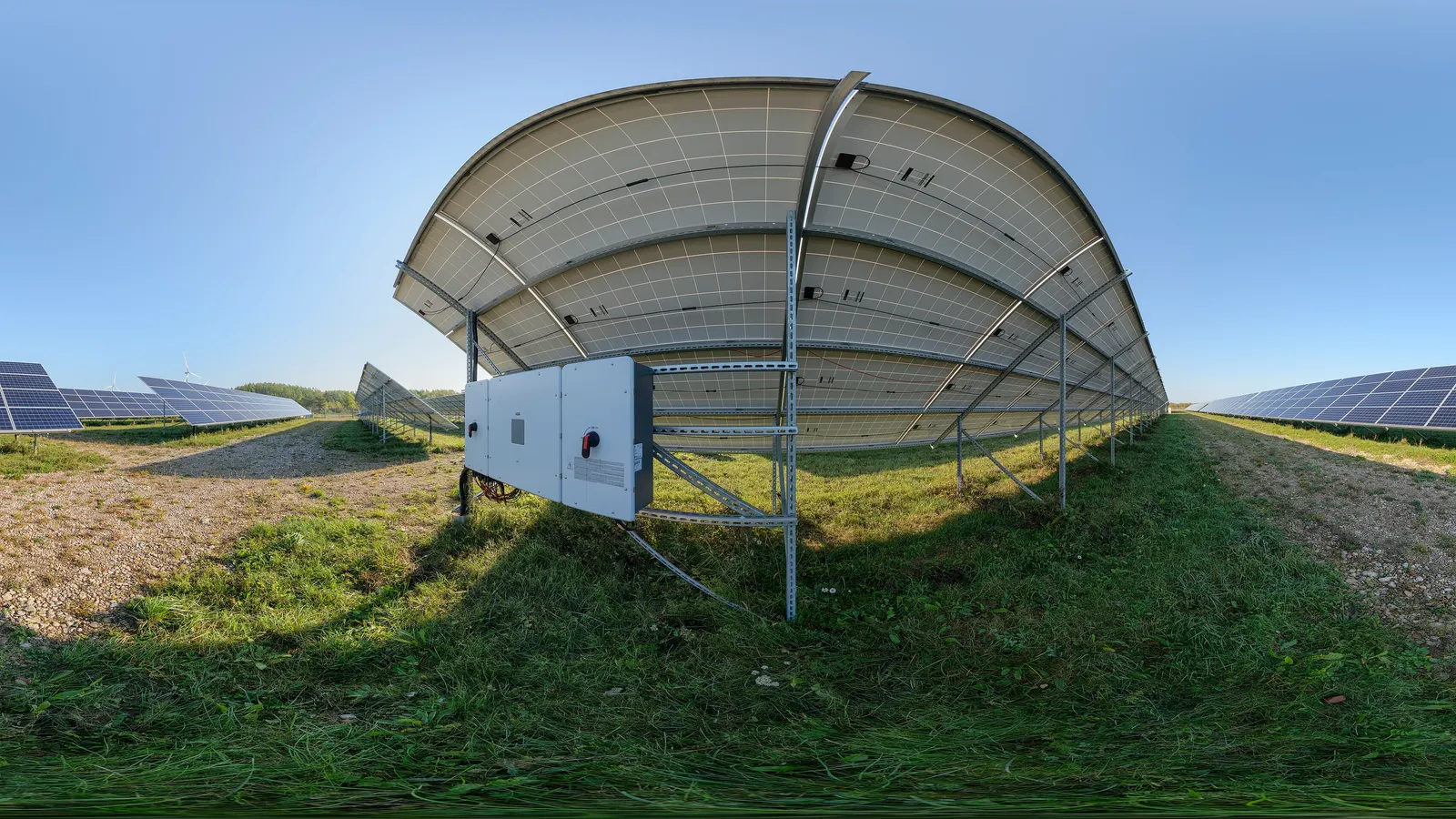
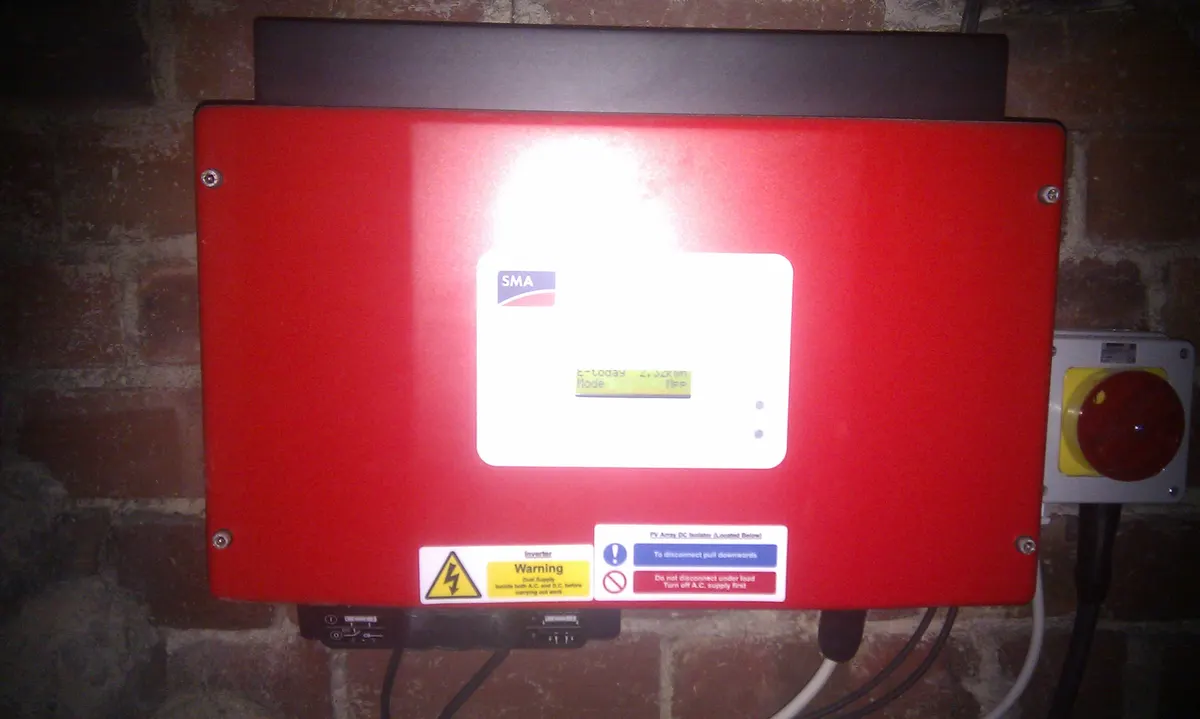
Modules produce direct current; the building and grid run on alternating current. The inverter converts one to the other and, as SEC's guidelines put it, also optimises the electrical operation of the PV array through maximum power point tracking (MPPT). On a grid-connected system it also works with the interface protection: DEWA requires an automatic decoupling device, either built into the inverter or fitted between inverter and grid, that stops the PV plant when a problem is detected on the network or during maintenance, so no current is injected into lines that have been switched off for safety.
That safety function is why a plain on-grid system goes dark in a power cut even on a sunny day. If you need power during outages, you need a hybrid or off-grid design with batteries and the right switching equipment.
On-grid, hybrid, off-grid and micro compared
Type
How it works
In a grid outage
Batteries
Suits
On-grid string inverter
One inverter takes several strings of modules, each string on an MPP tracker
Shuts down with the grid
None
Most villas, offices and factories on Shams Dubai or SEC net billing
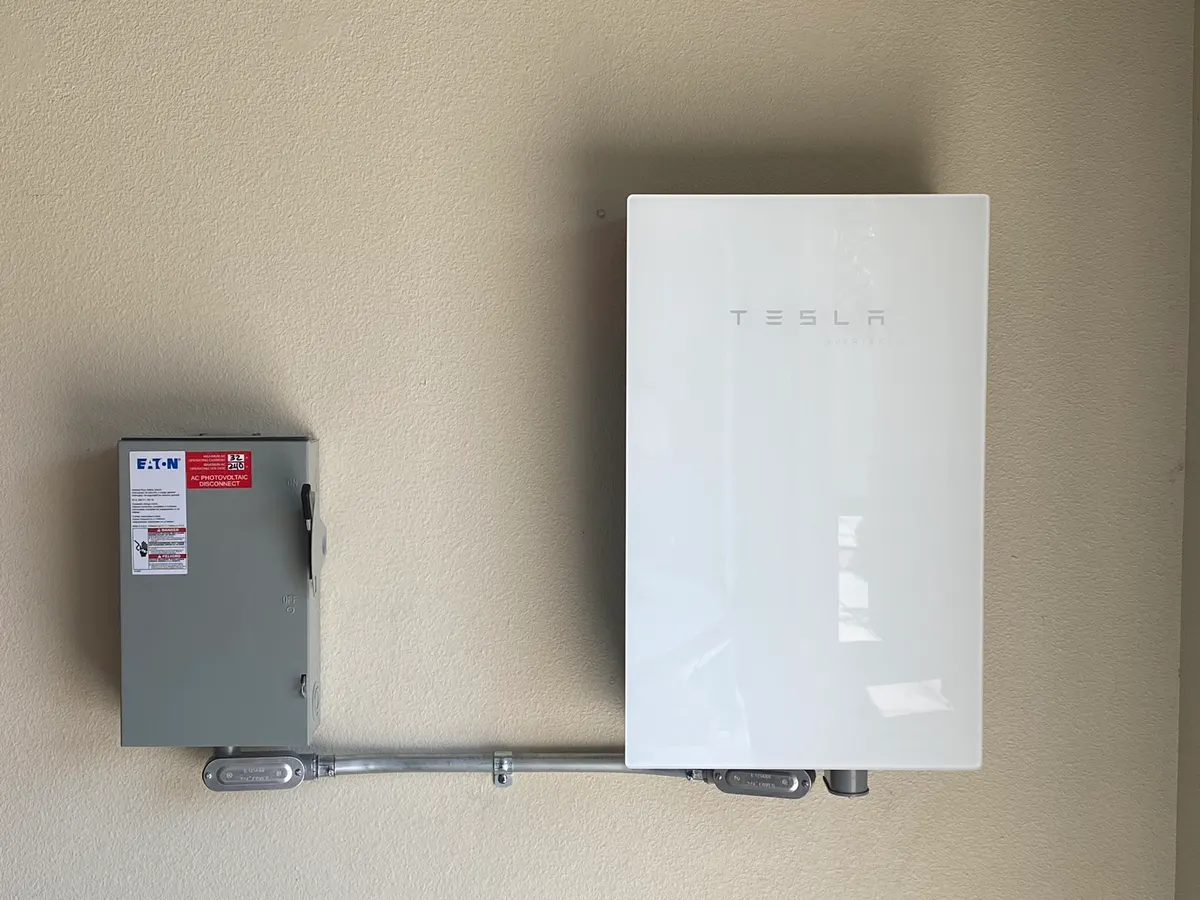
Hybrid inverter
A string inverter with a battery input and backup output
Can supply backup loads from battery and PV, with a grid switching device
Yes, from the same maker or listed compatible models
Sites that need backup or want to store daytime energy
Off-grid inverter
Runs a standalone system with no grid connection
Not applicable
Essential, sized for the night and cloudy days
Remote farms, rest houses, telecom and pumping sites
Microinverter
One small inverter per module, converting to AC at the module
Shuts down with the grid unless paired with a backup system
Through a separate battery system
Roofs with several orientations or partial shading
Module-level optimiser with string inverter
A controller on each module feeding a central inverter
As for the string inverter
As for the string inverter
Partly shaded roofs that still want one central inverter
DEWA's own description of the trade-off is plain: off-grid systems depend on rechargeable batteries to store excess electricity, while grid-connected systems need no storage because the surplus goes to the grid and is credited. It even suggests owners of off-grid systems that overproduce consider connecting to the grid to avoid costly battery replacements, provided the system meets DEWA specifications.
A string inverter is one box; if it fails, the whole system stops until it is repaired. Microinverters put the conversion on each module. Enphase, a microinverter maker, describes the benefit as one microinverter per module, so production keeps working even if one microinverter fails, and it offers a 25-year limited warranty on its IQ microinverters. Huawei offers a middle route with its Smart Module Controller (SUN2000-600W-PA0 for homes), which manages each module while a central inverter does the conversion.
For a simple south-facing roof without shading, a string inverter with two MPP trackers is usually enough: Huawei's residential SUN2000-MAP0 has two. Module-level electronics earn their cost where roof faces point different ways, where parapets, water tanks or AC plant cast shadows, or where module-level monitoring is wanted for maintenance. The trade-off is more electronics on a hot roof, so ask for the operating temperature range of the module-level devices too.
Heat: what the datasheet must show
Gulf heat makes an inverter's location and cooling as important as its rating. DEWA says the inverter should be in an airy, safe and accessible place, protected from direct solar radiation and water, and that inverter efficiency should exceed 95%. SEC's design checklist asks for each inverter's maximum temperature and IP enclosure and how dust is kept out of the installation room.
Huawei SUN2000-5K to 12K-MAP0: operating range -25 °C to +60 °C, natural convection cooling (no fans), IP66, maximum efficiency 98.4% to 98.6% and European weighted efficiency 97.5% to 98.2%, by model.
Fronius GEN24 Plus and Verto Plus: IP66 with active cooling; Fronius says active cooling protects the electronics from overheating.
Natural convection removes fans as a wear part; active cooling moves heat with fans, which are then a part to keep clear of dust. Neither is right in every case. What matters is the derating curve: ask each bidder for the output at your expected inverter ambient temperature (a shaded plant room, a sun-exposed wall or a hot roof) and for the location shown on the layout drawing.
Approval: which inverters can connect
Dubai: DEWA's eligible equipment list
Under Shams Dubai, the inverter must meet DEWA's minimum eligibility criteria and be registered on its List of Eligible Equipment through the DRRG Equipment Portal; DEWA says its old PDF list is obsolete. The criteria for PV inverters are:
IEC 62109-1/2 or UL 1741 for safety;
IEC 61000-3-2 or IEC 61000-3-12 for harmonics, plus an EMC pair from the IEC 61000-6 series matched to the usage category (residential, commercial and light industrial; industrial; or all);
compliance tests in DEWA's DRRG Standards (Version 3.0, December 2023), Appendix D.3 for LV or D.4 for MV connections;
harmonic spectrum data for each inverter.
Certificates must come from third-party ILAC-accredited laboratories working to ISO/IEC 17025. Interface protection devices have their own criteria, including IEC 61850 and DEWA's Appendix D.1 or D.2 tests. Check the exact model number on the list, not just the brand.
Saudi Arabia: SEC's technical standards and inspection
SEC applies its Technical Standards for the Connection of Small-Scale Solar PV Systems to the LV and MV Distribution Networks. The design file must specify each inverter's manufacturer, model, nominal power, maximum input current and voltage, MPPT range, output voltage and frequency range, maximum temperature, IP enclosure and certifications. At the end, SEC's inspector witnesses the commissioning test, in particular the test of the interface protection, before the meters are installed.
Batteries: when to add them and what to check
On Shams Dubai, credits roll over indefinitely, so storage rarely pays for itself on bill savings alone; its value is backup. Abu Dhabi's 2026 self-supply policy explicitly allows homes to store electricity in battery systems. In Saudi Arabia, value depends on how SEC's net billing values exports compared with what you pay for imports.
Huawei LUNA2000-S1: LFP cells, packs that combine from 5 to 21 kWh, IP66, warranty of up to 15 years. Huawei recommends it for its SUN2000-MAP0 inverters, which it describes as a whole-home backup solution that switches on during outages.
Fronius Reserva and Reserva Pro: high-voltage LFP batteries matched to Fronius hybrid inverters. Full household backup on the GEN24 Plus needs a battery and a grid switching device; the standard GEN24 offers basic backup through a single socket of up to 3 kW in sunshine and can add battery connection later through a software upgrade.
Sungrow also lists PV inverters and residential and utility energy storage systems among its products.
Ask for usable (not nominal) capacity, the battery's operating temperature range, where it will be installed (indoors and cool where possible), and confirmation that the battery is listed as compatible with the inverter. Compare battery energy storage systems and lithium-ion batteries.
An inverter will not last as long as the modules. DEWA cites a general inverter guarantee of 10 years, while module power warranties now run to 25 or 30 years. Budget for at least one inverter replacement over the life of the array, ask what extended warranty is available, and check who in the UAE or Saudi Arabia handles warranty claims and spare units.
Inverter RFQ checklist
Type: on-grid string, hybrid, off-grid or module-level, and why for this roof.
Model, AC rating, number of MPP trackers and the DC-to-AC ratio proposed.
Efficiency (maximum and weighted) and operating temperature range with the derating curve.
Cooling method, IP rating and the installed location on the drawings.
DEWA eligible-list entry for the exact model, or SEC technical-standard compliance and certificates.
Interface protection arrangement and settings.
For hybrids: compatible battery models, usable kWh, backup loads, switching device and changeover behaviour.
Monitoring platform and data access.
Warranty years, local service and spare-unit arrangement.
What is the difference between an on-grid and a hybrid solar inverter?
An on-grid inverter converts solar DC to AC and feeds your loads and the grid, but it disconnects when the grid fails, as interface protection requires. A hybrid inverter adds a battery input, so it can store surplus energy and, with a battery and a grid switching device, keep backup loads running during an outage. Hybrids cost more and need compatible batteries.
Does an on-grid solar inverter work during a power cut?
No. DEWA requires interface protection that stops the PV plant when a problem is detected on the network, so the system does not push current into lines that may be under repair. To keep power during outages you need a hybrid or backup-capable inverter, a battery and the switching equipment the manufacturer specifies.
Can I add batteries to my solar system later?
Often, if you choose the inverter with that in mind. Fronius, for example, lets its GEN24 inverter add battery connection later through a software upgrade, and Huawei lists LUNA2000 batteries for its SUN2000 residential inverters. A plain on-grid inverter may need replacing or an extra battery inverter. Ask before you buy which battery models are compatible.
Which inverters are approved by DEWA?
Those registered on DEWA's List of Eligible Equipment for the Shams Dubai programme, found on DEWA's website. To be listed, an inverter must meet IEC 62109-1/2 or UL 1741, IEC 61000 harmonics and EMC tests and DEWA's DRRG Standards compliance tests, with certificates from ILAC-accredited labs. Check the exact model, because listings are by model, not by brand.
How long does a solar inverter last?
Longer than its warranty but shorter than the modules. DEWA cites a general inverter guarantee of 10 years, while module power warranties now run 25 to 30 years, so plan for at least one inverter replacement. Keeping the inverter shaded, ventilated and free of dust, as DEWA and SEC both stress, protects its electronics in Gulf heat.
Are microinverters better than string inverters?
Not in every case. Microinverters, one per module, keep the rest of the array producing if one unit fails and suit roofs with several orientations or shading. A string inverter is a single unit to service and is usually enough for an unshaded, single-orientation roof. Compare the operating temperature ratings of whichever electronics will sit on the roof.
A step-by-step method to size rooftop solar in the UAE and Saudi Arabia from your bills, with modelled yields for five cities, roof area per kWp, DEWA and SEC caps and air conditioning examples.
A buyer guide to rooftop solar in the UAE and Saudi Arabia: yields by city, module types, DEWA, Abu Dhabi and SEC connection rules, dated cost figures, brands, warranties and an RFQ list.
Why solar panels in the UAE and Saudi Arabia produce less than their rating in summer and after dust storms, how to compare modules on heat, and how to plan cleaning and warranties.