Scaffolding Tags and Inspection: Green, Yellow and Red Tags Explained
What green, yellow and red scaffold tags mean, what each must show, how often Abu Dhabi, Dubai, Sharjah and SASO require inspection, who the competent person is, and how to keep the register.
A scaffold tag shows anyone at the access point whether the scaffold is safe to use. Green means it has been inspected and is safe. Yellow means it has been modified and can only be used with the precautions written on the tag. Red means do not use. In the UAE and Saudi Arabia a competent person must inspect before first use. After that, inspections happen daily before each use in Dubai, before each shift under the SASO guide, and at least every 7 days in Abu Dhabi and Sharjah, plus after bad weather or any alteration. Suppliers of scaffolding systems in the UAE and in Saudi Arabia often provide tags and inspection as part of the hire.
This guide is for site managers, HSE officers and scaffold supervisors setting up a tag and inspection system that will satisfy the local authority and the client. It compares what each Gulf code requires, explains what goes on a tag and in the register, and gives an inspection checklist. For systems, standards and hire, see the main guide to scaffolding in the UAE and Saudi Arabia. All requirements quoted come from the regulators' published codes. ListGCC did not test any tag product.
What green, yellow and red tags mean
The most detailed tag definitions in the region are in an annex of SASO's occupational safety and health guide for scaffolding activities, which the guide marks as mandatory. Dubai's Code of Construction Safety Practice uses the red and green pair.
Tag
Meaning
What it must show
Who changes it
Green
Inspected, complete and safe to use
Erection date, tag date, inspection date, inspector's name and signature or stamp, and the party responsible for erection and maintenance (SASO). Dubai requires the competent person to sign it
Competent person, after inspection
Yellow
Modified to suit the work. Usable only with special precautions
The possible hazards, the precautions to take before use, and the name of the party permitting use (SASO)
Stays until a competent person inspects and replaces it with red or green
Red
Unsafe. Do not use
Work and project number, inspection date, inspector's name, and the reason (under erection, under dismantling, needs repair) (SASO)
Posted whenever the scaffold is incomplete or unsafe. Dubai also requires access to be physically blocked
SASO also requires every tag to be numbered so it can be tracked at periodic checks. Tags must be posted at the scaffold's access points. A yellow tag must not be removed until a competent person has inspected the scaffold and returned it to a safe state.
What each Gulf code requires
Dubai
Under the scaffolding chapter of Dubai Municipality's Code of Construction Safety Practice:
Partially erected or dismantled scaffolds must not be used. A prominent red scaffold tag must be posted, and access must be physically blocked.
Once a competent person authorised by the contractor has inspected the scaffold and found it stable and able to carry the intended loads, they sign and post the green tag.
The competent person must have adequate training and hold a scaffold competent person training certificate from a company approved by the competent authority.
Inspections are required daily before each use, after bad weather or long periods out of use, and after any alteration.
Separately, a third-party inspection body approved by the competent authority must inspect supported and suspended scaffolds and issue a certificate, repeated when the scaffold is moved.
Abu Dhabi
ADOSH-SF CoP 26.0 (version 4.1, February 2026) does not prescribe tag colours. It does require the following:
Inspection by a competent person after erection and before use, to confirm the scaffold matches the manufacturer's specifications or the design drawings. Where an engineer prepared the design, the engineer signs off against the drawings.
A handover certificate from the person responsible for erection, kept on site until the scaffold is dismantled.
Minimum inspections before first use and within every 7 days after that, after alteration or repair, and after any event that could affect stability, such as strong winds or storms.
Marking of each scaffold, including mobile and tower scaffolds, at a prominent location with the date erected, use, loading, last inspection and inspected by.
Danger tags and signs such as "Keep Out: Falling Objects" and "Danger: Incomplete Scaffolding" where these hazards exist, and a prominent warning at every access point of a partly erected or dismantled scaffold.
Sharjah
OSHJ-CoP-23 requires scaffold tag systems that clearly show whether the scaffold is in use or not, usually at ladder access points. A scaffold must not be used unless a competent person has inspected it within the previous seven days. Inspection is required before use, at least every seven days, and after modification, a period without use, bad weather, damage (including vehicle impact), or excavation near the base. "Scaffolding incomplete" signs come down and "scaffolding complete" signs or tags go up at handover. Inspection, handover and maintenance records must be kept.
Saudi Arabia
SASO's guide requires inspection after erection and before first use. On multi-lift scaffolds, each completed lift must be inspected before the next is built. It also requires a visual inspection before every shift, an inspection after any break in work longer than 7 days, and an inspection after severe weather such as strong winds. The inspector must have knowledge, training and experience suited to the type and complexity of the scaffold. The guide calls for a scaffold inspection report that records any defects and the corrective action required.
Inspection intervals compared
Trigger
Abu Dhabi
Dubai
Sharjah
Saudi (SASO guide)
Before first use
Yes
Yes
Yes
Yes
Routine
Within every 7 days
Daily before each use
At least every 7 days
Visual before each shift
After alteration or repair
Yes
Yes
Yes
When site conditions change
After weather
Strong winds, storms
Bad weather
Bad weather
Strong winds and similar
After a break
Not specified
Long period out of use
Period without use
Break over 7 days
Third-party certificate
Engineer sign-off where designed
Approved inspection body for supported and suspended scaffolds
Not specified
Not specified
On projects that span emirates or work to a client specification, apply the strictest interval to every scaffold. In practice that means a daily pre-use check, a documented inspection at least weekly, and an inspection after every trigger event. The UK HSE guidance that many Gulf method statements borrow from is similar: inspect after installation and before first use, then at intervals of no more than 7 days, and after any circumstances liable to jeopardise safety, such as high winds.
Who is the competent person?
Each code links competence to training and experience suited to the scaffold.
Dubai: a person trained to supervise erection, dismantling and inspection, holding a scaffold competent person training certificate from a company approved by the competent authority.
Abu Dhabi: scaffold competencies shown by a qualification, certificate, permit, training or proven experience. Erectors of scaffolds over 10 m and of all suspended scaffolds need a Scaffolding Competency Certificate from an approved third-party provider. Mobile tower erectors need PASMA or equivalent training.
Sharjah: a competent person, with training covering the tagging system, inspection requirements and defect reporting for all scaffold users.
SASO: a person with knowledge, training and experience appropriate to the type and complexity of the scaffold.
HSE describes competence in the same terms: a combination of knowledge, training and experience appropriate to the type and complexity of the scaffold.
What to check at each inspection
Base: base plates on every standard, sole boards where needed, no washout, no excavation nearby, standards plumb.
Structure: built to the design or manual, all ledgers, transoms and bracing in place, joints tight, no mixing of systems.
Ties: all present at the designed spacing, none removed by other trades. Extra ties where sheeting or loading bays were added.
Platform: fully boarded, boards secured, gaps and overhangs within limits, clear of waste and stored materials.
Edge protection: guardrail at 950 mm or more, mid-rail, gaps 470 mm or less, toe boards 150 mm or more (UAE codes).
Access: ladders tied and extending above the landing, gates or trap doors working, landings at no more than 9 m intervals.
Loading: safe working load sign displayed, no overloading, loading bays within capacity.
Surroundings: distance from power lines, protection from vehicles, exclusion zones and fans or netting over public areas.
Tag and record: correct tag colour, tag details complete, register updated with defects and corrective actions.
Abu Dhabi requires inspection records to be kept on site. They must include the location, comments, date and time of each inspection, the relevant design or specification reference, and the details of the inspector. The handover certificate and any engineer's sign-off stay on site until the scaffold is dismantled. Sharjah requires inspection, handover, modification and maintenance records to be kept. A single register per scaffold, with a unique number matching the tag, meets all of these. Record the scaffold ID and location, the system and design reference, the erector and handover date, then each inspection with date, time, findings, corrective action, the tag posted and the inspector's signature.
Inspect the harnesses too
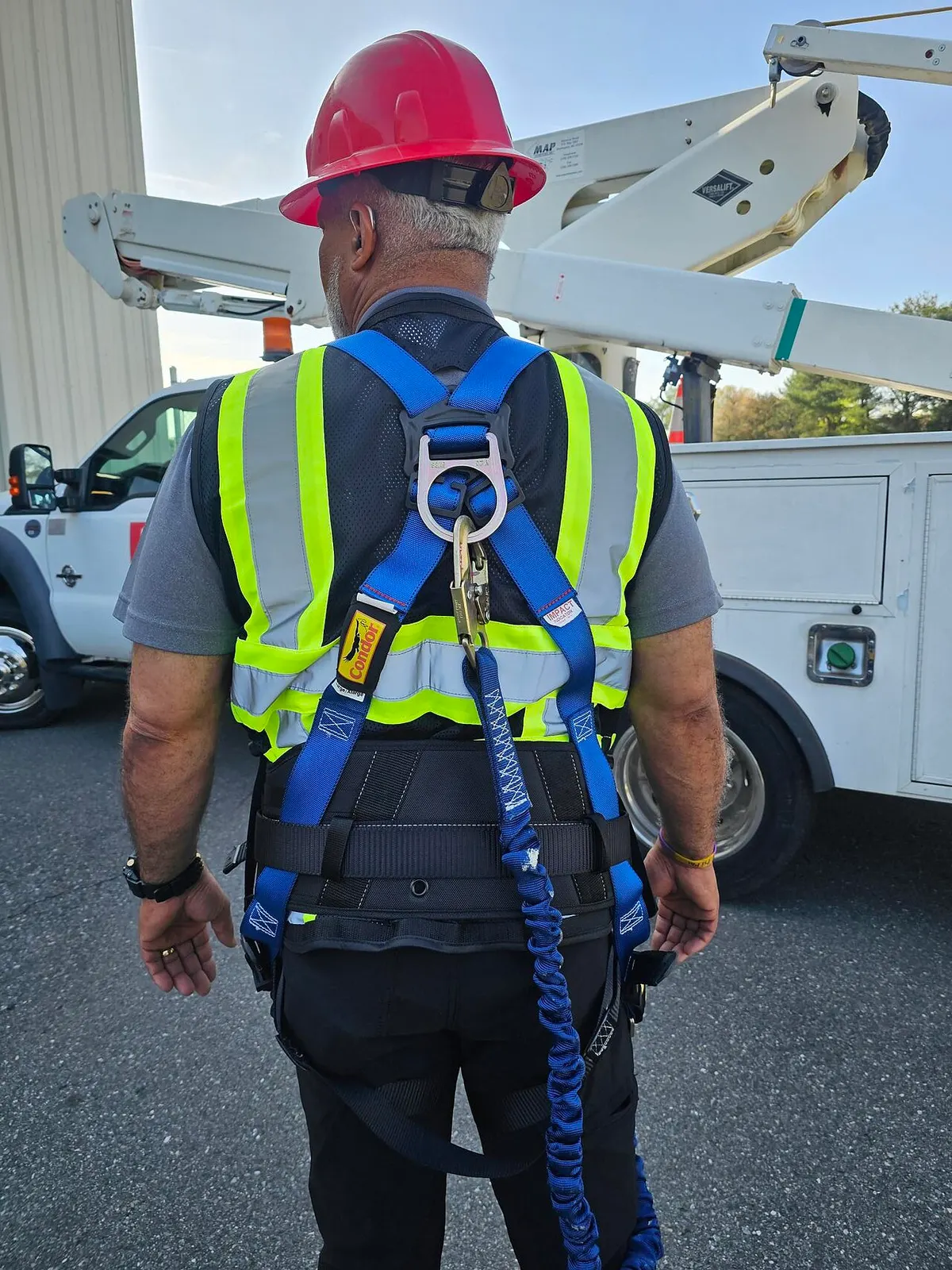
Harness inspection runs alongside scaffold inspection, because Abu Dhabi requires scaffold erectors to wear a harness at all times when working at height. Manufacturers set the inspection regime. Petzl's NEWTON notice calls for checks of the webbing, buckles, stitching and fall-arrest indicators before each use, and recommends a detailed inspection by a competent person at least every 12 months. The results go on a PPE inspection form with serial number, dates and the inspector's signature. Honeywell's Miller manual requires inspection by the user before each use and by a competent person other than the user at least once a year. Find harness and lanyard suppliers under safety harnesses.
When you hire, ask whether the supplier's competent person will inspect and tag, how often, and who keeps the register. In Dubai, also ask who arranges the approved third-party inspection certificate. When you buy, budget for tag holders and inserts, a register, and training for your own competent person under the emirate's rules. Find hire and erection contractors under scaffolding rental, or post a requirement for scaffolding with inspection included.
Frequently asked questions
What does a yellow scaffold tag mean?
Under SASO's scaffolding guide, a yellow tag replaces the green tag when the scaffold has been modified to suit the work and may present a hazard. The tag must list the possible hazards, the precautions needed before use, and the name of the party permitting use. It stays until a competent person inspects and posts red or green.
How often should scaffolding be inspected?
Before first use everywhere. After that, daily before each use in Dubai, a visual check before each shift under the SASO guide, and at least every 7 days in Abu Dhabi and Sharjah. Inspect again after alterations, bad weather or strong winds, and after breaks in use. On mixed projects, apply the strictest interval.
Who can sign a scaffold tag in Dubai?
A competent person authorised by the contractor. Dubai's code requires that person to be trained to supervise erection, dismantling and inspection, and to hold a scaffold competent person training certificate from a company approved by the competent authority. They sign and post the green tag after confirming the scaffold is stable and can carry the intended loads.
What information goes on a scaffold tag?
SASO requires the erection date, tag date, inspection date, the inspector's name and signature or stamp, and the party responsible for erection and maintenance. Red tags add the reason for the stop. Abu Dhabi requires each scaffold to be marked with the date erected, use, loading, last inspection and who inspected it.
Is a scaffold inspection needed after a sandstorm or high wind?
Yes. Abu Dhabi requires inspection after any event that could affect stability, giving strong winds or storms as examples. Sharjah lists exposure to bad weather, and SASO lists severe weather such as strong winds. Dubai also recommends stopping work on external scaffolds at 38 km/h wind speed.
Do scaffold inspection records have to be kept on site?
In Abu Dhabi, yes. Records must include the location, comments, date and time, design or specification reference and the inspector's details. The handover certificate stays on site until dismantling. Sharjah also requires inspection, handover and maintenance records to be kept.
Supported, frame, birdcage, suspended, cantilever and mobile tower scaffolds compared by job, with the Abu Dhabi, Dubai, Sharjah and SASO rules for each, aluminium towers and when to use a MEWP.
Scaffold systems compared, the EN and GSO standards suppliers quote, the scaffolding codes in Abu Dhabi, Dubai, Sharjah and Saudi Arabia, inspection and tags, hire or buy, and an RFQ checklist.
When to rent and when to buy scaffolding in the Gulf: the cost drivers, a break-even method with real quotes, hire clauses on minimum hire, alterations, loss, damage and insurance, and owner duties.