Wheeled vs Crawler Excavators: Choosing for Gulf Sites
Wheeled or crawler excavator: road speed against walking pace, outriggers and lift charts, ground pressure and shoe width on Gulf sand, undercarriage and tyre wear, urban work and what to ask suppliers.
Choose a crawler excavator when the machine stays on one site, works on sand, fill or rock, or needs maximum stability and size. Choose a wheeled excavator when it moves between many short jobs on paved roads, because it drives itself at road speed and does not damage asphalt. Excavator suppliers in the UAE offer both types, mostly in the 6 to 26 tonne range for wheeled machines.
This guide is for municipal, utility, road and earthworks contractors deciding which undercarriage to buy or hire. It compares mobility, stability, ground pressure, travel, tyres versus tracks in Gulf sand and rock, and the specs to put in a quote. For sizes, the main brands, used machine checks and import rules, see our excavator buying guide for the UAE and Saudi Arabia.
The short answer: it depends on where the machine spends its day
The undercarriage decides how a machine travels, how it stands while digging and what it costs to run. The table sets out the trade-offs; the sections below explain them with figures from makers' spec sheets.
Factor
Crawler (tracked)
Wheeled
Travel between sites
Low-bed trailer; travel speed is walking pace
Drives on the road under its own power, typically up to about 35 km/h where permitted
Municipal maintenance, utilities in cities, road works, ports and yards
Mobility: road speed against walking pace
This is the biggest difference. A crawler excavator moves slowly: Volvo's EC210 crawler, a typical 20 tonne class machine, has maximum travel speeds of 3.4 km/h in low and 5.4 km/h in high. To move it to the next site you need a low-bed trailer, a truck and, for larger loads, whatever road permits apply.
A wheeled excavator drives itself. Komatsu's PW168-11, a 16 to 18 tonne wheeled machine, lists maximum travel speeds of 35 km/h (high), 10 km/h (low) and 2.5 km/h (creep), with a 20 km/h speed restriction available as an option, and a speedometer for road homologation. Volvo says its EW180E can tow a trailer of up to 8 tonnes with brakes (3 tonnes without), so a crew can bring a trailer of attachments, pipe or kerbs with the machine.
For a contractor with ten small jobs a week across a city, that saves a low-bed booking for every move and lets one operator relocate the machine. For a contractor who stays on one earthworks site for months, road speed adds little.
Before you drive any excavator on a public road in the UAE or Saudi Arabia, confirm with the traffic authority how it must be registered, plated and driven, and what licence the driver needs. This guide does not cover vehicle licensing, and rules differ by emirate and region.
Stability: tracks are always planted, wheels need help
A crawler excavator stands on two long tracks, so it is stable over the front, rear and sides without extra equipment, and it can work on slopes. Volvo quotes a gradeability of 35 degrees for the EC210.
A wheeled excavator stands on tyres and axles, so for heavy digging or lifting it lowers a dozer blade, outriggers (stabilisers) or both. That set-up changes the machine's weight and capacity. Komatsu's PW168-11 data shows how much:
PW168-11 undercarriage set-up (mono boom)
Operating weight
Without blade or outriggers
15,775 kg
Rear blade
16,520 kg
Rear outrigger
16,815 kg
Two outriggers plus blade
17,560 kg
Four outriggers
17,855 kg
Komatsu publishes separate lift tables for the machine without stabilisers, with a front or rear blade and with a rear outrigger, each rated over the front and over the side. Its ratings follow ISO 10567 and do not exceed 87% of hydraulic lift capacity or 75% of tipping load. The practical lesson: when you compare a wheeled machine with a crawler for pipe laying or lifting, compare the lift chart for the set-up you will actually use, and order the outriggers if you lift over the side.
The PW168-11 also has axle oscillation of 8 degrees, lockable in any position from the cab. Locking the axle while digging stops the machine rocking on uneven ground.
Ground pressure: why crawlers float on Gulf sand
Ground pressure is the machine's weight divided by the area in contact with the ground. Tracks spread the weight over a long, wide footprint, which is why crawlers keep working on dune sand, loose fill and soft reclaimed ground where tyres sink or spin.
Shoe width lets you tune it. Volvo's spec for the EC210F L shows the effect:
Shoe width (triple grouser)
Operating weight
Ground pressure
Overall width
500 mm
21,880 kg
55.5 kPa
2,890 mm
600 mm
22,140 kg
46.8 kPa
2,990 mm
700 mm
22,560 kg
40.9 kPa
3,090 mm
800 mm
22,840 kg
36.2 kPa
3,190 mm
900 mm
23,120 kg
32.6 kPa
3,290 mm
Going from 500 mm to 900 mm shoes cuts ground pressure by about 40%, but adds weight and 400 mm of width, which affects transport and working in narrow corridors. Wide shoes suit sand and soft ground; on rock and breaker work they are more likely to bend, so narrower, stronger shoes are usually chosen there.
Wheeled excavators deal with ground through tyre choice. Volvo offers single and twin tyres for the EW180E in 12 configurations from eight suppliers. Twin tyres spread the load and add stability on firm ground, but no tyre set-up gives a wheeled machine the flotation of a tracked one in loose sand.
Wear and running costs in sand and rock
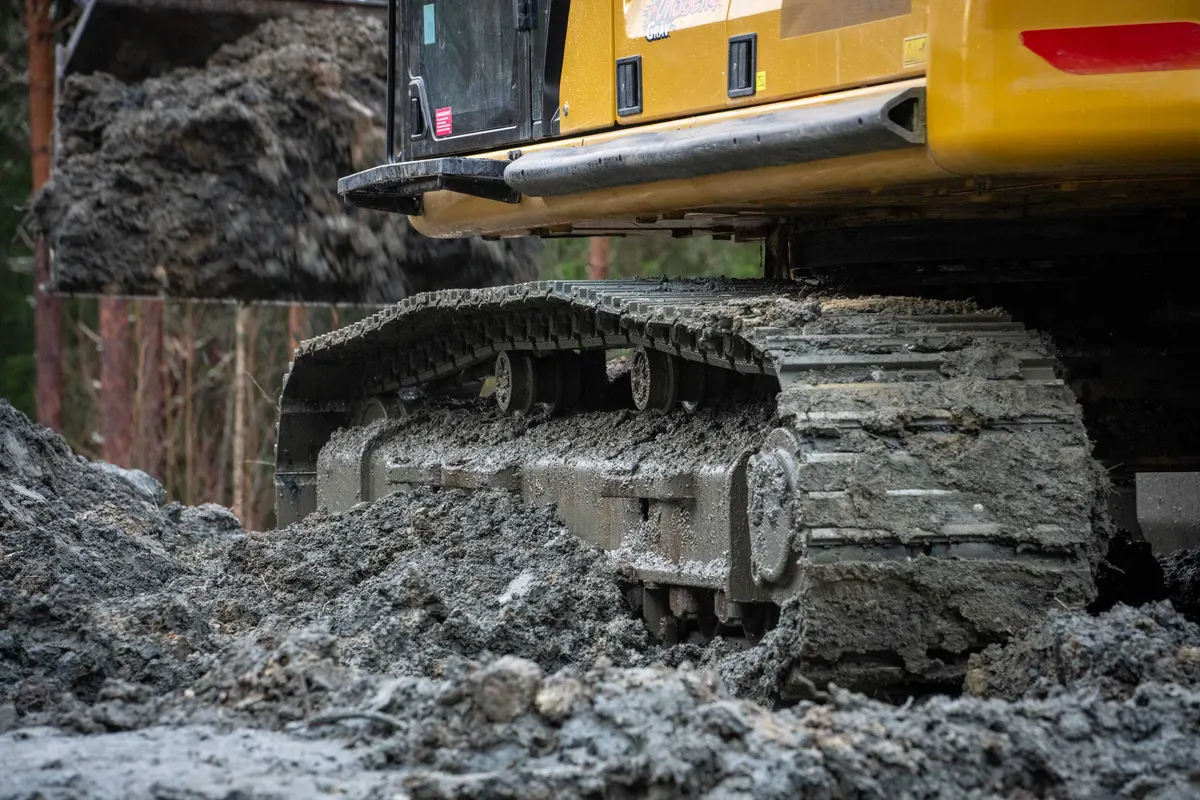
On a crawler, the undercarriage is the big wear item. Writing about crawler dozers, Komatsu says the undercarriage typically accounts for about 20% of the purchase price but 50% or more of lifetime repair costs, because it suffers more force, sliding and abrasion than any other part. Excavators travel much less than dozers, but the same parts wear, and abrasive Gulf sand works into pins and bushings. Long travel on tracks, high-speed reverse and constant turning on rock speed it up.
Ways to keep crawler undercarriage costs down on Gulf sites:
Choose shoe width for the ground, not the widest available.
Keep track tension to the maker's setting, and check it more often in sand.
Move the machine between distant work faces on a trailer rather than tracking long distances.
Ask for undercarriage measurement at each service so wear is tracked, not guessed.
On a wheeled excavator the equivalent costs are tyres, axles, brakes and the transmission. Tyres on hot asphalt and sharp rock fill wear and cut; ask the dealer which tyre options suit your surfaces and how tyre damage is treated under warranty.
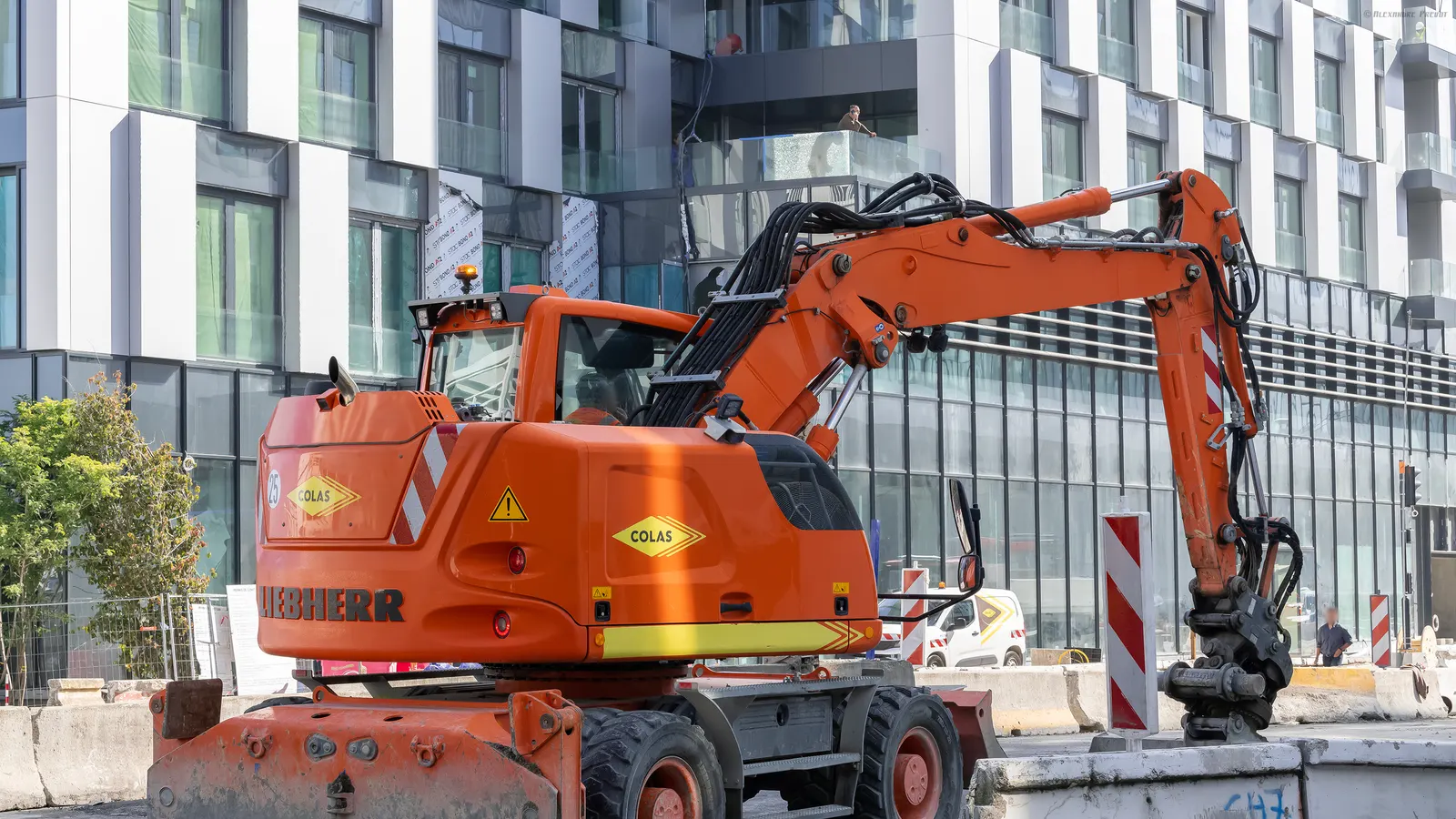
Wheeled excavators cover a narrower band. Volvo's European line-up, for example, runs wheeled machines from the EW65 at 6,120 to 7,400 kg up to the EW240 Electric material handler at 26,200 kg, while its crawler excavators run from compact models up to the EC750E HR at 103,028 kg. Liebherr's Compact wheeled models, from the A 909 to the A 916, run from about 10 to 18 tonnes, and Liebherr describes the smaller ones as versatile "in urban areas or off-road".
So for mass excavation, quarry faces and heavy rock breaking, which call for 30 tonnes and more, the choice is effectively a crawler. The real choice between the two arises in the 13 to 25 tonne class.
Urban and municipal work
Wheeled excavators are built around city work. When working in one traffic lane, compare tail swing radius on the spec sheets (Volvo lists 2,550 mm for the EW180E). Wheeled machines do not tear up asphalt, interlock or kerbs when they move, they can drive from the depot to the job, and many are set up as tool carriers with a tiltrotator or quick coupler and a trailer of attachments. Komatsu, for example, lists preparation for tiltrotator fitting and a 2.75 m wide axle option on the PW168-11.
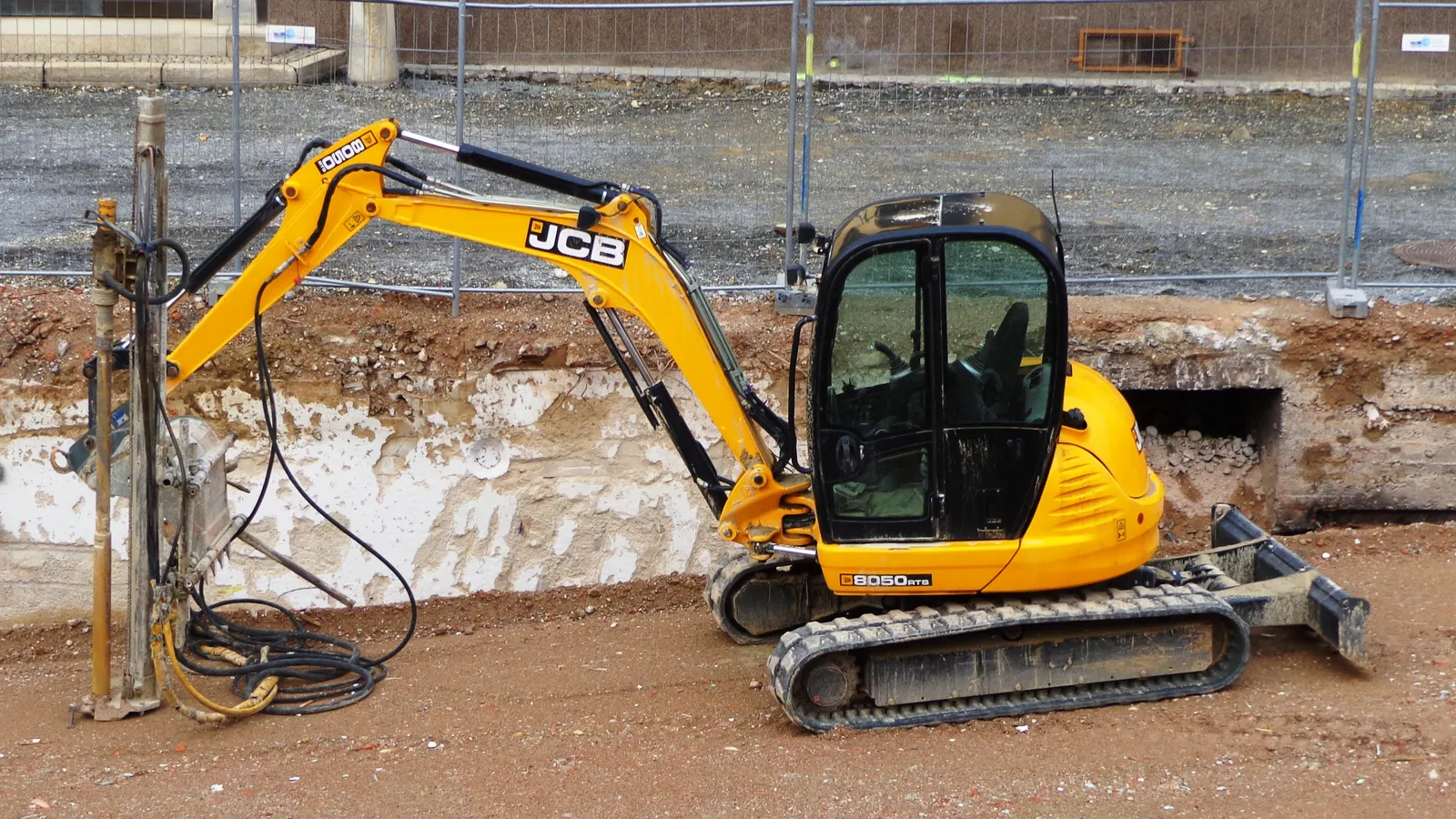
Crawlers can still work in cities. Rubber track pads protect paving, and a short-radius crawler suits tight plots. If the job is a single basement or a long trench that will take weeks in one place, a crawler is often the better tool even in town.
Gulf conditions that change the choice
Desert and coastal sand: favours crawlers, with shoe width chosen for flotation.
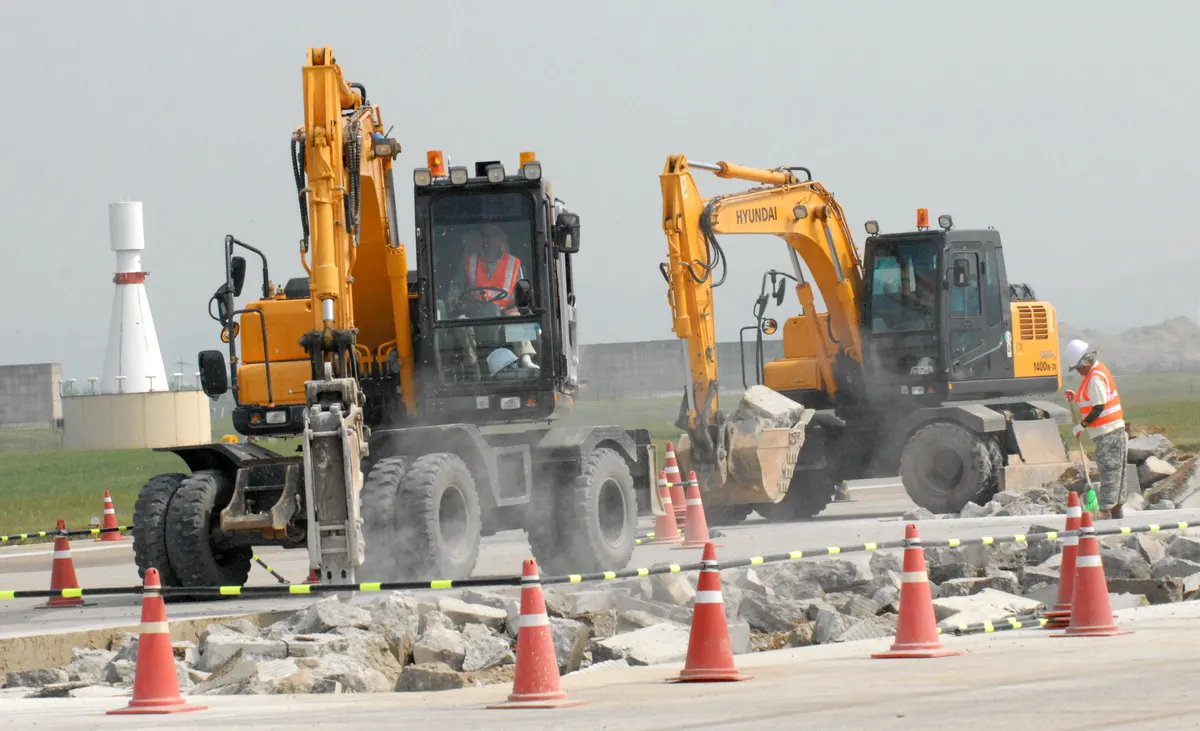
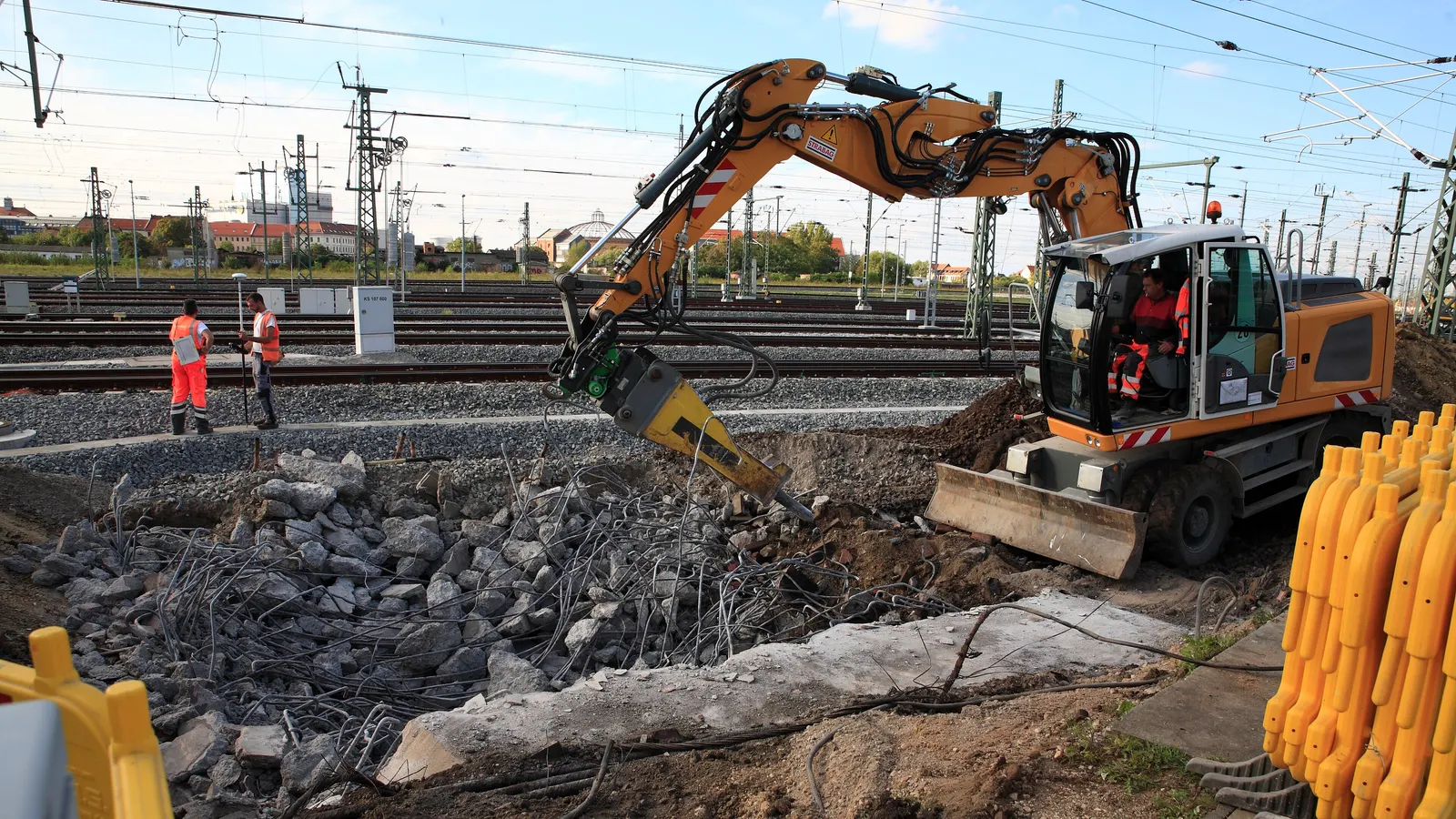
Rock and breaker work: favours crawlers for stability and protection; a wheeled machine can run a breaker on firm ground with outriggers down (see the photo above) but heavy rock calls for a larger tracked carrier.
Heat: both types need the cooling and filtration spec covered in the main guide. On wheeled machines also ask about tyre ratings for hot road surfaces and long road travel in summer.
Long distances between sites: favour wheeled machines in cities; in remote areas, distances and road rules may still mean a low-bed.
Brands that build both
Every major maker builds crawler excavators, but not all offer wheeled ones. Among those that list both:
Volvo Construction Equipment
Volvo CE lists wheeled excavators from the EW65 to the EW240 material handlers, including EWR models, alongside crawlers up to more than 100 tonnes.
Komatsu
Komatsu sells the PW wheeled range, which it describes as all-European, plus wheeled midi excavators, alongside its crawler PC range.
Liebherr
Liebherr builds wheeled excavators such as the A 909 to A 916 Compact models as well as crawler, railroad and mining excavators.
Where the machine will work: ground type (sand, fill, rock, asphalt), slopes, and how often it moves between sites and how far.
For crawlers: shoe width and type, resulting ground pressure and overall width, and whether rubber pads are needed for paving.
For wheeled machines: blade and outrigger arrangement, tyre type (single or twin), maximum travel speed, axle lock and road equipment.
Lift chart for the exact set-up (over front and over side, with and without stabilisers).
Tail swing radius and overall width if you work in one traffic lane or between buildings.
Quick coupler, auxiliary hydraulics and any tiltrotator preparation.
Cooling rating and air filtration for Gulf heat and dust.
Undercarriage or tyre warranty terms, and the dealer's parts stock for tracks, rollers or tyres.
Transport method and cost for crawlers; registration and driver licensing for wheeled machines on public roads.
Send the same checklist to each supplier. To compare offers quickly, post your excavator requirement on ListGCC and dealers and hire firms will respond.
What is the difference between a wheeled and a crawler excavator?
A crawler excavator runs on tracks, which spread its weight, keep it stable without outriggers and let it work on sand, soft ground and slopes, but it travels at walking pace and moves between sites on a low-bed. A wheeled excavator runs on tyres, drives itself at up to about 35 km/h and does not damage paving, but needs firm ground and a blade or outriggers for stability when digging or lifting.
Is a wheeled excavator good on sand?
Not on loose or dune sand. Tyres concentrate weight on small contact patches, so a wheeled machine sinks or spins where a crawler with wide shoes keeps working. Twin tyres help on firm, compacted ground but do not give the flotation of tracks. For desert sites, reclaimed land and loose fill, choose a crawler and match the shoe width to the ground.
How fast can a wheeled excavator travel?
Many mid-size wheeled excavators are rated at about 35 km/h. Komatsu's PW168-11, for example, lists 35 km/h in high, 10 km/h in low and 2.5 km/h creep, with an optional 20 km/h restriction. A typical 20 tonne crawler such as Volvo's EC210 travels at 3.4 or 5.4 km/h. Whether a wheeled excavator may drive on a public road depends on local registration rules.
Does track shoe width matter?
Yes. Wider shoes lower ground pressure and help on sand and soft ground, while narrower shoes are stronger on rock and keep the machine narrower. On Volvo's EC210F L, moving from 500 mm to 900 mm shoes lowers ground pressure from 55.5 kPa to 32.6 kPa, but adds about 1,240 kg and 400 mm of overall width.
Do wheeled excavators need outriggers?
For light digging on firm ground a blade may be enough, but for heavy digging, breaker work and lifting, outriggers make the machine much more stable, especially over the side. Makers publish different lift charts for each set-up, so check the chart for the configuration you will use. Outriggers add weight: on Komatsu's PW168-11, four outriggers add about 2 tonnes over the bare machine.
Which costs more to run, wheeled or crawler?
It depends on the work. Crawlers carry undercarriage wear, which Komatsu says can be 50% or more of lifetime repair costs on crawler dozers, plus low-bed transport for every move. Wheeled machines carry tyre, axle and transmission costs but avoid transport bookings. For many short urban jobs a wheeled machine usually wins; for long stays on sand or rock, a crawler does.
How to choose a mini excavator: what makers mean by mini and micro, size bands and jobs, zero tail swing or conventional, blade and boom swing, attachments, transport, electric models and digging rules.
How to choose excavator attachments: bucket types and wear parts, sizing a hydraulic breaker to the carrier, flow and pressure settings, breaker features, quick coupler interfaces and safety, and an RFQ list.
What to check before you rent an excavator in the UAE or Saudi Arabia: wet or dry hire, size, attachments, transport, inspection certificates, handover and off-hire, damage and insurance, and rent vs buy.