Mini Excavators: Sizes, Tail Swing, Attachments and Choosing One
How to choose a mini excavator: what makers mean by mini and micro, size bands and jobs, zero tail swing or conventional, blade and boom swing, attachments, transport, electric models and digging rules.
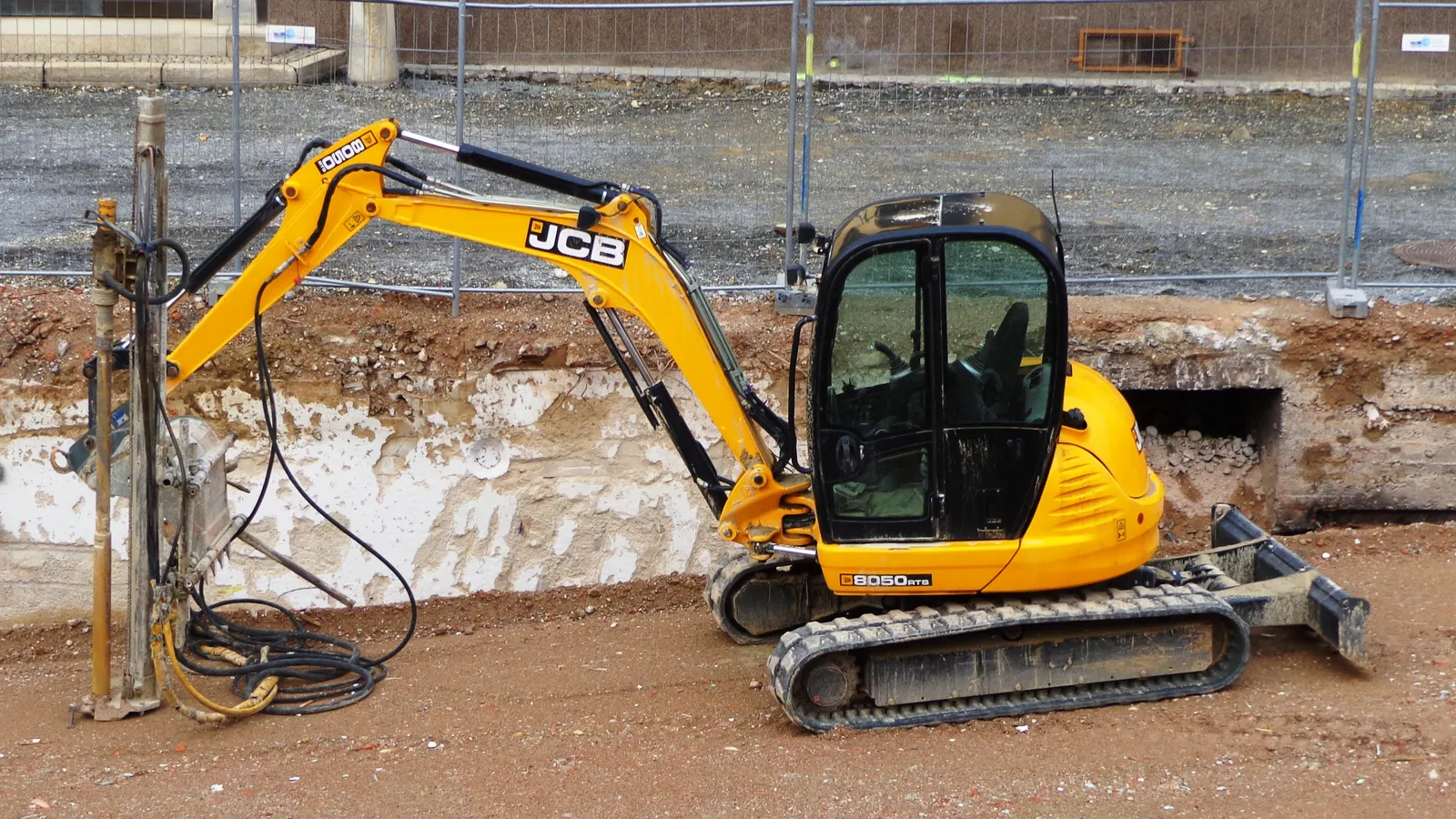
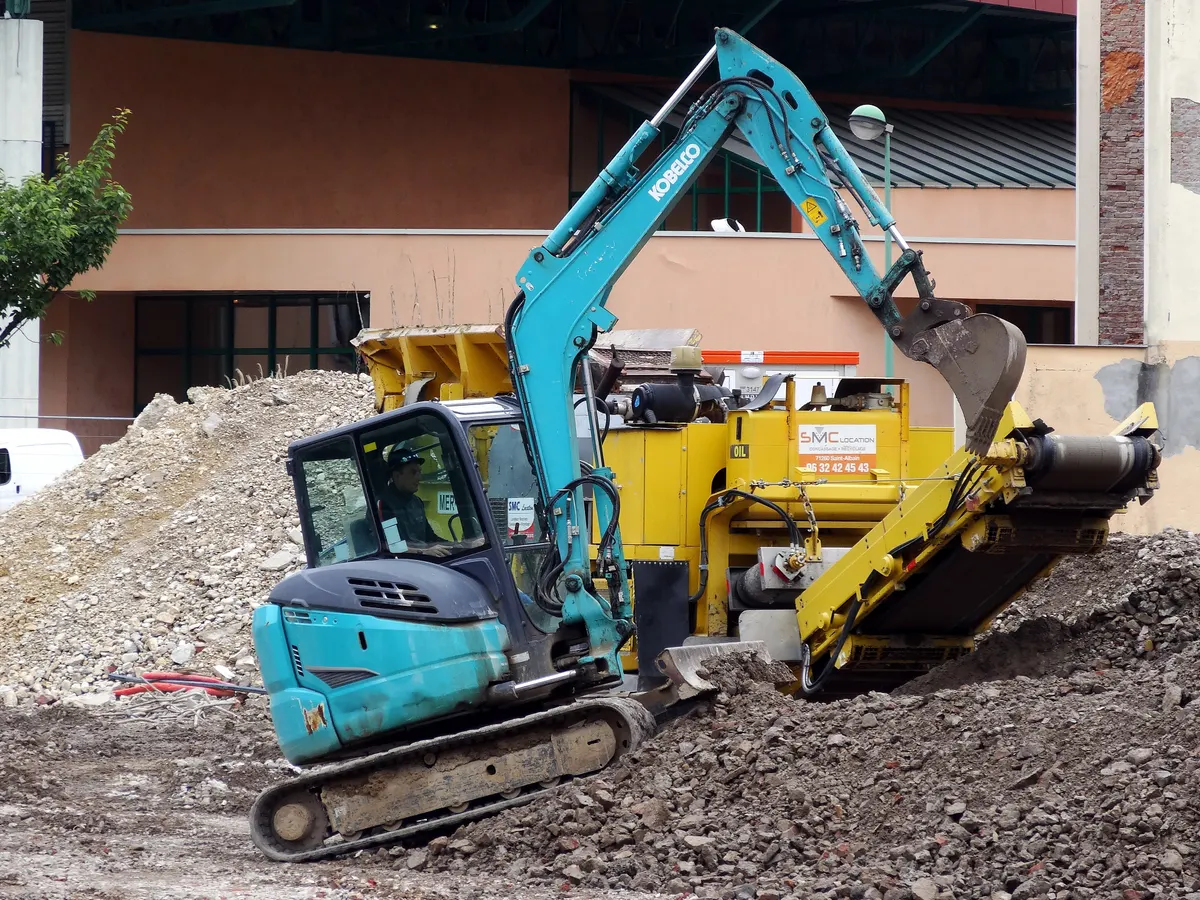
A mini excavator is a compact tracked digger, usually between about 1 and 6 tonnes, built for trenching, landscaping and digging where a full-size machine cannot fit or would damage the ground. Choose one by the dig depth and lift you need, the width of the access, and whether the tail must stay inside the tracks. Excavator suppliers in the UAE stock and hire mini models from most major makers.
This guide is for utility, landscaping, villa and fit-out contractors, and for plant managers adding a small machine to a fleet. It goes deeper on one question: which compact excavator suits which job. For the full size range, crawler versus wheeled machines, the 14 main brands, used machine checks and import rules, read our excavator buying guide for the UAE and Saudi Arabia. Prices are not quoted here; the cost drivers are.
What counts as a mini excavator?
There is no single cut-off that every maker uses, so check the operating weight on the spec sheet rather than the label. The terms "mini" and "compact" are used for the same machines, and "micro" is used for the smallest ones. Here is how a few makers and references draw the lines:
Source
What it calls mini or compact
Notes
Komatsu Europe
Mini excavators from 1 to 5.3 tonnes operating weight
Larger machines are sold as midi excavators
SANY
Mini excavators up to 5.5 tonnes
Small class runs from 5.5 to 20 tonnes
JCB (UK)
Micro diggers around 1 tonne; mini diggers 1.5 to 8 tonnes
Calls its 100C-2 a 10 tonne midi excavator
Wikipedia, compact excavator
Up to about 8.5 tonnes; "micro" generally below 1 tonne
Reflects common industry usage
For buying and hiring, it is more useful to think in four practical bands: micro (under 1 tonne), small mini (about 1 to 3 tonnes), large mini (about 3 to 6 tonnes) and midi (above that, up to around 10 tonnes). Each band changes what fits through a gate, what tows it and what it can lift.
Size classes and the jobs they suit
Pick the smallest machine that reaches the depth and handles the bucket and attachment you need. A bigger mini digs faster but needs more access width, a heavier trailer and firmer ground.
Band
Approximate operating weight
Typical jobs
Things to check
Micro
Under 1 t
Work inside buildings, basements, courtyards, behind villa gates, garden services
Track width (some retract), whether it fits a doorway, lift capacity is small
Small mini
About 1 to 3 t
Irrigation lines, cable and telecom trenches, landscaping, small footings
Dig depth with the standard arm, rubber tracks for paving
Large mini
About 3 to 6 t
Water and drainage trenches, villa foundations, loading small trucks, light breaker work
Tail swing type, lift chart, auxiliary hydraulics for a breaker or auger
Midi
About 6 to 10 t
Longer road and pipeline trenches, deeper services, bulk digging on tight plots
Transport now needs a low-bed or plant trailer and a heavier truck
Real numbers from one range show the spread. JCB's 8008 CTS micro digger has an operating weight of 950 kg and a width of 0.87 m, while its mini and midi range offers dig depths from 1.69 m to 4.81 m and engine power up to 55 kW. Volvo's compact ECR50 and ECR58 weigh 5,050 kg and 5,840 kg respectively. Use figures like these to shortlist, then confirm dig depth, dump height and lift capacity for the exact arm and bucket you will run.
Zero tail swing, short swing or conventional tail?
This is the choice that most often decides whether a mini excavator works on a tight Gulf site. It is about the back of the upper structure (the house and counterweight) as the machine slews.
Conventional tail swing: the rear counterweight extends beyond the tracks when the house rotates. The overhang gives more leverage for lifting and digging, but the operator must watch the rear when working next to walls, traffic or parked vehicles.
Zero tail swing: the house stays within the width of the tracks through a full rotation, so the machine can work right up against a wall or fence and slew without hitting it.
Short or reduced swing: in between, with only a small overhang. Volvo, for example, describes its ECR50 as zero tail swing and its ECR58 as short swing, and says the ECR58 has 10% more lifting capacity than the previous D-series model.
Makers often offer both layouts in the same weight class. JCB says its mini range includes zero tailswing options, and Develon (formerly Doosan) sells, for example, a DX17Z-7 zero tail swing machine alongside a DX19-7 conventional model. The trade press report on those two models notes that adding the optional 85 kg extra counterweight to the DX17Z-7 increases its tail swing radius from 645 mm to 720 mm, a reminder that "zero" depends on the configuration you order.
A simple rule: if the machine will spend its life alongside boundary walls, in traffic lanes or between buildings, choose zero tail swing. If it will mostly lift pipes, chambers or kerbs in open trenches, a conventional tail usually gives more lift for the same weight. Ask for the lift chart in both cases.
Blade, boom swing and tracks
Three features separate a mini excavator from a scaled-down 20 tonne machine, and each is worth specifying.
Dozer blade. Almost every mini has one. It is used for grading, levelling and backfilling, and it also stabilises the machine while digging. On a utility job it lets one machine dig, lay and backfill without a second machine.
Boom swing (offset digging). The boom can pivot left and right independently of the house, so the operator can dig along a wall or foundation line, or work in a space too narrow for the cab to rotate. Volvo describes an in-track boom swing that keeps the swing post and cylinder inside the track width when digging beside obstacles.
Rubber or steel tracks. Rubber tracks are the usual choice on paving, interlock and finished surfaces. Steel tracks add weight but resist cuts on rock and demolition rubble. Some micro models have tracks that retract to pass through a narrow opening and extend for stability when digging.
Attachments that make a mini excavator earn its keep
A mini excavator is often used as a tool carrier as much as a digger. Common hydraulic attachments include a breaker, a grapple, an auger and a tiltrotator, and many machines have quick couplers for fast changes.
Narrow trenching buckets for cable and pipe, and a wide ditching (grading) bucket for shaping and landscaping.
An auger for fence posts, light poles, tree pits and sign foundations.
A small hydraulic breaker for kerbs, slabs and thin rock layers.
A grab or thumb for handling kerbs, pipes and demolition debris.
Before you order attachments, check the auxiliary hydraulic flow and pressure, and remember that attachments add weight: Bobcat notes that attachments can add hundreds of pounds to a compact excavator, and that steel tracks weigh more than rubber. That added weight counts against both lift capacity and the trailer. Bucket types, breaker sizing and quick coupler safety are covered in our guide to excavator attachments.
Transport is one of the main reasons buyers choose a mini over a larger machine, so plan it before you pick the size.
Use the transport weight, not the brochure operating weight: add the attachments, the quick coupler, any extra counterweight and steel tracks if fitted.
Match the trailer and towing vehicle to that weight, and check the trailer's rated payload and the vehicle's towing limit on their registration papers.
Check the transport height with the boom folded. Cab and canopy versions differ.
Use rated tie-down points on the machine and on the trailer, and load on firm, level ground with the trailer ramps secured.
Confirm road rules for the combination with the traffic authority in your emirate or region before the first move; this guide does not cover vehicle licensing.
Electric mini excavators
Battery-electric minis are now on sale (Bobcat, for example, lists the E10e and E19e), aimed at work indoors, in residential areas and at night. JCB, for example, sells the 19C-1E electric mini and the 8008E electric micro, and says the 8008E gives 4.5 hours of continuous use. Before choosing one, check how many hours of real digging you need per shift, how the batteries are charged on your site (and whether a generator would cancel the benefit), and the rated working temperature of the battery pack for Gulf summers. Ask the supplier for those figures in writing.
Digging near buried services in the UAE and Saudi Arabia
Most mini excavators work near pipes and cables, and the rules focus on how you dig, not which machine you use.
UAE
Each emirate has its own safety system. In Sharjah, the Sharjah Prevention and Safety Authority's code of practice OSHJ-CoP-08, Safe Excavation (version 2, July 2024), requires excavation work to be planned and supervised by a competent person, with a permit to work where extra controls are needed. Before digging, the supervisor should have the service plans, a cable locator should be used to trace pipes and cables, and all services should be assumed to be live. The code calls for hand-dug trial holes to confirm the position of services and for hand digging near them, and it says: "Do not use a machine to excavate near to a gas pipe." It also requires spoil, plant and vehicles to be kept back from trench edges. Dubai, Abu Dhabi and utility owners such as DEWA have their own approval processes; get the No Objection Certificates your project needs before mobilising.
Saudi Arabia
Excavation in public roads is licensed through the Ministry of Municipalities and Housing's Balady platform. The ministry's "Nasseq" service is a unified electronic service on Balady for coordinating excavation works and issuing, extending or cancelling excavation licences, with the stated aim of preventing damage, blockages and overlapping work. The ministry announced in March 2024 that general excavation licences run for 30 days on highways and 60 days on other main, sub-main and local roads. If your mini excavator will dig in a street, make sure the licence holder (often the utility or its contractor) has the permit before the machine arrives. Saudi buyers can compare excavator suppliers in Saudi Arabia.
Mini excavator, skid steer or backhoe loader?
A mini excavator is a digging machine first. If most of the work is loading, carrying and sweeping, a skid steer loader may suit better, and many contractors pair the two. If you need one machine to drive between scattered small jobs and both dig and load, look at backhoe loaders. For short jobs, equipment rental companies hire minis with attachments, which is a low-risk way to test a size before buying.
Which brands make mini excavators?
Most of the excavator makers active in the Gulf build mini models. A few, with what their own sites or launch material show:
JCB
JCB splits its compact range into micro diggers of around 1 tonne and mini diggers of 1.5 to 8 tonnes, with zero tailswing options and electric models such as the 19C-1E and 8008E.
Volvo Construction Equipment
Volvo CE builds compact excavators including the ECR short-swing series; the ECR50 is zero tail swing and the ECR58 short swing, both with an in-track boom swing.
Komatsu
Komatsu sells mini excavators from 1 to 5.3 tonnes operating weight, aimed at work in tight spaces, with midi excavators above that.
Develon (formerly Doosan)
Develon offers both zero tail swing and conventional minis, such as the DX17Z-7 and DX19-7.
Bobcat and Kobelco, among others, also build compact excavators. For dealer support and parts, the same advice as for large excavators applies: the nearest dealer with stock and trained technicians matters more than the badge.
Mini excavator RFQ checklist
Job description: trench widths and depths, materials, access width and height, ground surface (paving, sand, rock).
Operating weight band and tail type: zero tail swing, short swing or conventional.
Maximum dig depth, dump height and lift chart for the arm length you want.
Cab or canopy, and the cab air conditioning rating for Gulf summers.
Rubber or steel tracks; retractable tracks if you need to pass through narrow openings.
Blade type, boom swing, auxiliary hydraulic circuits (flow and pressure) and quick coupler.
Attachments: bucket widths, auger, breaker, grab.
Transport weight and height with attachments fitted, and trailer recommendation.
For electric models: battery capacity, hours per charge, charging method and rated temperature range.
Warranty, service intervals, local parts stock and operator training.
Send the same list to each supplier so quotes line up. To get offers from dealers and hire firms, post your mini excavator requirement on ListGCC.
Makers draw the line differently. Komatsu Europe sells mini excavators from 1 to 5.3 tonnes, SANY's mini range goes up to 5.5 tonnes, and JCB calls machines from 1.5 to 8 tonnes mini diggers, with micro diggers around 1 tonne. In practice most buyers mean a tracked machine of roughly 1 to 6 tonnes. Always compare operating weight, dig depth and width on the spec sheet rather than the label.
What is a zero tail swing excavator?
A zero tail swing excavator has an upper structure whose rear stays within the width of the tracks through a full rotation. The operator can slew next to a wall, fence or traffic lane without the counterweight hitting it. The trade-off is usually less lift than a conventional-tail machine of similar weight, so check the lift chart. Short or reduced swing models sit in between, with a small overhang.
What is the difference between a micro and a mini excavator?
Micro excavators are the smallest class, generally below 1 tonne operating weight. JCB's 8008 CTS, for example, weighs 950 kg and is 0.87 m wide, so it can pass through doorways and garden gates. Mini excavators start at around 1 to 1.5 tonnes and dig deeper, lift more and carry larger attachments, but need wider access and a heavier trailer.
Can a mini excavator use a hydraulic breaker?
Yes, if it has an auxiliary hydraulic circuit with the flow and pressure the breaker needs, and the breaker is matched to the machine's weight class. Small breakers on minis are used for kerbs, slabs and thin rock layers. Heavier rock breaking needs a larger carrier. Ask the breaker supplier to confirm compatibility with your exact model before you buy.
Is an electric mini excavator suitable for Gulf sites?
It can be, mainly for indoor work, residential areas and night shifts where noise and fumes matter. Check the battery hours per charge against your shift (JCB quotes 4.5 hours of continuous use for its 8008E micro), how you will charge it on site, and the rated operating temperature of the battery and cab cooling for summer heat. Get these figures in writing from the supplier.
Do I need a permit to dig with a mini excavator?
The machine itself does not need a digging permit, but the excavation often does. In Saudi Arabia, excavation in public roads is licensed through the Balady platform's Nasseq service. In the UAE, each emirate and utility has its own approvals; in Sharjah, OSHJ-CoP-08 requires planned, supervised excavation with a permit to work where extra controls are needed. Confirm the approvals before you start.
Wheeled or crawler excavator: road speed against walking pace, outriggers and lift charts, ground pressure and shoe width on Gulf sand, undercarriage and tyre wear, urban work and what to ask suppliers.
How to choose excavator attachments: bucket types and wear parts, sizing a hydraulic breaker to the carrier, flow and pressure settings, breaker features, quick coupler interfaces and safety, and an RFQ list.
What to check before you rent an excavator in the UAE or Saudi Arabia: wet or dry hire, size, attachments, transport, inspection certificates, handover and off-hire, damage and insurance, and rent vs buy.