Backhoe Loader vs Excavator: Which Machine for the Job?
Backhoe loader or excavator: what each machine is, dig depth and reach, loading and carrying, road travel, attachments, productivity, operator skills, Gulf conditions and the brands that build backhoe loaders.
A backhoe loader is the better choice when one machine must drive between small jobs and dig, load, backfill and carry on each visit. An excavator is the better choice when digging or truck loading is the main task, because it slews a full 360 degrees and moves more material per hour. Compare backhoe loader suppliers in the UAE with excavator dealers before deciding.
This comparison is for municipal, utility, villa and small civil contractors, and for plant managers deciding which machine to add to a fleet. It covers what each machine is, dig depth and reach, loading, road travel, versatility, operator skills and the brands that make backhoe loaders. Excavator sizes, the wider brand line-up and import rules are in our excavator buying guide for the UAE and Saudi Arabia.
What is a backhoe loader?
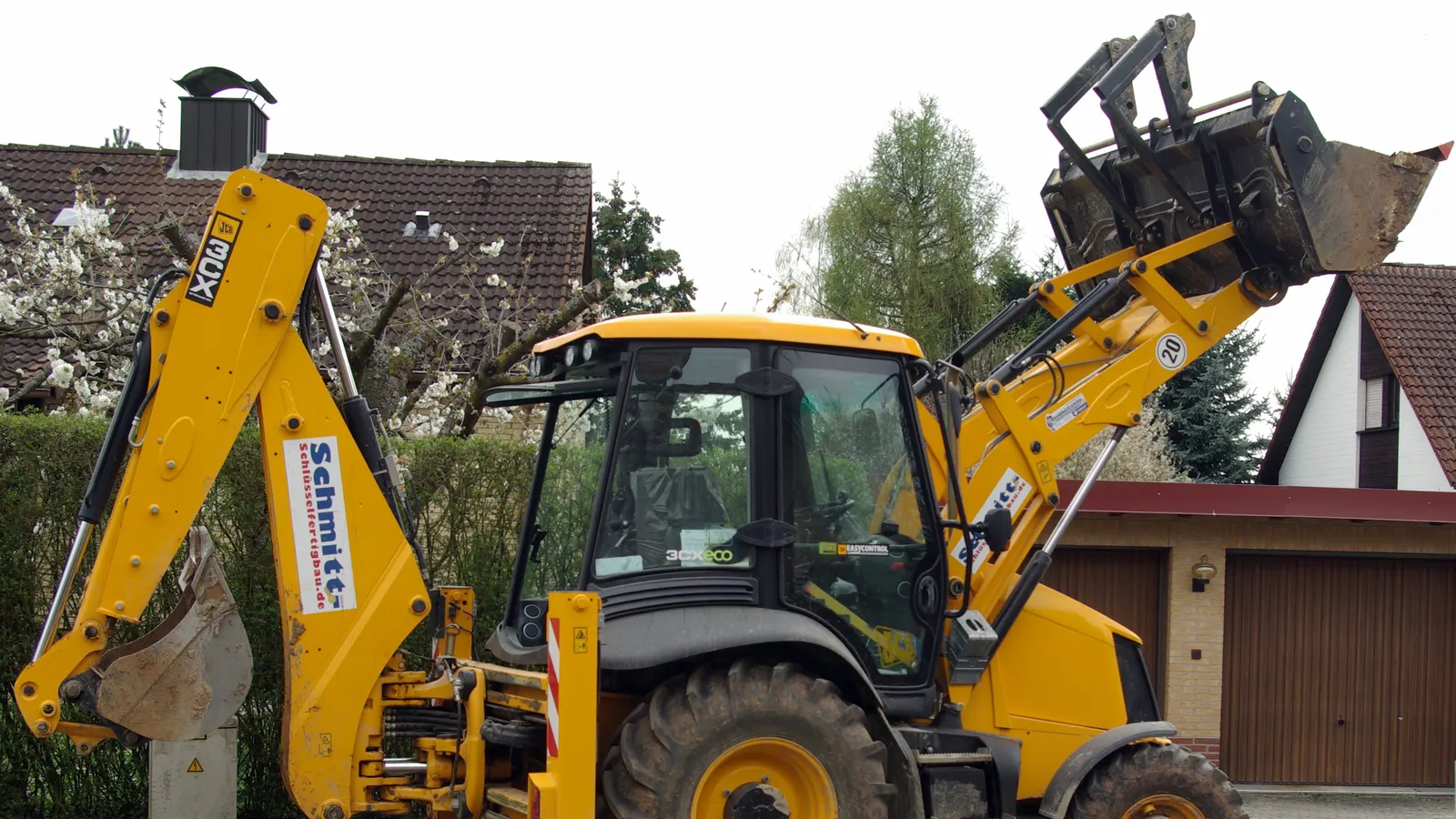
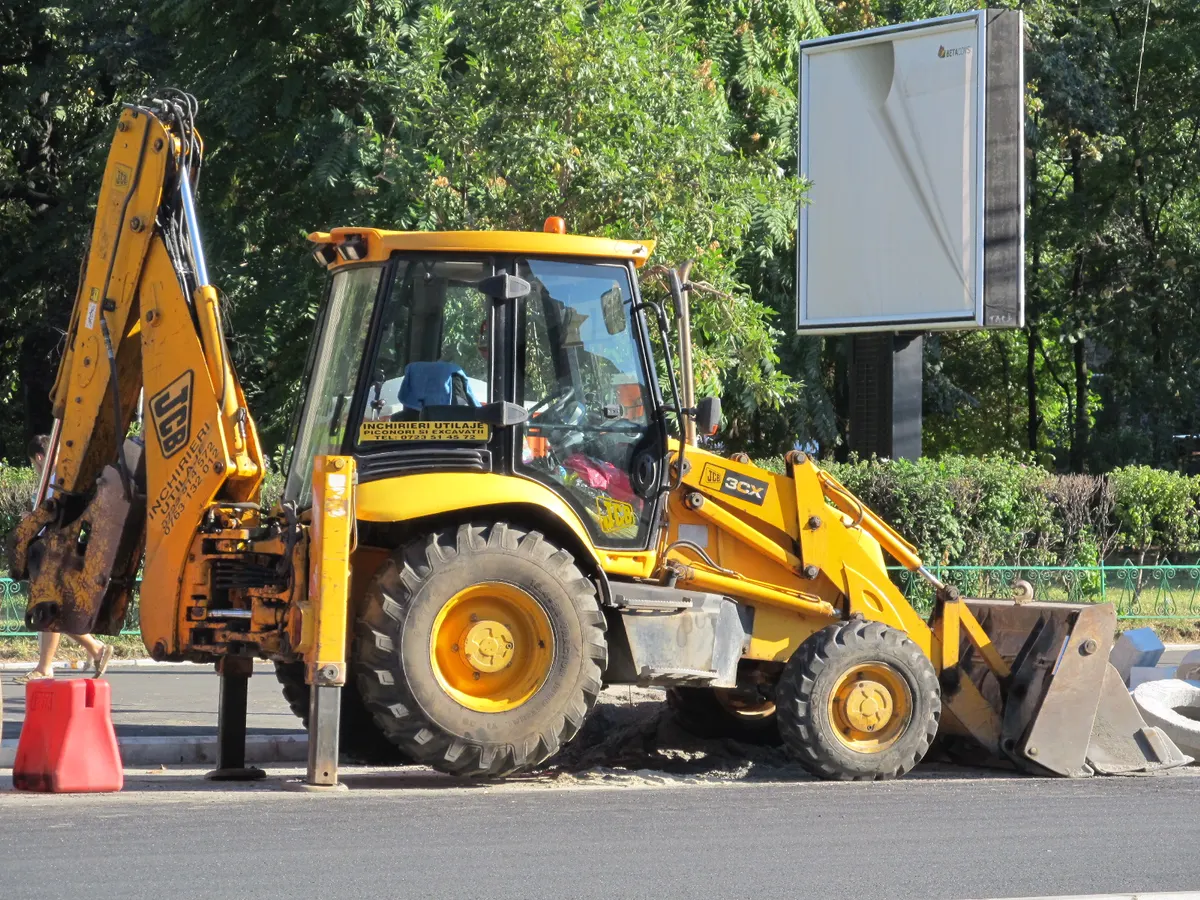
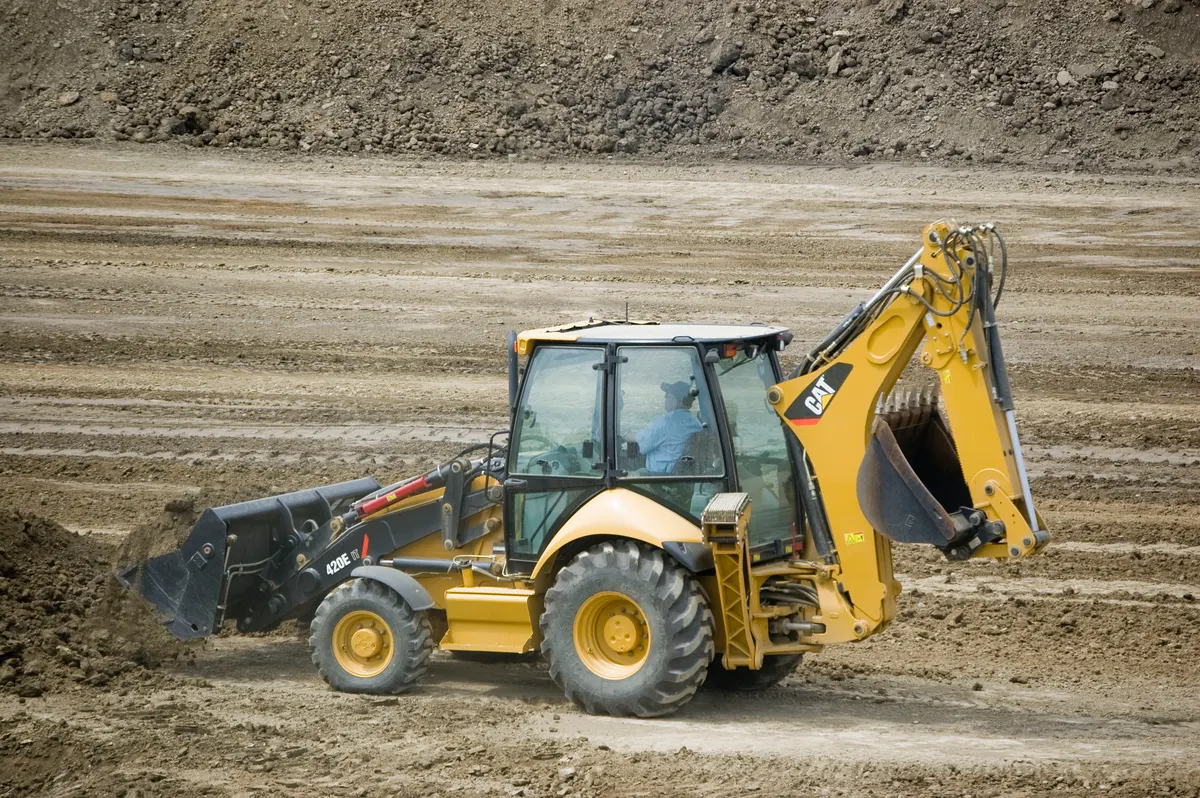
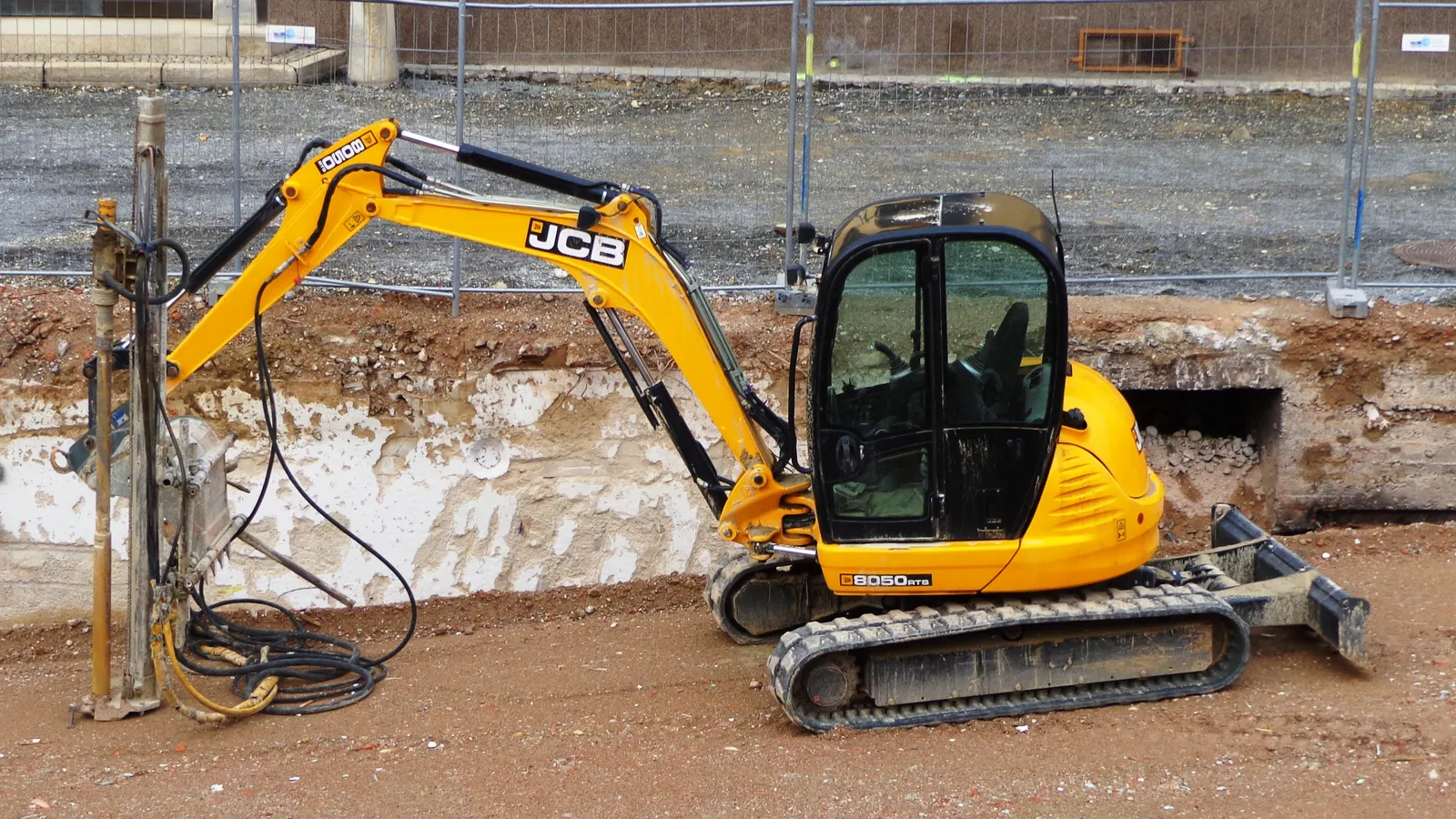
A backhoe loader is a tractor-like machine with a loader bucket on the front and a digging arm (the backhoe) on the back. It is also called a loader backhoe or loader excavator, and in some markets a TLB (tractor-loader-backhoe), the name of the farm-tractor-based machines it descends from. In Britain, Ireland and India people often just call it a "JCB", after the British maker.
It digs from the rear with its stabiliser legs down and the loader bucket lowered for extra stability; the legs must be raised before it moves. The backhoe arm works through about 180 degrees behind the machine, and the operator's seat swivels to face it. JCB contrasts this 180 degree working range with the 360 degree slew of an excavator.
Two backhoe layouts exist. On a sideshift machine the whole backhoe slides across the rear frame so it can dig close to a wall or kerb; on a centre-pivot (centre-mount) machine the boom pivots on the machine's centre line. CASE, for example, offers its 580SV and 695SV in both "Center Pivot" and "Side Shift" versions.
About 4.4 to 6.0 m depending on model and arm (JCB 3CX Sitemaster 5.44 m; CASE range 4.39 to 5.97 m)
Volvo EC210: 6,825 mm
Slew
About 180 degrees at the rear
360 degrees
Loading
Front loader bucket (JCB 3CX: 1.0 m³ 6-in-1 shovel, 2,998 kg lift to full height)
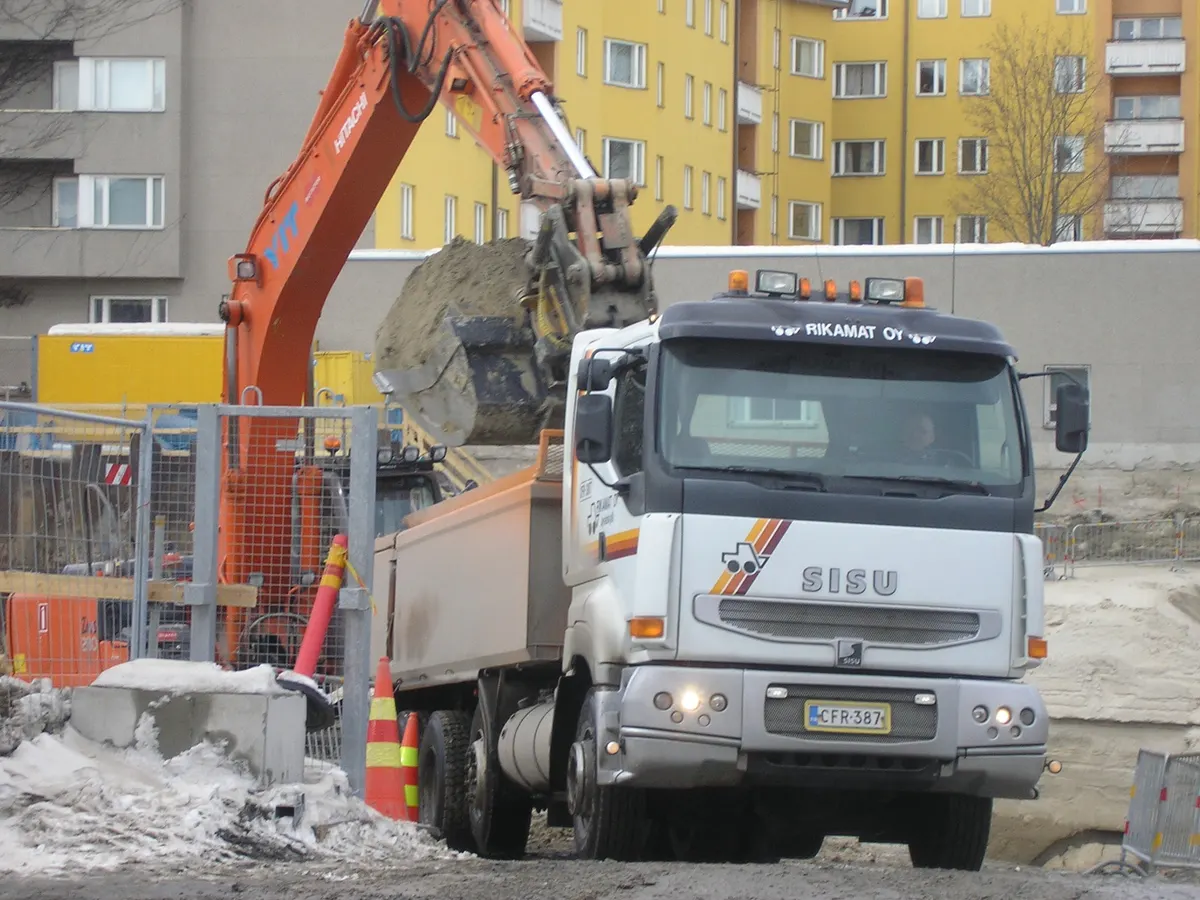
Loads trucks with the digging bucket, swinging between face and truck
Travel
Drives on wheels, JCB quotes up to 40 km/h
Walking pace (Volvo EC210: 3.4 or 5.4 km/h); low-bed between sites
Stability when digging
Stabiliser legs and loader bucket down
Tracks; stable in all directions
Best at
Many small jobs, dig and backfill, loading and carrying
Sustained digging, deep trenches, bulk earthworks, truck loading, breakers
Use the table as a guide to the classes, not a ranking. The right comparison for your fleet is the specific backhoe and excavator models a dealer can support near your sites.
Digging depth and reach
Backhoe loaders dig deeper than many buyers expect. JCB says its Extradig arm gives the 3CX Sitemaster a dig depth of up to 5.44 m and a reach of 7.81 m, and quotes 5.97 m with a deep-profile bucket for the 3CX Plus. CASE lists dig depths from 4.39 m on its 580SV to 5.97 m on its 695SV. That covers most service trenches, manholes and soakaways.
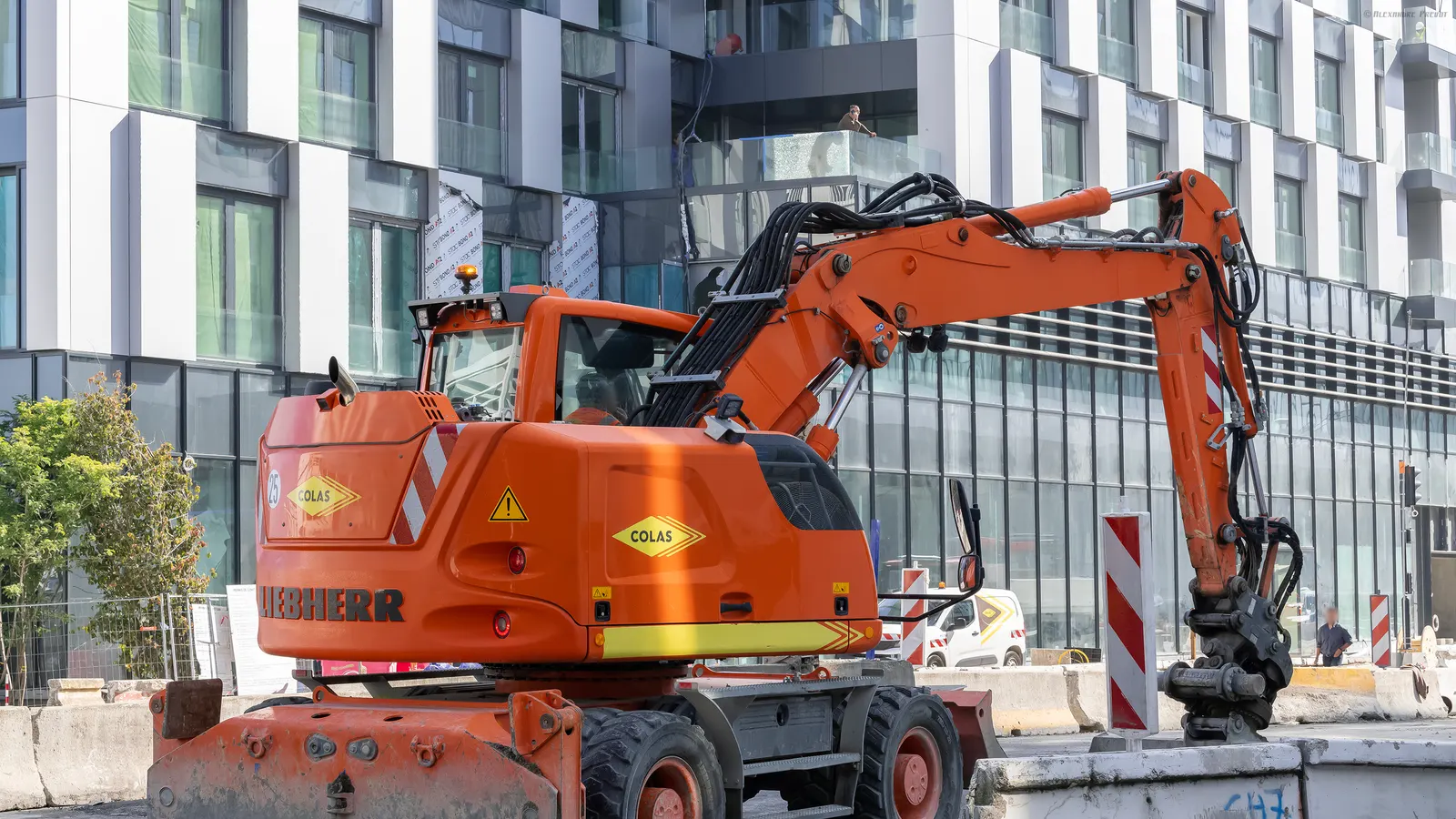
Where the excavator pulls ahead is not just depth (a 20 tonne class crawler such as Volvo's EC210 reaches 6,825 mm) but what it can do at depth: lift heavier pipes and chambers, swing loaded buckets to either side and keep working from one position all day. For a long trench, a basement or a deep foundation, an excavator finishes sooner.
Loading and carrying
The loader end is what makes a backhoe loader a two-in-one machine. JCB's 3CX Sitemaster carries a 1.0 m³ 6-in-1 shovel with 2,998 kg of lift to full height and 4,439 kgf of breakout force, and can be fitted with pallet forks. That lets one machine load a truck from a stockpile, carry pipes and pallets, spread bedding sand, backfill a trench and clean up the site, without bringing in a wheel loader.
An excavator loads trucks well from a face or stockpile, but it cannot carry material across a site. If the work involves a lot of carrying and stockpile loading, compare a wheel loader as well.
A backhoe loader drives itself. JCB quotes up to 40 km/h for the 3CX Sitemaster, on four-wheel drive with a rear limited-slip differential, and describes it as able to cover up to 40 km in an hour. Komatsu offers rigid two-wheel and four-wheel steering models. For a municipality or utility contractor with several small jobs a day across a city, this is the main reason to choose one: no low-bed booking, no waiting, and the operator moves the machine.
A crawler excavator needs a trailer for every move between sites. A wheeled excavator sits between the two, and our comparison of wheeled and crawler excavators covers that choice. Before any machine drives on a public road in the UAE or Saudi Arabia, confirm the registration and driver licensing requirements with the traffic authority.
Versatility and attachments
Both machines take a wide range of tools, but in different ways:
Backhoe end: digging buckets of different widths, a hydraulic breaker, an auger and a grab. JCB quotes 165 l/min of hydraulic flow at the backhoe end of the 3CX and says its breaker performance is "equivalent to a much larger excavator". Treat that as the maker's claim and compare impact class with the breaker supplier.
Loader end: general purpose or 6-in-1 (multi-purpose) buckets, pallet forks and sweepers.
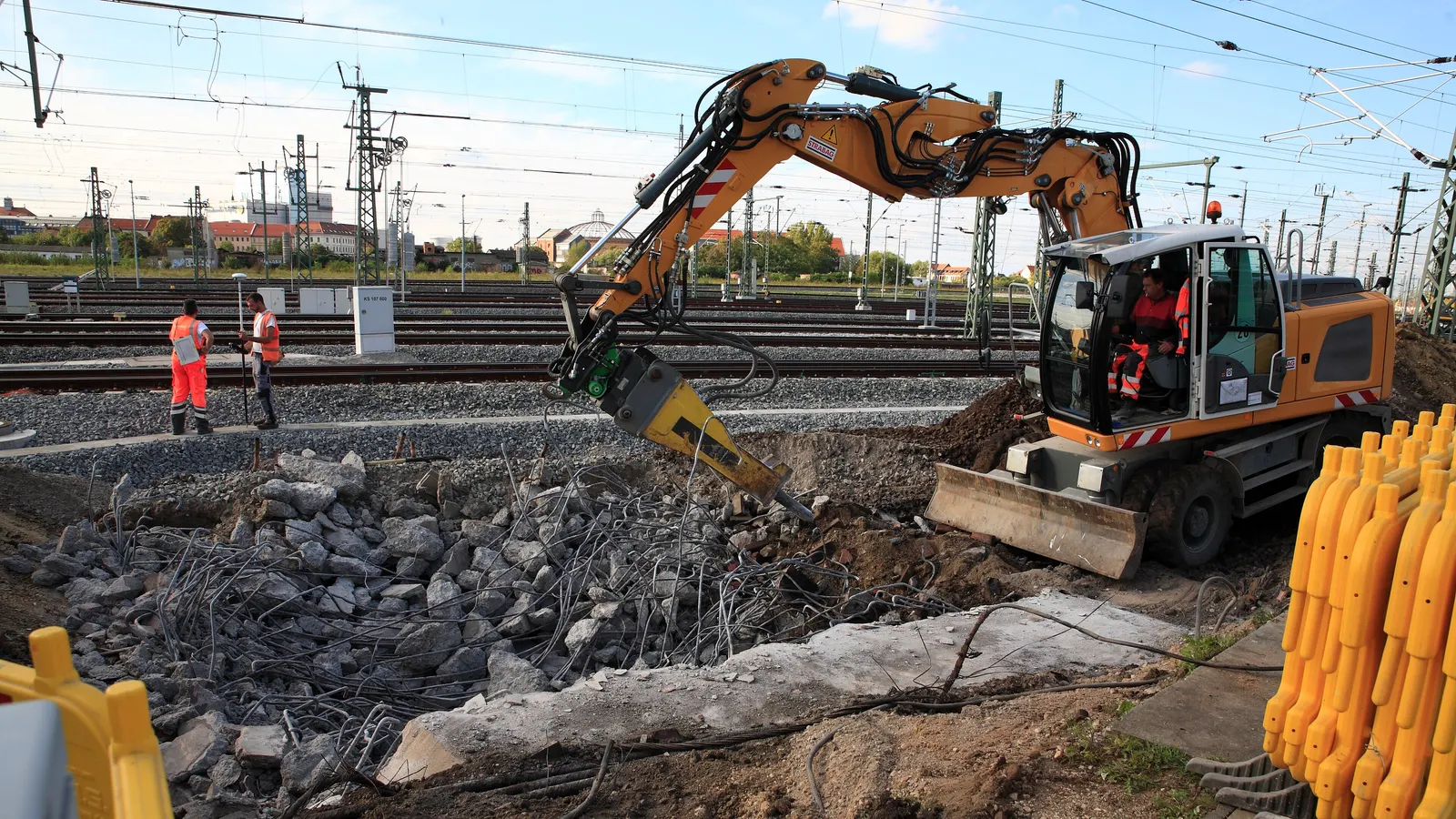
Excavator: buckets, breakers, grabs, augers, compactor plates and tiltrotators, usually on a quick coupler, with more hydraulic power and weight to run larger tools.
A backhoe loader covers more different tasks; an excavator does fewer tasks faster and at a larger scale. Excavator buckets, breakers and quick couplers are covered in our guide to excavator attachments.
Productivity: where each machine wins
Backhoe loader wins: scattered small jobs in a day; dig, lay and backfill by one machine and one operator; road reinstatement and kerb work; loading and carrying on sites without a separate loader; municipal maintenance where travel time dominates.
Excavator wins: any job where digging hours dominate; deep or long trenches; basements and foundations; loading a steady stream of trucks; heavy breaker work in rock; lifting heavy pipes or chambers into a trench.
Many Gulf contractors run both: excavators on the main earthworks and a backhoe loader for services, reinstatement and site support. Wikipedia's article on backhoe loaders makes the same point: they are common in urban engineering and small construction projects, while larger projects generally use tracked excavators.
Operator skills
A backhoe loader asks more of the operator. They drive it on the road, run a loader from the front seat, then swivel round to dig with the backhoe on stabilisers, often with two control layouts on one machine. An excavator operator works from one seat with one control pattern, though slewing a loaded bucket next to trucks and people needs its own care.
Practical points for both:
Check which control pattern the machine uses and that the operator is trained and competent on it.
On a backhoe loader, make sure the stabilisers are fully down on firm ground before digging, and raised before moving.
For lifting with either machine (pipes, chambers, pallets on forks), treat it as lifting equipment under your emirate's or client's safety system; our main excavator guide notes Sharjah's OSHJ-CoP-10 requirements.
Gulf conditions
Sand: a backhoe loader on tyres loses traction on loose sand, where a crawler excavator keeps working. Four-wheel drive helps on firm or compacted ground.
Rock: breaker work in hard rock favours a heavier excavator carrier; a backhoe-mounted breaker suits kerbs, slabs and light rock.
Heat and dust: ask for the rated maximum ambient temperature and the air filtration arrangement for either machine, and check the cab air conditioning, since backhoe operators spend more time in and out of the cab.
Fewer makers build backhoe loaders than excavators. Among those with pages on ListGCC:
JCB
JCB is the name most associated with the machine. Its 3CX is in the 8 tonne class, offered as the 3CX Sitemaster (55 kW, up to 40 km/h) and the 3CX Plus (up to 81 kW, all-wheel steering, six-speed Autoshift), and the 4CX also features in its range.
CASE Construction Equipment
CASE says it launched the first factory-integrated backhoe loader in 1957. Its range runs from the 580 series to the 695SV, in centre-pivot and sideshift versions, and includes the 580EV battery-electric backhoe loader.
Caterpillar
Caterpillar builds backhoe loaders, such as the 420 series, alongside its excavators and wheel loaders.
Komatsu
Komatsu offers backhoe loaders with rigid two-wheel and four-wheel steering.
Hyundai Construction Equipment
Hyundai lists backhoe loaders alongside its HX excavators and wheel loaders.
Both machines usually work near buried services. Each emirate has its own excavation and permit-to-work rules; Sharjah's OSHJ-CoP-08 on safe excavation, for example, requires supervised digging, cable locating and hand-dug trial holes near services. Our mini excavator guide summarises it. Utility owners and master developers add their own approvals.
Saudi Arabia
Machinery imported into Saudi Arabia is covered by SASO's machinery safety regulation through the SABER platform; check your HS code there, as the main excavator guide explains. Digging in public roads needs an excavation licence through the Balady platform.
Checklist: choosing between them
List a typical week's jobs: how many sites, how far apart, and how many hours of digging versus loading and carrying at each.
Required dig depth, trench width and the heaviest item you must lift into a trench.
Ground: sand, compacted fill, asphalt or rock.
Which loaders and excavators you already have on the sites you serve.
For a backhoe loader: sideshift or centre pivot, arm length, steering type, loader bucket type and forks, auxiliary hydraulics for a breaker.
For an excavator: size class, tracks or wheels, quick coupler and breaker piping.
Operator availability and training for the machine type.
Dealer support near your sites: parts stock, technicians, response time.
To get quotes from dealers and hire firms for either machine, post your requirement on ListGCC.
What is the difference between a backhoe and an excavator?
A backhoe loader is a wheeled, tractor-like machine with a loader bucket at the front and a digging arm at the rear that works through about 180 degrees on stabiliser legs. An excavator is a dedicated digging machine whose whole upper body slews 360 degrees on tracks or wheels. The backhoe loader is more versatile and drives between jobs; the excavator digs faster and handles larger work.
What does TLB machine mean?
TLB stands for tractor-loader-backhoe. It originally described a farm tractor fitted with a front loader and a rear backhoe, and the term is still used in some markets for backhoe loaders in general. The modern machine is purpose-built rather than tractor-based, but it does the same jobs: loading at the front and digging at the rear.
Why are backhoe loaders called JCB?
JCB, the British maker, is so closely associated with backhoe loaders that in Britain, Ireland and India people often call any backhoe loader a "JCB", in the same way some brand names become generic. Other makers including CASE, Caterpillar, Komatsu and Hyundai also build backhoe loaders, so specify the machine type, not the brand, in an RFQ.
How deep can a backhoe loader dig?
Most backhoe loaders dig between about 4.4 and 6 metres, depending on the model and arm. JCB quotes 5.44 m for the 3CX Sitemaster with its Extradig arm, and CASE lists 4.39 m for the 580SV up to 5.97 m for the 695SV. Check the figure for the exact arm and bucket, and the lift capacity at that depth.
Is a backhoe loader or an excavator better for trenching?
For short trenches across several sites, a backhoe loader often wins because it drives between jobs and backfills with its loader. For long or deep trenches, or trenches where heavy pipes must be lowered in, an excavator is faster and safer at depth, and it can work continuously from one side. Many contractors use both on larger utility projects.
What are the types of backhoe loaders?
Backhoe loaders differ by backhoe mount (sideshift, where the boom slides across the rear frame, or centre pivot), by steering (two-wheel or four-wheel and all-wheel steering) and by arm length. Battery-electric models such as CASE's 580EV also exist. Choose by the jobs and ground you work on.
Wheeled or crawler excavator: road speed against walking pace, outriggers and lift charts, ground pressure and shoe width on Gulf sand, undercarriage and tyre wear, urban work and what to ask suppliers.
How to choose a mini excavator: what makers mean by mini and micro, size bands and jobs, zero tail swing or conventional, blade and boom swing, attachments, transport, electric models and digging rules.
How to choose excavator attachments: bucket types and wear parts, sizing a hydraulic breaker to the carrier, flow and pressure settings, breaker features, quick coupler interfaces and safety, and an RFQ list.