Excavator Attachments: Buckets, Breakers and Quick Couplers
How to choose excavator attachments: bucket types and wear parts, sizing a hydraulic breaker to the carrier, flow and pressure settings, breaker features, quick coupler interfaces and safety, and an RFQ list.
Choose an excavator bucket by the material (general purpose for soil, heavy duty for abrasive ground, extreme duty for rock), size a hydraulic breaker to the carrier's weight and hydraulic flow, and fit a quick coupler only with a working locking system and trained operators. Rock breaker and hammer suppliers in the UAE can match tools to your machine.
This guide is for plant managers, operators and buyers specifying work tools for excavators on Gulf sites. It goes deeper on the tools at the end of the arm: bucket types and wear parts, breaker sizing, hydraulic flow and pressure, and quick coupler safety. For choosing the excavator itself (size, brand, cooling and filtration, used checks, import rules), see our excavator buying guide for the UAE and Saudi Arabia.
Excavator bucket types and what each is for
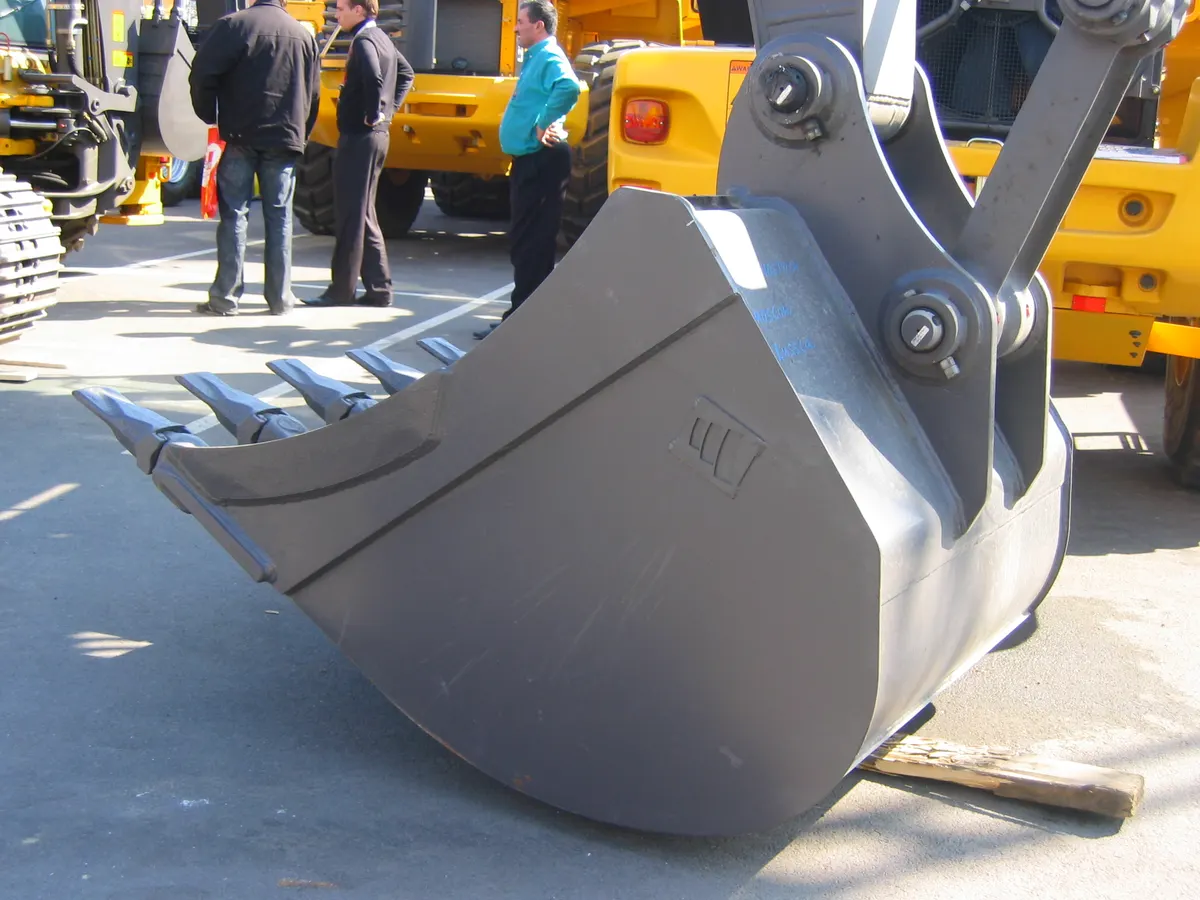
Bucket makers use different names, but the families are similar. Volvo CE's own excavator bucket range is a useful map:
Bucket type
What it is for
Gulf use
General purpose
Digging and re-handling soft to medium materials such as soil, sand and clay
Bulk digging in sand and fill, loading trucks
Heavy duty
Dense and abrasive materials, with reinforcement
Abrasive desert sand, compacted fill, mixed ground with gravel
Extreme duty
The toughest digging, with extensive reinforcement
Ripped or broken rock, quarry faces, caprock after breaking
Cable or narrow trenching
Narrow trenches and cable laying, with a long profile
Power, telecom and irrigation lines
Ditching (fixed or tiltable)
Ditch maintenance, landscaping and slope shaping; smooth edge, wide
Drainage channels, embankments, landscaping
Grading
Accurate grading, often used with a tiltrotator
Final levels, road formation, finished landscaping
Volvo also distinguishes a "universal cut" edge from an "aggressive cut" version within the same family, the second for more aggressive cutting. Other common types include rock buckets, skeleton (riddle) buckets for separating stone from sand, and clamshell or grab buckets; ask for the intended material and the wear protection on each.
Three rules help when ordering buckets:
Match the bucket to the hardest material it will meet often, not the average. A general purpose bucket worn out in abrasive sand costs more than a heavy duty bucket from the start.
Match the width to the trench and the capacity to the machine. An oversized bucket slows the cycle and overloads the arm; the excavator maker's bucket chart for your arm length is the reference.
Match the mounting to your quick coupler or pin size, so the bucket fits every machine it will go on.
The parts that touch the ground wear out, and on Gulf sand they wear fast. Ground engaging tools (GET) are designed to be replaced so the bucket shell lasts:
Teeth (tips) do the penetrating and are replaced most often. Choose a profile for the material: sharper tips for penetration in compacted ground, heavier tips for abrasion and rock.
Adapters hold the teeth to the lip. A worn adapter lets good teeth fall off; check them at each tooth change.
Cutting edges and side cutters protect the lip and sides on smooth-edge buckets such as ditching buckets.
Wear strips and heel shrouds protect the underside and corners, where sliding wear in sand is worst.
Keep a small stock of teeth and pins on site, check them at the start of each shift, and replace a tooth before it wears through to the adapter. Ask the supplier what tooth system the bucket uses and whether parts are stocked locally, because a bucket waiting for a proprietary tooth from abroad is a stopped machine.
Sizing a hydraulic breaker to the excavator
A hydraulic breaker (hammer) must suit the carrier on three counts: weight, oil flow and pressure. Breaker makers publish a carrier weight range for each model, and excavator makers publish which breakers suit each machine.
Rammer, a Sandvik Group brand, shows how the ranges step up:
Rammer model
Carrier weight range
Oil flow
Minimum working weight
E01
Mini excavator 1 to 3 t
10 to 31 l/min
50 kg
E04
Mini excavator 2 to 6 t
20 to 62 l/min
150 kg
999E
Mini excavator or backhoe 6 to 13 t
50 to 150 l/min
505 kg
1655E
12 to 20 t
90 to 130 l/min
1,100 kg
2166E
16 to 26 t
120 to 180 l/min
1,360 kg
2577E
21 to 32 t
140 to 200 l/min
1,670 kg
3288E
26 to 42 t
160 to 250 l/min
2,350 kg
Excavator makers do the same from the other side. Volvo CE, for example, lists its HB03 breaker for its 2.5 to 4 tonne compact excavators (ECR25D to ECR40), its HB22 for 20 to 29 tonne machines such as the EC210, EC230, EW220E and ECR255, and its HB48 for the EC400 and EC500 classes. Volvo supplies its breakers as a package with hoses, brackets and tools for installation.
How to use these figures:
Start with the carrier's operating weight and choose a breaker whose range puts your machine near the middle. Rammer gives an "optimum" band inside the full range for the 3288E (28 to 38 tonnes within 26 to 42 tonnes).
Check the excavator maker's allowed attachment weight for your arm length. Rammer's own spec page tells buyers to "check carrier allowed attachment weight from carrier manufacturer".
Confirm the excavator's auxiliary circuit delivers flow inside the breaker's range at the right pressure (see below).
Match the tool to the job: chisel, moil (point) or blunt tool for different rock and concrete.
Too small a breaker for the carrier gets bent or overloaded by the boom and breaks less per hour. Too large a breaker overloads the arm, upsets stability and may exceed the hydraulic supply.
Hydraulic flow and pressure: the settings that matter
A breaker is driven by the excavator's auxiliary hydraulic circuit. Getting the settings wrong is the most common cause of poor breaking and early failure. For the Rammer 3288E, the published figures are:
Oil flow 160 to 250 l/min.
Operating pressure 150 to 160 bar.
Pressure relief setting 220 bar (maximum 240 bar).
Maximum back pressure 10 bar.
Every breaker has its own set, so ask for them in writing and have the dealer or a hydraulic technician set the excavator's breaker circuit to them at installation. Points to check:
Flow: the excavator's auxiliary flow at engine working speed must fall inside the breaker's range. Too little and the breaker runs slowly; too much heats the oil and can damage seals.
Relief pressure: the circuit relief valve protects the breaker and hoses. Set it to the breaker maker's value, not the excavator's main relief.
Back pressure: return oil should go as directly as possible to tank through a return line and filter sized for breaker work. High back pressure cuts power and damages the breaker.
Oil temperature and cleanliness: breakers put a lot of heat into the oil. In Gulf summers, watch the hydraulic oil temperature, keep coolers clean, and change filters at the intervals the excavator maker sets for breaker use.
Breaker features worth asking for on Gulf sites
Blank-firing protection. Firing without the tool against the material damages the breaker. Rammer's Idle Blow Protector, for example, prevents operation until pressure is applied to the tool.
Automatic lubrication. Tool bushings need regular greasing. Rammer offers RAMLUBE units mounted on the breaker or the carrier; other makers have similar options.
Dust protection. Rammer's Ramair option supplies air to keep dirt out of the housing and impact chamber, which matters in dry, dusty Gulf rock and demolition work. Ask each maker about dust sealing.
Noise. Volvo labels its breakers "Low Noise". For work near homes, schools or hospitals, ask for the sound power level and any local noise limits.
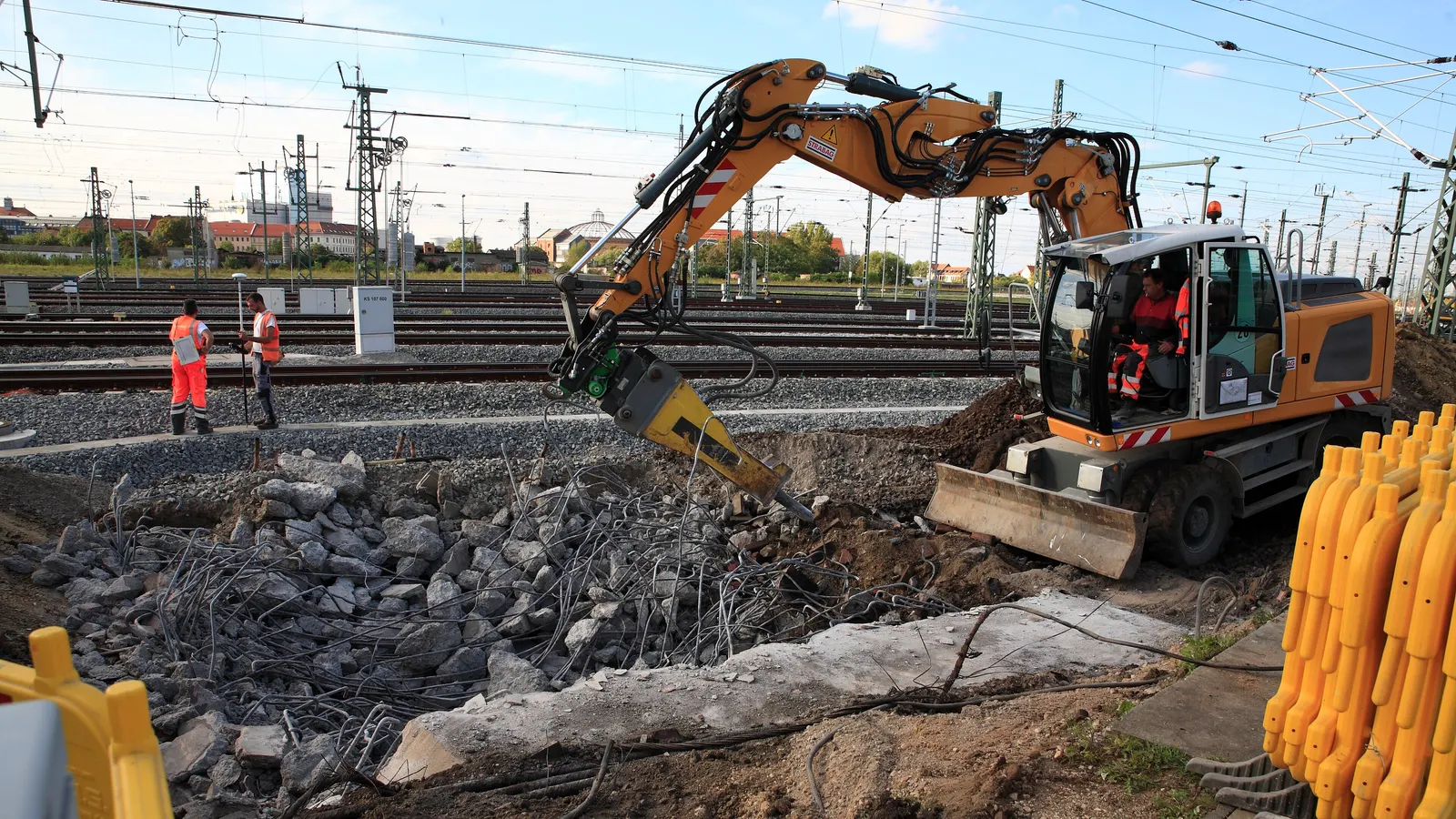
Breakers on excavators also need a cab front guard against flying rock, and breaker piping fitted to the arm; both are on the main guide's RFQ list.
Quick couplers: types and interfaces
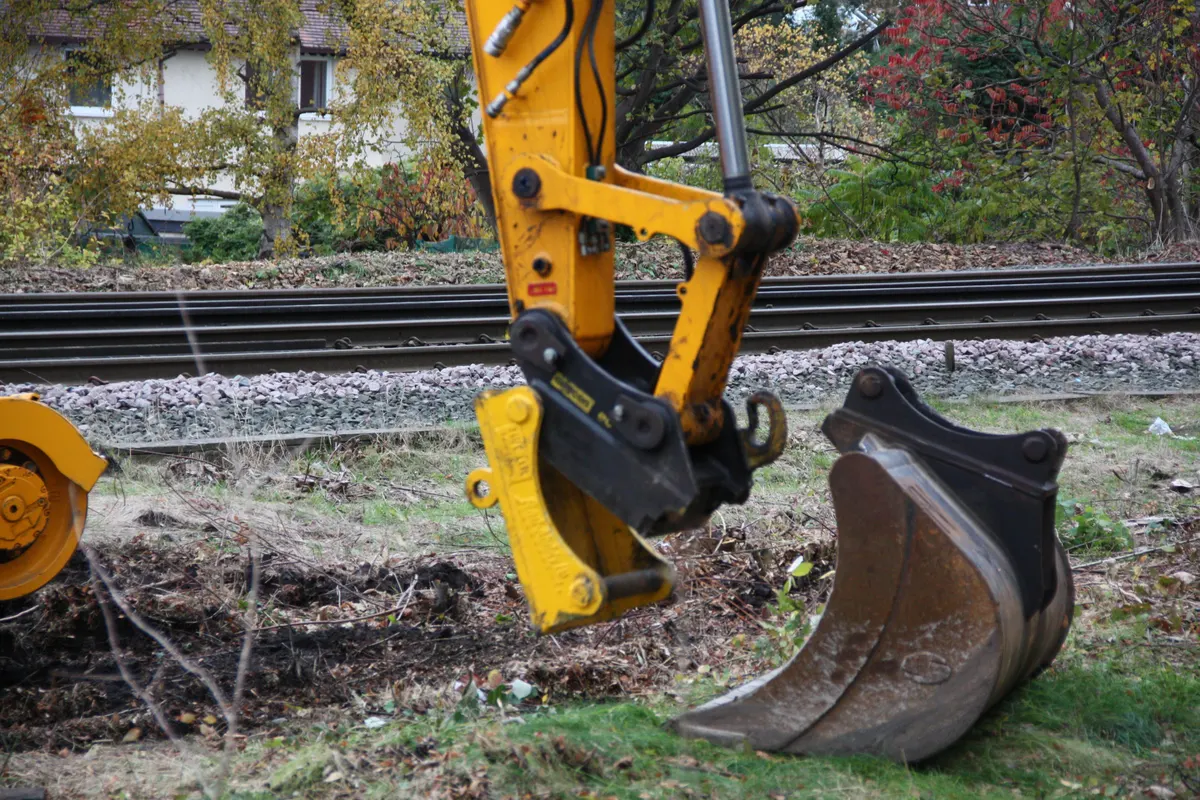
A quick coupler (quick hitch) is a latching device on the end of the arm that lets the operator change buckets and tools in minutes instead of knocking out pins. Volvo CE's coupler range shows the main kinds:
Mechanical couplers, locked by hand.
Hydraulic couplers, locked and released from the cab.
Automatic hydraulic connection, such as Steelwrist Auto Connect, which also connects the attachment's hydraulic lines "from the comfort and safety of the cab".
Tilt couplers and tiltrotators, which tilt or rotate the attachment.
Couplers are built to attachment interfaces, and an attachment only fits a coupler with the same interface. Volvo lists couplers that match the S1, S2 or S3 interfaces, others for S40 or S50, symmetrical couplers for S60 or S70, and a mechanical coupler matching the Lehnhoff interface. Before buying buckets or a breaker, confirm the interface on every machine they will be used on, or buy pin-on tools for a single machine.
A coupler that is not properly locked can drop the bucket or tool. The UK Health and Safety Executive issued a safety alert on excavator quick hitches in December 2007 after a number of serious incidents, including four fatalities since December 2006. All four fatal incidents involved semi-automatic hitches, and the common theme was a missing retaining pin or bar. HSE warned that a hitch may work for some time without the pin and then suddenly swing open or fall off. European manufacturers later agreed to stop supplying semi-automatic quick hitches into the UK from 1 October 2008.
HSE's precautions apply to any coupler on any site:
Operators trained in quick hitches in general and competent on the specific hitch fitted.
The manufacturer-specified retaining pin available on the machine, and only pins designed for that use; no bolts, wire or other substitutes.
A check that the coupler is locked before starting work and every time an attachment is changed, from the ground if the operator cannot see it from the cab.
Nobody working under the bucket, for example ground workers in a trench.
Random checks by those in control of the site.
In the UK, quick hitches are also subject to thorough examination under lifting equipment rules: every 12 months if permanently on the machine, six-monthly if classed as a lifting accessory. UAE and Saudi requirements are set by emirate, regulator and client; in Sharjah, for example, OSHJ-CoP-10 requires third-party examination of lifting equipment, as our main excavator guide explains. Ask your client or safety consultant how couplers are treated on your project.
Other attachments in brief
Hydraulic thumbs and grabs: for handling rock, kerbs, pipes and demolition debris.
Tiltrotators: rotate and tilt the tool for precise grading and work around obstacles; they need hydraulic preparation on the excavator.
Augers: for piles, poles and tree pits, mostly on mini and midi machines; see our mini excavator guide.
Demolition tools: pulverisers, crushers and shears for concrete and steel.
Which brands to look at
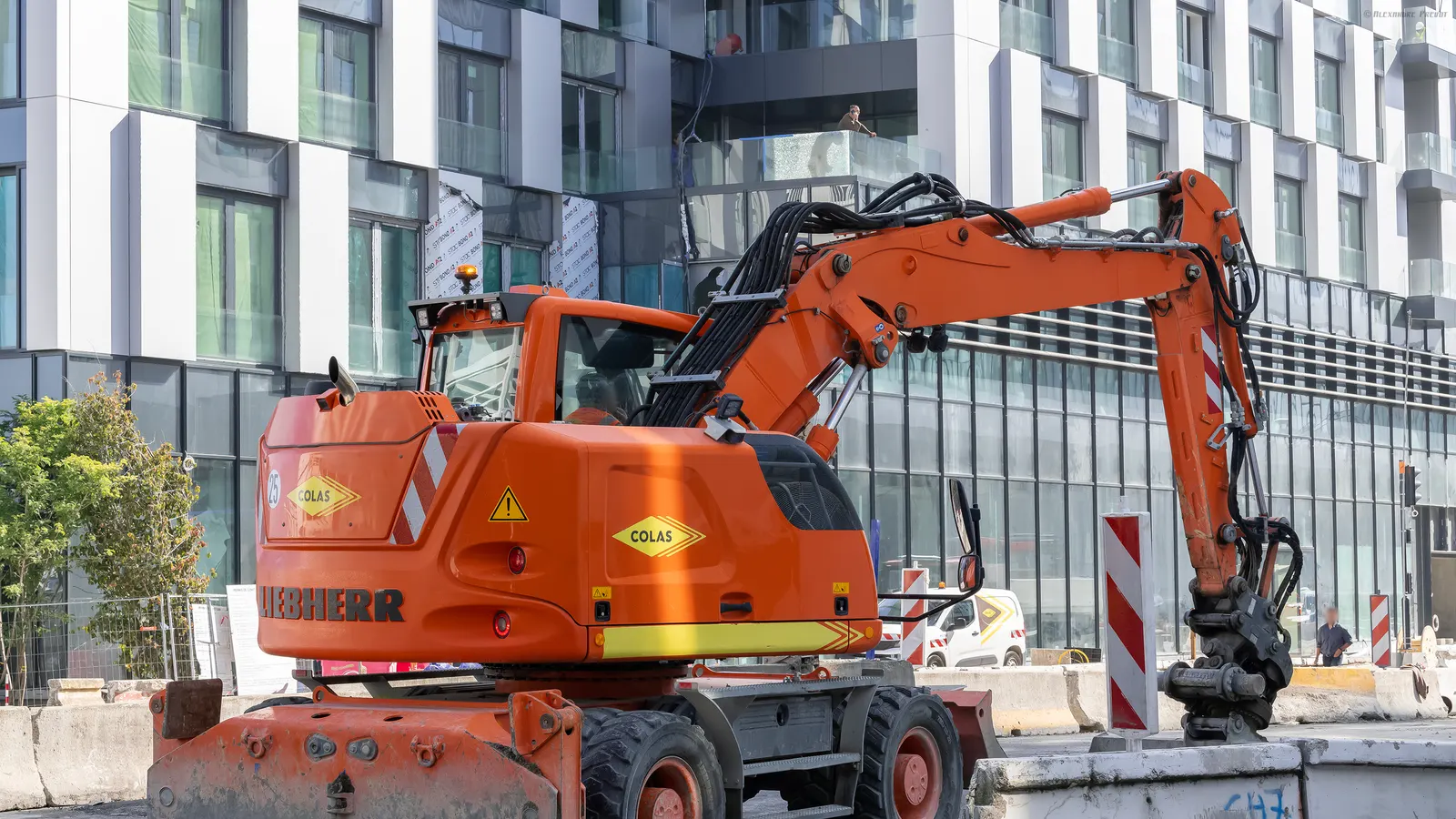
Several excavator makers, Volvo among them, sell their own buckets, breakers and couplers matched to their machines, which simplifies fitting and warranty. Specialist attachment makers sell across brands.
Volvo Construction Equipment
Volvo CE offers general purpose, heavy duty, extreme duty, cable, ditching and grading buckets, Low Noise hydraulic breakers from the HB01 to the HB48 matched to its excavators, and mechanical, hydraulic, S-type and symmetrical quick couplers.
Sandvik (Rammer)
Sandvik owns the Rammer brand of hydraulic hammers, with Excellence Line and Performance Line ranges from small hammers for 1 tonne carriers up to large models for 26 to 42 tonne excavators, plus demolition tools.
The main families are general purpose buckets for soil and sand, heavy duty buckets for dense and abrasive ground, extreme or rock duty buckets for broken rock, narrow cable or trenching buckets, wide smooth-edge ditching buckets for shaping and landscaping, and grading buckets for final levels. Skeleton buckets separate stone from sand, and tilting versions help on slopes. Choose by the hardest material you dig often.
What size breaker do I need for a 20 tonne excavator?
Choose a breaker whose published carrier weight range puts a 20 tonne machine near the middle, then check flow and pressure. In Rammer's range, for example, the 1655E covers 12 to 20 tonne carriers and the 2166E covers 16 to 26 tonnes. Volvo matches its HB22 to its 20 to 29 tonne excavators. Always confirm the excavator maker's allowed attachment weight for your arm.
What hydraulic flow does a breaker need?
It depends on the breaker. Small breakers for mini excavators need from about 10 to 60 l/min, while large breakers for 30 to 40 tonne machines need around 160 to 250 l/min. Each model also has an operating pressure, a relief setting and a maximum back pressure; the Rammer 3288E, for instance, runs at 150 to 160 bar with a 220 bar relief setting and 10 bar maximum back pressure.
Are excavator quick couplers safe?
They are safe when properly designed, maintained and used. The danger is a coupler that is not locked: the UK Health and Safety Executive linked four deaths in a year to semi-automatic hitches with missing retaining pins. Use the maker's specified pin or locking system, check the lock every time a tool is changed, train operators on the specific coupler, and keep people out from under the bucket.
Can any bucket fit any quick coupler?
No. Couplers are made to specific attachment interfaces, such as the S-type or symmetrical standards, or to a maker's own pattern, and the attachment must have the matching interface. Pin-on buckets fit only the pin diameter and spacing they were built for. Confirm the interface on every machine in your fleet before ordering attachments.
How often should bucket teeth be replaced?
There is no fixed interval: it depends on the material and hours. Abrasive sand and rock wear teeth much faster than soil. Check teeth and pins at the start of every shift, and replace a tooth before it wears through to the adapter, because a worn adapter is far more expensive than a tooth. Keep spare teeth and pins on site.
Wheeled or crawler excavator: road speed against walking pace, outriggers and lift charts, ground pressure and shoe width on Gulf sand, undercarriage and tyre wear, urban work and what to ask suppliers.
How to choose a mini excavator: what makers mean by mini and micro, size bands and jobs, zero tail swing or conventional, blade and boom swing, attachments, transport, electric models and digging rules.
What to check before you rent an excavator in the UAE or Saudi Arabia: wet or dry hire, size, attachments, transport, inspection certificates, handover and off-hire, damage and insurance, and rent vs buy.