Roof Waterproofing in the UAE and Saudi Arabia: Systems and Common Failures
How to choose a roof waterproofing build-up for Gulf heat, why roofs leak at falls, outlets, upstands and plant bases, how to test a finished roof, and what to put in the warranty and maintenance plan.
Roof waterproofing in the UAE and Saudi Arabia works when three things are right: a build-up that keeps the membrane out of direct sun where possible, falls that send water to outlets instead of letting it pond, and properly detailed upstands, outlets and plant bases. Most leaks start at those details, not in the open field of the membrane. Compare roofing membrane suppliers on the waterproof membranes suppliers page for the UAE.
This guide is for consultants, contractors and facility managers specifying a new roof or fixing a leaking one. Our waterproofing membranes guide for the UAE and Saudi Arabia compares the membrane families, the Dubai reflectance rule and the brands; this page is about the roof as a system: build-up, drainage, details, testing, warranty and maintenance. For the Saudi supplier list, see waterproof membrane suppliers in Saudi Arabia.
Why Gulf roofs fail
Sika's roof repair guidance says "60-70% of roof leakage problems are due to incorrect application or installation". The membrane itself is rarely the weak link. In practice, the causes buyers can control fall into five groups:
Exposure. A membrane left in direct sun without a surface rated for exposure ages fast. Sika describes roofs as the part of a building "most exposed to intense elements", with temperature swings, sunlight, rain and wind uplift wearing them down.
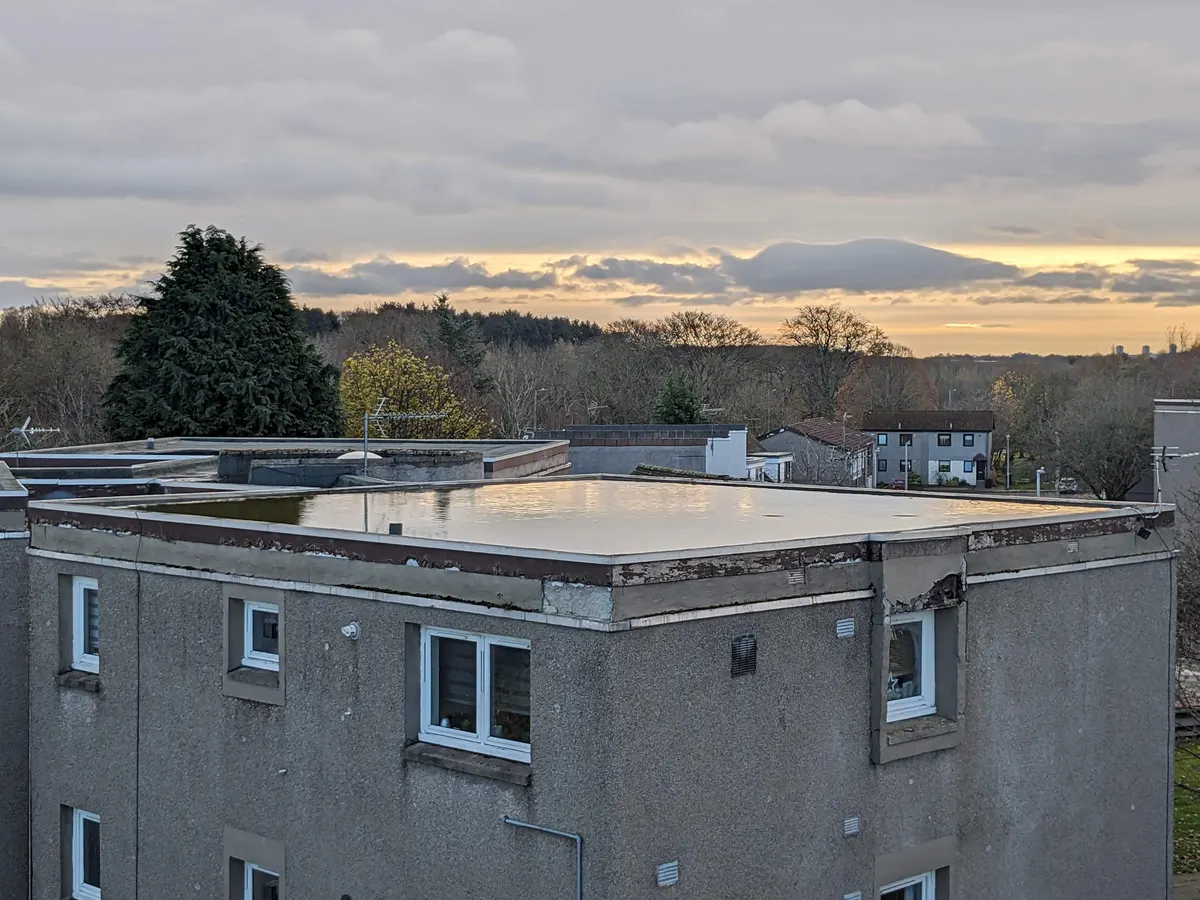
Ponding. Water that sits on a roof finds every weak lap and keeps loading it. Ponding usually traces back to poor falls or blocked outlets.
Details. Upstands, parapets, outlets, expansion joints, pipe penetrations and AC plinths are where the membrane changes direction or meets another material.
Later trades. Fixings for plant, satellite dishes, solar frames and signage are often drilled through a finished roof without the waterproofing contractor present.
No maintenance. Sand and debris block outlets, coatings wear, and small defects grow.
Conventional or inverted roof?
The first design decision is where the insulation goes relative to the membrane. Designing Buildings, the UK construction wiki, defines three arrangements: a cold roof with insulation at ceiling level, a warm roof with insulation "below the waterproof covering, above the roof decking", and an inverted roof with insulation "above the waterproof covering".
Question
Conventional (warm) roof
Inverted (protected membrane) roof
Layer order, top down
Membrane (exposed or with a finish), insulation, vapour control layer, deck
Ballast or pavers, insulation boards, membrane, deck
Membrane exposure
Faces sun, heat cycling and foot traffic unless covered
Shielded by insulation and ballast
Weight
Lighter
Needs ballast; check the structure
Finding leaks
Membrane visible
Ballast and boards must be lifted
Membrane choice
Must be rated for exposure, or be given a protective finish; reflectance applies in Dubai
Must be compatible with the insulation and suited to constant dampness under the boards
Designing Buildings explains that in an inverted roof the insulation protects the membrane from expansion and contraction caused by weather and solar radiation, and from damage by foot traffic and equipment. It also notes two design points: the insulation is likely to be wet much of the time, which must be allowed for in U-value calculations, and condensation can form under the boards when the membrane is below dew point.
On exposed Gulf roofs, that protection is the main reason to consider an inverted build-up. Sika makes a similar case for gravel-ballasted roofs: covering the membrane protects it "against environmental exposure and mechanical damage", "making the membrane last much longer". Sika's ballasted build-up uses a loose-laid single-ply membrane and insulation held down by a gravel layer of at least 50 mm and 80 kg/m² to resist wind uplift. Ask your structural engineer to confirm the slab can take the ballast load before you choose this route. Specify the membrane and the roof insulation boards (for example XPS boards, where the insulation maker approves them for inverted use) as one approved system.
Green and amenity roofs
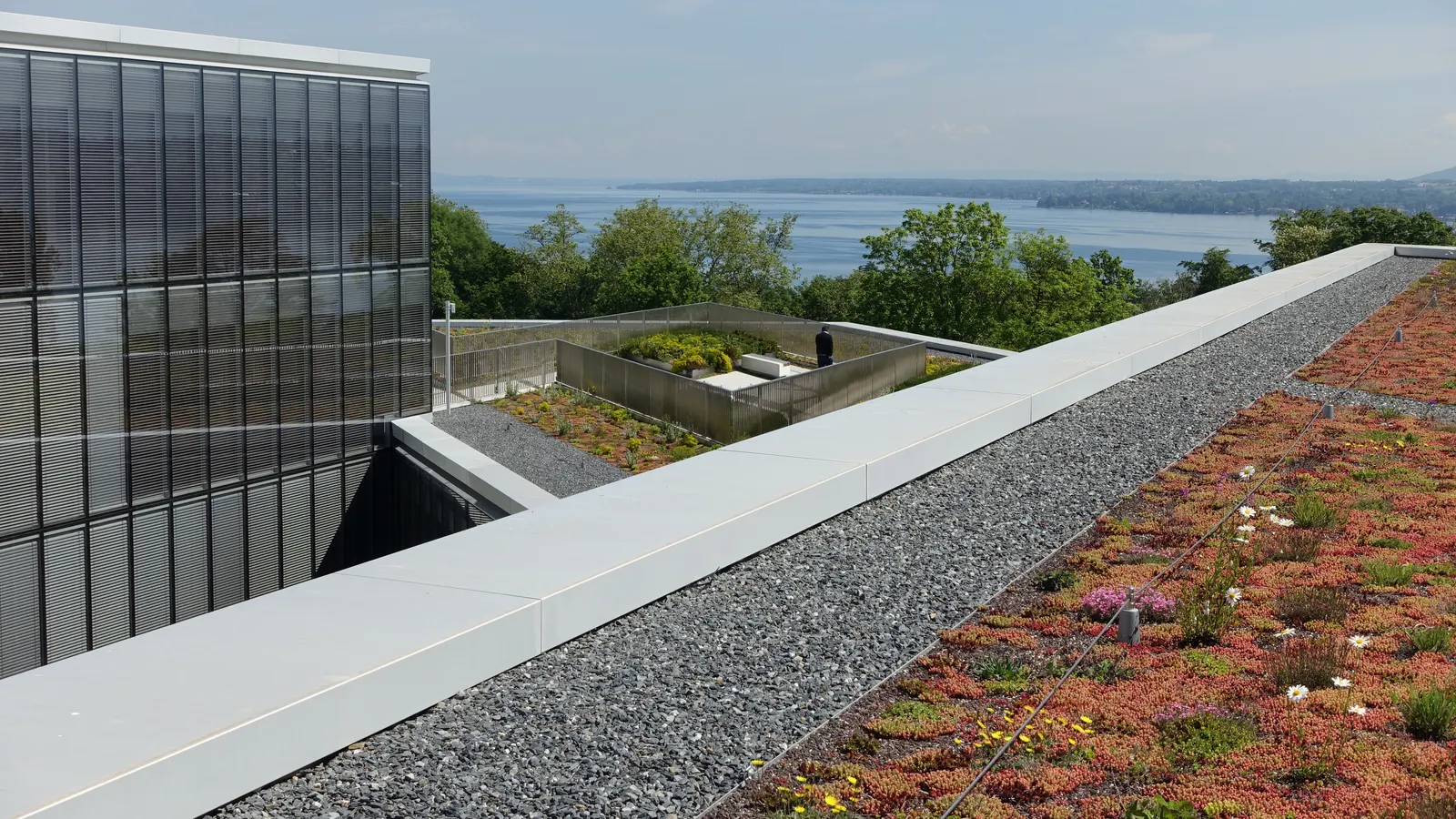
Planted roofs are a form of protected roof. Sika lists the layers it supplies for them (drainage board, membrane, protection or separation layer, insulation, vapour control layer) and says its green roof membranes are root resistant, verified for example through FLL certification. It also says vegetation protects the membrane from UV. If planters, podium gardens or landscaped terraces are planned, require a root-resistant membrane with a named test certificate, not a standard roof sheet under a root barrier added later.
Falls and drainage: design them, then check them
A flat roof is never truly flat. Designing Buildings says flat roofs should be designed to a minimum fall of 1:40 so that, allowing for site inaccuracies, the finished construction still achieves at least 1:80. The gap between those two numbers is the point: if the design fall is 1:80, normal construction tolerances will leave dead spots that hold water.
For Gulf roofs, drainage design has three local quirks:
Sand blocks outlets. Outlets and overflows sized for a heavy storm do nothing if they are blocked by wind-blown sand. Specify outlet guards and a cleaning routine.
Screeds to falls take time to dry. If falls are formed in screed, the membrane manufacturer's moisture limit for the substrate applies before any bonded or liquid membrane goes down.
Overflows show problems. A secondary overflow or scupper at each low point gives a visible warning when a primary outlet blocks, before water backs up over an upstand.
Check falls before waterproofing starts. A simple flood of the bare slab or screed, or a level survey, shows where water will sit. Fixing a hollow then costs a few bags of screed; fixing it after the membrane is down means a patch over a known weak point.
The details where roofs leak
Every roof specification should include drawn details, from the membrane manufacturer, for each of these. Ask bidders to price them separately so you can see who has allowed for them.
Detail
What goes wrong
What to specify
Upstands and parapets
Membrane stops short, debonds in heat, or the top edge is left open
Minimum upstand height from the system details, mechanical termination bar or chase, and a coping or counter-flashing over the top
Outlets and drains
Membrane not clamped into the outlet; outlet set high so water ponds around it
Outlets with a clamping ring or a compatible spigot, set at the lowest point, with a guard
AC plinths and plant bases
Plinth cast after waterproofing and drilled through; membrane not carried up the plinth
Plinths cast before waterproofing, membrane turned up and over, or proprietary supports that sit on a protection pad
Pipe and duct penetrations
Sealant blob instead of a collar; pipes too close together to detail
Purpose-made collars or sleeves, minimum spacing between penetrations, liquid membrane around clusters
Expansion joints
Membrane run straight over the joint and torn by movement
A joint detail or joint system from the same manufacturer
Changes of system
Two different membranes meet without a tested joint
Written confirmation of compatibility at the junction
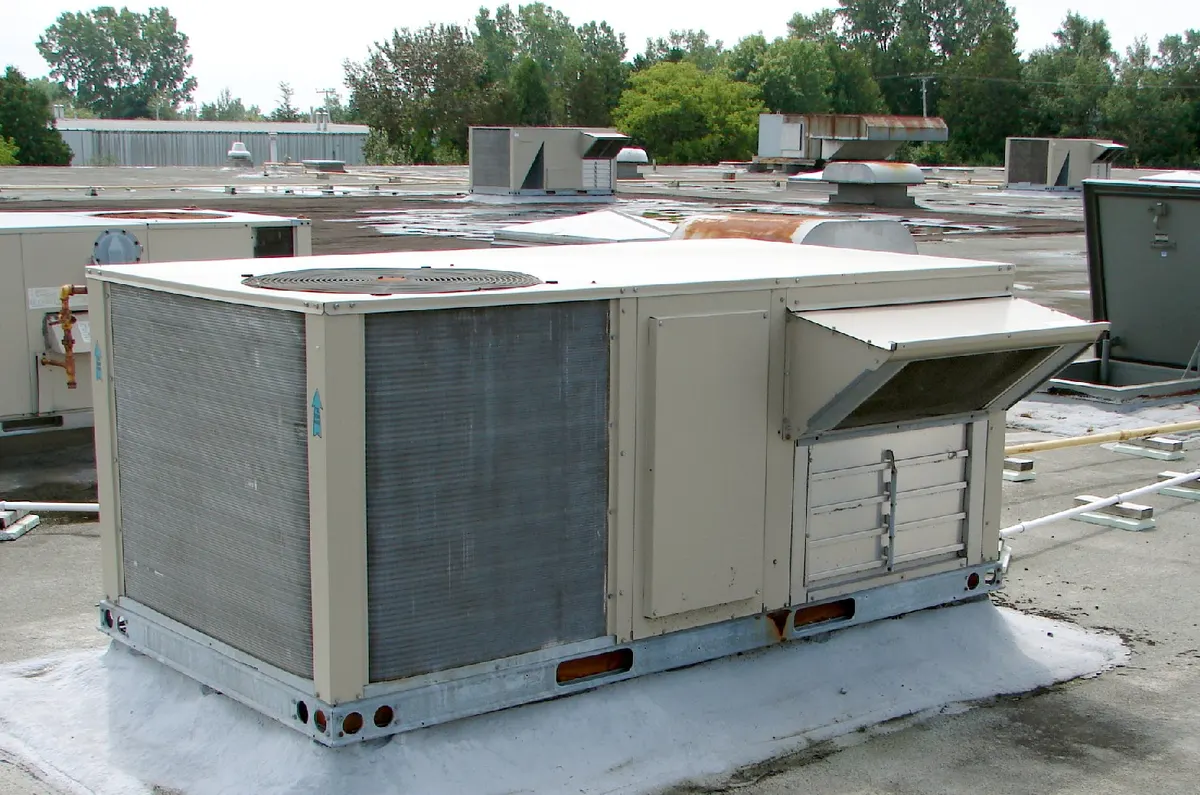
Rooftop packaged air-conditioning units. The base of each unit, where the roof membrane meets the curb, is one of the details that needs a drawn waterproofing detail. Photo: P199, public domain, via Wikimedia Commons
On roofs crowded with plant, pipes and drains, a liquid-applied membrane is often the practical answer for the details even if the field is a sheet. Sika calls its liquid-applied membranes "ideal for exposed roofs with large number of complicated details and penetrations". Our comparison of APP and SBS bitumen sheets covers the sheet side of that choice.
Heat and the finished surface
An exposed roof in the Gulf faces strong sun and wide daily temperature swings, so the top surface does real work.
Exposed sheet roofs need a surface rated for exposure, such as a mineral or reflective cap sheet, or a reflective coating that then becomes a maintenance item.
Liquid-applied roofs in white can achieve a high solar reflectance index, according to Sika, which matters for Dubai's Al Sa'fat reflectance clause.
Protected roofs move the reflectance and heat question to the ballast, pavers or planting.
In Dubai, the roof finish must meet the Al Sa'fat solar reflectance requirement and Dubai Central Laboratory certifies roofing products for it; the main membranes guide explains the rule. In Saudi Arabia, the Saudi Building Code and the owner's specification set the requirements, and imported products go through SABER.
Testing a finished roof
Test before anything covers the membrane: insulation, ballast, screed, tiles or planting.
Flood testing. If the specification calls for it, note that ASTM D5957, the common flood test guide, is written for plaza decks and parking garages and excludes roofing systems. If you flood test a roof, the structural engineer must confirm the load, and the test plan must state depth, duration and how outlets are plugged.
Electronic leak detection. ASTM D7877-25, Standard Guide for Electronic Methods for Detecting and Locating Leaks in Roofing and Waterproofing Membranes (astm.org), covers exposed and covered membranes on roofs, plaza decks, pools and covered reservoirs. It needs a conductive path under the membrane: where insulation or a protection board interrupts the path to a conductive deck, the guide calls for a conductive material directly under the membrane. Decide this at design stage, because it cannot be added later.
Visual inspection with hold points. Laps, terminations and every detail inspected and signed off by the main contractor and, ideally, the manufacturer's technical representative before covering.
Refurbishing a leaking roof
Sika says a roof will need at least one repair or replacement over a building's life and that a project-specific survey must come first, starting with what the existing material is and its condition. Two routes are common:
Overlay. Some systems go over the old roof. Sika says its Sarnafil T polyolefin membranes resist bitumen and can be applied directly over old bitumen waterproofing, and that adhered systems need no penetration of the existing build-up. Liquid-applied membranes are also used over existing roofs; Sika says they can extend the life of old or leaking roofs "without interruption" and can be recoated without stripping.
Strip and replace. Needed where the existing roof is saturated, debonded or carries wet insulation. Overlaying a wet roof traps the water.
Whichever route, check the added load, the new finished level at door thresholds and upstands, and whether outlets need to be replaced with ones that suit the new membrane.
Warranties and handover
A roof warranty is only as good as its conditions. Before signing, get written answers to these:
Is it material only, or material and workmanship? Who issues each part: the manufacturer, the applicator, or both jointly?
How long, and does the period start at completion or at handover?
What voids it: penetrations by other trades, plant installed without a detail, missed maintenance, blocked outlets?
Is an inspection by the manufacturer a condition of issue?
At handover, collect the as-built roof drawings with outlet and detail locations, the inspection and test records, the product data sheets and the maintenance requirements the warranty depends on.
Maintenance plan
Write the plan into the facility management contract on day one:
Inspect the roof on a fixed schedule and after every significant storm or sandstorm.
Clear sand and debris from outlets, gutters and overflows at each visit.
Check upstands, terminations, sealants and penetration collars; reseal before they open.
Check reflective coatings and exposed sheets for wear, and recoat as the manufacturer specifies.
Require a permit for any work on the roof, so new fixings or plant get a proper waterproofing detail.
Brands for roof systems
Listed by what they make, not ranked. For the wider field, see the main guide.
Sika
Sika's GCC roofing range covers single-ply, liquid-applied and bituminous membranes, with build-ups for gravel-ballasted and green roofs and guidance on roof repair. It suits buyers who want one supplier for the membrane, details and roof accessories.
Soprema
Soprema's UAE site lists SBS-modified, APP-modified, synthetic and liquid-applied roof waterproofing, so it can offer more than one roof type from the same maker.
BMI Group (Icopal)
BMI Group's flat roof range covers bitumen, synthetic single-ply and liquid-applied systems and blue and green roofs. Confirm local stock and technical support for the Gulf.
Roof waterproofing RFQ checklist
Roof type: conventional exposed, conventional with finish, inverted with ballast or pavers, green or amenity; structural capacity for ballast.
Falls: design fall and method of forming it, outlet and overflow locations, substrate moisture limit.
Membrane system with insulation, protection, drainage and root-resistance certificates as one tested system.
Manufacturer's drawn details for upstands, outlets, plinths, penetrations, expansion joints and system junctions.
Finish and reflectance evidence for Dubai roofs; owner specification requirements for Saudi roofs.
Test plan: flood test (with structural approval) or electronic leak detection, and hold points before covering.
Applicator approval, warranty scope and conditions, handover documents and maintenance requirements.
What is the best roof waterproofing system for the UAE?
No single system is best for every roof. Exposed roofs need a membrane or finish rated for sun and heat, and in Dubai a finish that meets the Al Sa'fat reflectance rule. Inverted roofs protect the membrane under insulation and ballast but add weight. Roofs crowded with plant suit liquid-applied membranes at the details. Choose by roof type, then compare tested systems.
What is an inverted roof?
An inverted, or protected membrane, roof places the insulation above the waterproofing membrane, with ballast or pavers on top to hold the boards down. The insulation shields the membrane from temperature swings, sun and foot traffic. The insulation stays damp much of the time, which must be allowed for in thermal calculations, and leaks are harder to find because the ballast and boards must be lifted.
What slope does a flat roof need?
Designing Buildings recommends designing flat roofs to a minimum fall of 1:40 so that the finished roof still achieves at least 1:80 after construction tolerances. Designing to the bare minimum leaves hollows that hold water. Check the falls before the membrane goes on, and follow the membrane manufacturer's own minimum.
Why do flat roofs leak?
Mostly because of installation and details rather than the membrane material. Sika says 60 to 70% of roof leakage problems are due to incorrect application or installation. Typical points are upstands, outlets, plant bases, penetrations and expansion joints, plus ponding from poor falls or blocked drains, and later fixings drilled through the finished roof.
How do you test a roof for leaks?
Before covering the membrane, roofs can be flood tested or tested electronically. ASTM D5957 flood testing is written for plaza decks and car parks, not roofing systems, so any roof flood test needs a structural check of the water load. ASTM D7877 covers electronic leak detection on exposed and covered membranes, and needs a conductive layer under the membrane.
Can a new waterproofing membrane go over an old roof?
Sometimes. Sika says its Sarnafil T membranes can be applied directly over old bitumen waterproofing, and liquid-applied membranes are often used to refurbish existing roofs. A survey must come first: if the old roof or insulation is wet or debonded, it should be stripped, because overlaying traps the water.
How one-component and two-component polyurethane, PU/polyurea hybrids and hot-spray pure polyurea differ, where each suits Gulf roofs, decks, wet areas and tanks, and what the data sheets and approvals should show.
Rigid or flexible cementitious waterproofing, where each works (wet areas, tanks, pools, basements from the inside), how thick to apply it, how to cure it in Gulf heat and what to ask suppliers for.
How to waterproof basements under high water tables and concrete water tanks: positive vs negative side, pre-applied bonded sheets, crystalline and bentonite, joints and service entries, potable linings and dewatering.