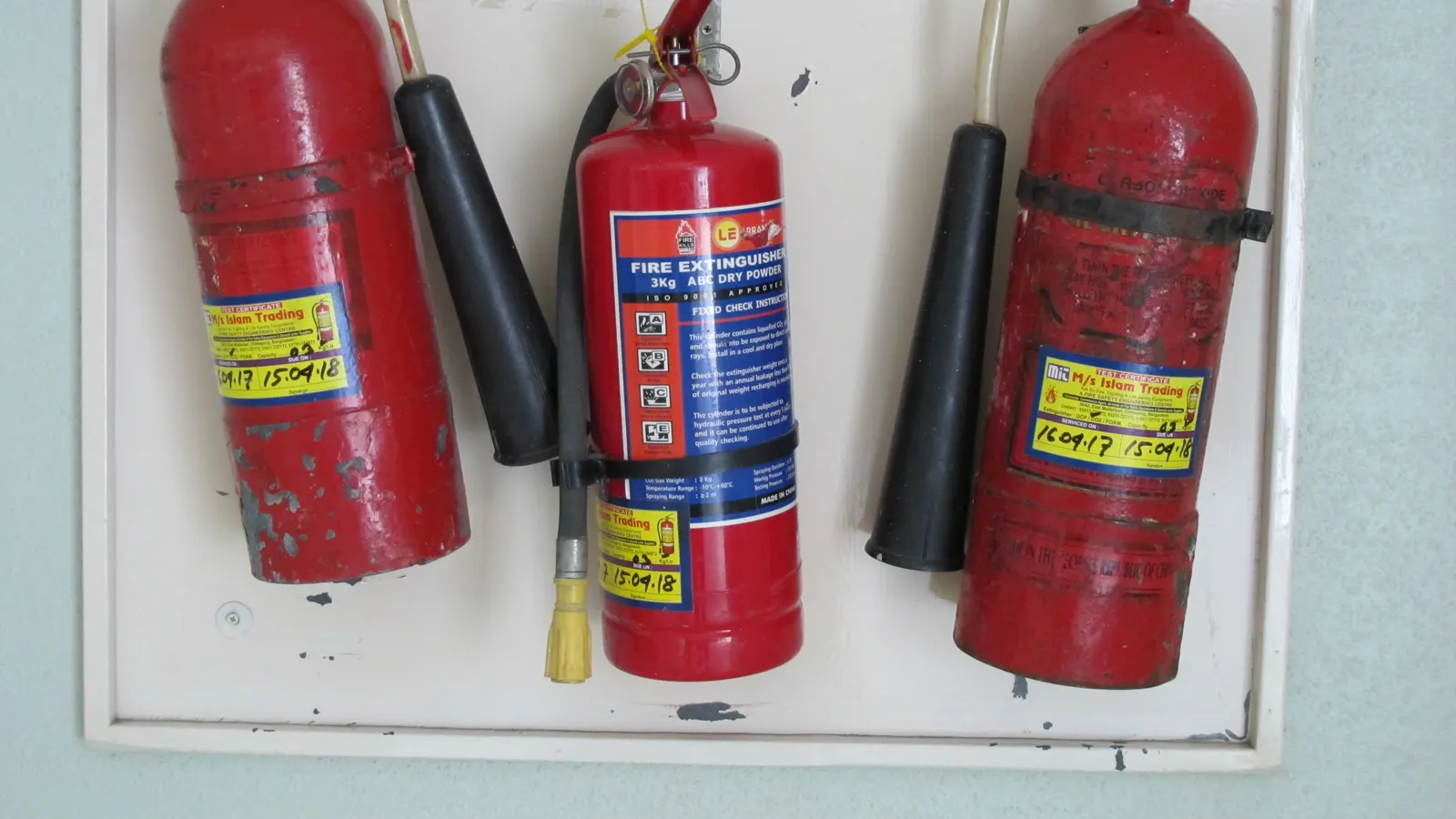
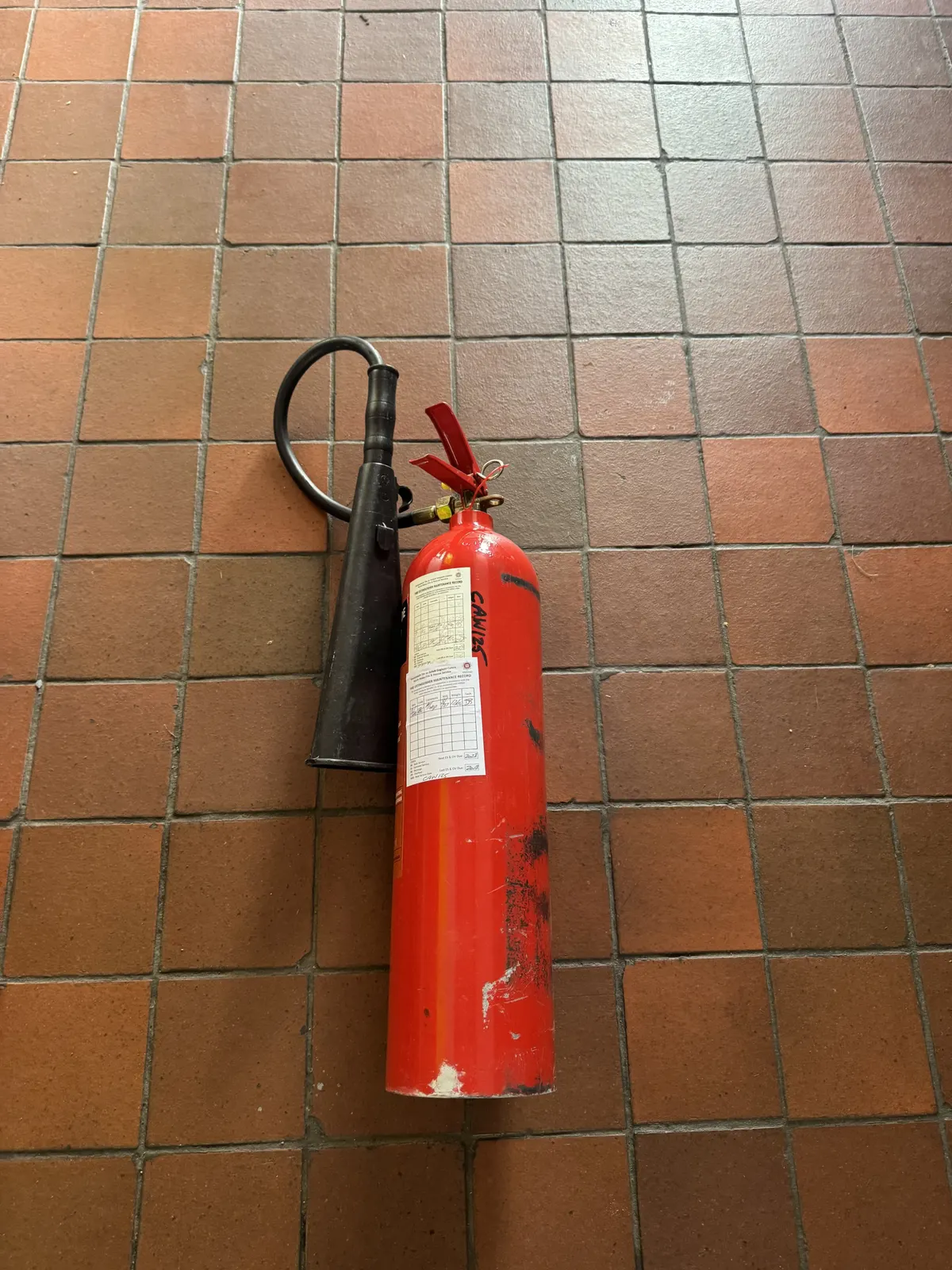
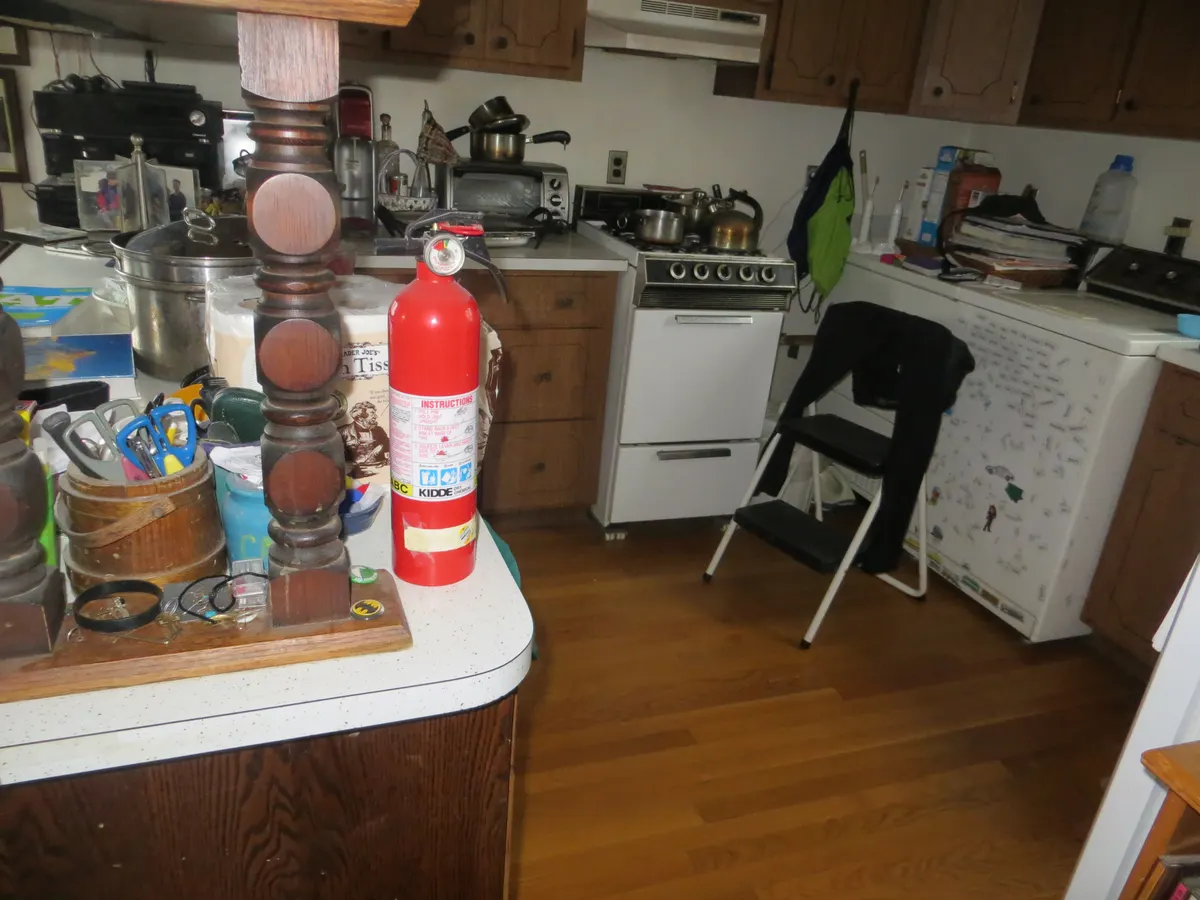
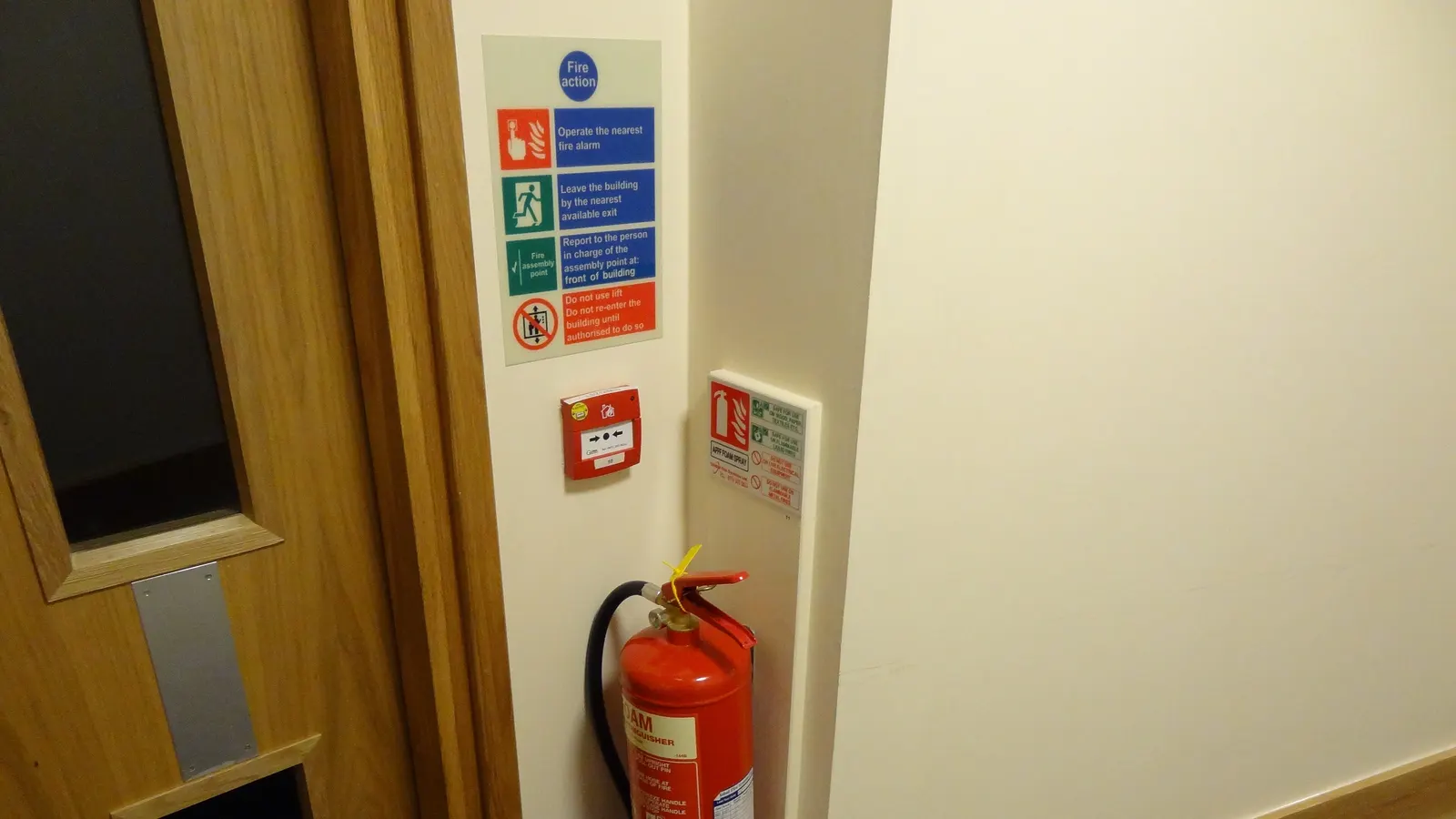
ABC vs CO2 Fire Extinguisher: Which One for Offices, Server Rooms and Kitchens
ABC dry powder and CO2 extinguishers side by side: residue, electrical risk, the enclosed-room hazard, ratings, temperature limits and servicing, with a room-by-room decision table for offices, server rooms and kitchens.
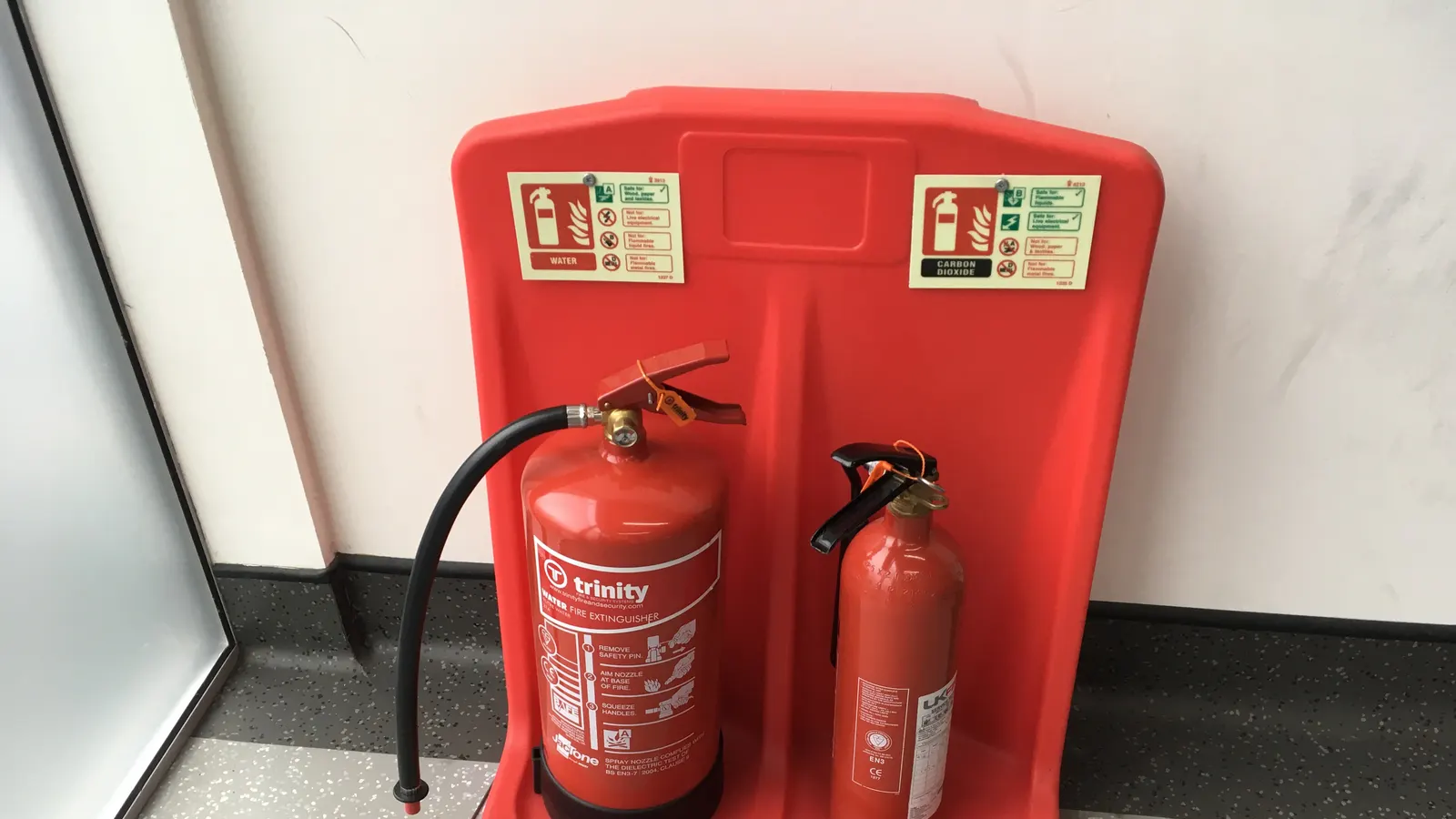
Use an ABC dry powder extinguisher where fires could involve paper, furniture, liquids and electrics together, such as open offices, corridors, stores and car parks. Use CO2 where electrical equipment is the main risk and residue would do damage, such as server rooms, switch rooms and labs. Neither replaces a wet chemical unit on a deep-fat fryer. Most buildings need both, chosen from the same range of fire extinguishers.
This comparison is for facility managers, IT and data centre managers, office fit-out contractors and HSE officers deciding which unit goes in which room. It compares residue, electrical safety, the hazard in enclosed rooms, ratings, heat limits and servicing, then gives a decision table by room type. For the wider picture (codes, approvals and brands) see the main fire extinguisher guide for the UAE and Saudi Arabia. ListGCC has not tested the products named; details come from manufacturers and official guidance.
Monoammonium phosphate powder, fluidised and siliconised
Carbon dioxide gas, stored as liquid under pressure
How it works
Coats Class A solids and breaks the chain reaction of Class B fires
Displaces oxygen around the fire
Fire classes
A, B, C and electrical
B and electrical; not intended for Class A
Conducts electricity?
No, per Amerex
No, per Amerex and OSHA
Residue
Yes; more corrosive than other dry chemicals
None; "clean, non-contaminating"
Hazard to the user
Powder cloud; clean-up afterwards
Lower oxygen in closed rooms; frostbite and suffocation if discharged at a person
Example rating
Multipurpose ratings such as A:B:C
2.5 kg unit rated 34B in UK practice
Example temperature range (Amerex)
-65 °F to 120 °F (about -54 °C to 49 °C)
-22 °F to 120 °F (about -30 °C to 49 °C)
Colour zone (UK practice)
Blue
Black
US hydrostatic test interval
12 years for stored-pressure dry chemical, with a 6-year internal maintenance
5 years
Sources for the rows: Amerex product pages for agent, conductivity and temperature ranges; OSHA 29 CFR 1910.155 and 1910.157 for the CO2 definition and test intervals; London Fire Brigade GN08 for ratings and colours; Wikipedia's summary for corrosiveness and the Class A and personal-injury limits of CO2.
Residue: the deciding factor for electronics
ABC powder is designed to stick. Amerex says its agent melts at about 350 °F and "coats surface to which it is applied", which is what stops solids from flaring up again. The same coating settles on circuit boards, keyboards, stock and food areas, and monoammonium phosphate is more corrosive than other dry chemical agents. After a discharge in an equipment room, plan for a thorough clean before anything goes back into service.
CO2 leaves nothing behind: Amerex describes it as a clean, non-contaminating, odourless gas. That is why it is the default for switchboards, UPS rooms, server racks, telecom rooms and laboratories. In larger data halls, ask your consultant whether a fixed clean agent system is also required; a portable CO2 unit is a first-response tool, not a room protection system.
Electrical risk: both are non-conductive, water is not
Both agents are safe on live electrical equipment in the sense that neither conducts electricity back to the user: Amerex says its ABC agent "will not conduct electricity back to the operator", and OSHA defines CO2 as electrically non-conductive. Plain water and most water-based units are not safe on energised equipment. A US Class C rating (energised electrical equipment) or an EN label that states suitability for electrical risks is what to look for.
Where it is safe to do so, isolate the power first, so that the person tackling the fire is no longer dealing with live equipment.
The enclosed-room hazard with CO2
CO2 puts out fire by displacing oxygen, and it does the same to the air a person breathes. In a small, closed room such as a comms cupboard, plant room or vehicle cab, discharge a CO2 unit, step out and ventilate before re-entering. Never point the horn at a person: the discharge is cold enough to cause frostbite and can cause suffocation. Train staff on this before you hang CO2 units in small rooms.
Ratings: CO2 has no Class A rating
A CO2 unit is rated for Class B only, with suitability for electrical risks stated on the label; it is not intended for Class A fires and its high-pressure discharge can scatter burning paper or fabric. An ABC unit carries ratings across classes. That is the practical reason CO2 cannot be your only extinguisher in an office: paper, furniture and partitions are Class A.
Compare ratings, not cylinder sizes. London Fire Brigade guidance says to allocate extinguishers by rating, and a 2.5 kg CO2 unit is rated 34B. US units show combined ratings such as 1-A:10-B:C, which is the rating Kidde lists for its Pro 110 commercial extinguisher.
Decision table by room type
Room or area
Main risk
Usual choice
Notes
Open-plan office, corridors
Class A plus small electrics
ABC powder, or foam or water mist where residue matters
Add CO2 beside any comms or electrical cupboard
Server room, data closet
Electrical
CO2 (or clean agent)
Step out and ventilate after use; check any fixed system design
Electrical switch room, MCC, UPS room
Electrical
CO2
Place outside or just inside the door
Laboratory
Electrical and small liquid fires
CO2
Class D powder where reactive metals are used
Commercial kitchen
Cooking oil (Class F or K)
Wet chemical for fryers and cooking lines
Neither ABC nor CO2 is a substitute on oil fires
Warehouse, store, car park
Class A and B
ABC powder or foam
Wheeled units for larger fuel risks
Workshop with fuels and electrics
Class A, B and electrical
ABC powder plus CO2
Group units at fire points near exits
Outdoor plant, fuel area
Class B
ABC powder
Check the temperature rating and use a cabinet in sun
Kitchens: why neither is the right answer on a fryer
Cooking oil fires are Class F in Europe and Class K in the US. The agent made for them is wet chemical, which turns the burning oil surface into a soapy layer through saponification. ABC powder and CO2 units are not rated for Class F or K fires, and CO2's high-pressure discharge can scatter burning material. Put a wet chemical unit by the cooking line, keep a CO2 or ABC unit for electrical and general fires elsewhere in the kitchen, and coordinate both with any hood suppression system and the commercial kitchen equipment layout.
Heat, humidity and servicing in the Gulf
Check the top of the operating temperature range against the hottest place the unit will sit. Amerex lists 120 °F (about 49 °C) as the upper limit for both its ABC and CO2 units, while Gloria rates its foam units to +60 °C. For units going into outdoor cabinets, rooftop plant rooms or parked vehicles, ask suppliers for the label range before you order and compare it with the conditions on site.
Servicing differs too. Under US rules (OSHA 1910.157), CO2 cylinders are hydrostatically tested every 5 years; stored-pressure dry chemical units every 12 years, with internal maintenance every 6. SASO's guide to its fire equipment regulation warns that powder absorbs moisture from humid air, so powder units should only be opened in dry conditions, and different powders must never be mixed. The maintenance and refill guide covers the full routine and local contractor rules.
Buying both in one order
Most manufacturers offer both types. Amerex lists ABC and CO2 units in its hand portable range, and NAFFCO lists CO2 and DCP models alongside foam, water, clean agent and wet chemical. Whichever brand you choose, ask for the approval of each model: the UAE Civil Defence Certificate of Compliance, or SASO conformity through SABER for fire extinguishers in Saudi Arabia. If you are unsure which rooms need which unit, a fire and safety audit gives you a schedule to buy against. Then post your requirement with the room list and ratings.
Neither is better everywhere. ABC dry powder is rated for solids, liquids, gases and electrical fires, so it suits general areas, but it leaves a corrosive residue. CO2 leaves no residue and is ideal for electrical equipment, but it is not intended for Class A fires such as paper and wood. Most offices and plants use ABC units on escape routes and CO2 units beside electrical risks.
Is a CO2 fire extinguisher safe on electrical fires?
Yes. Carbon dioxide is electrically non-conductive, which is why CO2 units are the usual choice for switchboards, servers and laboratory equipment. They also leave no residue to damage the equipment. Isolate the power if it is safe to do so, discharge from the distance on the label, and leave and ventilate small rooms afterwards because the gas displaces oxygen.
Will ABC powder damage computers and servers?
It can. ABC powder is designed to coat surfaces and monoammonium phosphate is more corrosive than other dry chemical agents, so a discharge in an equipment room means a thorough clean before equipment goes back into service. That is why server rooms and electrical rooms are normally given CO2 or clean agent units, with ABC units kept for the corridors outside.
Is a CO2 extinguisher dangerous in a small room?
It needs care. CO2 puts out fire by displacing oxygen, and in a small closed room it lowers the oxygen available to the person using it. The discharge is also very cold and can cause frostbite or suffocation if aimed at a person. Discharge it, leave the room, close the door and ventilate before going back in, and train staff on this.
Which extinguisher should an office have?
A typical office needs units rated for Class A fires (paper, furniture) on escape routes near exits, such as ABC powder, foam or water mist, plus CO2 units beside server cupboards and electrical panels. The number and spacing come from the civil defence code that applies. A commercial kitchen needs wet chemical units as well.
Can I use an ABC or CO2 extinguisher on a kitchen fire?
Not on a deep-fat fryer or a large cooking oil fire. Those are Class F (Europe) or Class K (US) fires, and the agent designed for them is wet chemical, which forms a soapy layer over the oil. neither CO2 nor powder is rated for these fires. Keep ABC or CO2 units in the kitchen for electrical and general fires only.
A buyer's guide to fire extinguishers in the UAE and Saudi Arabia: agents and fire classes, ratings and sizes, placement rules, Civil Defence and SASO approvals, maintenance, Gulf heat and the main brands.
Each fire extinguisher type explained for Gulf buyers: how ABC powder, CO2, foam, water, water mist, wet chemical and Class D units work, what they are rated for, colour codes and where each is wrong.
Where to put fire extinguishers and how to mark them: travel distances, mounting heights in UAE and NFPA guidance, ISO 7010 F001 signs, brackets, stands and cabinets, SASO rules for cabinets, and Gulf heat.