Fire Extinguisher Maintenance and Refilling in the UAE and Saudi Arabia
How to keep fire extinguishers in service in the UAE and Saudi Arabia: the monthly check, annual service, five-year work, hydrostatic test intervals, refilling, tags and records, approved contractors and cost drivers.
Fire extinguishers need a visual check about once a month by the building team, a full service once a year by a competent contractor, extended servicing with discharge and internal inspection at intervals of up to five years, pressure testing on the schedule for each type, and a refill after any use. In the UAE that work must sit under a maintenance contract with a civil defence approved contractor. The routine below applies to every unit in your stock of fire extinguishers, whatever the brand.
This how-to is for facility managers, HSE officers and building owners who have to keep extinguishers in service and prove it at inspection. It covers the monthly check, the annual service, five-year work, pressure tests, refilling, tags and records, who may do the work in each country, and what drives the cost. Selection, codes and approvals are in the main fire extinguisher guide for the UAE and Saudi Arabia.
Which rules set the schedule?
There is no single maintenance standard used across the Gulf, so the schedule comes from several layers:
Saudi Arabia: SASO's guide to its Technical Regulation for Fire Control Materials and Equipment sets out inspection and maintenance procedures by extinguisher category. The guide notes that the regulation itself does not impose periodic inspections over the product's life, but says regular inspection and maintenance are essential to keep the equipment safe and working.
UAE: the UAE Fire and Life Safety Code, applied by each emirate's civil defence authority, plus local guidance. Dubai's Trakhees requires weekly inspections with records, an annual service with records, a tag showing the service date on every unit, and hydraulic testing "as prescribed by Civil Defence". DMCC's bulletin calls for daily and monthly checks and an annual inspection by a third party.
International standards that contractors follow: BS 5306-3 for commissioning and maintenance in UK practice (named in London Fire Brigade guidance) and NFPA 10 in US practice, reflected in the US federal rule OSHA 29 CFR 1910.157.
When the layers differ, follow the stricter requirement and the manufacturer's instructions for that model, and agree the schedule in writing with your contractor.
SASO's guide says extinguishers should be inspected when first placed in service and then at intervals of approximately 30 days, or more often when conditions require. OSHA's rule also requires a monthly visual inspection. The check takes a minute per unit and needs no tools. Confirm that:
The extinguisher is in its designated place.
It is visible and reachable without obstruction, with the operating instructions facing outward.
The operating instructions are present and legible.
Seals and tamper indicators are not broken or missing.
It is full, checked by weighing or lifting.
It is not obviously damaged, corroded or leaking, and the nozzle is not blocked.
Any pressure gauge reads in the operable range.
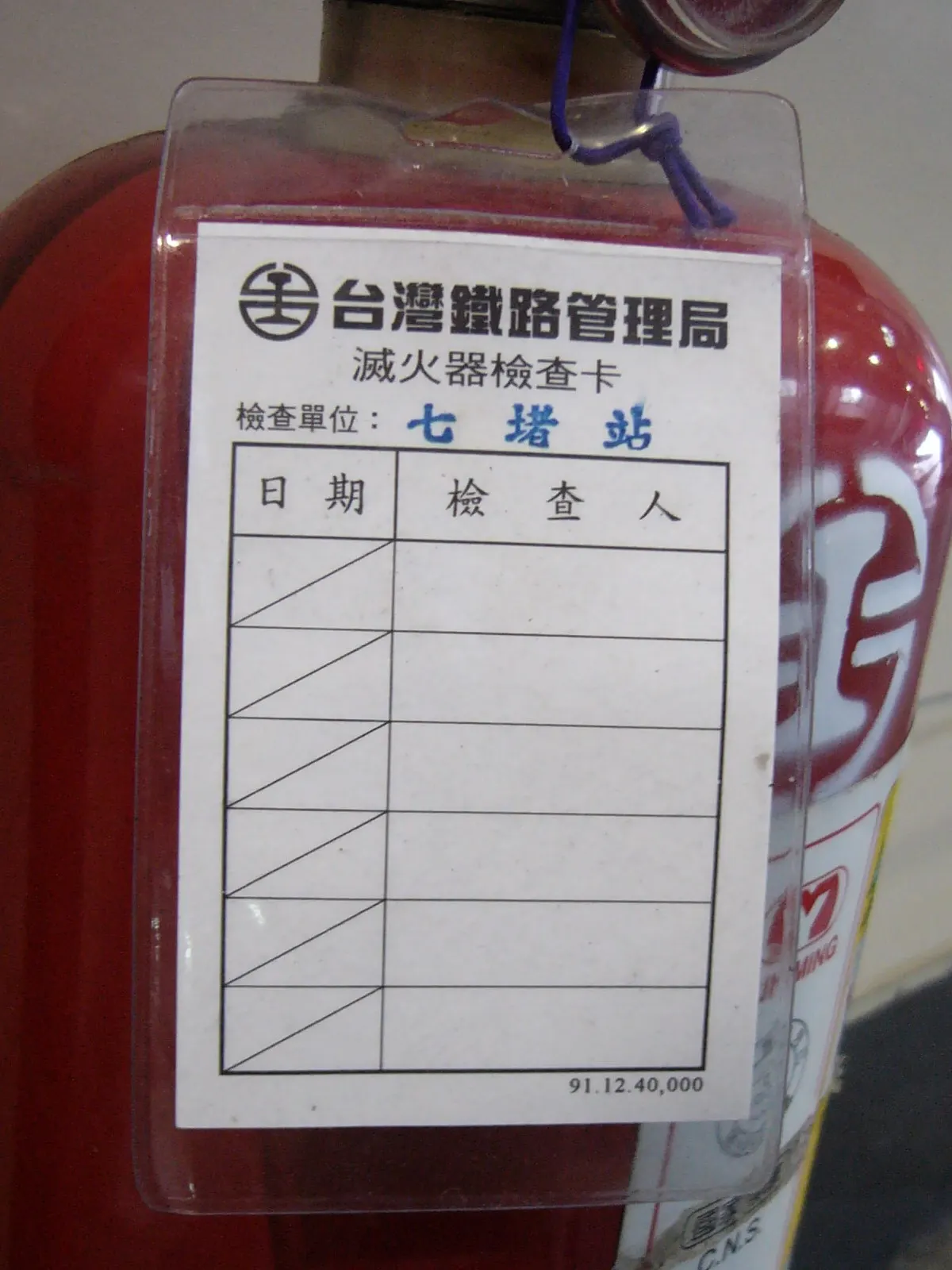
That list follows SASO's guide; London Fire Brigade guidance note GN08 gives almost the same user checks. Record the date and initials on the unit's card or tag, or in a log.
What happens next depends on what you find. Under SASO's guide, a missing or blocked unit (the first two points) needs immediate correction. A rechargeable unit failing any of the other points goes for maintenance. A non-rechargeable powder unit failing them is removed from service, and a non-rechargeable clean agent unit is removed and its agent recovered or destroyed.
The annual service: what the contractor does
Basic servicing should be carried out annually by a competent person, according to London Fire Brigade guidance, and OSHA requires an annual maintenance check. SASO's guide calls for maintenance at the annual service, at the time of a hydrostatic test, and whenever an inspection shows it is needed. At each maintenance visit the contractor should:
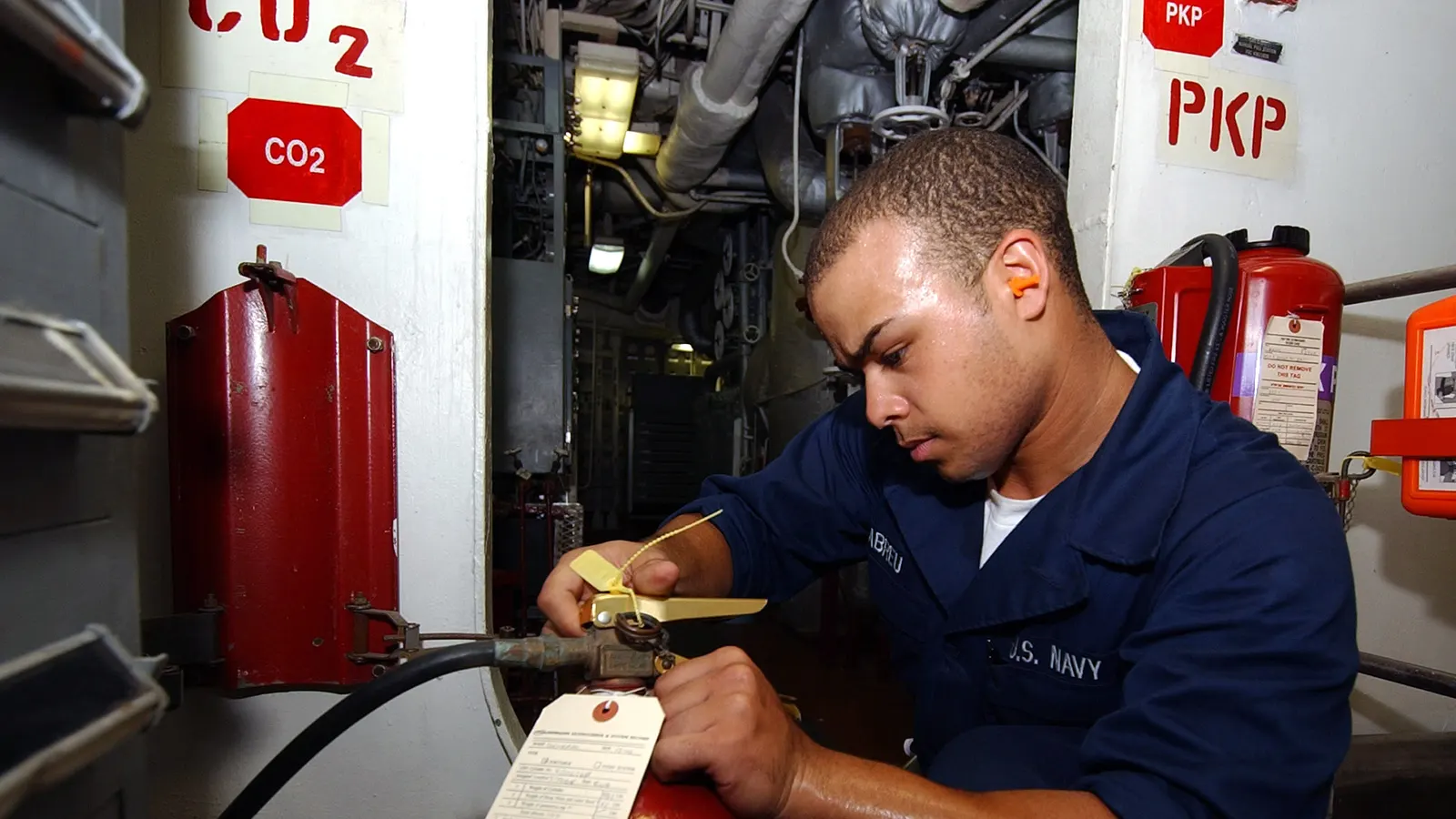
Check the safety device to see whether the unit has been used, then fit a new safety pin and seal.
Check that the pressure gauge reads correctly; SASO's guide says a unit showing a pressure loss of more than 10%, or more than the maker allows, should be handled per the manufacturer's instructions.
Inspect the body for corrosion and damage. Lightly corroded or slightly damaged units should be discarded or pressure tested; badly corroded or damaged units discarded.
Weigh the unit and compare the mass with the figure recorded when it was first put in service.
Inspect and clean the nozzle and hose, replacing worn parts.
For cartridge-operated units, check and weigh the gas cartridge and inspect the powder for caking or foreign matter.
Attach a label or mark showing the maintenance was done.
On top of the annual service, SASO's guide lists extra procedures at intervals of no more than five years for most categories: fully discharge the unit, open and clean it, inspect the inside for corrosion, check the nozzle, strainer, hose and vents, replace seals and defective parts, check the operating mechanism, then reassemble and recharge. Clean agent units must not be discharged into the air; the agent is recovered.
Pressure (hydrostatic) testing is a separate test of the cylinder's strength. US federal rules give the clearest published schedule:
Extinguisher type
Hydrostatic test interval (OSHA Table L-1)
Stored-pressure water and antifreeze, wetting agent, loaded stream
5 years
AFFF foam, foam with stainless steel shell
5 years
Carbon dioxide
5 years
Dry chemical with stainless steel shell
5 years
Dry chemical, stored pressure, with mild steel, brazed brass or aluminium shell
12 years (with internal maintenance every 6 years)
Dry chemical or dry powder, cartridge or cylinder operated, mild steel shell
12 years
UK practice differs for CO2: units are hydraulic pressure tested, inspected and date stamped every 10 years. For the UAE, Trakhees requires hydraulic testing as prescribed by Civil Defence, so ask your contractor which interval the local authority applies to each type and get it on the service report. In the US, CO2 cylinders that pass are stamped with the month and year of the test on the shoulder, neck or foot ring, according to San Diego's fire department policy; look for the equivalent marking or test label on your units.
Refilling after use
Refill or replace any extinguisher that has been discharged, even briefly: a partly used unit may not have enough agent or pressure for the next fire, and the California rules quoted in San Diego's fire policy require maintenance "immediately after use". SASO's guide says maintenance and recharging must follow the appropriate manuals, using the tools, recharge agents, lubricants and spare parts recommended by the manufacturer. Two other points from the same guide matter in practice:
Spare units. Any extinguisher taken out of service for maintenance or refilling should be replaced by a spare of the same type and at least the same rating. Ask your contractor to bring spares rather than leave gaps.
Powder handling. Powder units should only be opened in the driest conditions available and for the minimum time, because powder can absorb harmful moisture from humid air. Different powders must never be mixed; some react to produce water and CO2, causing caking and pressure build-up in a closed cylinder.
Some extinguishers are not meant to be refilled. SASO's guide says non-rechargeable units (other than clean agent types) must be discharged and disposed of within five years of manufacture, and non-rechargeable clean agent units returned for agent recovery within the same period. London Fire Brigade guidance also describes 20-year life cycle extinguishers that are refurbished by the manufacturer after 10 years and only need an annual visual inspection in between; check whether your authority accepts them before you buy.
Tags, labels and records
Inspectors ask for evidence, so keep three things:
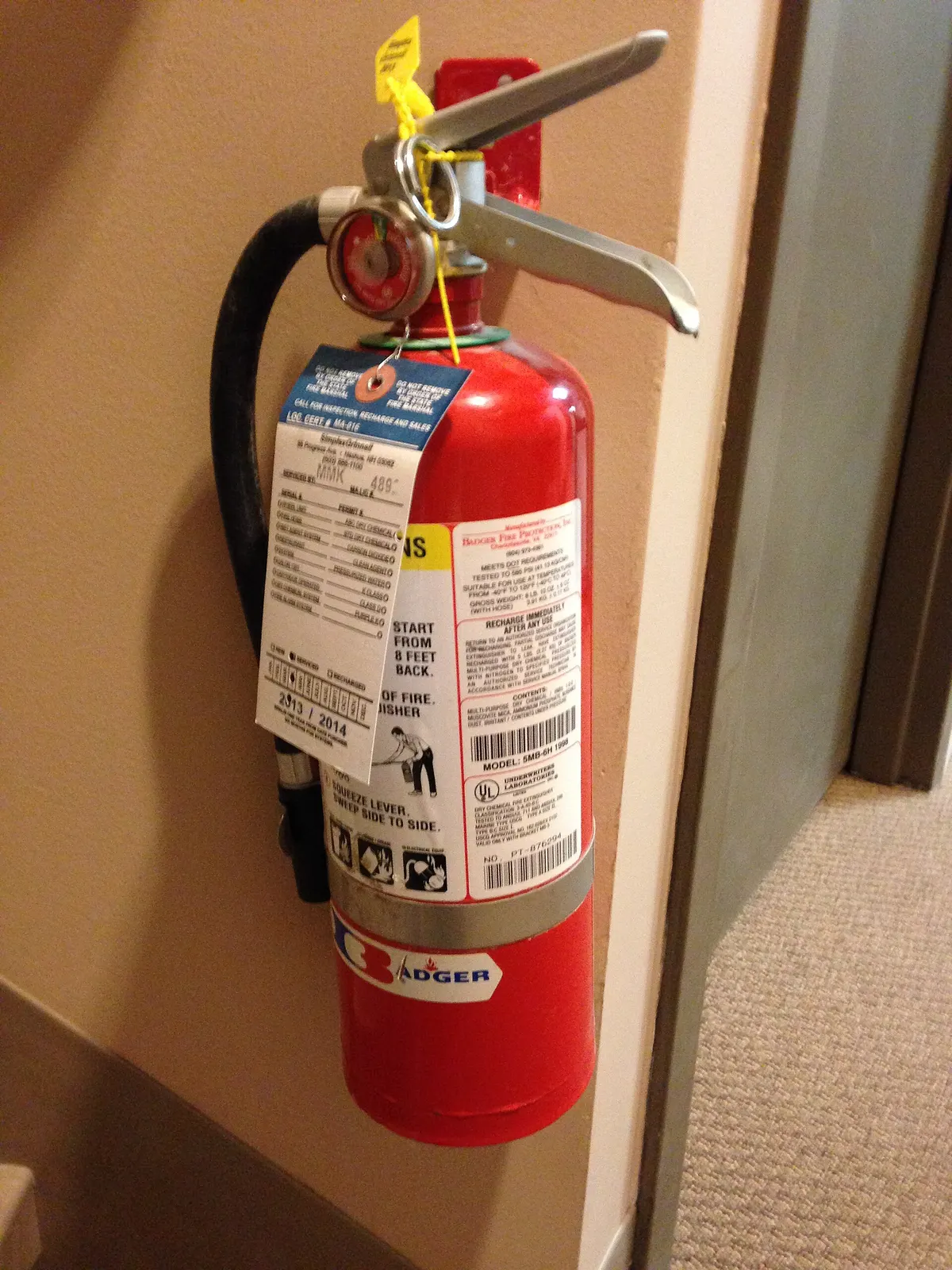
A tag on every unit showing the last service date and the contractor. Trakhees requires the service date tag on all extinguishers, and SASO's guide calls for a label or mark after each maintenance.
A register listing every extinguisher by location, type, rating, serial number, manufacture date, last service, last pressure test and next due date. London Fire Brigade guidance says maintenance tests of all types should be recorded.
The contract and certificates: the maintenance contract, the contractor's civil defence approval, and the product approvals for any replacement units.
Who may service extinguishers in the UAE and Saudi Arabia?
UAE. Under Cabinet Decision No. 24 of 2012 on civil defence services, owners must hold a valid maintenance contract for fire alarm and fire fighting systems and equipment with a contractor approved by the civil defence authority. In July 2023, Abu Dhabi Civil Defence reminded owners of an AED 10,000 fine for having no valid contract, as summarised by LexisNexis Middle East. In Dubai, The National reported in 2016 that installation companies must be registered and licensed with civil defence. Ask any contractor for its current approval certificate and check that the scope covers portable extinguishers.
Saudi Arabia. SASO's guide says inspection and maintenance procedures vary a great deal by type and must only be carried out by competent persons. Premises need a Civil Defence licence, issued through the Salamah portal. Use a contractor that can show its Civil Defence registration and the manufacturer's service authorisation, and source replacements from fire extinguisher suppliers in Saudi Arabia that hold SABER certificates for the models.
Many regional manufacturers, such as NAFFCO in Dubai and SFFECO in Riyadh, also sell wider fire fighting equipment; if you have their units, ask for service by a contractor that uses their recharge agents and parts. The UAE contract requirement names fire alarm systems as well as fire fighting equipment, so make sure the contract also covers the fire alarm system.
What drives the cost of extinguisher maintenance
ListGCC does not publish service prices, because they depend on the site and the contract. The main cost drivers are:
The number of units and how spread out they are (floors, buildings, remote sites).
The mix of types: each agent has its own recharge, parts and pressure test requirements.
Whether the visit is an annual service, a five-year extended service or a pressure test year.
Replacement parts, seals, hoses and agent, and condemned units that must be replaced.
Spare units supplied during servicing and emergency call-outs after use.
Contract scope: extinguishers only, or alarm, sprinkler and suppression systems as well.
Compare quotes on the same register, with the same schedule, and ask each contractor to state the standard and interval for every task. A periodic fire and safety audit is a good way to check the contractor's work. To get quotes, post your requirement with the extinguisher register attached.
Refill or replace it immediately after any discharge, even a short one, and at the five-year extended service when the unit is emptied for internal inspection. Between those, a unit is only recharged if the annual service finds low pressure, lost weight or contaminated agent. Recharging must use the agent and parts the manufacturer specifies, and different powders must never be mixed.
Do fire extinguishers expire?
The guidance cited here sets service and test intervals for rechargeable units rather than a fixed expiry date; units that fail, or that are badly corroded or damaged, are taken out of service. Non-rechargeable units are different: SASO's guide says they must be discharged and disposed of within five years of manufacture. Check the manufacture date on the label.
Who can refill fire extinguishers in the UAE?
Use a contractor approved by the civil defence authority in your emirate. UAE rules under Cabinet Decision No. 24 of 2012 require owners to keep fire fighting equipment under a maintenance contract with an approved contractor, and Abu Dhabi has reminded owners of an AED 10,000 fine for having no valid contract. Ask for the contractor's approval certificate and check its scope.
What should a monthly fire extinguisher inspection check?
Check that each unit is in its place, visible and unobstructed with instructions facing out; that the instructions are legible; that seals and tamper indicators are intact; that it is full by weight or lift; that it is not damaged, corroded, leaking or blocked; and that any gauge reads in the operable range. Record the date on the unit's tag or in the register.
How often is hydrostatic testing needed?
It depends on the type and the standard. Under US federal rules, CO2, water, foam and stainless steel dry chemical units are tested every 5 years and stored-pressure mild steel dry chemical units every 12 years. UK practice tests CO2 units every 10 years. In the UAE, Trakhees requires testing as prescribed by Civil Defence, so confirm the local interval with your contractor.
A buyer's guide to fire extinguishers in the UAE and Saudi Arabia: agents and fire classes, ratings and sizes, placement rules, Civil Defence and SASO approvals, maintenance, Gulf heat and the main brands.
Each fire extinguisher type explained for Gulf buyers: how ABC powder, CO2, foam, water, water mist, wet chemical and Class D units work, what they are rated for, colour codes and where each is wrong.
Where to put fire extinguishers and how to mark them: travel distances, mounting heights in UAE and NFPA guidance, ISO 7010 F001 signs, brackets, stands and cabinets, SASO rules for cabinets, and Gulf heat.