Fire Extinguisher Types: ABC Powder, CO2, Foam, Water and Wet Chemical
Each fire extinguisher type explained for Gulf buyers: how ABC powder, CO2, foam, water, water mist, wet chemical and Class D units work, what they are rated for, colour codes and where each is wrong.
Pick the agent by what is burning: ABC dry powder for mixed risks of solids, liquids and electrics; CO2 for electrical equipment and flammable liquids where residue matters; foam for solids and liquid spills; water or water mist for paper, wood and textiles; and wet chemical for cooking oil fires in kitchens. Every unit you buy as one of the fire extinguishers on the UAE market carries a rating for the classes it has passed, and that label, not the colour, is the final word.
This explainer is for HSE officers, facility managers and buyers who need to put the right agent in the right place. It goes agent by agent: how each one works, what it is rated for, its colour code and where it is the wrong choice. Sizes, how many units to provide, local rules, approvals and brands are covered in the main guide to fire extinguishers in the UAE and Saudi Arabia. ListGCC did not test any extinguisher; product details come from manufacturers' pages.
Types of fire extinguisher at a glance
Type
How it works
Rated for
Colour zone (UK practice)
Do not use on
ABC dry powder (DCP)
Chemical powder interrupts the flame and coats solids
Class A, B, C and electrical
Blue
Cooking oil fires; avoid where residue would damage equipment
Carbon dioxide (CO2)
Gas displaces oxygen
Class B and electrical
Black
Class A fires; use with care in small closed rooms
Foam
Blankets and cools the surface
Class A and B
Pale cream
Cooking oil fires unless F rated; live electrics beyond the maker's tested limits
Water
Cools burning solids
Class A
Red
Live electrical equipment, flammable liquids, cooking oil
Water mist
Fine spray of de-ionised water cools and shields
Class A, and electrical risks on many models
White body
Anything the label does not list
Wet chemical
Turns burning oil into a soapy layer
Class F (K in the US), usually Class A too
Canary yellow
Live electrical equipment
Special powder
Forms a crust over burning metal
Class D
Signal violet
General areas
Colour zones follow London Fire Brigade guidance note GN08: the body is signal red, with up to 5% of the surface in the agent's colour. Clean agent units use green. The classes are those of EN 2: A for solids, B for liquids, C for gases, D for metals and F for cooking fats. US labels add Class C for energised electrical equipment and use K for cooking oils.
Dry powder (ABC and DCP) extinguishers
A DCP, or dry chemical powder, extinguisher is the general-purpose unit you will find in most corridors, shops and site offices. The common multipurpose agent is monoammonium phosphate, one of the dry chemicals listed in OSHA's definitions. Amerex describes its ABC powder as "specially fluidized and siliconized mono ammonium phosphate" that melts at about 350 °F, coats Class A surfaces, breaks the chain reaction of Class B fires and does not conduct electricity back to the operator.
That coating is the trade-off. Powder is meant to coat what it lands on, and monoammonium phosphate is more corrosive than other dry chemical agents. That is why powder is a poor fit beside servers, switchgear you want back in service quickly, or food preparation surfaces.
Powder also needs care in a humid climate. SASO's guide to its fire equipment regulation warns that powder can absorb harmful amounts of moisture if exposed to humid air, so powder units should only be opened in the driest conditions available, and never refilled with a different powder: some powders react with each other to produce water and CO2, causing caking and, in a closed cylinder, a dangerous pressure rise. Ask your service contractor how they handle that.
BC powder units, rated only for Class B and C, also exist. Special Class D powders for metal fires are a separate product and are covered below.
CO2 extinguishers
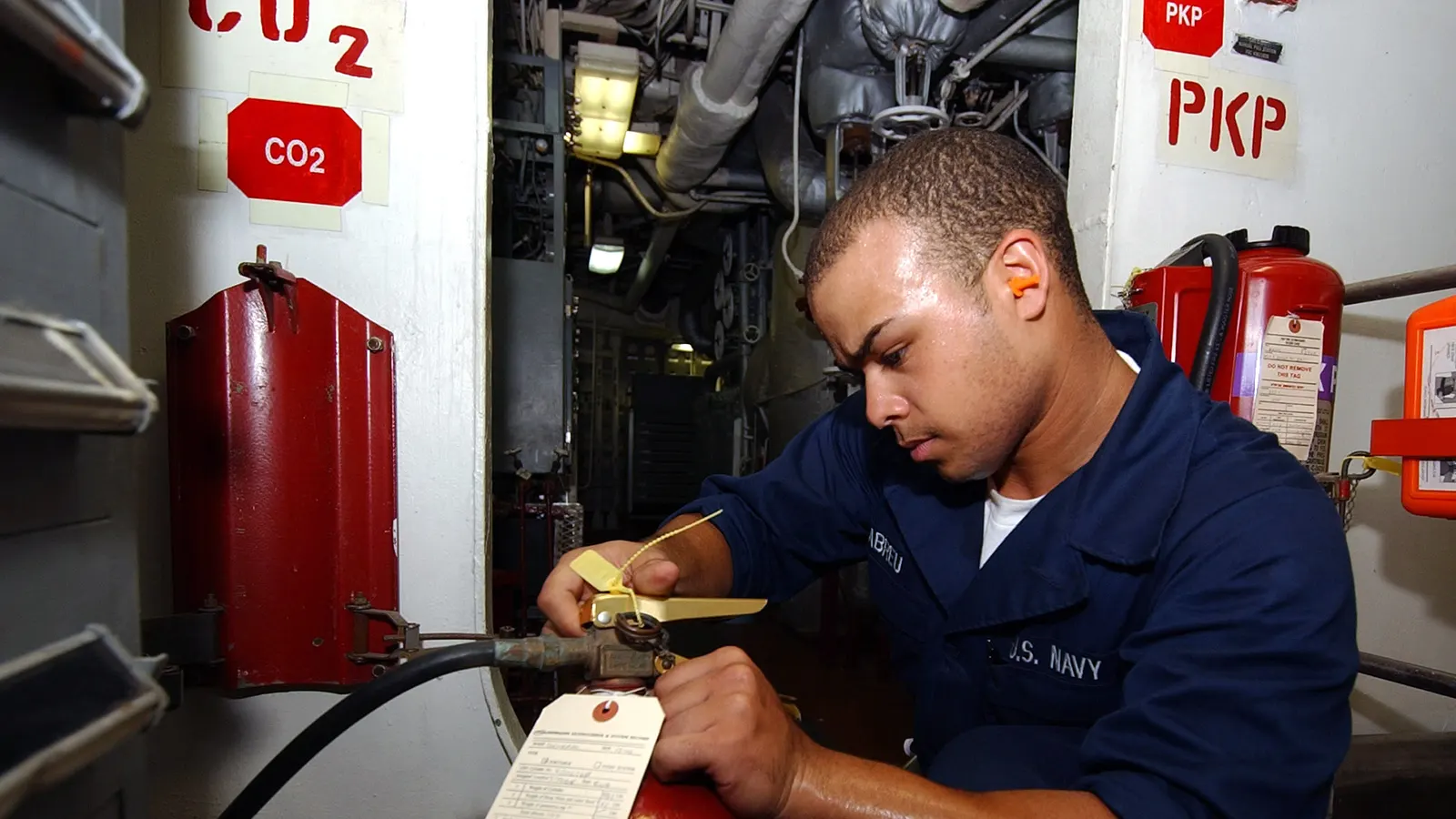
A CO2 extinguisher (CO2 stands for carbon dioxide) holds the gas as a liquid under high pressure. Amerex describes the discharge as "a white cloud of snow" that smothers a fire by displacing oxygen, effective on Class B flammable liquids and electrically non-conductive. OSHA defines carbon dioxide as a colourless, odourless, non-conductive inert gas that puts out fire by reducing the concentration of oxygen or fuel vapour.
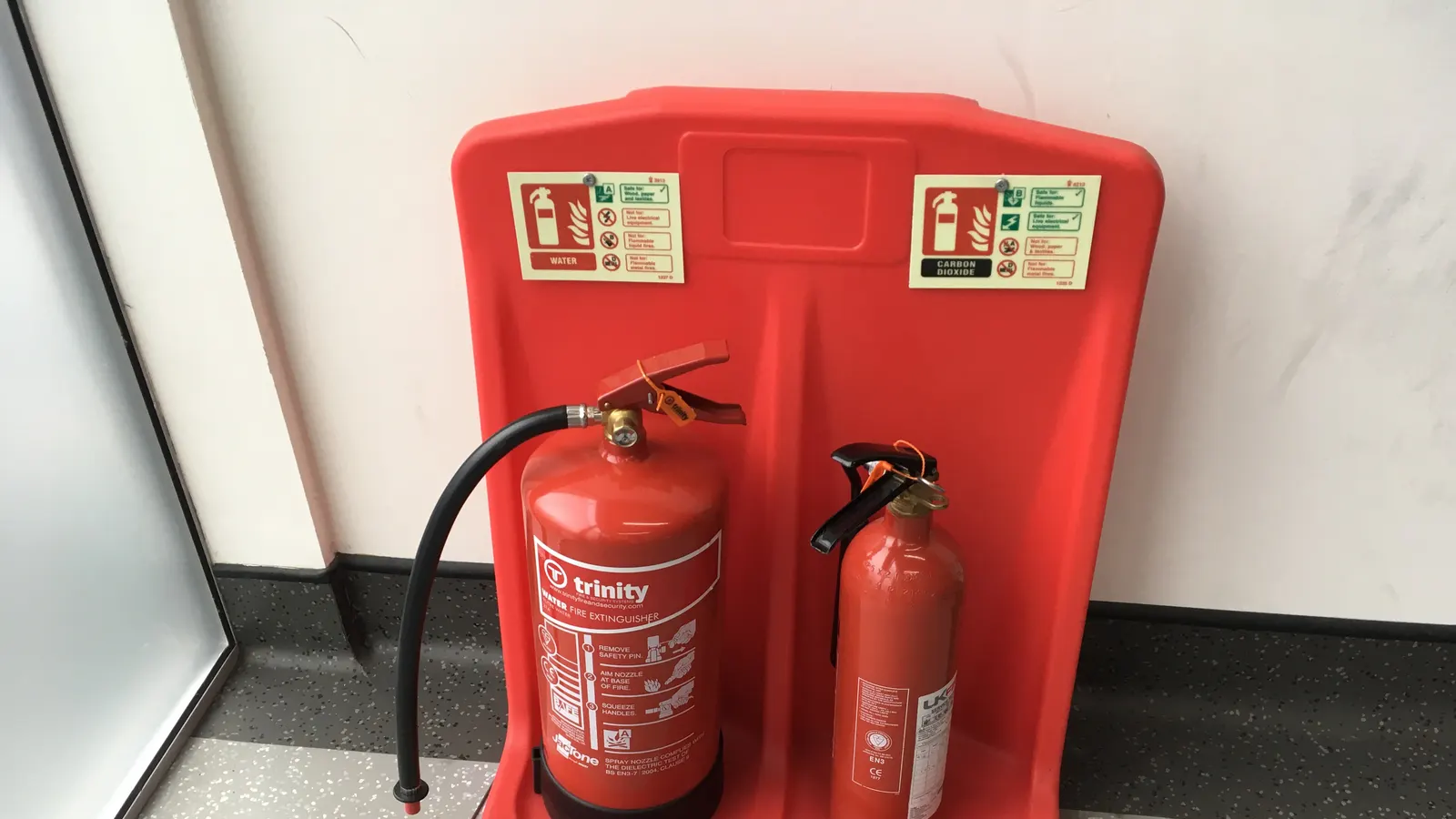
Because the gas leaves no residue, CO2 is the usual choice for electrical panels, server and telecom rooms, laboratories and offices full of electronics. A 2.5 kg CO2 unit is rated 34B, according to London Fire Brigade guidance.
The limits matter as much as the strengths:
Not for Class A. CO2 units are not intended for solid-fuel fires, and the high-pressure cloud can scatter burning material.
Oxygen and cold. The same displacement that smothers a fire reduces oxygen for people nearby, and the discharge can cause frostbite and suffocation if used on a person. Use it, then leave small closed rooms and ventilate them.
High-pressure cylinder. SASO's guide lists a hydraulic pressure test of 23.6 MPa for 2.5 minutes among the type tests for steel CO2 cylinders, and UK practice pressure tests CO2 units every 10 years.
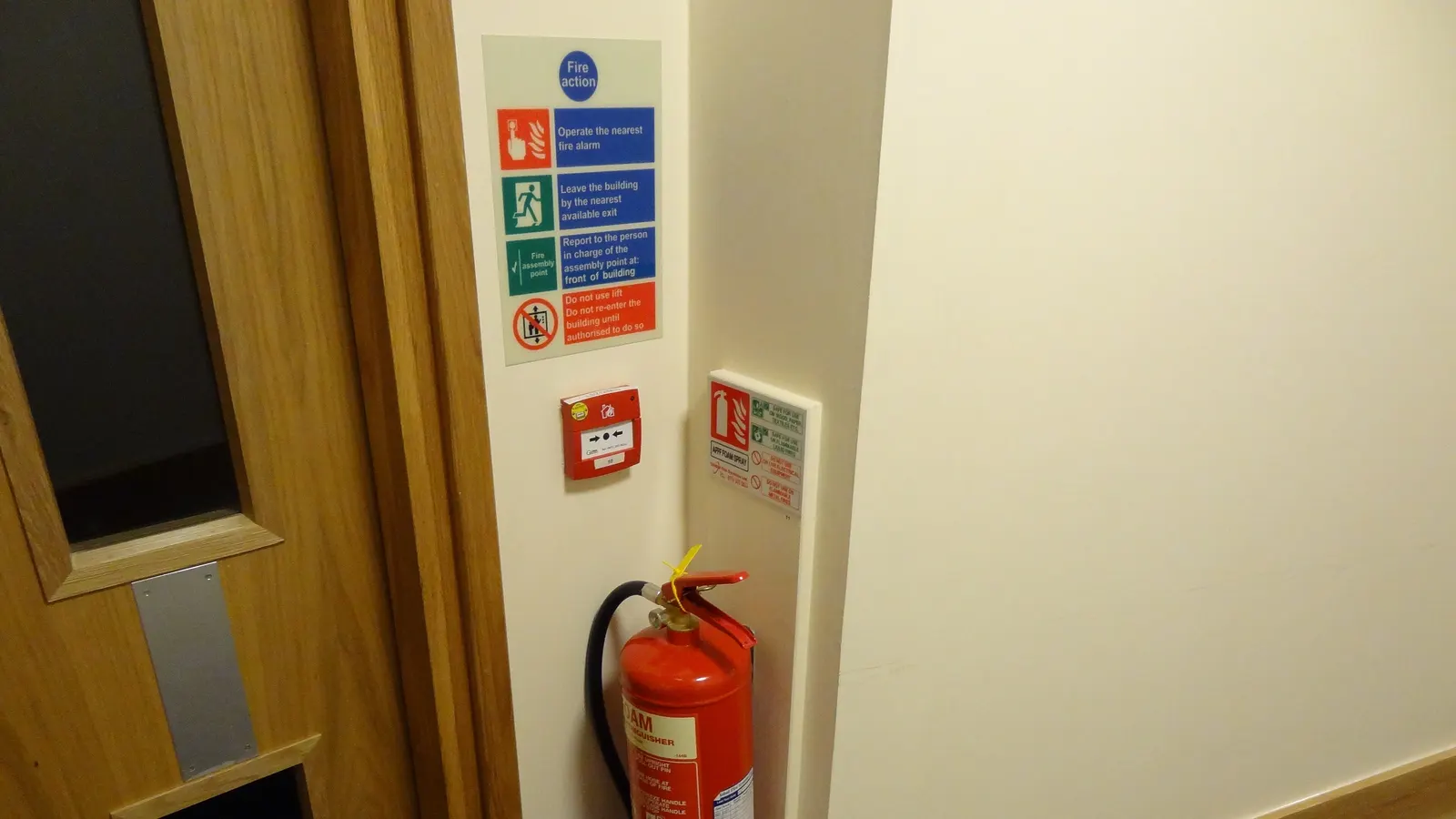
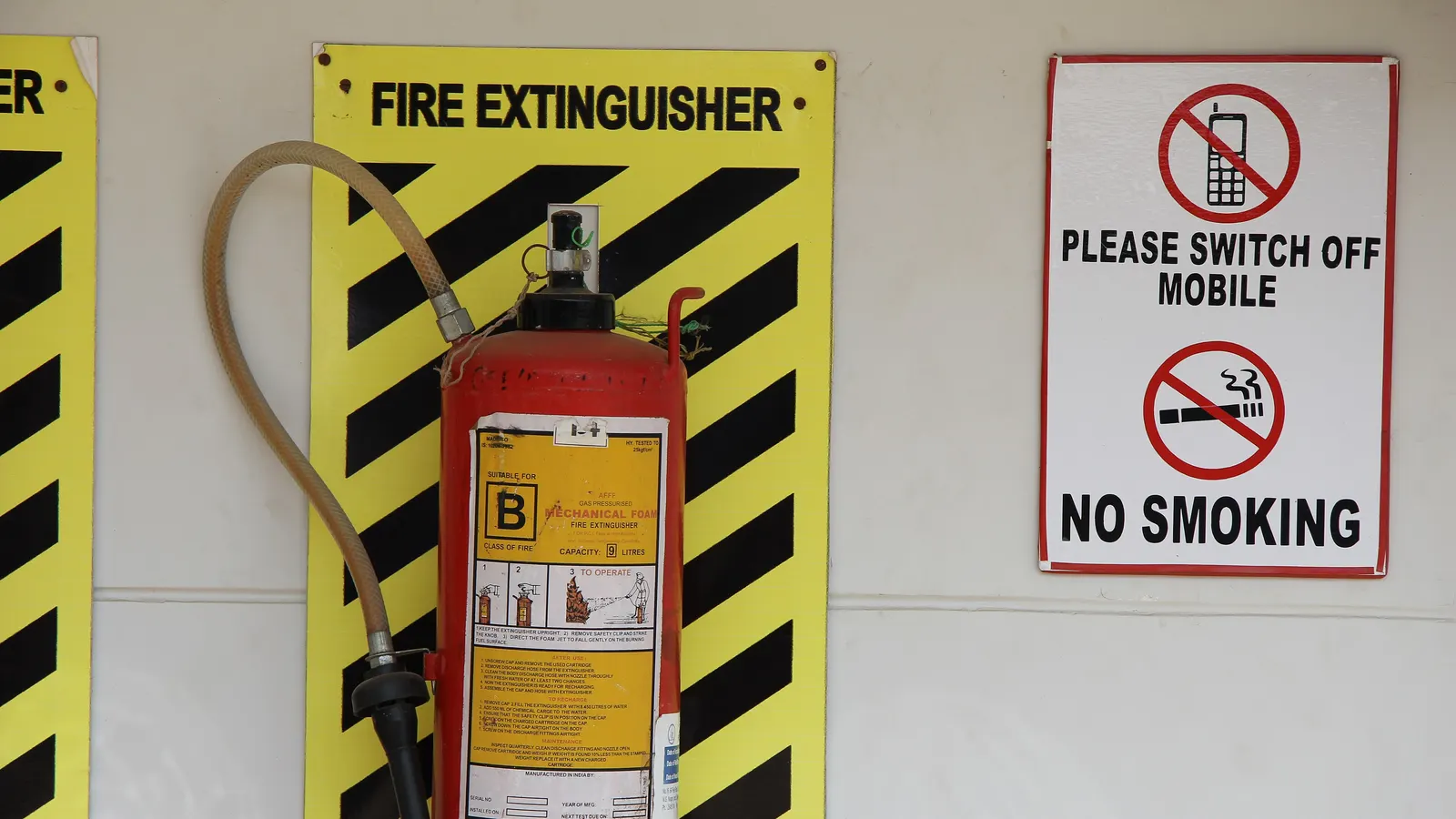
Foam units cover both Class A solids and Class B liquids, which makes them a good fit for warehouses, workshops, car parks and fuel-handling areas where solids and spills sit side by side. They leave far less mess than powder.
Ratings show what the cylinder size alone does not. Gloria's SDB 6 P foam extinguisher, a 6 litre unit, is rated 21A and 183B, and the 9 litre SDB 9 P is rated 27A and 233B, according to the datasheet. The same sheet says the units are suitable for electrical installations up to 1,000 volts at a minimum distance of 1 m, a claim tied to that model's testing, so do not assume it for every foam unit.
Foam chemistry is changing. London Fire Brigade notes that manufacturers have begun to replace foam with fluorine-free foam, free from PFAS ("forever chemicals"), and Gloria's site refers to a new EU rule restricting PFAS-containing firefighting foams. If you buy for multinational clients with environmental policies, ask for fluorine-free foam and the agent's data sheet.
Water and water mist extinguishers
Plain water extinguishers are for Class A fires only. Water-based extinguishers cannot be used safely on energised electrical fires or flammable liquid fires, and water must never go on burning cooking oil. In UK practice they carry a red colour zone.
Water mist units are different. Amerex says its water mist extinguisher uses de-ionised water through a misting nozzle, is suited to Class A fires and locations with a potential Class C (electrical) hazard, and is built non-magnetic for MRI facilities. London Fire Brigade notes water mist units have a white body. Amerex positions them for hospitals, telecom facilities and clean rooms; the label decides what each model is rated for.
Wet chemical extinguishers for kitchens
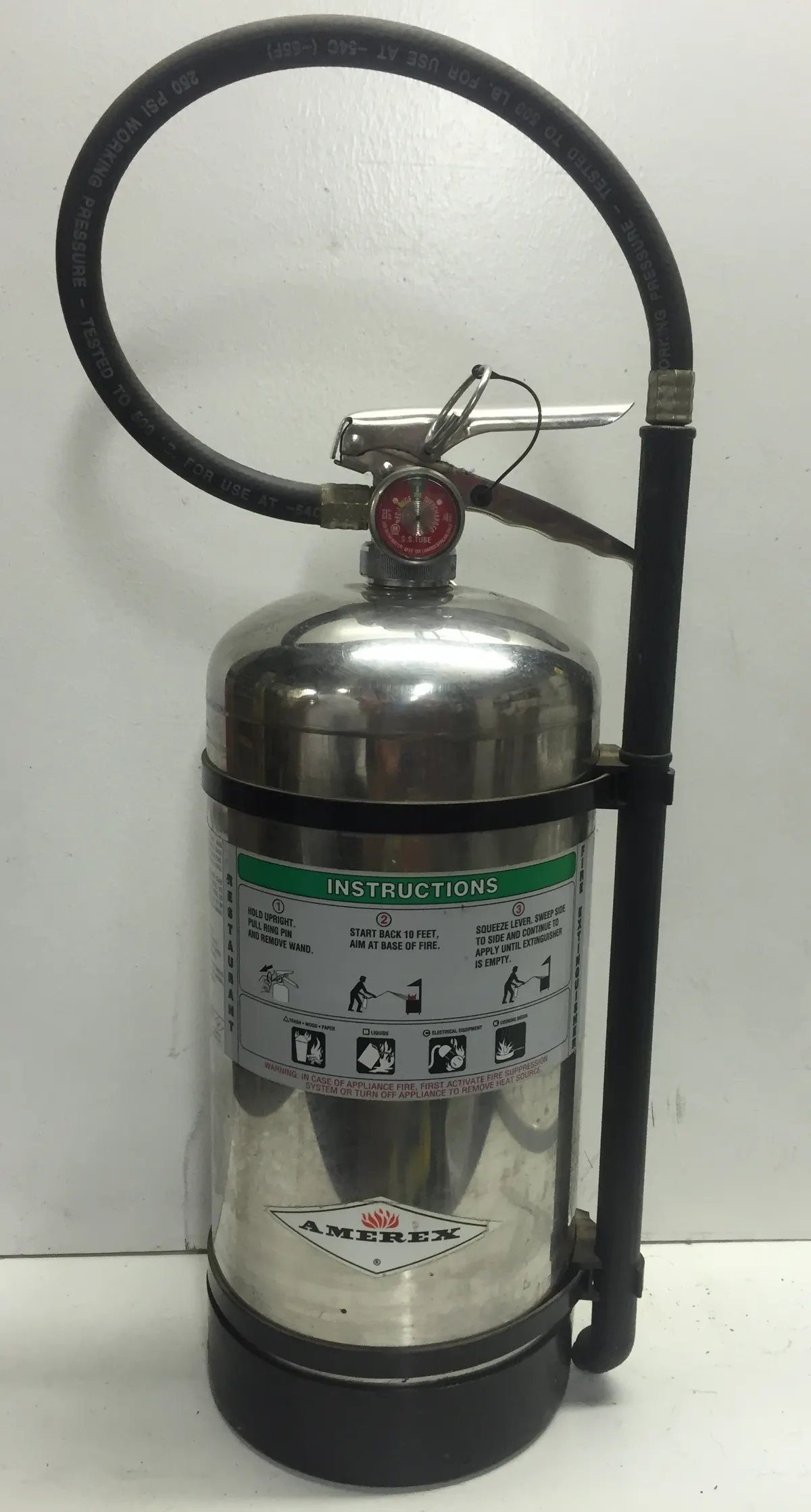
Cooking oil fires are Class F in Europe and Class K in the US. Wet chemical agents form an air-excluding soapy foam layer over the burning oil through saponification, which cools and seals the surface. They are generally rated for Class A and F (or K).
ANSUL's K-Guard, for example, is designed for fires in cooking vegetable or animal fats in commercial cooking equipment, is charged with ANSULEX Low pH agent and carries a 2-A:K rating to UL 8 and 711 and NFPA 10. Amerex also lists Class K wet chemical units in its hand portable range.
Under US practice derived from NFPA 10, kitchen units are placed close to the cooking line: San Diego's fire extinguisher policy, for example, lists 2-A:K units within 30 feet (about 9 m) for kitchens. In the UAE and Saudi Arabia, follow the civil defence code and the kitchen suppression design. A portable unit does not replace a fixed hood suppression system where the design calls for one. If you are fitting out a kitchen, specify both alongside the commercial kitchen equipment.
Clean agent and Class D extinguishers
Clean agent units use a gaseous or vaporising agent that leaves no residue; Amerex lists Halotron clean agent units for commercial and aviation use. London Fire Brigade notes that green colour-coded extinguishers containing clean agent gases or wet chemical solutions are now offered for small lithium-ion battery fires.
Class D fires involve combustible metals such as magnesium, titanium, sodium and lithium metal. They need special powder extinguishers (signal violet zone), and London Fire Brigade advises dry sand and specialist advice according to the risk. If you machine or store such metals, ask the supplier to match the powder to the metal.
Where each type is the wrong choice
Water on electrics or oil: risk of electric shock and of spreading burning liquid.
CO2 on paper, wood or fabric: it can scatter burning material, and smouldering solids can reignite.
Powder in server rooms and food areas: it works, but the residue spreads and is corrosive.
Anything but wet chemical on a deep-fat fryer: most ordinary units are not rated for Class F or K fires.
Ordinary powder on metal fires: only a Class D agent is designed for them.
Equip each location for the hazard it actually has, and check the approval of each model: the UAE Civil Defence Certificate of Compliance or SASO's SABER certificate in Saudi Arabia. NAFFCO, for instance, lists CO2, DCP, water, foam, clean agent and wet chemical models in its range. Buyers in the Kingdom can compare fire extinguisher suppliers in Saudi Arabia, and hose reels and cabinets sit under fire fighting equipment. To have suppliers quote against your list, post a requirement.
DCP stands for dry chemical powder. A DCP extinguisher discharges a fine chemical powder, most often monoammonium phosphate in multipurpose ABC units, which interrupts the flame and coats burning solids. It is rated for Class A, B and C fires and electrical risks, which is why it is the most common general-purpose unit. It leaves a corrosive residue, so it is a poor choice beside sensitive electronics.
What is CO2 in full name?
CO2 is carbon dioxide. In a CO2 fire extinguisher the gas is stored as a liquid under high pressure and discharges as a cold white cloud that smothers the fire by displacing oxygen. It is electrically non-conductive and leaves no residue, so it is used on electrical equipment and flammable liquids, but it is not intended for Class A fires such as paper or wood.
What is a CO2 fire extinguisher used for?
CO2 extinguishers are used on Class B flammable liquid fires and on electrical equipment such as switchboards, servers and laboratory instruments, because the gas does not conduct electricity and leaves no residue. A 2.5 kg unit is rated 34B in UK practice. Do not use it on solid-fuel fires, and leave and ventilate small rooms after discharge because the gas displaces oxygen.
Which fire extinguisher is used for kitchen fires?
Use a wet chemical extinguisher, rated Class F in Europe or Class K in the US, for fires in deep-fat fryers and other cooking oil appliances. The agent turns the burning oil surface into a soapy layer through saponification, cooling and sealing it. Never use water on burning oil. A portable unit does not replace a fixed kitchen hood suppression system.
Can a water extinguisher be used on electrical fires?
No. Plain water and water-based extinguishers cannot be used safely on energised electrical equipment or on flammable liquid fires. The exception is a water mist unit that has been tested and labelled for electrical risks, such as models using de-ionised water through a misting nozzle. Otherwise use CO2 or ABC powder, and isolate the power if it is safe to do so.
What colour is each type of fire extinguisher?
Under UK and BS EN 3 practice the body is red and a colour zone shows the agent: red for water, pale cream for foam, blue for powder, black for CO2, canary yellow for wet chemical, green for clean agent and signal violet for Class D powder. Water mist units have a white body. Always read the label, which states the agent and rating.
A buyer's guide to fire extinguishers in the UAE and Saudi Arabia: agents and fire classes, ratings and sizes, placement rules, Civil Defence and SASO approvals, maintenance, Gulf heat and the main brands.
Where to put fire extinguishers and how to mark them: travel distances, mounting heights in UAE and NFPA guidance, ISO 7010 F001 signs, brackets, stands and cabinets, SASO rules for cabinets, and Gulf heat.
How to keep fire extinguishers in service in the UAE and Saudi Arabia: the monthly check, annual service, five-year work, hydrostatic test intervals, refilling, tags and records, approved contractors and cost drivers.