Welding Helmets and PPE: Shades, Standards and Heat in the Gulf
Which filter shade each welding process needs, what to check on an auto-darkening helmet, the standards for helmets, jackets and gloves, respirators for fume, and PPE rules in the UAE and Saudi Arabia.
A welding helmet must have a filter dark enough for the process and current (at least shade 10 for MIG at 60 A and above and for stick above 160 A), give full UV and infrared protection even in its light state, and be worn with flame-resistant clothing, welding gloves and, where fume is not extracted, a respirator. Compare welding PPE and accessories suppliers in the UAE once you know the shades and standards you need.
This guide is for HSE officers, workshop supervisors and buyers kitting out welders. It covers filter shades by process and current, what to look for in an auto-darkening helmet, the standards for helmets, clothing and gloves, respiratory protection for fume, and the import rules in each country. The machines, codes and general fume rules are covered in our welding machine guide for the UAE and Saudi Arabia. Saudi buyers can compare sellers on the welding PPE page for Saudi Arabia.
What welding does to eyes and skin
The arc gives off intense visible light, ultraviolet and infrared radiation. Unprotected exposure causes arc eye, a painful inflammation of the cornea, and can burn the retina, which can lead to loss of vision. That is the short answer to why some welders lose their eyesight. Uncovered skin can get a sunburn-like condition in a relatively short period of welding. Spatter, slag and hot metal add burn risk, and HSE notes that all arc welders using hand-held equipment are at risk of electric shock and electrical burns.
So welding PPE is a system: a helmet with the right filter, safety glasses under it for chipping and grinding, flame-resistant clothing, welding gloves, and respiratory protection where the fume is not controlled at source.
Which filter shade for which welding process?
Shade numbers run from light to dark; the higher the number, the less light passes. The US OSHA regulation on eye and face protection, 29 CFR 1910.133, publishes minimum protective shades by process and current, and it is a widely used reference. Selected rows:
Process
Arc current
Minimum shade
Stick (SMAW), electrodes under 2.4 mm (3/32 in)
Under 60 A
7
Stick (SMAW), 2.4 to 4.0 mm (3/32 to 5/32 in)
60 to 160 A
8
Stick (SMAW), 4.0 to 6.4 mm (5/32 to 1/4 in)
160 to 250 A
10
Stick (SMAW), over 6.4 mm (1/4 in)
250 to 550 A
11
MIG/MAG and flux-cored
Under 60 A
7
MIG/MAG and flux-cored
60 to 500 A
10
TIG
Under 150 A
8
TIG
150 to 500 A
10
Air carbon arc cutting (light)
Under 500 A
10
Plasma arc cutting (light, medium, heavy)
Under 300 A / 300 to 400 A / 400 to 800 A
8 / 9 / 10
Torch brazing
Not applicable
3
These are minimums. OSHA's rule of thumb is to start with a shade too dark to see the weld zone, then go lighter until you have a sufficient view, without going below the minimum. Electrode sizes in the table are converted from OSHA's thirty-seconds of an inch.
The practical consequence for buyers: a stick welder at 200 A and any MIG welder above 60 A need at least shade 10, and stick above 250 A needs 11. A variable filter that darkens to 13, like the example below, covers every arc welding row in the table; only carbon arc welding (shade 14) needs darker.
Auto-darkening or passive welding helmet?
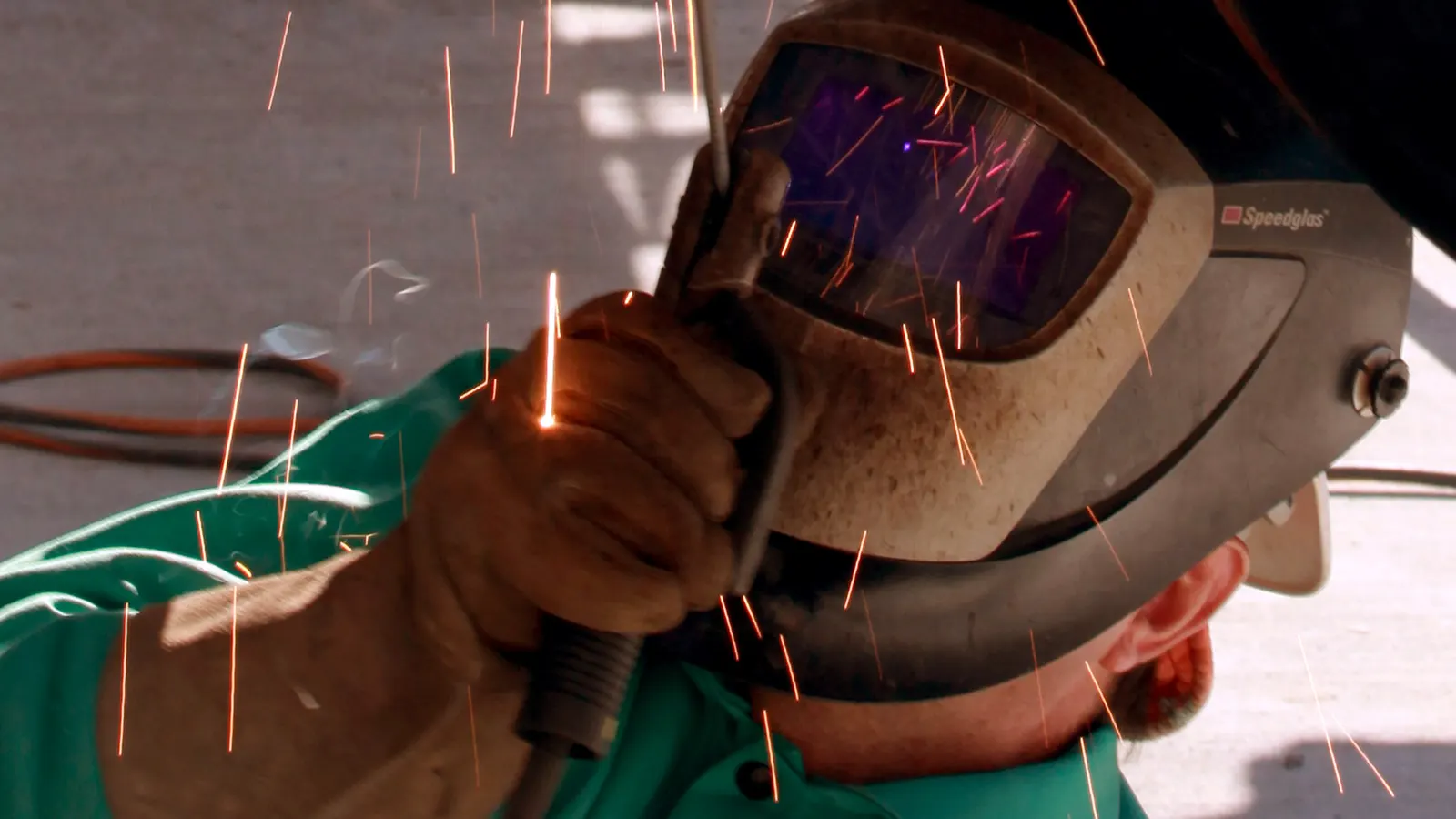
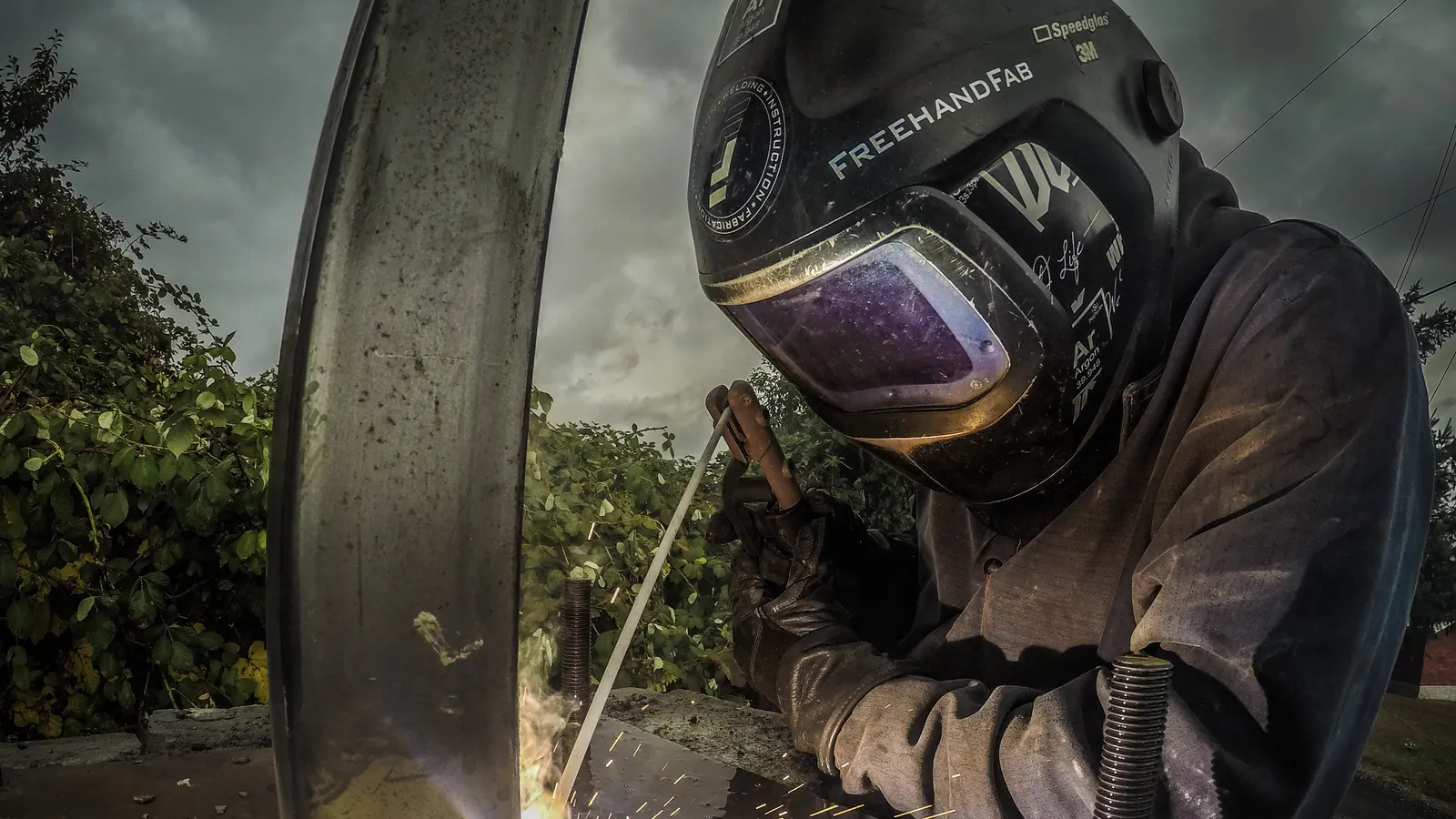
A passive helmet has a fixed dark lens: tinted glass or plastic. The welder has to nod the helmet down before striking. An auto-darkening filter (ADF) uses an LCD shutter that darkens when its sensors detect the arc. The first, Speedglas, was introduced in 1981 by Hornell International, now owned by 3M; auto-darkening helmets remove the need to nod the helmet down, which saves time and reduces exposure to harmful light.
The key safety point: a good ADF protects against UV and infrared all the time, not only when dark. The US standard ANSI Z87.1 requires auto-darkening helmets to give full UV and IR protection even in the light state, and helmet maker Optrel states its cassettes give permanent UV and IR protection whether light or dark.
What to read on an auto-darkening helmet spec sheet
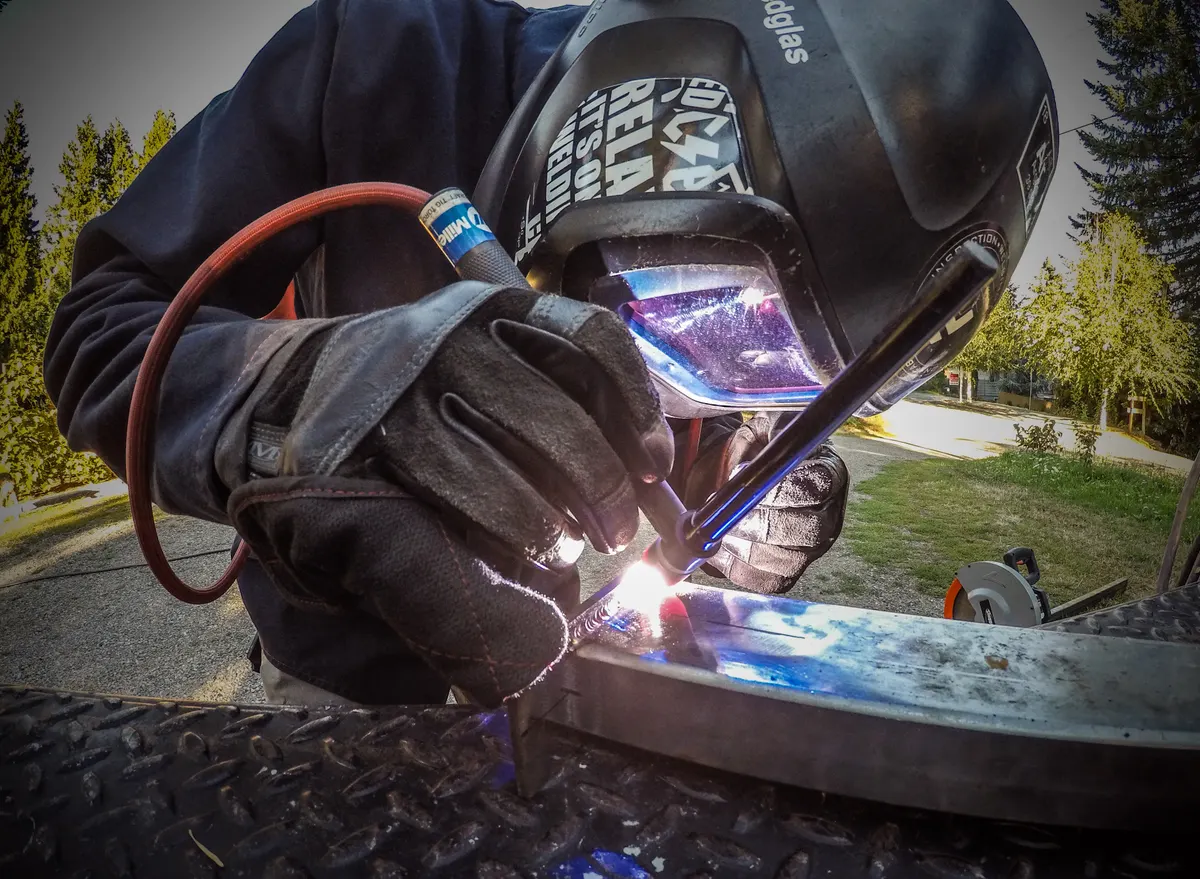
Miller Electric's Digital Elite helmet is a useful example of the figures to compare across brands: variable welding shades 8 to 13, cutting shades 5 to 8 and a light state of 2.5, with half-shade settings; a reaction time of 1/25,000 of a second; four independent arc sensors; a 9.2 square inch viewing area; weld, cut, grind and X-Mode settings; and a replaceable lithium battery with a low-battery indicator.
Shade range: check the darkest setting against your highest current, and the cutting range if the same welder uses plasma or gouging.
Light state: a lighter light state (lower number) makes setting up and fitting easier.
Sensors and low-amp TIG: a low-current TIG arc is dim and may not trigger every filter. Optrel lists the minimum TIG current its cassettes detect reliably by model, from 5 A on some helmets to 28 A on another, so ask for the low-amp TIG rating if you weld thin stainless.
Sensor shielding: in a shop with several welders, a sensor bar or slider that narrows the detection angle stops the filter reacting to a neighbour's arc.
Grind mode: lets the welder grind without lifting the helmet; Optrel's switches off after 10 minutes for safety.
Power: most filters use replaceable batteries; solar cells, where fitted, extend battery life but do not replace the battery.
Optical clarity: European filters are rated under EN 379, and makers quote clarity as a four-figure rating such as 1/1/1/1. Ask for the rating and the certificate rather than the marketing description.
Standards for helmets, filters, clothing and gloves
Saudi Arabia's PPE technical regulation lists the standards it expects, which makes a practical checklist for both countries. For welding it names:
Item
Standard
Title
Auto-darkening filters
EN 379
Personal eye-protection, automatic welding filters
Fixed (passive) filters
SASO-ISO-4850
Personal eye-protectors for welding and related techniques, filters, utilization and transmittance requirements
Welding clothing
SASO-ISO-11611
Protective clothing for use in welding and allied processes
Clothing materials
SASO-ISO-9150 and SASO-ISO-9185
Behaviour on impact of small splashes of molten metal; resistance to molten metal splash
Welding gloves
EN 12477
Protective gloves for welders
US-made helmets are usually marked to ANSI Z87.1 instead. If a project specification names EN standards, ask the supplier for EN-marked products and the matching certificates.
Welding jackets, aprons and gloves
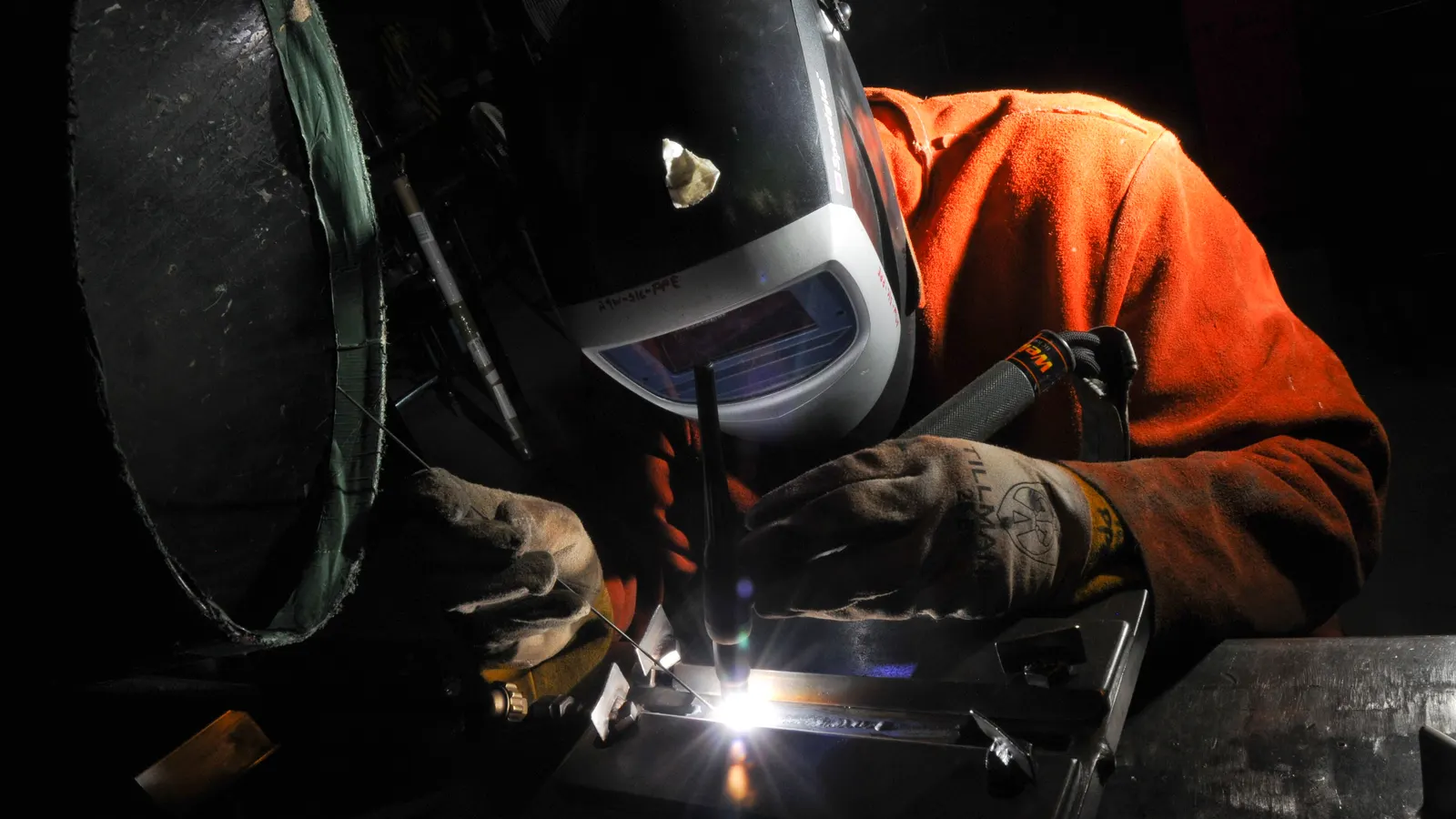
Ask for clothing certified to ISO 11611 and gloves to EN 12477, and match them to the work: tell the supplier whether the wearer does heavy stick or overhead work, with a lot of spatter, or TIG work, where the welder feeds filler rod by hand and needs dexterity. HSE's basic rules apply everywhere:
Use clean, dry welding gloves and overalls.
Wear clothing that leaves as little bare skin as possible, especially on the arms and legs.
Replace damp or contaminated clothing: it lowers electrical resistance and raises the risk of shock. HSE notes welding PPE is not designed to prevent electric shock, although it gives some protection.
Fume control starts with extraction, not masks. The UK Health and Safety Executive, a sound benchmark for Gulf workshops, sets out when respiratory protective equipment (RPE) is needed and which type:
Indoors, extract first. Use local exhaust ventilation (on-torch extraction, extracted benches or booths, or movable extraction arms). Provide RPE if extraction alone does not give adequate control. Signs it is not enough: visible uncaptured fume or, with TIG welding, a smell of ozone.
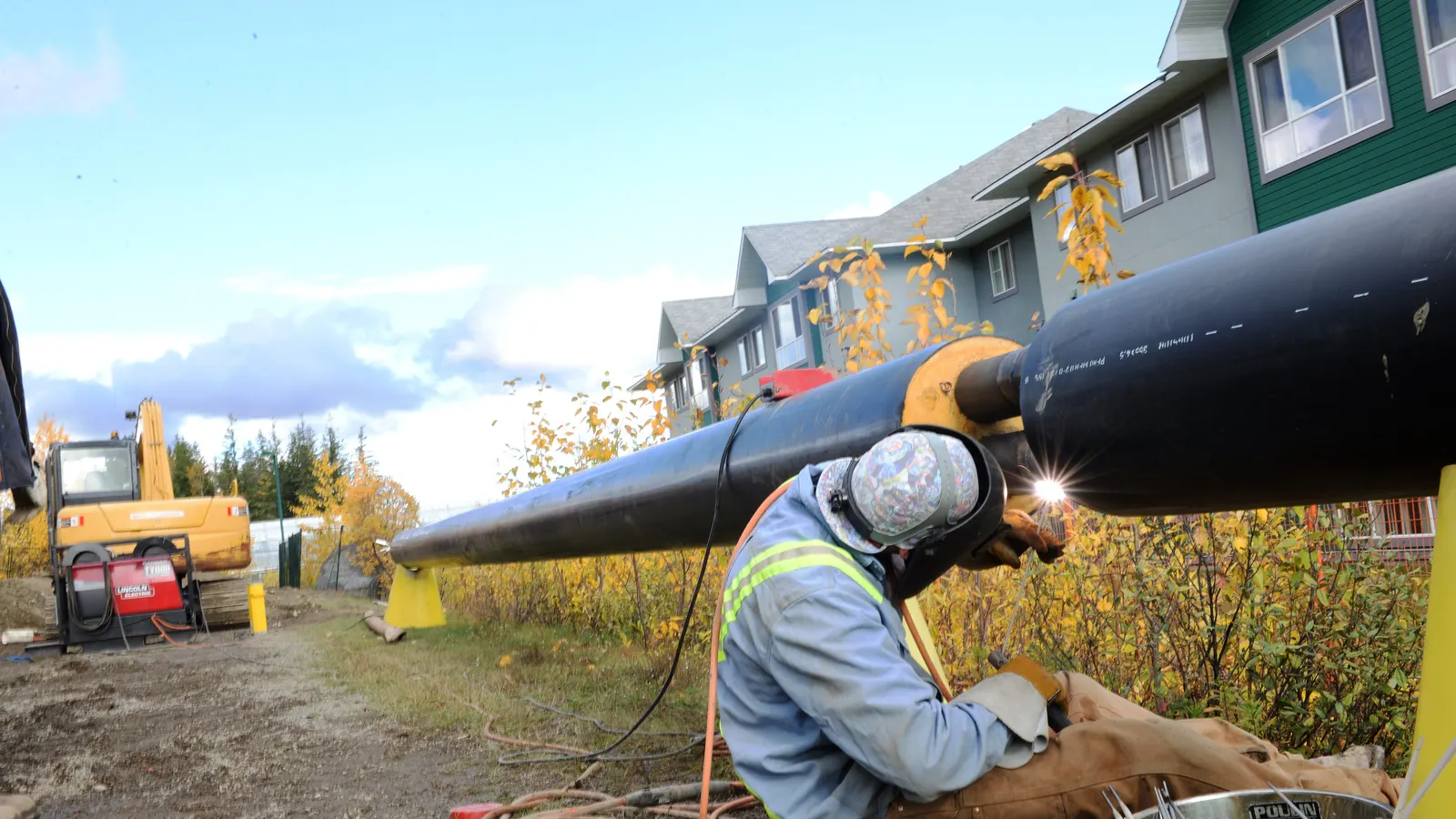
Outdoors, RPE. Local extraction will not work outdoors, so workers should wear suitable RPE.
Short jobs: an FFP3 disposable mask or a half mask with P3 filter, for work of up to an hour.
Longer jobs: battery-powered air-fed equipment with an assigned protection factor of at least 20 (APF 20).
Fit: tight-fitting masks need face-fit testing and clean-shaven wearers.
Leathers, a helmet and a respirator add to the heat load, and on the UAE coast summer humidity is high: The National, citing the National Centre of Meteorology, puts August's average maximum relative humidity at 72%, with humidity worse in coastal cities such as Abu Dhabi and Dubai. Plan the work around the heat: the midday outdoor work bans in both countries are summarised in the main guide, and our guide to PPE and heat stress for outdoor work in the Gulf covers breathable and flame-resistant workwear, work-rest planning and cooling.
UAE rules for welding PPE
In the UAE, personal protective equipment is a regulated product under the UAE control scheme for personal protective equipment (Cabinet Resolution No. 3 of 2016), administered by the Ministry of Industry and Advanced Technology (MoIAT) through its ECAS conformity service. MoIAT's list of requirements asks for test reports from an ISO 17025 accredited laboratory to the applicable standards, less than three years old, the product label, distributor ownership for traders, and registration on the MoIAT website. Ask the supplier for the MoIAT certificate covering the helmet, gloves or clothing you are buying.
Saudi rules for welding PPE
In Saudi Arabia, SASO's Technical Regulation for Personal Protective Equipment and Clothing (04-04-18-165) applies. It was approved by the SASO board on 5 July 2018, published in the Official Gazette on 7 December 2018, and amended in January 2021. Its Annex 1 lists the standards in the table above (EN 379, SASO-ISO-4850, SASO-ISO-11611, SASO-ISO-9150, SASO-ISO-9185 and EN 12477), and its product list includes welding goggles. Ask the importer for the SASO certificate of conformity covering each product.
Buying checklist for welding PPE
List processes and the highest current each welder uses; set the minimum shade from the table, and check the helmet's darkest shade.
For auto-darkening helmets, ask for the EN 379 or ANSI Z87.1 certificate, the light state, shade range, reaction time, number of sensors and the low-amp TIG rating.
Specify spare outer and inner cover lenses and batteries; they are consumables.
Specify clothing to ISO 11611 and gloves to EN 12477, with separate glove types for stick and TIG welders.
Decide RPE by task: FFP3 or half mask with P3 filter for short jobs, powered air-fed helmets for longer work, and face-fit testing for tight-fitting masks.
Ask for the MoIAT certificate (UAE) or SASO certificate of conformity (Saudi Arabia) for each item.
Include safety glasses for chipping and grinding, and safety footwear suitable for hot spatter.
It depends on process and current. OSHA's minimum shades are 7 for stick or MIG below 60 A, 8 for stick at 60 to 160 A and TIG below 150 A, 10 for MIG and flux-cored at 60 to 500 A, stick at 160 to 250 A and TIG above 150 A, and 11 for stick above 250 A. Start darker and go lighter until you can see the weld, never below the minimum.
Why do welders lose their eyesight?
Arc light contains intense ultraviolet and infrared radiation. Without a proper filter it inflames the cornea (arc eye) and can burn the retina, which can lead to permanent loss of vision. Prevention is a helmet with at least the minimum shade for the process and current, worn every time the arc is struck.
Are auto-darkening welding helmets safe?
Yes, if certified. ANSI Z87.1 requires auto-darkening helmets to give full UV and infrared protection even when the filter is in its light state, and European filters are tested to EN 379. Check the certificate, keep batteries charged, and ask for the low-amp TIG rating, since a weak TIG arc may not trigger every filter.
What standard covers welding gloves?
EN 12477, Protective gloves for welders, which Saudi Arabia's PPE regulation lists. Welding jackets, aprons and trousers are covered by ISO 11611, Protective clothing for use in welding and allied processes. In the UAE, the products need MoIAT conformity under the PPE regulation, with accredited test reports to the applicable standards.
Do welders need a respirator?
Indoors, extraction comes first, and a respirator is needed where extraction does not adequately control the fume. Outdoors, extraction will not work, so HSE expects suitable RPE. For jobs up to an hour, an FFP3 mask or half mask with P3 filter; for longer work, battery-powered air-fed equipment with an assigned protection factor of at least 20.
What is the difference between a welding helmet and welding goggles?
Welding goggles usually do not have a shade dark enough for arc welding, because an open arc gives off far more light and UV than gas welding. Arc welding needs a helmet with a filter of at least the minimum shade for the process and current, which also shields the face from UV burns.
How welder certification works on UAE and Saudi projects: WPS, PQR and WQTR, which code applies, what the test involves, 1G to 6G positions, how long qualifications last, AWS and CSWIP, and third-party witnessing.
What the numbers on a welding rod mean, when to use E6013 or E7018, how to store and redry low-hydrogen electrodes on humid Gulf sites, and which rods suit stainless steel and cast iron.
How MIG, TIG and stick welding differ in metals, thickness, speed, finish, wind tolerance and skill, and which process fits shop, site and pipe work in the UAE and Saudi Arabia.