MIG vs TIG vs Stick Welding: Which Process for Which Job
How MIG, TIG and stick welding differ in metals, thickness, speed, finish, wind tolerance and skill, and which process fits shop, site and pipe work in the UAE and Saudi Arabia.
MIG welding is the fastest of the three common arc processes and suits shop fabrication of steel, stainless and aluminium; TIG is the slowest but gives the most control on thin sections, non-ferrous metals and pipe roots; stick (MMA) is the slowest to deposit metal but the most tolerant of wind, rust and remote sites. Match the process to the metal, thickness and location, then compare welding equipment suppliers in the UAE.
This comparison is for fabrication managers, maintenance engineers and contractors deciding which process a job, a crew or a new workshop should be built around. It goes deeper on that one question than our welding machine buying guide for the UAE and Saudi Arabia, which covers duty cycle in heat, power supply, import rules and brands. Saudi buyers can find sellers on the welding equipment page for Saudi Arabia.
What MIG, TIG and stick welding have in common
All three are arc welding processes: an electric arc between an electrode and the workpiece melts the joint. What separates them is how the electrode works and how the molten pool is protected from the air.
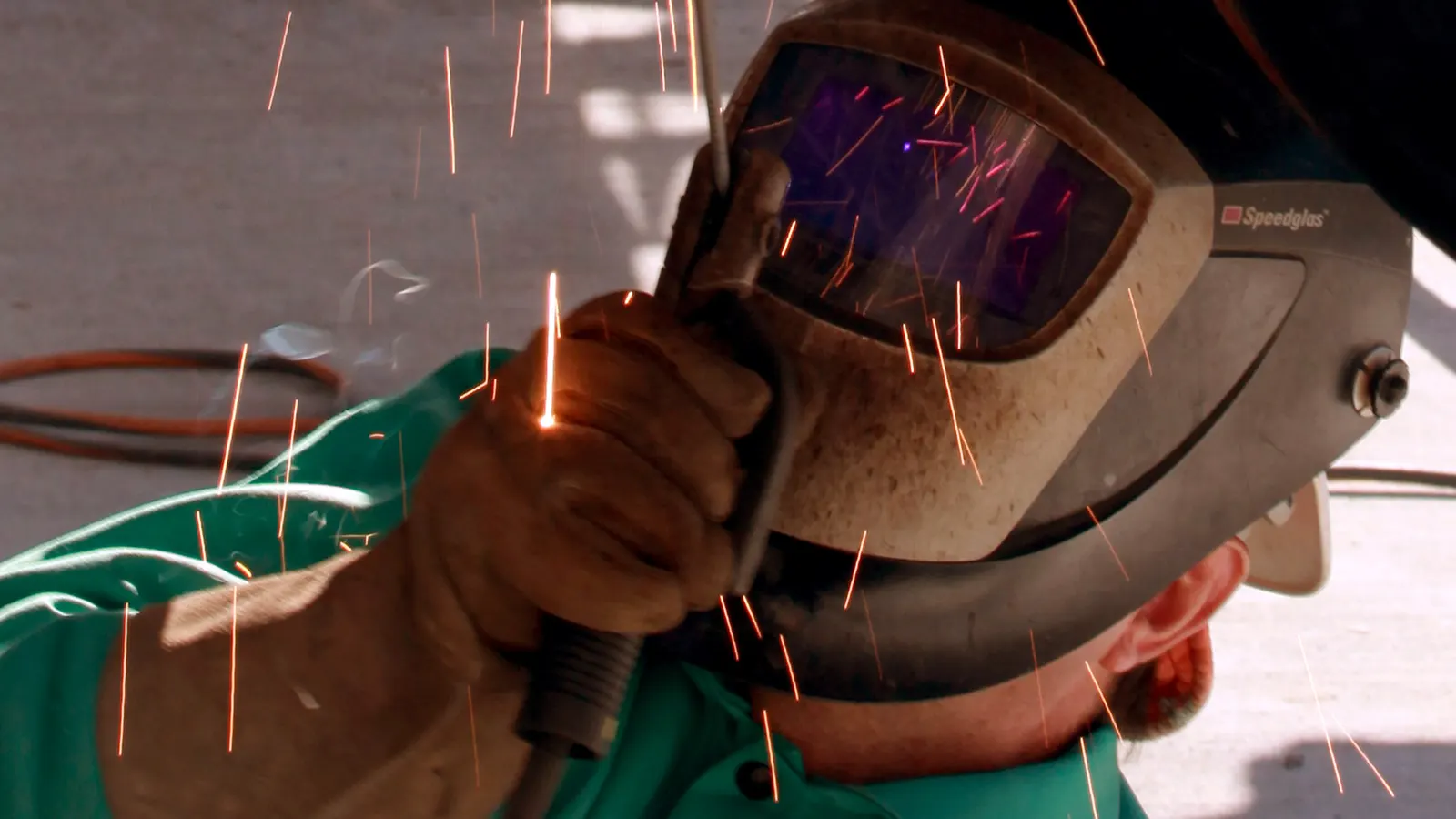
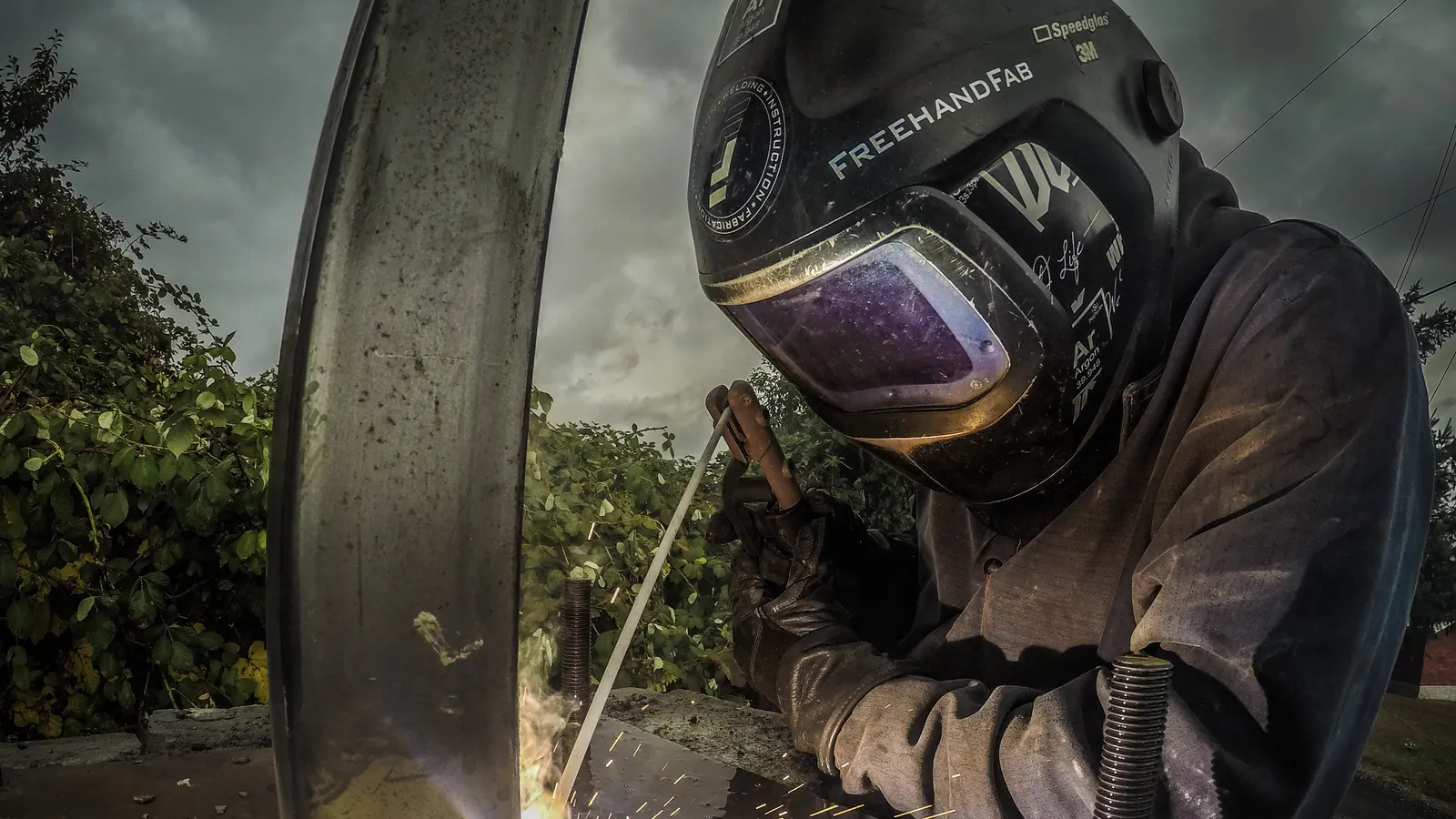
Stick (shielded metal arc welding, SMAW, also called MMA): the arc is struck between a flux-coated metal rod and the work. The rod melts into the joint, and the burning flux gives off gas and forms a slag that shields the pool. The slag is chipped off after each run.
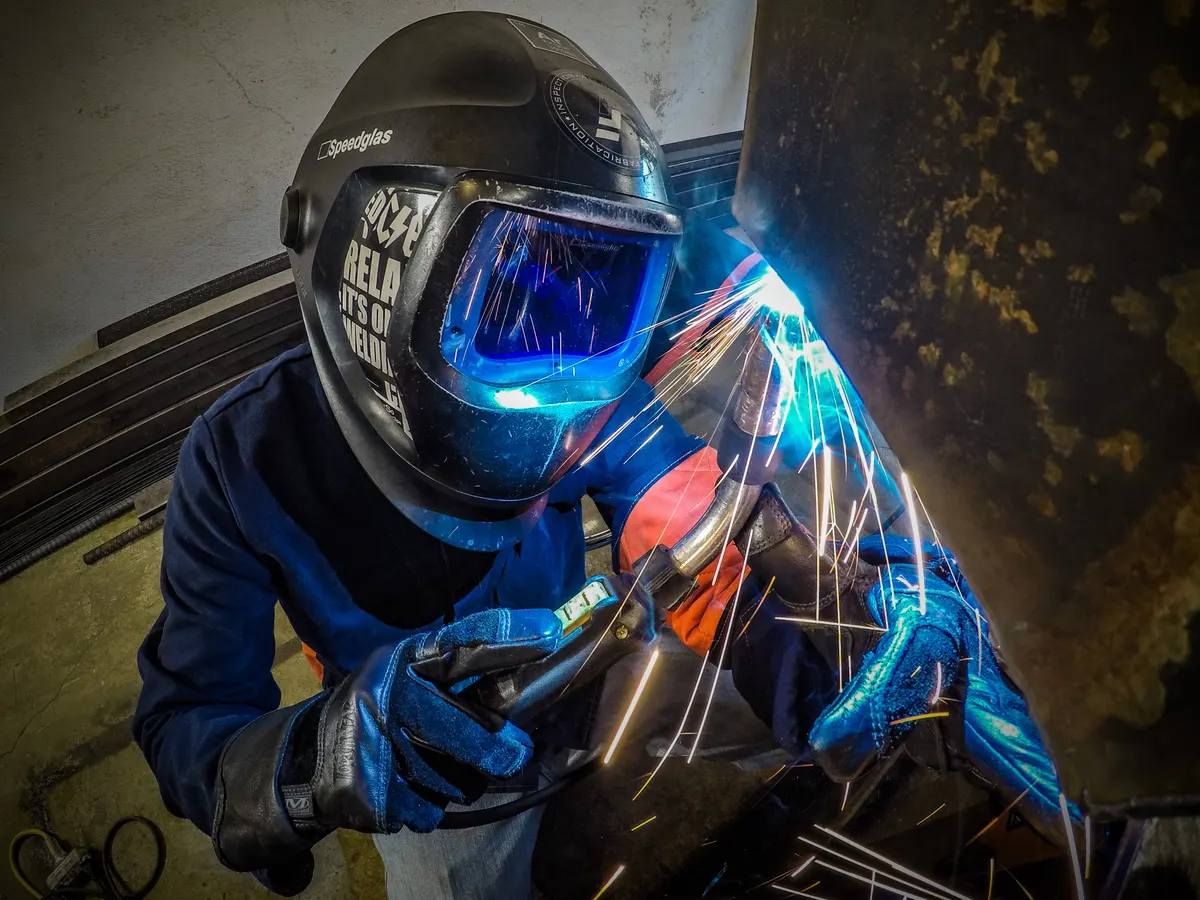
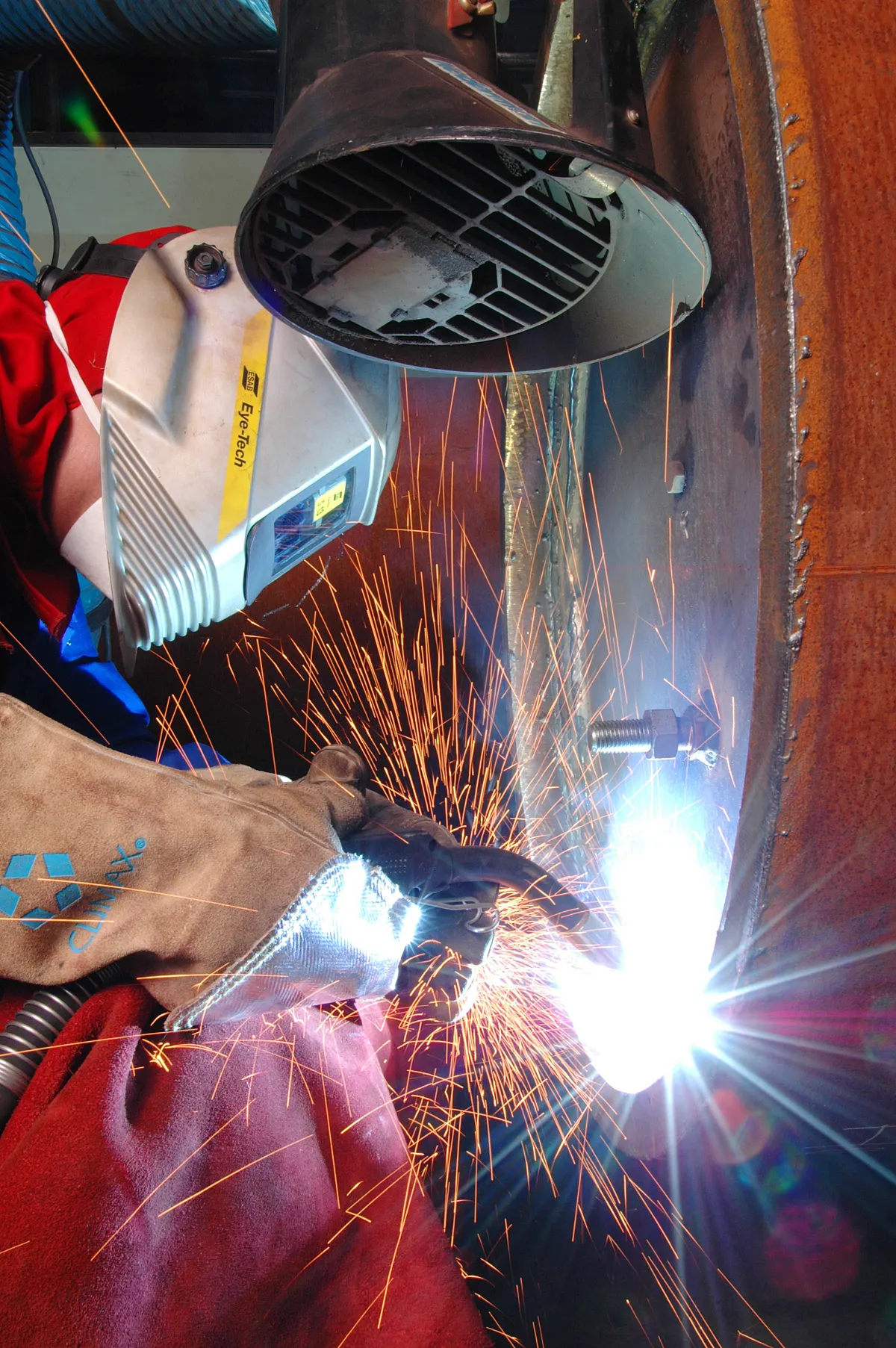
MIG/MAG (gas metal arc welding, GMAW): a solid wire is fed continuously through the torch by a wire feeder and melts into the joint, shielded by gas from a cylinder. TWI gives the usual gas for steel as a mix of 75% argon and 25% carbon dioxide.
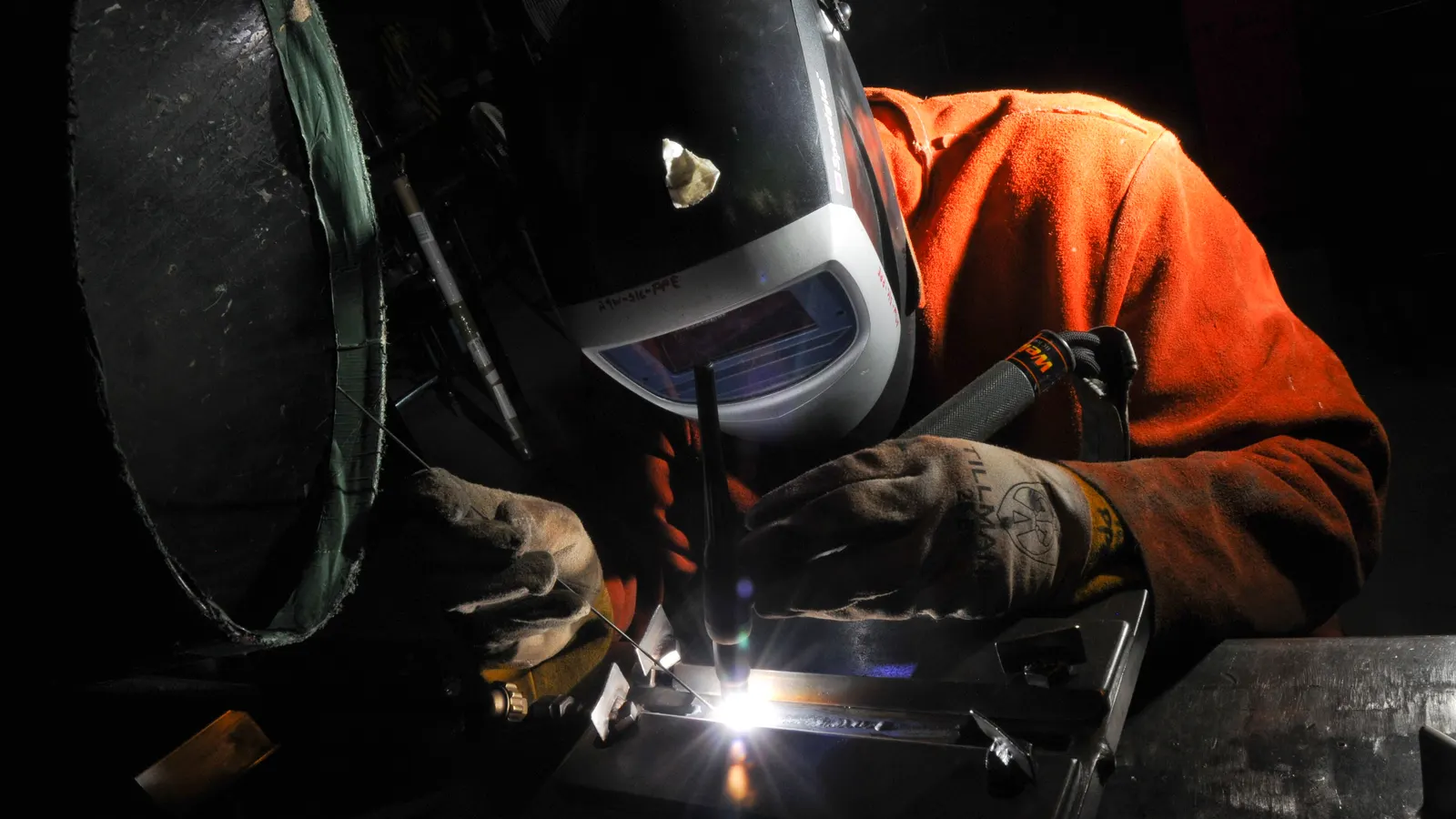
TIG (gas tungsten arc welding, GTAW): the arc comes from a tungsten electrode that does not melt. The welder adds filler rod by hand, or none at all on thin material, and the pool is shielded by gas, typically 100% argon.
So "arc welding" is the family, not a fourth choice. Flux-cored welding runs on MIG-type equipment with a tubular wire; it is covered in the main guide and appears here only where it changes the decision.
MIG vs TIG vs stick at a glance
The figures below come from Miller Electric's process comparison, TWI and the reference sources listed at the end. Gauge and inch values are converted to approximate millimetres.
Factor
Stick (SMAW/MMA)
MIG/MAG (GMAW)
TIG (GTAW)
Shielding
Flux coating on the rod (gas and slag)
Gas from a cylinder
Gas from a cylinder, usually argon
Typical metals
Carbon and alloy steel, stainless, cast and ductile iron; aluminium only rarely
Carbon steel, stainless, aluminium
Steel, stainless, aluminium, copper, titanium and other weldable metals
Thinnest practical material
About 3 mm (1/8 in) in Miller's table; rarely below 1.5 mm even for skilled welders
About 0.6 mm (24 gauge)
About 0.8 mm (22 gauge), down to 0.25 mm in skilled hands
Positions
All positions, with the right electrode
All positions in short-circuit or pulsed mode; spray transfer mainly flat and horizontal
All positions
Speed
Slow; about 25% arc-on time
Very fast; up to four times faster than stick
Very slow
Skill to learn
More skill
Easiest to learn
Most skill
Wind and open sites
Best suited
Needs shelter
Needs shelter
Dirty or rusty steel
More forgiving
Needs clean metal
Needs very clean metal
Finish
Slag to remove; rougher bead
Little or no slag; some spatter depending on mode
Cleanest, most precise bead
Which process for which metal and thickness?
Thickness and base metal narrow the choice faster than anything else.
Thin sheet (under about 3 mm)
Stick is a poor fit here. Miller's table starts stick at 1/8 in, and its guide says even skilled welders hesitate to stick weld 18-gauge steel (about 1.2 mm). For thin carbon steel in volume, MIG in short-circuit transfer is the usual answer: its low current, typically 100 to 200 A at 17 to 22 V, keeps heat input down and works in all positions. For thin stainless, aluminium or visible work, TIG gives the most control and, in pulsed mode, less distortion and warpage. Compare MIG welding machines on low-current arc stability and pulsed programmes if most of your work is sheet.
Medium and thick plate
TWI describes MIG as particularly effective on thicker metals. Spray transfer, generally used above about 6.4 mm, gives high deposition and little spatter but is limited mainly to flat and horizontal positions and is not practical for root passes. Stick has no upper thickness limit: with joint preparation and multiple passes, virtually any thickness can be joined, which is why it still carries much structural repair and site work.
Stainless steel
All three processes weld stainless. TIG is the usual choice for thin sections and for work where appearance or a clean root matters; MIG suits longer runs on thicker stainless; stick, which the SMAW reference lists for stainless as well as carbon and alloy steels, covers site repairs; our guide to welding electrodes covers stainless rod selection.
Aluminium
Aluminium is a MIG or TIG job. Miller rates stick on aluminium as marginal, and the SMAW reference notes it is used on aluminium only rarely. TIG on aluminium is most often done on AC, which breaks up the surface oxide, so an aluminium shop needs an AC/DC TIG machine; see TIG welding machines. MIG covers thicker aluminium faster.
Cast iron and repair work
Stick is often used on cast and ductile iron as well as carbon, low and high alloy steel and stainless, and it dominates maintenance and repair welding.
Productivity is where the processes differ most. Two numbers explain it.
Arc-on time. Stick has an operator factor of about 25%: the welder stops to change electrode stubs and chip slag, so the arc burns for only a quarter of the working time. That makes it one of the least efficient processes.
Continuous wire. MIG feeds wire from a spool, so there are no rod changes and little slag. Miller says MIG can be up to four times faster than stick, and TWI notes that MIG/MAG accounts for more than half of all weld metal deposited, because of its deposition rates and how easily it can be mechanised.
TIG is the slowest of the three. Wikipedia's GTAW reference calls it significantly slower than most other techniques, and TWI says it costs more per foot of bead than MIG. That is acceptable where the weld is short, thin, critical or visible, and expensive anywhere else.
MIG speed also depends on the transfer mode. Published figures for GMAW give travel speeds of up to about 600 mm/s in spray transfer and up to about 85 mm/s in pulsed spray, so the mode your procedure allows matters as much as the process name.
Weld quality and appearance
TIG gives the most precise and cleanest welds. TWI describes TIG welds as stronger, more precise and better looking than MIG welds made by an equivalent welder, and says MIG is typically used where appearance is not a priority. That does not make MIG or stick welds weak: a qualified procedure and welder produce sound welds with any of the three. The difference is how much control the welder has and how much cleanup the bead needs.
TIG: no slag and no spatter, but very sensitive to contamination. Oil, moisture and dirt cause porosity, and gases containing carbon dioxide or oxygen contaminate the tungsten. Preparation and cleaning time goes up accordingly.
MIG: spatter depends on transfer mode. Globular transfer, run on cheaper carbon dioxide, gives the most spatter; spray and pulsed modes give little or none.
Stick: slag must be removed after every run, and the bead is rougher. In return it tolerates rust and dirt better than MIG, although Miller still advises welding the cleanest material you can.
Working outdoors and in wind on Gulf sites
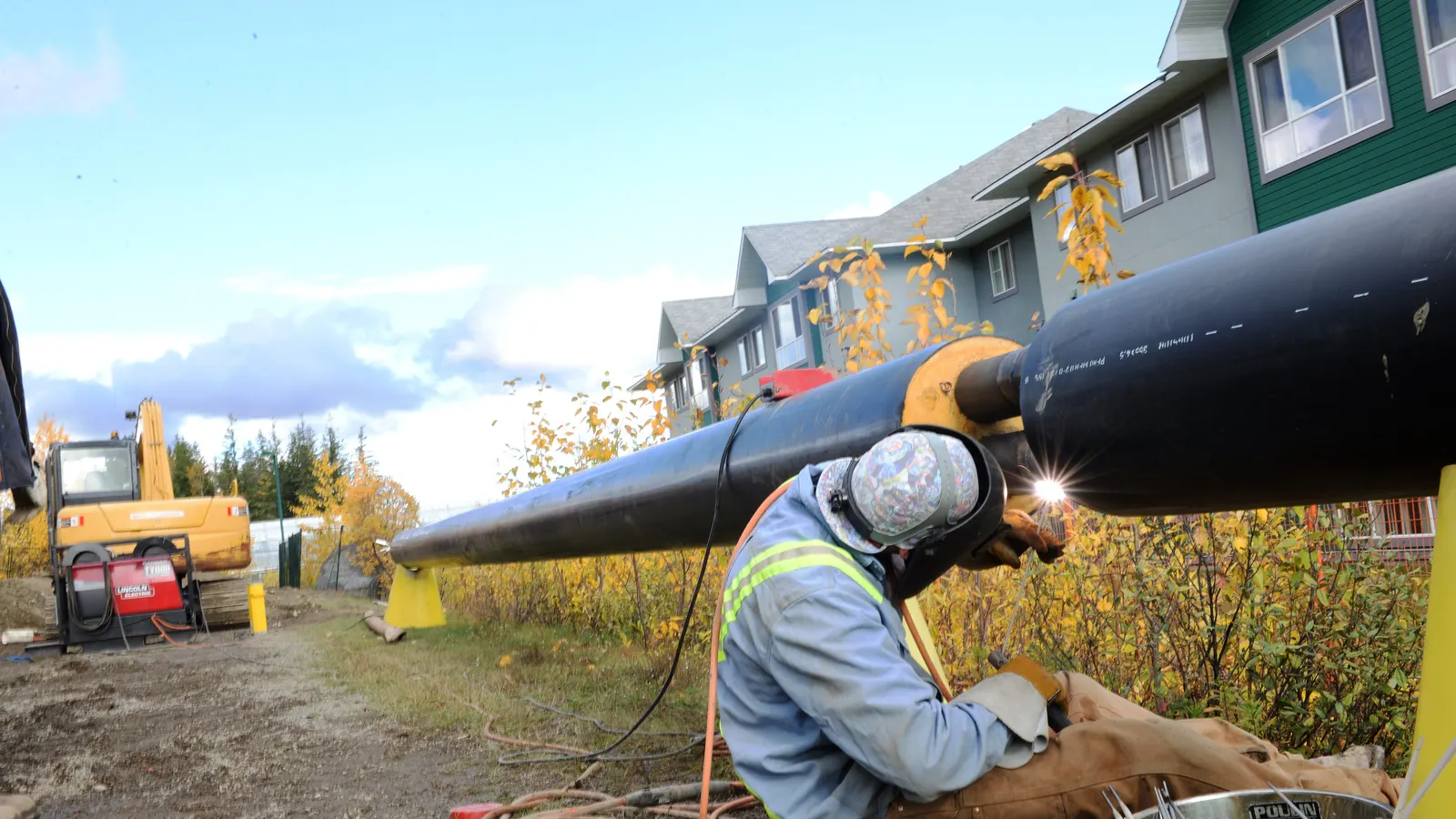
For open sites, rooftops, pipe racks and marine work in the UAE and Saudi Arabia, wind usually decides the process before metal or thickness does.
MIG and TIG rely on gas from a cylinder, and moving air blows it away. The GMAW reference says MIG is rarely used outdoors or in moving air, and in drafts TIG needs more gas to protect the weld. The structural steel code AWS D1.1 does not allow gas-shielded processes (MIG, TIG and gas-shielded flux-cored) in a draft or wind unless a shelter cuts the wind at the weld to no more than 8 km/h (5 mph), as summarised by Material Welding; ASME and EN/ISO codes do not set a figure but require the weld to be protected from direct drafts.
Stick electrodes carry their own shielding, which is why Miller calls them better suited to windy outdoor conditions than MIG or TIG, and why engine-driven stick machines remain the field default. Self-shielded flux-cored wire is the faster alternative: Miller says it is less affected by drafts and works as well as stick on rusty or dirty material.
If the job needs MIG or TIG outdoors, budget for the shelter: screens or a tent around the joint, and a plan for dust, which contaminates TIG welds in particular.
Skill drives labour cost and availability, so it belongs in the process decision.
MIG is the easiest to learn: Miller calls it the easiest process and TWI says it is much easier to learn and master than TIG. TWI also notes it still needs a high degree of manipulative skill to weld well, especially out of position.
Stick needs more skill than MIG, especially in vertical and overhead positions and on thin material, where the low end of the thickness range is set mainly by the welder's skill.
TIG needs the most skill. The welder coordinates the torch with one hand and the filler with the other, and the process is described as comparatively complex and difficult to master.
For coded work the question is not whether a welder can use the process but whether they are qualified for it, in that position and on that material. A welder qualified for stick is not automatically qualified for TIG; see our guide to welder qualification and certification. Training centres and test facilities are listed under welding training and certification.
Equipment and running cost drivers
No prices here, because they vary by brand, rating and supplier. The cost drivers are:
Stick: the simplest set: a constant-current power source, electrode holder, earth clamp and cables, with no gas. Engine-driven units cover sites without mains power. Running costs are electrodes, which you lose as stubs, and labour, which is high per kilogram because of the 25% arc time. Electrodes are on the welding consumables page.
MIG: a constant-voltage power source plus a wire feeder, torch, gas cylinder and regulator. Running costs are wire, gas, contact tips and nozzles, offset by much lower labour per metre of weld. TWI gives typical MIG gas flow as 35 to 50 cubic feet per hour.
TIG: a constant-current source (AC/DC for aluminium), torch, tungsten electrodes, filler rods, argon and often a water cooler for high currents. TWI gives typical TIG gas flow as 15 to 25 cubic feet per hour; the cost is mainly the slow travel speed and skilled labour.
Multi-process machines
If one crew needs all three, a multi-process power source can switch between them. Miller Electric describes its multiprocess welders as letting crews switch processes without changing power sources, and lists PipeWorx multiprocess pipe welding systems for pipe shops. Fronius offers separate MIG/MAG (TPS/i) and stick (Ignis) ranges, and EWM lists MIG/MAG, TIG and stick machines including its Picomig and Picotig series. Check which processes a multi-process unit really covers, and whether its TIG output is AC/DC or DC only, since aluminium is most often TIG welded on AC.
Decision table: which process for which job
Job
Usual first choice
Why
Steel fabrication in a workshop, medium to thick plate
MIG/MAG
Highest speed, easy to mechanise, spray transfer on thicker plate
Thin carbon steel sheet
MIG (short-circuit or pulsed)
Low heat input, all positions
Thin stainless and visible welds
TIG
Precise control, clean bead, low distortion when pulsed
Aluminium
TIG (AC) for thin and precise work, MIG for thicker and longer runs
Stick is marginal on aluminium
Pipe root passes
TIG
Often used for root or first-pass welds in piping
Structural repair, maintenance, cast iron
Stick
Simple kit, all positions, tolerant of dirty metal
Open sites, wind, no mains power
Stick, or self-shielded flux-cored
No external gas to blow away; engine-driven units available
Outdoor MIG or TIG unavoidable
MIG or TIG with a shelter
Wind at the weld must be kept low enough to protect the gas
Before you specify a process
List the base metals and the thickness range you weld most often, and the thinnest you must weld.
Note where the welding happens: workshop, sheltered site area or open site, and whether mains power is available.
Check the project specification and welding procedures: they may fix the process, polarity, transfer mode or consumable.
Check which processes your welders are qualified for, in which positions.
Decide whether appearance matters (visible stainless, architectural work) or only soundness.
For MIG and TIG, confirm gas supply and the shielding you will need on site; for stick, confirm electrode storage.
Choose between single-process machines for each crew and a multi-process unit, checking whether TIG must run on AC.
With that list ready, post your welding requirement so suppliers in the UAE and Saudi Arabia can quote the right machines and consumables.
Neither is better overall; they suit different work. MIG is faster, easier to learn and better for longer welds on thicker steel, stainless and aluminium. TIG is slower and needs more skill, but gives more precise, cleaner welds and is preferred for thin sections, non-ferrous metals, pipe root passes and visible work. TWI notes TIG costs more per foot of bead than MIG.
What is a MIG welder best used for?
A MIG welder is best for production fabrication: carbon steel, stainless and aluminium from about 0.6 mm sheet up to thick plate, in a workshop or sheltered area. Continuous wire feed makes it fast, and Miller says it can be up to four times faster than stick. It needs clean metal and protection from wind because it depends on shielding gas.
Why is stick welding still used on construction sites?
Stick electrodes make their own shielding from the flux coating, so wind does not strip the shield the way it does with MIG or TIG. The equipment is simple and can run from engine-driven welders where there is no mains power, it works in all positions, and it is more forgiving of rusty or dirty steel. The trade-off is speed: only about 25% of the welder's time is arc time.
Can you MIG or TIG weld outdoors?
Yes, but only with shelter. Both rely on shielding gas that moving air disperses, which causes porosity. The structural code AWS D1.1 does not allow gas-shielded processes in wind unless a shelter brings the wind at the weld down to 8 km/h (5 mph) or less. Otherwise, use stick or self-shielded flux-cored wire.
Which welding process is easiest to learn?
MIG. Both Miller and TWI describe it as the easiest process to learn, because the machine feeds the wire and the welder controls mainly the torch angle and travel speed. Stick needs more skill, particularly out of position, and TIG needs the most, since the welder works the torch and the filler rod with separate hands.
Can stick welding be used on aluminium or thin sheet?
Rarely. The SMAW reference notes stick is used on aluminium only in rare cases, and Miller rates it as marginal and demanding on aluminium. On thin steel, Miller's table starts stick at about 3 mm, and the practical lower limit is around 1.5 mm even for skilled welders. Use MIG or TIG for aluminium and thin sheet.
Is TIG welding stronger than MIG?
TWI describes TIG welds as stronger and more precise than MIG welds, largely because the welder has finer control of heat and filler. In coded work, though, strength comes from a qualified procedure, the right filler metal and a qualified welder, and sound welds are made with MIG, TIG and stick every day. Choose on metal, thickness, location and speed.
How welder certification works on UAE and Saudi projects: WPS, PQR and WQTR, which code applies, what the test involves, 1G to 6G positions, how long qualifications last, AWS and CSWIP, and third-party witnessing.
Which filter shade each welding process needs, what to check on an auto-darkening helmet, the standards for helmets, jackets and gloves, respirators for fume, and PPE rules in the UAE and Saudi Arabia.
What the numbers on a welding rod mean, when to use E6013 or E7018, how to store and redry low-hydrogen electrodes on humid Gulf sites, and which rods suit stainless steel and cast iron.