Tile Sizes and Thickness: From 60x60 to Large-Format Slabs
How tile sizes work on site: nominal, work and coordinating sizes under ISO 13006, rectified edges, thickness and weight, lippage, substrate flatness and what large-format slabs need.
Tile size on a quote is usually the nominal size, such as 60 x 60 cm, but the tile you receive is made to a slightly smaller work size, such as 598 x 598 mm, and laid with a joint that brings it back to the grid. Pick the size for the room and the substrate, pick the thickness for the load and the format, and confirm both with ceramic and porcelain tile suppliers in the UAE or in Saudi Arabia before you set out the floor.
This spoke is for site engineers, fit-out contractors and buyers working out tile sizes, thickness and large-format slabs. It explains how ISO 13006 defines sizes, what rectified edges change, how thickness and weight scale, and what large slabs ask of the substrate, adhesive and crew. For tile groups, abrasion classes and the Saudi and Dubai rules, see our main guide to ceramic and porcelain tiles in the UAE and Saudi Arabia. ListGCC did not test any products named here.
Nominal, work and actual size
The short answer: three sizes describe one tile, and only one of them is on the price list. ISO 13006:2018 defines them as follows:
Nominal size: the size used to describe the product, for example 60 x 60 cm.
Work size: the size specified for manufacture, which the actual size must meet within permitted deviations, for example 598 x 598 mm.
Actual size: the size measured on the face of the tile, under ISO 10545-2.
Coordinating size: the work size plus the joint width. This is the number to use when you set out a room.
Modular size: a size based on the module M (100 mm in ISO 1006) and its multiples or subdivisions. Non-modular sizes are, in the standard's words, "those commonly used in most countries".
ISO 13006 requires the box to show both the nominal and the work size, and "M" if the size is modular. Its own marking example is "60 cm × 60 cm (Sw 598 mm × 598 mm × 10 mm)", where Sw is the work size and the third figure is the thickness. If two deliveries of a "60 x 60" tile have different work sizes, they will not line up in one floor, so write the work size into the purchase order and check it on arrival.
Common sizes and where they are used
Many series are sold in several sizes of the same design. The table below is a planning aid, not a rule; the right size depends on the room, the substrate and the installer.
Format (nominal)
Typical uses
Points to check
Mosaic (pieces under 7 cm)
Pools, showers, curved surfaces, feature walls
Outside ISO 13006 scope; see the mosaic spoke
20 x 20, 30 x 30
Bathroom and kitchen floors, small rooms, falls to drains
How the size works with falls to floor drains
30 x 60, 60 x 60
Apartments, offices, retail, corridors
Rectified or not; joint width; batch
20 x 120 and other planks
Wood-look floors
Warpage limits; the stagger offset the maker allows
ISO 13006 defines a rectified tile as a ceramic tile that, after firing, "is subjected to a precise mechanical finishing of the edges". Grinding the edges square after firing brings the sizes in a batch close together, which is what allows narrow joints. Pressed-edge (non-rectified) tiles keep the edge formed in the press and kiln; some carry spacer lugs, which ISO 13006 describes as projections along the edges that hold adjacent tiles at least the specified joint width apart.
Narrow joints look clean, but they do not remove the need for movement. Every tiled floor still needs perimeter and field movement joints as the designer details them, and a narrow joint leaves less grout to take up small differences in size and level. Follow the maker's recommended minimum joint for the series, and agree it with the consultant before setting out.
Thickness and weight
Thickness is part of the work size in ISO 13006 marking, so it should appear on every datasheet and box. Thicker tiles are heavier and stiffer; very thin large slabs are lighter per square metre but need full support and careful handling. As an example of the range on the market, the Maximus slab range, linked from RAK Ceramics' site, lists:
Size (cm)
Thicknesses listed (mm)
162 x 324
12
144 x 305
14
162 x 162
9
120 x 280
6 or 9
120 x 120
9 or 12
60 x 120
9, 14 or 20
Weight matters for logistics, lifting and structure. ISO 13006 requires boxes to state the total dry weight the tiles and packaging will not exceed; the standard's example lists a box of three 60 x 60 cm porcelain tiles, 10 mm thick, at a maximum of 16 kg. Use the box weight to plan pallet loads, hoisting and manual handling, and check the floor or podium loading for thick outdoor formats on screeds or pedestals.
Ask for the breaking strength (ISO 10545-4) of the exact size and thickness, not just the series. A thin slab that is fine on a wall may not be suitable for a floor that carries trolleys or forklifts.
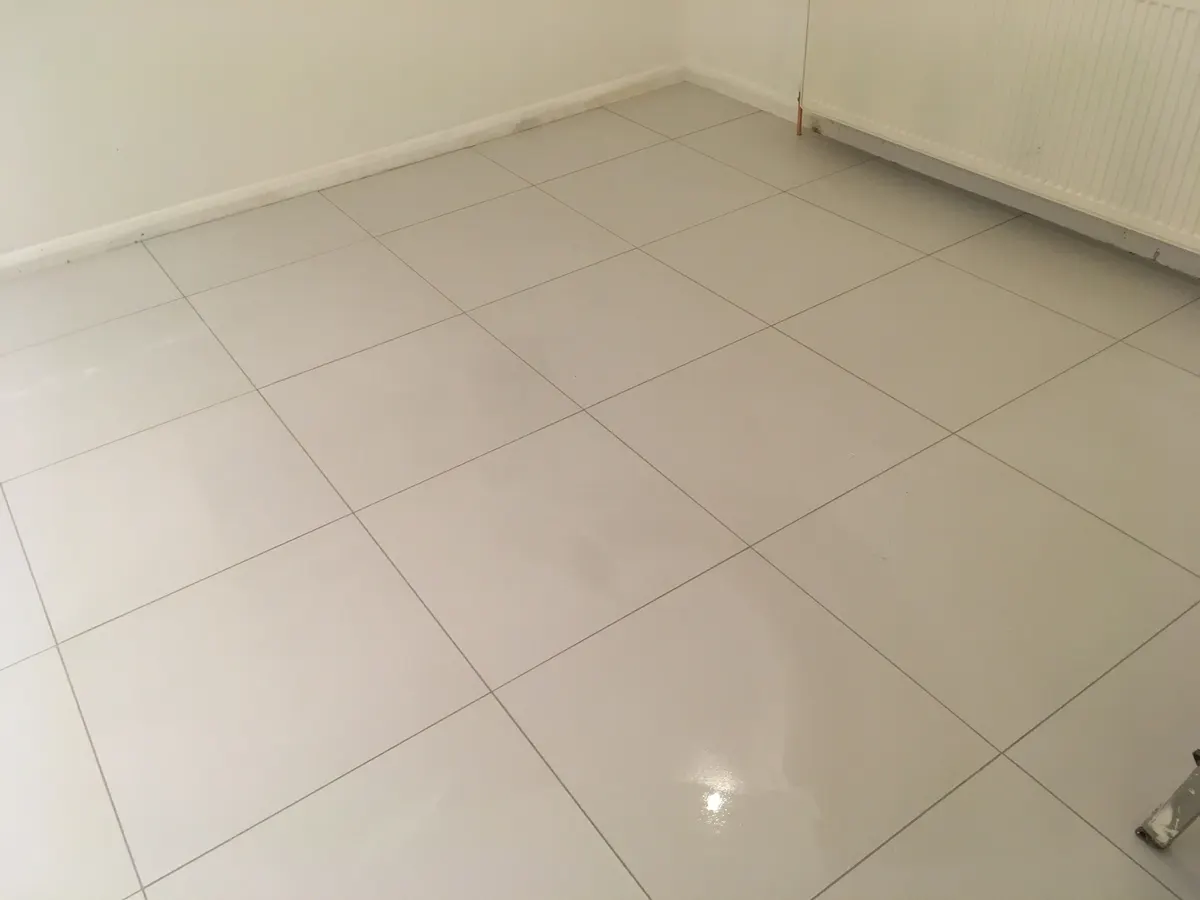
Lippage and substrate flatness
Lippage is the height difference between edges of neighbouring tiles. It comes from three sources: the tile itself (dimensional limits are set in each group's annex of ISO 13006 and tested under ISO 10545-2, dimensions and surface quality), an uneven substrate, and the installer's bedding. Large and long formats leave less room to absorb any of the three.
Write a flatness requirement for the screed into the specification, and have it checked before tiling, rather than relying on the adhesive bed to correct it.
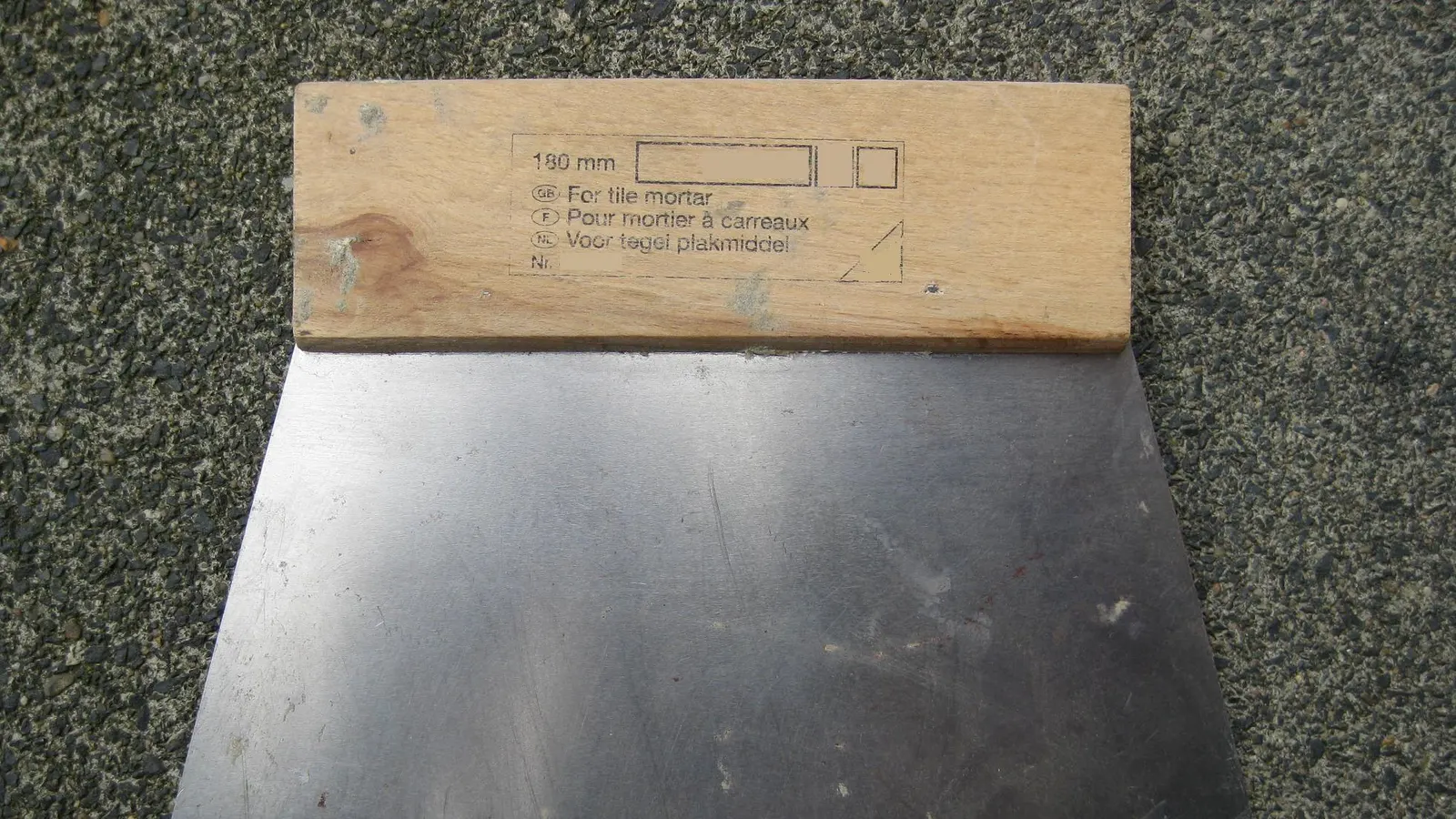
Use the right adhesive and coverage. Large tiles need full contact with the bed; ask the adhesive maker which trowel and method (for example buttering the back of the tile) it recommends for the size.
Respect the stagger. If the series' installation sheet limits the offset for long planks, follow it.
Levelling systems (clips and wedges) help hold edges flush while the adhesive sets, but they do not fix a poor substrate.
Agree an acceptance method, such as a straightedge check at set positions, in the contract so that lippage disputes have a reference.
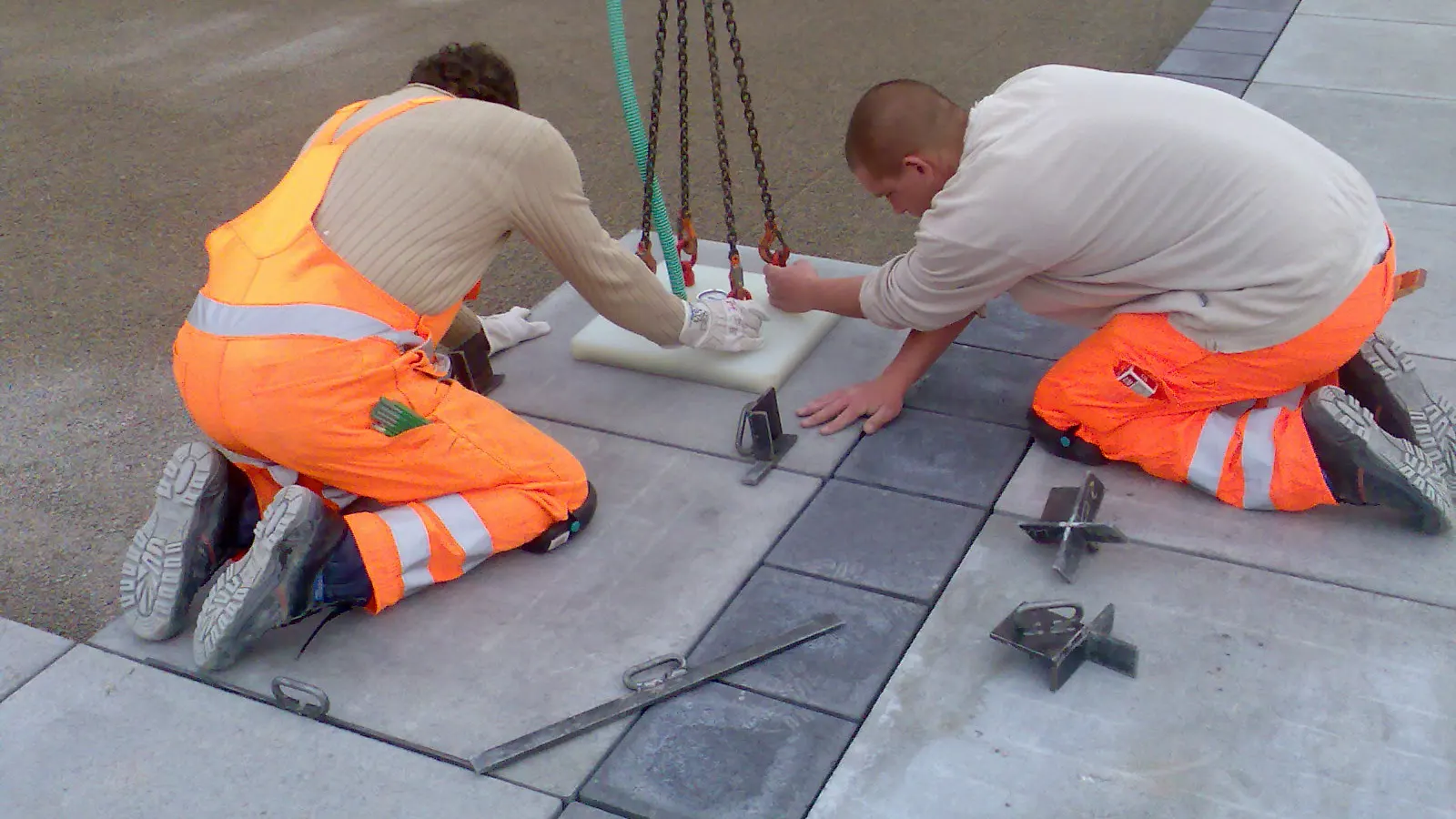
Slabs change the job from tiling to panel installation. Before you order, check each step from the container to the wall:
Delivery and storage: agree how slabs will be packed (racks or crates) and store them as the maker's handling guide specifies, out of direct sun.
Access: lift sizes, stair turns and door openings decide whether a 320 cm slab can reach the room at all.
Lifting: suction frames and vacuum lifters, rated for the slab weight, with enough people to carry the frame.
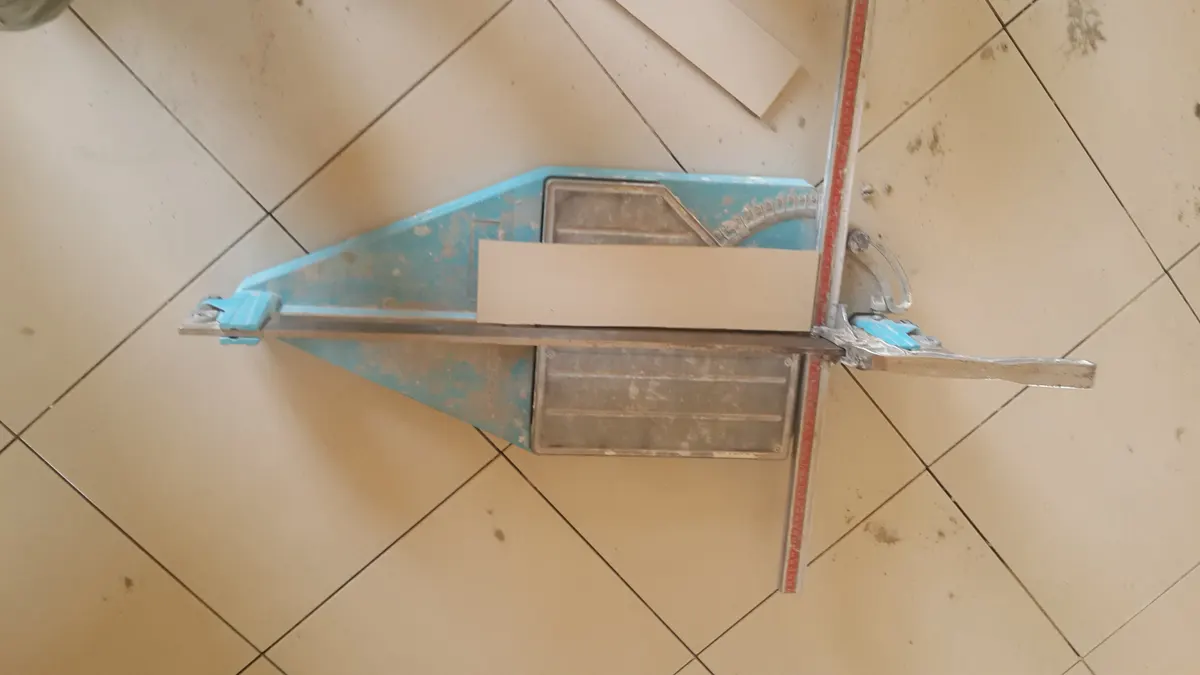
Cutting: a rail cutter or saw long enough for the slab, and a flat, fully supported cutting table.
Bedding: full adhesive coverage on both the substrate and the slab back, with a deformable adhesive class (S1 or S2) where the maker or the adhesive supplier requires it.
Crew: an installer who has set the format before, with references you can check.
In Gulf heat, large formats add a timing problem: a slab takes longer to place than a small tile, while high temperature shortens the adhesive's open time. Work in the cooler hours, keep tiles and adhesive out of the sun, and use an adhesive with extended open time (class E under EN 12004) where the data sheet supports it. The adhesive classes are explained in the spoke on tile adhesive and grout classes, and you can source products from construction adhesives suppliers in the UAE.
Who makes large formats
Several makers with pages on ListGCC offer slabs. RAK Ceramics in Ras Al Khaimah links its Mega slabs to the Maximus range, which lists floor, wall, countertop and ventilated facade uses. Somany Ceramics in India lists Coverstone slabs alongside its tiles. For any maker, ask for the installation guide for the exact format before you price labour, because handling and adhesive requirements differ by size and thickness. Saudi supply must carry the SASO Quality Mark required for ceramic tiles.
Sizing checklist for the RFQ
Nominal size, work size and thickness, plus "rectified" or "non-rectified".
Joint width recommended by the maker, and the coordinating size you will set out to.
Breaking strength (ISO 10545-4) for the size and thickness, and warpage and dimensional limits (ISO 10545-2).
Box contents, maximum dry weight and pallet weight.
Installation guide for the format: adhesive, trowel, back-buttering, stagger, levelling system.
Substrate flatness requirement and how it will be checked.
For slabs: delivery racks, lifting equipment, cutting table and the installer's previous jobs in the same format.
There is no single standard size. ISO 13006 defines modular sizes based on a 100 mm module and notes that non-modular sizes are those commonly used in most countries. The standard's own examples include 30 x 30 and 60 x 60 cm, and slab ranges such as Maximus run from 60 x 120 to 162 x 324 cm. Choose by room size, substrate and drainage falls.
Why is my 60 x 60 tile not 600 mm?
Because 60 x 60 cm is the nominal size. ISO 13006 requires the box to also show the work size, the dimension the maker manufactures to, such as 598 x 598 mm in the standard's own example. The joint brings the tile back to the grid; the work size plus the joint is the coordinating size you set out with.
What thickness should floor tiles be?
It depends on the format and the load. ISO 13006's own marking examples use 10 mm and 12.5 mm tiles, and outdoor formats go thicker: the Maximus range, for example, lists 60 x 120 cm in 9, 14 and 20 mm. Ask for the breaking strength of the exact size and thickness, and match it to the traffic the floor will carry.
What is a rectified tile and does it need a smaller joint?
A rectified tile has its edges mechanically finished after firing, according to ISO 13006, so tiles in a batch are square and closely sized. That allows narrow joints, but the joint width should follow the maker's recommendation for the series. Rectified tiles still need movement joints and a flat substrate.
How do you prevent lippage with large tiles?
Start with a substrate built and checked to a written flatness requirement, then use the adhesive, trowel and back-buttering method the maker recommends for the size. Limit plank offsets as the series' installation sheet allows, and use a levelling clip system to hold edges while the adhesive sets. Agree a straightedge acceptance check in the contract.
Are large-format slabs suitable for Gulf projects?
Yes, if the job is planned as panel installation: access for the slab size, lifting frames, a long cutter, full adhesive coverage with a deformable adhesive, and a crew that has set the format before. Heat shortens adhesive open time while slabs take longer to place, so work in cooler hours and keep materials in shade.
How to read tile adhesive and grout codes: EN 12004 and EN 13888-1 classes, which to specify for porcelain, large tiles, pools and outdoors, when epoxy grout is worth it and movement joints in heat.
Porcelain and ceramic tiles compared for UAE and Saudi projects: the 0.5% absorption definition, strength and abrasion, outdoor use, adhesives, cutting, cost drivers and which body suits each area.
Glass and porcelain mosaic for pools, showers and facades in the UAE and Saudi Arabia: what counts as mosaic, adhesive and grout classes, pool water, curing before filling and facade rules of thumb.