Screw vs Piston Air Compressors: Which Do You Need?
Rotary screw or reciprocating piston: how duty cycle, Gulf heat, noise, oil carry-over, pressure and maintenance decide the choice, and when a small piston compressor is the right buy.
Buy a rotary screw compressor if the air is needed for more than a few hours a day, if the machine will sit in a hot plant room, or if noise matters. Buy a piston (reciprocating) compressor for small, intermittent demand, for pressures above about 15 bar, or when the budget is the deciding factor. Compare screw air compressor suppliers in the UAE against piston quotes on running cost, not price.
This guide is for workshop owners, maintenance engineers and buyers deciding between the two technologies. It goes deeper on that one choice than our guide to industrial air compressors in the UAE and Saudi Arabia, which covers every compressor type, sizing, air quality, brands and the rules in each country. Here we compare how screw and piston machines work, duty cycle, heat, noise, air quality, pressure, maintenance and cost, then set out when each one is the right buy. Buyers in the Kingdom can compare screw compressor suppliers in Saudi Arabia.
How the two designs compress air
Both are positive displacement machines: they trap a volume of air and squeeze it. The difference is how.
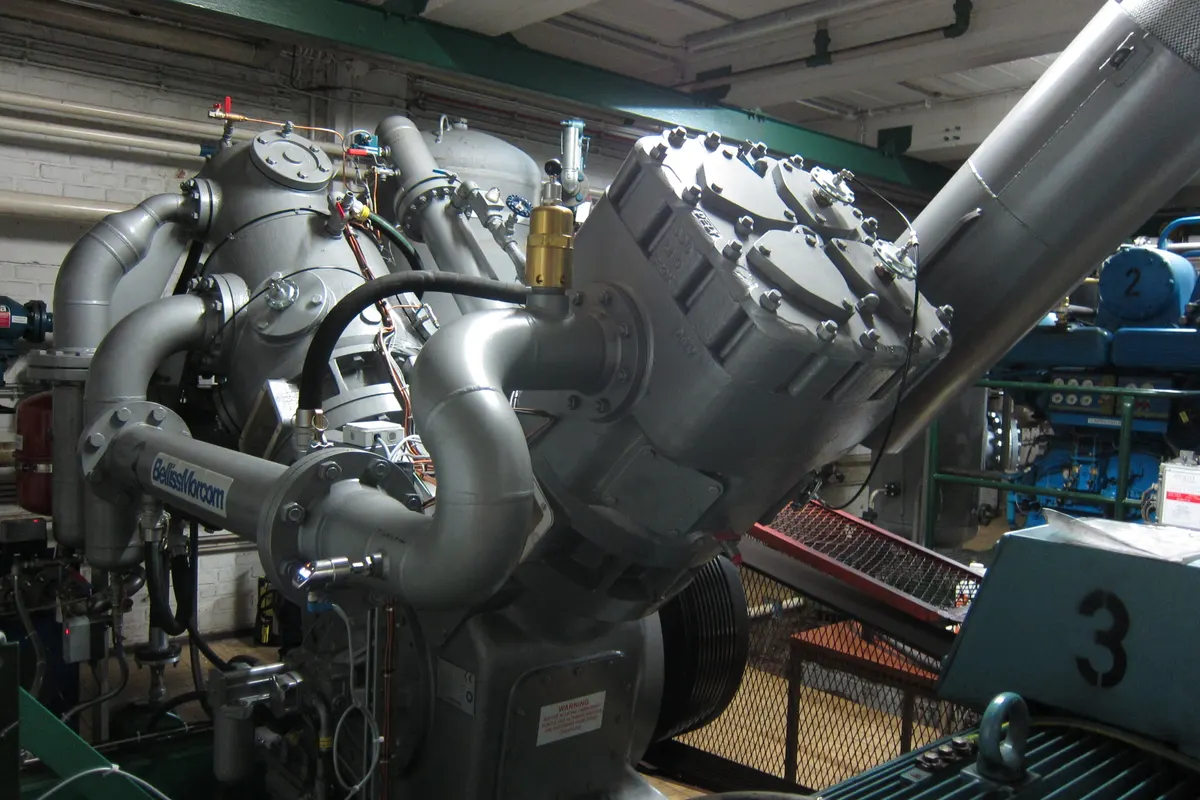
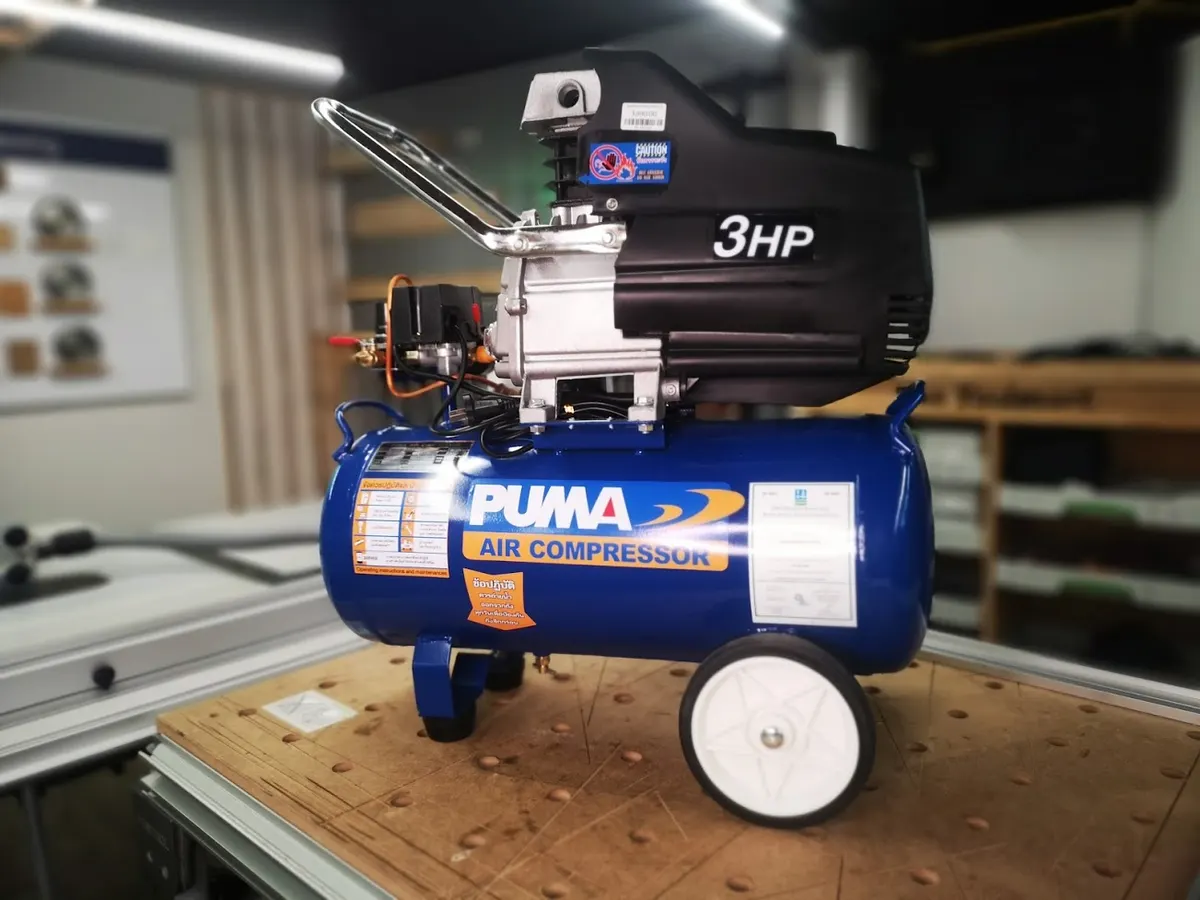
Piston (reciprocating). A crankshaft drives one or more pistons up and down in cylinders, with valves letting air in and out on each stroke. High-pressure units compress the air in two or three stages, one cylinder feeding the next.
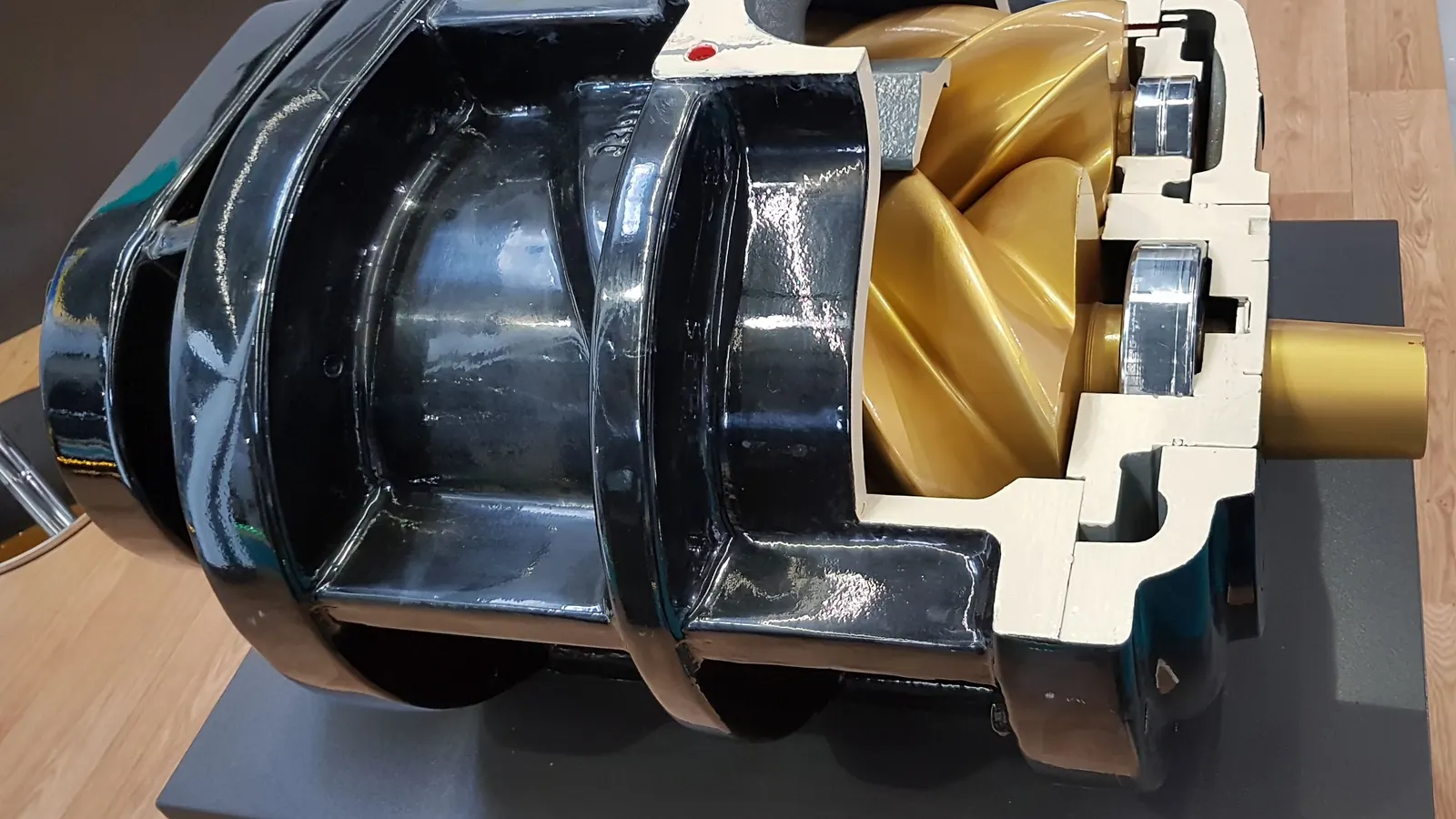
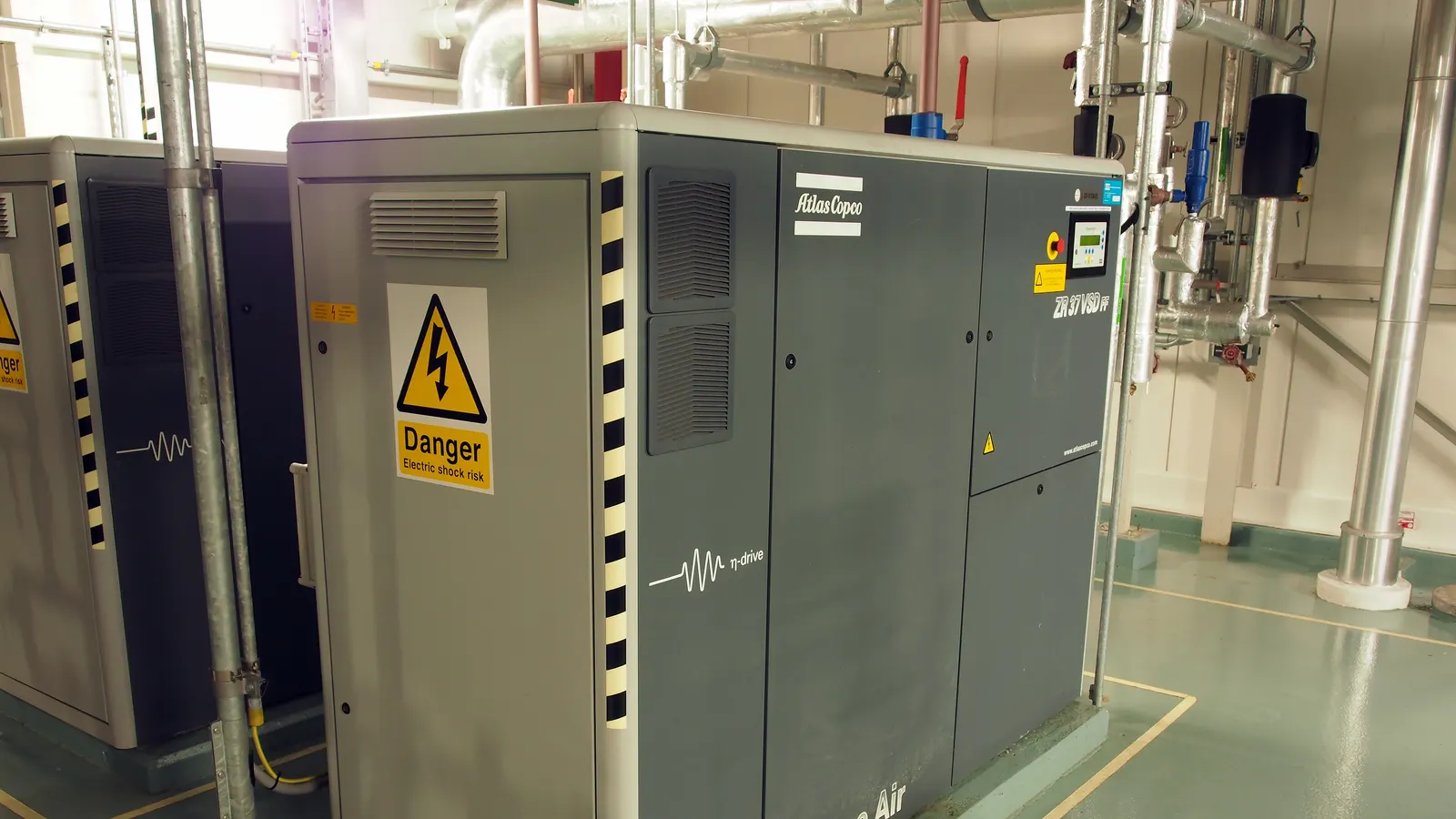
Rotary screw. Two meshing helical rotors turn inside a housing and squeeze air continuously as it moves along the rotors. In an oil-injected screw compressor, oil is injected into the compression chamber and removed again by an oil separator before the air leaves the package.
Those mechanical differences explain almost every point in the comparison that follows: the piston's rubbing rings and stop-start strokes make it hotter, noisier and harder on wearing parts, while the screw's continuous rotation lets it run all day.
Typically below 3 ppm after the built-in separator (ELGi)
No separator; air can carry more oil
Pressure sweet spot
Medium pressure plant air
High pressure, above about 14 to 15 bar, in multi-stage units
Moving and wearing parts
Few; two rotors in the airend
More: pistons, rings, valves, connecting rods
Installation
Compact, sits on a level floor
Larger footprint, heavier foundation
Purchase price
Higher
Lower
Running cost at long hours
Lower
Higher
Sources for the table: Atlas Copco's UAE comparison (duty cycle, noise, pressure, installation, cost), Atlas Copco's selection guide (maintenance, running cost) and ELGi's comparison (temperatures, oil content). Treat the figures as typical values and check the data sheet of the exact model you are quoted.
Duty cycle: the deciding factor for most buyers
Duty cycle is the share of time a compressor can run loaded without overheating. Atlas Copco's UAE comparison lists rotary screw compressors at 100% and piston compressors at 50 to 70%, and its selection guide says screw compressors are engineered to run 24/7 while piston compressors suit low duty cycles and low daily running hours. The same UAE page recommends a rotary screw machine for continuous use of 8 hours or more a day.
This changes how you size a piston machine. If your tools need 10 units of air on average, a piston compressor rated for a 60% duty cycle has to be able to deliver about 10 / 0.6, or roughly 17 units, so that it can rest for 40% of the time. A screw compressor can be matched more closely to the demand. Two buyers who compare a "same size" piston and screw quote on flow alone are not comparing like for like.
Screw compressors have their own form of cycling. A fixed-speed screw machine loads and unloads to follow demand and uses power while unloaded; a variable speed drive avoids most of that. The main guide covers fixed speed versus VSD; the point here is that a screw compressor that spends most of its day unloaded is oversized, and the piston versus screw decision should be made on a realistic demand profile.
Heat: why it matters more in the Gulf
Piston compressors run much hotter. ELGi gives internal operating temperatures of about 150 to 200 °C for reciprocating compressors against about 80 to 99 °C for rotary screw units, and Atlas Copco explains why: piston rings rub on the cylinder walls, while screw rotors do not touch each other, so pistons generate more friction heat and should not run non-stop.
Ambient temperature limits matter just as much. BOGE's technical guidance gives a maximum admissible ambient of +40 °C for piston and screw compressors in general and only +35 °C for sound-insulated piston compressors, and warns that above the maximum the air outlet temperature may exceed the statutory limit, air quality falls, components are strained and service intervals shorten. In contrast, Atlas Copco states that the GA oil-injected screw compressors it offers in the UAE are designed for ambients up to 55 °C. Ratings differ by maker and model, so ask every bidder, screw or piston, for the maximum ambient rating in writing.
For a Gulf buyer the practical reading is simple. A piston compressor in an unventilated workshop, a container or a rooftop plant room in July is working at or beyond the limits most piston units are rated for. If a piston machine is the right choice on duty, give it the coolest, best-ventilated position you have and duct its hot air out.
Noise and where you can put the machine
Atlas Copco describes piston compressors as loud and screw compressors as much quieter, with less vibration. According to Atlas Copco's UAE page, screw compressors sit on anti-vibration pads and need no special foundation, so they can go on a finished, level floor close to the point of use. Piston machines take more space and a heavier foundation. If the compressor has to sit inside a workshop where people work all day, the screw machine is usually the only practical choice; note BOGE's lower +35 °C limit for sound-insulated piston units if you plan to enclose a piston compressor to quieten it.
Air quality and oil carry-over
Both common designs use oil, and both need treatment after the compressor. ELGi states that the oil content in the air from a rotary screw compressor is typically below 3 ppm because the package has an oil separator, and that reciprocating compressors have no such oil filtration, so their outlet air can be more contaminated. In either case, add a dryer and filters matched to the ISO 8573-1 class you need; our guide to compressed air dryers covers how to choose them for Gulf conditions. Where oil must be kept out of the air altogether, both technologies come in oil-free versions, which is a separate decision from screw versus piston.
Ordinary plant air pressures are screw compressor territory. Above about 15 bar, piston machines take over. Atlas Copco's UAE comparison says pistons are best for pressures above 14 bar, and its LT range of oil-lubricated multi-stage piston compressors is described as the solution for pressures above 15 bar: a two-stage LT reaches up to 30 bar and a three-stage version up to 40 bar. Atlas Copco also describes a combined set-up, a screw compressor feeding a piston booster, for duties up to 40 bar. Atlas Copco markets its LB piston booster, also rated up to 40 bar, for PET bottling, testing and nitrogen duties such as laser cutting. Confirm the pressure and air purity the process needs before choosing between a high-pressure piston compressor and a booster.
Maintenance and spares
Pistons have more parts that wear. Atlas Copco states that piston compressors have more moving parts, wear more and need more maintenance, while screw compressors have less wear and longer service intervals. ELGi makes the same point and adds that reciprocating machines may need a stock of spares, but lists ease of maintenance as one reason some users still prefer them: a piston compressor's valves, rings and gaskets are simple parts that a general mechanic can change, whereas a screw airend overhaul is specialist work. For a remote site with a capable mechanic and no service network, that can favour a piston machine. For a plant that wants a service contract and minimal downtime, the screw machine's longer intervals usually win.
Cost: purchase price versus running cost
A piston compressor costs less to buy; a screw compressor costs less to run at long hours. Atlas Copco's selection guide says that with equal running hours a screw compressor is much more efficient and has lower lifetime operating costs, and its UAE page says the main criterion should be total life-cycle cost: energy, investment and maintenance. Because energy dominates that total, the cheaper piston machine is the expensive choice once it runs most of the day.
When comparing efficiency, ask for specific power (kW per m3/min of free air delivery at your pressure). The Compressed Air and Gas Institute (CAGI) publishes standard data sheets and runs third-party verification for rotary compressors, testing randomly selected units each year to ISO 1217; its program does not list reciprocating compressors, so for a piston quote ask the maker for data measured to ISO 1217 directly.
When a piston compressor is the right buy
Air is used for short, intermittent periods: tyre inflation, a few hand tools, occasional blow-off.
Total running time is well under a full shift, so the duty cycle limit is never reached.
The required pressure is above about 15 bar, or you need a booster on top of a screw compressor.
The budget is fixed and running hours are low enough that energy cost does not dominate.
The site depends on a local mechanic rather than a dealer service network.
When a screw compressor is the right buy
Air is needed through most of a shift or around the clock, which Atlas Copco puts at 8 hours a day or more.
The compressor room is hot, or the machine has to sit near people.
Oil carry-over must be low before treatment, or the plant runs a dryer and fine filters that oil would load.
Energy cost matters and you want verified specific power data.
The demand varies, and a VSD screw machine can follow it.
Several makers sell both screw and piston compressors, which helps if you want one supplier for base load and standby.
Atlas Copco
Atlas Copco sells oil-injected screw compressors such as the GA range and oil-lubricated piston compressors including the LT multi-stage range for 15 to 40 bar, and runs its own compressor offices in the UAE and Saudi Arabia.
BOGE
BOGE, a family-run German maker based in Bielefeld, lists screw and piston compressors with air treatment and controls.
ELGi
ELGi designs its own screw airends and sells rotary screw, oil-free, portable and reciprocating compressors, with ELGi Gulf in SAIF Zone, Sharjah.
ALUP
ALUP lists fixed and variable speed screw compressors alongside professional and industrial piston compressors, including an oil-free piston range.
Ingersoll Rand
Ingersoll Rand lists rotary screw and reciprocating piston among the compressor technologies sold across its brands.
Screw or piston RFQ checklist
Average and peak air demand, and how many hours a day the air is used.
Working pressure at the point of use, and any duty above 15 bar.
For piston bids: the rated duty cycle and the flow at that duty cycle.
FAD and package power at your pressure, measured to ISO 1217, and specific power.
Maximum ambient temperature rating, with any enclosure fitted.
Noise level at 1 m and the installation space and foundation needed.
Oil carry-over before treatment, and the dryer and filters included.
Service intervals, wearing parts list and price, and local service support.
Supply voltage and frequency: 50 Hz in the UAE, 60 Hz in Saudi Arabia.
Send this to several suppliers at once: post your compressor requirement and suppliers in the UAE and Saudi Arabia can quote both technologies.
What is the main difference between a screw and a piston compressor?
A piston compressor uses pistons driven by a crankshaft to compress air in cylinders, stroke by stroke. A rotary screw compressor uses two meshing helical rotors that compress air continuously. That makes screw machines suited to continuous duty, cooler, quieter and lower in maintenance, while piston machines are cheaper to buy and better at high pressure.
Can a piston compressor run continuously?
Not usually. Atlas Copco lists typical piston compressors at a 50 to 70% duty cycle, against 100% for rotary screw units, and warns that pistons risk overheating if run non-stop because ring friction makes them run hot. Size a piston machine so it can rest for the rest of each cycle, or choose a screw compressor for continuous demand.
Is a screw compressor more efficient than a piston compressor?
At long running hours, yes. Atlas Copco states that with equal running hours a screw compressor is much more efficient and has lower lifetime operating costs. For short, intermittent use, a piston unit can be the better value because its lower purchase price is not offset by energy cost. Compare specific power at your pressure, measured to ISO 1217.
Which compressor is better for high ambient temperatures?
Usually a screw compressor rated for high ambient. BOGE gives a +40 °C maximum ambient for compressors generally and +35 °C for sound-insulated piston units, while Atlas Copco rates the GA screw compressors it sells in the UAE for up to 55 °C. Always get the maximum ambient rating for the exact model in writing.
Which is better for high pressure?
Piston compressors. Atlas Copco says pistons are best above about 14 bar, and its LT multi-stage piston range reaches 30 bar in two stages and 40 bar in three. Screw compressors cover typical plant air pressures. A screw compressor feeding a piston booster is another way to reach high pressure for part of the flow.
How long does a screw compressor last compared with a piston compressor?
Makers do not publish a single comparable figure, and life depends on hours, maintenance and conditions. What they do state is that screw compressors have fewer moving parts, less wear and longer service intervals, while piston compressors have more wearing parts and need more frequent maintenance. Ask each bidder for service intervals and overhaul hours for the model quoted.
When food, pharmaceutical and electronics plants need an oil-free compressor, what Class 0 certification means, how heat affects oil-injected filtration, which oil-free technology fits, and how to test the air.
How to size and source a portable diesel compressor for breakers, sandblasting and drilling in the UAE and Saudi Arabia: tool air demand, pressure classes, aftercoolers, Gulf heat and whether to rent or buy.
How to pick a compressed air dryer for Gulf heat and humidity: pressure dew point, refrigerated vs heatless and heated desiccant, correction factors at 45°C, purge losses, drains and condensate.