Rebar Couplers and Mechanical Splices: Types, Approvals and Site Checks
When to use a rebar coupler instead of a lap, the main coupler types, ACI 318 Type 1 and Type 2 and other performance classes, how systems are approved and tested, and what to check on site.
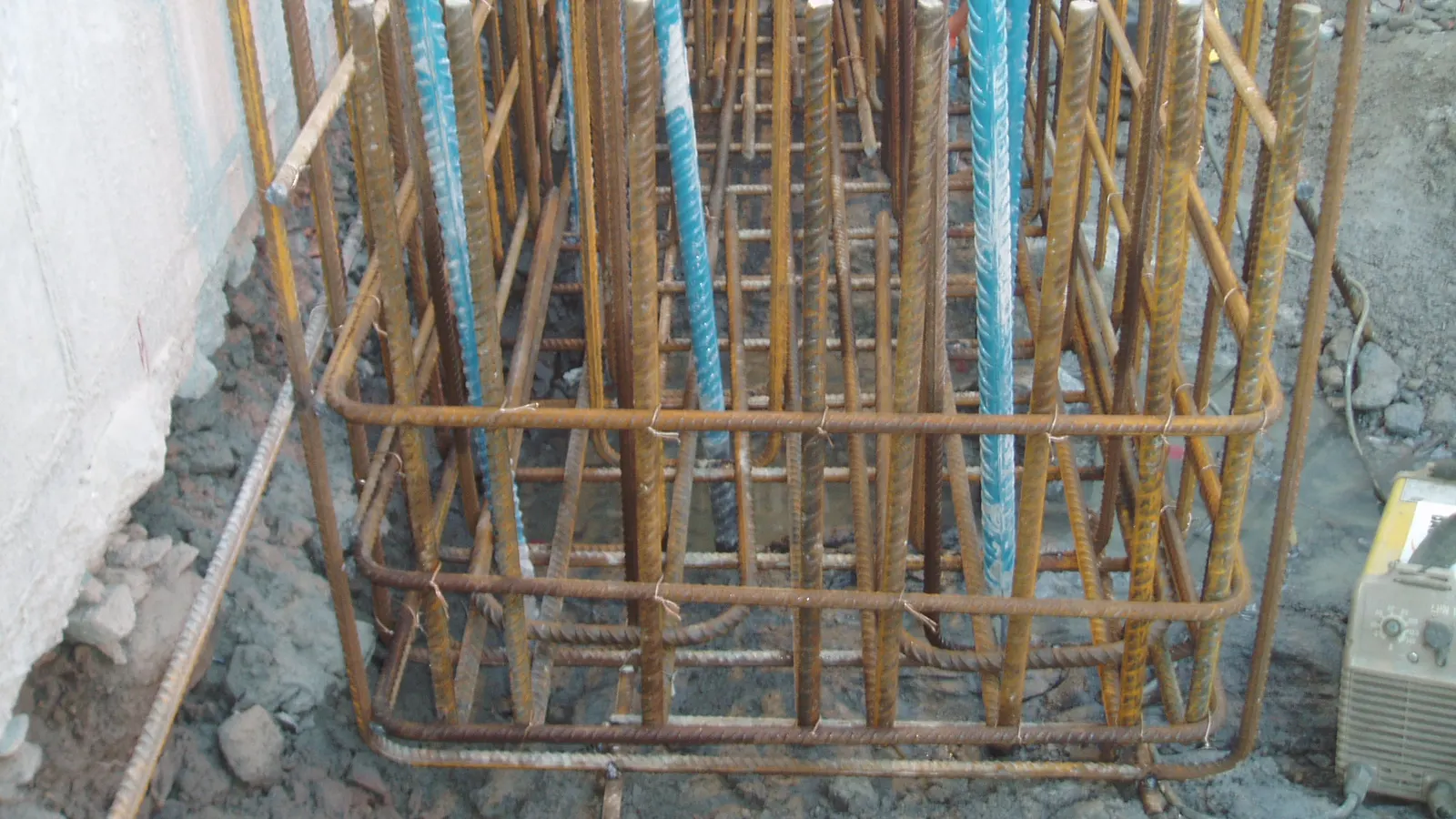
A rebar coupler is a sleeve that joins two reinforcing bars end to end so that load passes through the coupler instead of through a lapped length of concrete. Couplers are used where laps would congest the section, where bars must continue through a construction joint, or where the bars are too large to lap economically. Buy couplers as a tested system matched to the bar you get from steel rebar suppliers in the UAE or rebar suppliers in Saudi Arabia, never as loose hardware.
This guide is for site engineers, rebar subcontractors and buyers deciding between laps and couplers and writing the coupler package. It covers the main coupler types, the performance classes engineers specify, how systems are approved and tested, and what to check during installation. Bar grades, mill certification and the UAE and Saudi rules for the bars themselves are in our main guide to steel rebar grades, standards and mills in the UAE and Saudi Arabia.
Lap splice, coupler or weld: which joint to use
The structural engineer decides the splice type and shows it on the drawings; procurement's job is to buy what is shown and flag cost or programme implications early. The three options compare as follows.
Splice
How it transfers load
Where it fits
What to watch
Lap splice
Through bond between the overlapping bars and the concrete
The default for most bars; CRSI calls it "the predominant method" of splicing
Lap length grows with bar size, grade and cover conditions, adding steel and congestion
Mechanical coupler
Through the coupler, by threads, swaging, grout, wedges or bolts
Congested members, construction joints, precast connections, large bars
Must be a tested system for that bar; installation quality is critical
Welded splice
Through the weld metal
Special cases where the specification allows it
CRSI calls manual arc welding usually the most costly method because of inspection; bar must be weldable
CRSI explains that lap length depends on concrete strength and type, bar grade, bar size, bar spacing, cover, and the ties or stirrups around the splice, and that laps appear on placing drawings, details, lap charts or general notes. Contact laps are preferred because they are easier to secure against displacement during the pour.
Couplers earn their price in three situations. First, congestion: mechanical couplers are an effective way to reduce rebar congestion in heavily reinforced areas, because two lapped bars side by side take up room that concrete needs to flow around. Second, joints: couplers let a bar continue through a construction joint or into a precast element without a long projecting starter bar. Third, large bars: laps on big diameters add a lot of steel, which the rebar weight chart lets you quantify against the cost of couplers.
Welding is the least common route. CRSI recommends against manual arc welding in the field, notes that welded splices need chemical analysis of the steel, inspection, supervision and quality control, and points to AWS D1.4 as the governing code in the US. Weldability depends on the bar: Qatar Steel, for example, lists its BS 4449 B500B bars as weldable because of a low carbon equivalent, and its ASTM A615 grades as non-weldable. CRSI also warns that tack welding crossbars is associated with brittle failure of rebar assemblies.
The Concrete Reinforcing Steel Institute (CRSI) groups mechanical splices by how they grip the bar. The main families a Gulf contractor will be offered are:
Coupler type
How it works
Points to note (as described by CRSI)
Taper-threaded
Bar ends are cut with a tapered thread that matches the coupler
Position couplers are available for bent or curved bars that cannot be rotated
Parallel (straight) thread, upset ends
Bar ends are enlarged (upset or forged) before threading, so the threaded section is larger than the bar
Coupler can be two or three pieces; with headed ends the bar does not need to rotate
Parallel thread, not upset
Threads are cut or rolled directly on the bar end
Thread cutting reduces the bar's area, so some systems use a larger bar size or bars with enough extra strength
Threaded bar (thread-deformed)
The bar's ribs are rolled as a continuous coarse thread; a coupler screws on anywhere
Needs special bars meeting ASTM A615, with lock nuts or a torqued connection
Cold-swaged sleeve
A hydraulic press deforms a steel sleeve onto the ribs of both bars
No threads on the bar; longer sleeves are needed for epoxy-coated bars
Cold-swaged threaded
Threaded sleeves are swaged onto the bar ends, then joined
No bar threading; a three-piece position coupler suits bent bars
Grout-filled sleeve
Bars are inserted into a sleeve filled with non-shrink grout
Tolerates minor misalignment and can join different bar sizes; common in precast
Shear screw or shear bolt sleeve
Bolts clamp the bars and their heads shear off at a set torque
No bar-end preparation; shear bolt and wedge sleeves are designed mainly for small bars (No. 3 to No. 6)
Compression-only (end-bearing)
A sleeve holds two square-cut bar ends in contact
Carries compression only; bar ends must be cut within 1.5° of square and fit within 3° when erected
CRSI also lists steel-filled sleeves, extruded sleeves, double-wedge sleeves, combined grout and threaded sleeves for precast work, and dowel-bar splices that stop bars protruding through formwork. Caltrans, the California transportation department, uses a similar vocabulary on its authorized coupler list: sleeve threaded, sleeve-tapered thread, sleeve-forged, sleeve-swaged, sleeve-filler grout, sleeve-lock shear bolts and mechanical lap splices among them.
Which type is right is a design and buildability question. Threaded systems need the bar ends prepared before assembly, swaged sleeves are pressed on with a hydraulic press, and shear bolt sleeves are tightened until the bolt heads shear off. Ask the coupler supplier who prepares the bar ends, with what equipment, and how that work is inspected.
Performance classes: what the engineer is asking for
Requirements for mechanical splices vary by country, code and industry, so read the specification, not a catalogue. The common reference points are:
ACI 318 Type 1 and Type 2. As summarised on Wikipedia's rebar page, ACI 318 specifies either Type 1 performance (the splice develops 125% of the bar's specified yield strength) or Type 2 (125% of specified yield and 100% of the bar's specified tensile strength). Type 2 is the stricter class. Confirm the exact clause in the ACI 318 edition your project uses.
"Bar break". Some specifications go further and ask that the joint fails in the bar, in a ductile manner, rather than in the coupler.
Service and ultimate splices (Caltrans). Caltrans authorizes couplers in two categories. A service splice must reach a minimum tensile strength of 80 ksi (about 550 MPa) wherever it fails. An ultimate butt splice must fail in the bar, outside the affected zone, with visible necking or a minimum measured strain (at least 6% for No. 11 and larger bars, 9% for No. 10 and smaller), and the coupler must be shorter than 10 bar diameters.
Slip. A coupler that holds load but lets the bars slide apart can still open cracks. Caltrans sets total slip limits from 0.020 in (about 0.5 mm) for No. 4 to No. 6 bars up to 0.060 in (about 1.5 mm) for No. 18 bars.
Fatigue. Bridges, crane beams and other members with repeated loading need couplers tested for fatigue. CARES runs a separate technical approval schedule (TA1-A) for couplers in structures designed to the Eurocode fatigue requirements, alongside TA1-B for static loading under BS 8110 and EN 1992-1-1.
The coupler must also suit the bar's strength. A coupler qualified on Grade 60 or B500B bars is not automatically qualified on a higher-strength bar. EMSTEEL states that its 600 MPa ES600 bar can use the same market couplers, which is a claim to verify with the coupler maker's own test data for that grade and size.
Approvals and testing
A coupler approval proves that the system, made under a controlled process and installed by a stated method, meets a performance class on a stated range of bars. Look for these layers:
Product approval of the system. On British-standard projects, CARES' model specification requires coupler manufacturers to hold a CARES Technical Approval (or a fully equivalent scheme) and coupler suppliers to hold CARES approval to Appendix 8, "Mechanical coupling of reinforcing steel". CARES describes Technical Approvals as covering products without a recognised product standard, with quality audits, initial testing against its schedule, then ongoing inspection and periodic testing, and says it holds UKAS accreditation for this work. In US practice, Caltrans keeps its own authorized coupler list, and the ICC Evaluation Service publishes acceptance criteria AC133 for mechanical splice systems.
Factory production control. Caltrans requires a quality control manual covering material qualification, QC methods and frequencies during production, calibration of equipment, documentation of heat treatment or forging of bar ends, signed assembly and installation procedures including torque values, and traceability to heat number, lot number and mill certificates.
Project tests. Specifications may call for sample splices made with the project's own bars and tested before and during the work. Caltrans' prequalification, for example, puts one sample through cyclic testing and another through fatigue testing, each then pulled to failure, plus two more tensile tests to failure under its test method CT 670.
Consultant approval. In the UAE and Saudi Arabia, the coupler system is normally submitted to the project consultant with its test reports and approvals. We did not find a federal UAE or Saudi technical regulation specific to couplers, so the project specification governs; the bars being joined still need their ECAS certificate or Saudi Quality Mark.
A coupler only performs as tested if the joint is made the way it was tested. Build these checks into the inspection and test plan:
Bar identity. The bars at each joint must be the grade and size the system was qualified on. ASTM No. sizes and metric sizes are not interchangeable (see our guide to rebar sizes and bar marks).
Bar-end preparation. For threaded systems, check prepared ends with the manufacturer's inspection method and protect them until assembly. For end-bearing sleeves, check squareness: CRSI gives 1.5° when cut and 3° when erected.
Assembly. Follow the signed installation procedure: torque values for torqued and shear bolt systems, press settings for swaged sleeves, grout and curing for grouted sleeves. CRSI recommends a bar-end check for steel-filled and extruded sleeves to confirm bar engagement.
Coated bars. CRSI notes longer swaged sleeves for epoxy-coated bars; confirm the system is qualified for coated bars, and repair coating damage at the joint.
Traceability. Keep coupler lot numbers with the bar heat numbers for each pour, as Caltrans requires of its approved systems.
Before the pour. Inspect every joint, record it, and coordinate with your ready-mix concrete supplier so the pour is not booked before inspection is signed off.
Buying couplers: RFQ checklist
Coupler type and performance class from the drawings (for example ACI 318 Type 2, or the CARES approval or equivalent your specification names).
Bar standard, grade and sizes for each coupler, including transition couplers between two sizes and position couplers for bent bars.
Quantities by type and size, plus spares for test samples.
Approval documents: system approval certificate, test reports covering your grade and sizes, and the factory QC certificate.
Bar-end preparation: who threads or forges, where, with what machine, and how it is inspected.
Installation procedure, tools (torque wrenches, presses) and training for the fixing crew.
Project testing: number of sample splices, test laboratory, and who pays for retests.
Delivery: thread protection, packing by size, lot labels and lead time per batch.
A rebar coupler is a mechanical sleeve that joins two reinforcing bars end to end, transferring load through the coupler instead of through a lapped length of concrete. Couplers grip the bars by tapered or parallel threads, by swaging a sleeve onto the ribs, with grout, or with bolts. They reduce congestion and let bars continue through construction joints.
What is the difference between Type 1 and Type 2 couplers?
They are ACI 318 performance classes. A Type 1 mechanical splice must develop 125% of the bar's specified yield strength. A Type 2 splice must develop both 125% of specified yield and 100% of the bar's specified tensile strength. Type 2 is the stricter class. Check the code edition your project uses.
Are couplers better than lap splices?
Neither is better in general. Laps are the predominant method and need no special hardware, but they lengthen with bar size and add congestion. Couplers save steel and space on large bars and in congested members, and allow joints at construction breaks, but they cost more per joint and depend on careful bar-end preparation and installation. The engineer chooses.
What is the difference between taper thread and parallel thread couplers?
Taper-threaded couplers join bars cut with matching tapered threads, which engage quickly. Parallel-thread couplers use straight threads; in upset systems the bar end is first enlarged so the threaded section is not weaker than the bar, while non-upset systems cut threads directly and reduce the bar's area. Each must be qualified for your bar grade and size.
Can you weld rebar instead of using couplers?
Only if the specification allows it and the bar is weldable. CRSI recommends against manual arc welding in the field and calls it usually the most costly splice because of inspection. Qatar Steel lists its BS 4449 B500B bars as weldable and its ASTM A615 grades as non-weldable. Welded joints need a qualified procedure and inspection.
Who approves rebar couplers in the UAE and Saudi Arabia?
The project consultant approves the coupler system against the specification, which may name CARES approval, ACI 318 Type 1 or Type 2, or project testing. We did not find a federal UAE or Saudi regulation specific to couplers. The bars themselves still need their UAE ECAS certificate or Saudi Quality Mark.
How to buy rebar in the UAE and Saudi Arabia: B500B and Grade 60 explained, UAE ECAS and Saudi Quality Mark rules, bar marks and mill certificates, the main Gulf mills, coated bars and pricing terms.
How GFRP, epoxy-coated and hot-dip galvanised rebar protect concrete from chlorides, their standards and design codes, bending, cutting and repair rules, cost drivers and what UAE and Saudi regulations cover.
Metric rebar sizes and what Gulf mills roll, ASTM bar numbers in mm, what makes a bar deformed, reading the grade from ribs and rolled marks, what a delivery certificate must contain, and what CARES means.