GFRP, Epoxy-Coated and Galvanised Rebar for Corrosive Gulf Exposure
How GFRP, epoxy-coated and hot-dip galvanised rebar protect concrete from chlorides, their standards and design codes, bending, cutting and repair rules, cost drivers and what UAE and Saudi regulations cover.
For concrete exposed to chlorides from seawater or saline ground, there are three main alternatives to plain steel bars: epoxy-coated bars (ASTM A775 or A934), hot-dip galvanised bars (ASTM A767) and glass fibre reinforced polymer (GFRP) bars to ASTM D7957, designed under ACI CODE-440.11-22. Each changes design, handling and cost differently, so the engineer chooses, and you buy exactly that from rebar suppliers in the UAE or rebar suppliers in Saudi Arabia.
This guide is for engineers, contractors and buyers on marine, coastal, below-ground and infrastructure work in the Gulf who need to compare these options and write a workable specification and RFQ. It goes into the standards, handling, repair and cost drivers of each. The basics of plain rebar grades, mills and certification are in our main guide to steel rebar grades, standards and mills in the UAE and Saudi Arabia. None of these products replaces adequate cover and dense concrete, which remain the first line of defence.
Why plain steel needs help in chloride exposure
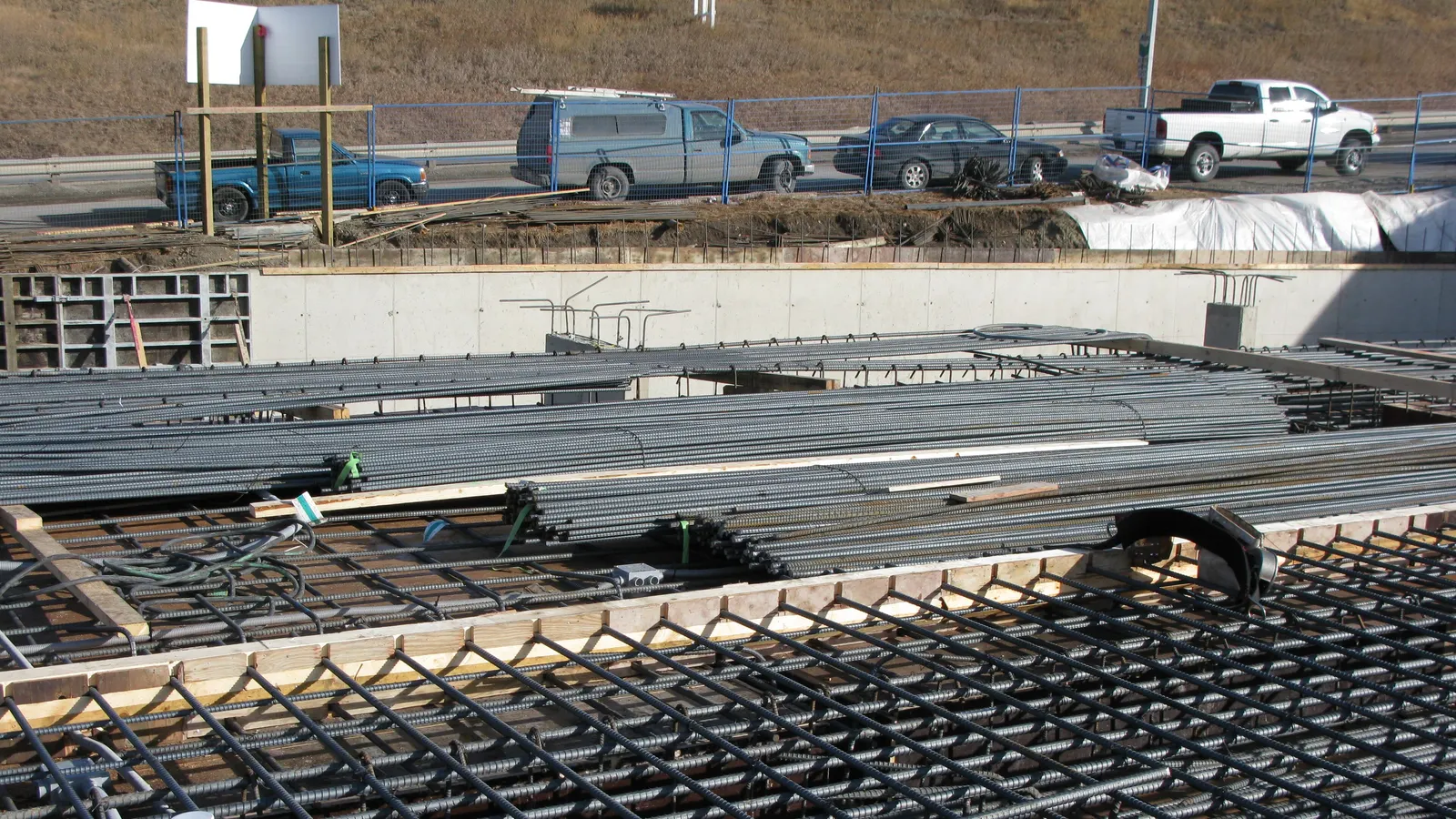
Steel in concrete is protected by the concrete around it until chlorides or carbonation break that protection down. Once steel corrodes, its corrosion products take up more room than the steel, which cracks and spalls the cover. The American Galvanizers Association calls chloride intrusion "the primary incentive" for using galvanised reinforcement, and the Florida Department of Transportation (FDOT), which uses GFRP bars on bridges and bulkheads, describes its marine and inland water crossings as aggressive environments where cracks let corrosive agents reach the steel.
The three options work in different ways. Epoxy is a barrier: it keeps chlorides and moisture off the steel as long as the coating is intact. Zinc is a barrier and also sacrificial, so it keeps protecting small areas of exposed steel, and its corrosion products are far less voluminous than iron's, which reduces cracking. GFRP is not metal, so there is nothing to corrode in the usual sense; FDOT describes it as "highly resistant to chloride ion and chemical attack".
ASTM A775 (epoxy-coated bars); ASTM A934 (prefabricated bars, coated after fabrication); SASO ASTM A775 in Saudi Arabia
ASTM A767 (bars only, not wire); SASO ASTM A767 in Saudi Arabia; ISO 1461 is listed in the UAE rebar scheme
ASTM D7957-22
Design basis
Steel design codes (ACI 318 or BS/Eurocode), as for plain bars
Steel design codes, as for plain bars
ACI CODE-440.11-22 for buildings; AASHTO GFRP guide specification for bridges (cited by FDOT)
How it protects
Barrier coating
Barrier plus sacrificial zinc
Non-metallic, no steel to corrode
Weak point
Coating damage from handling, cutting and bending
Cracking of thick coatings at bends; zinc loss if coupled to bare steel
UV exposure, improper cutting and rough handling; different structural behaviour
Site repair
Two-part epoxy patching on cut ends and damage
Repair to ASTM A780
Follow the specification and supplier rules; FDOT stresses careful cutting and handling
Bending
Bent before coating (A934), or bent after coating without damaging it (A775)
Before galvanising (large diameters or stress relief) or after (minor flaking accepted)
Bends are detailed separately (FDOT publishes FRP bar bending details)
Epoxy-coated rebar
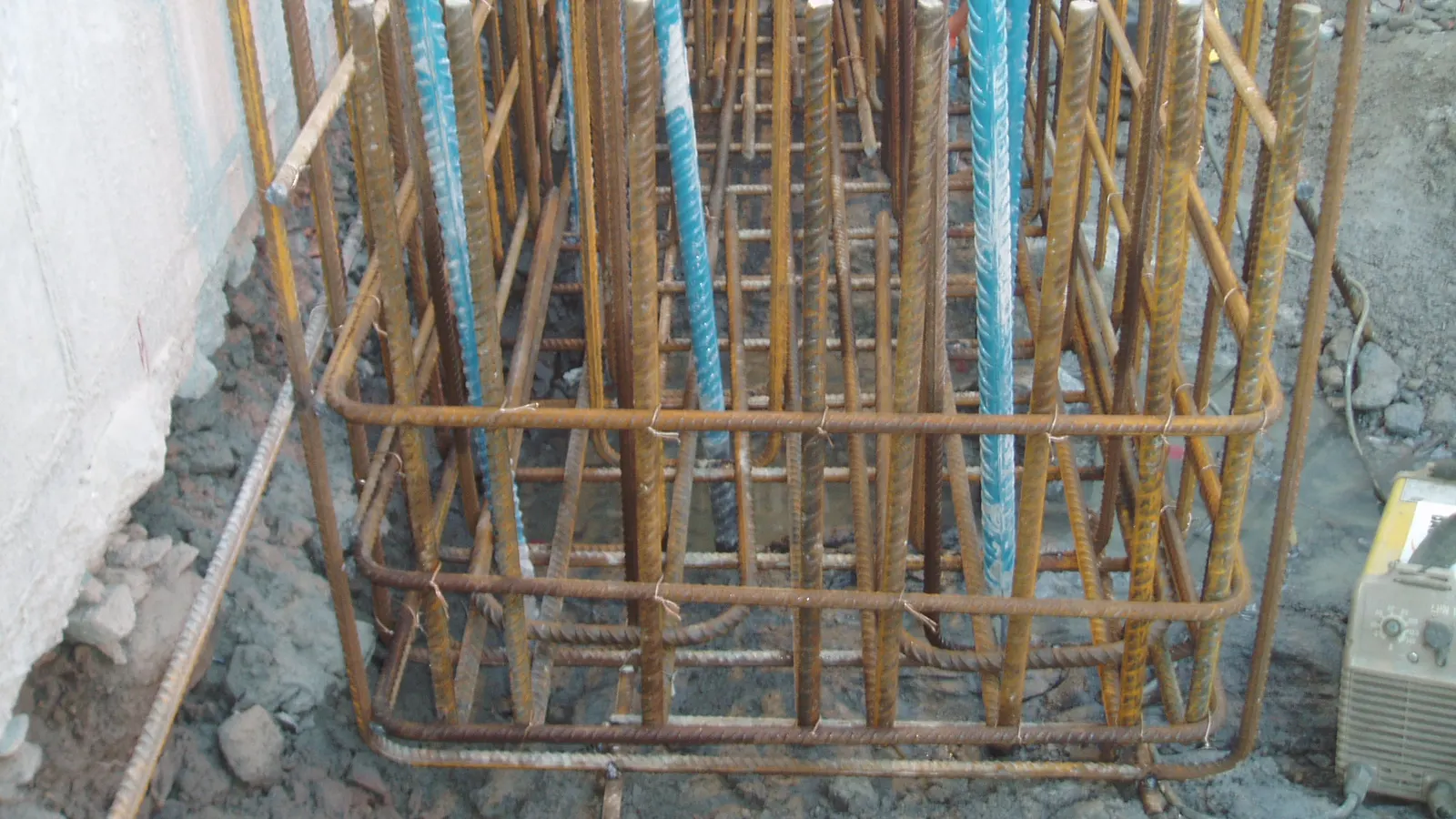
Epoxy-coated bars are the most familiar option in specifications that follow US practice. CRSI lists two ASTM standards: A775/A775M for epoxy-coated reinforcing steel bars and A934/A934M for epoxy-coated prefabricated reinforcing bars, which, as the title indicates, covers bars fabricated before they are coated. Saudi Arabia's Technical Regulation for Building Materials, Part 1, lists SASO ASTM A775 for epoxy-coated bars and SASO ASTM A884 for epoxy-coated wire and welded wire reinforcement.
The coating only works if it arrives intact and stays intact. Wikipedia's summary of the field experience is balanced: extra care is needed through transport, fabrication, handling, installation and concrete placement because damage reduces long-term corrosion resistance; damaged epoxy-coated bars have still performed better than uncoated bars; and debonding of the coating and corrosion under the film have been reported. What follows from that for a buyer:
Plant quality. CRSI runs a voluntary certification for fusion-bonded epoxy coating plants based on ANSI/CRSI CG1.3-2025 and the applicable ASTM specifications. It covers quality control, handling and storage, surface preparation, cure, holiday (defect) testing, thickness and adhesion testing, with an independent third-party inspection at least once a year. CRSI says it is required in more than 20 US state transportation specifications and has been implemented in more than 35 plants in North America, so ask a Gulf coater what equivalent QC and records it offers.
Fabricator quality. CRSI has a separate certification for fabricators of epoxy-coated bars covering handling, storage, identification and coating repair.
Cutting. CRSI advises that small epoxy-coated bars (No. 10, 13 and 16) can be cut with bolt cutters, larger bars with a diamond-blade saw, never a flame torch, and that cut ends are coated with two-part epoxy patching material.
Couplers. Swaged sleeves need to be longer on epoxy-coated bars, according to CRSI; confirm the system is qualified for coated bars (see our guide to rebar couplers).
Ask the supplier to include the repair material and its instructions with each delivery, and keep coated bars apart from uncoated ones in storage so the two are not mixed in the works.
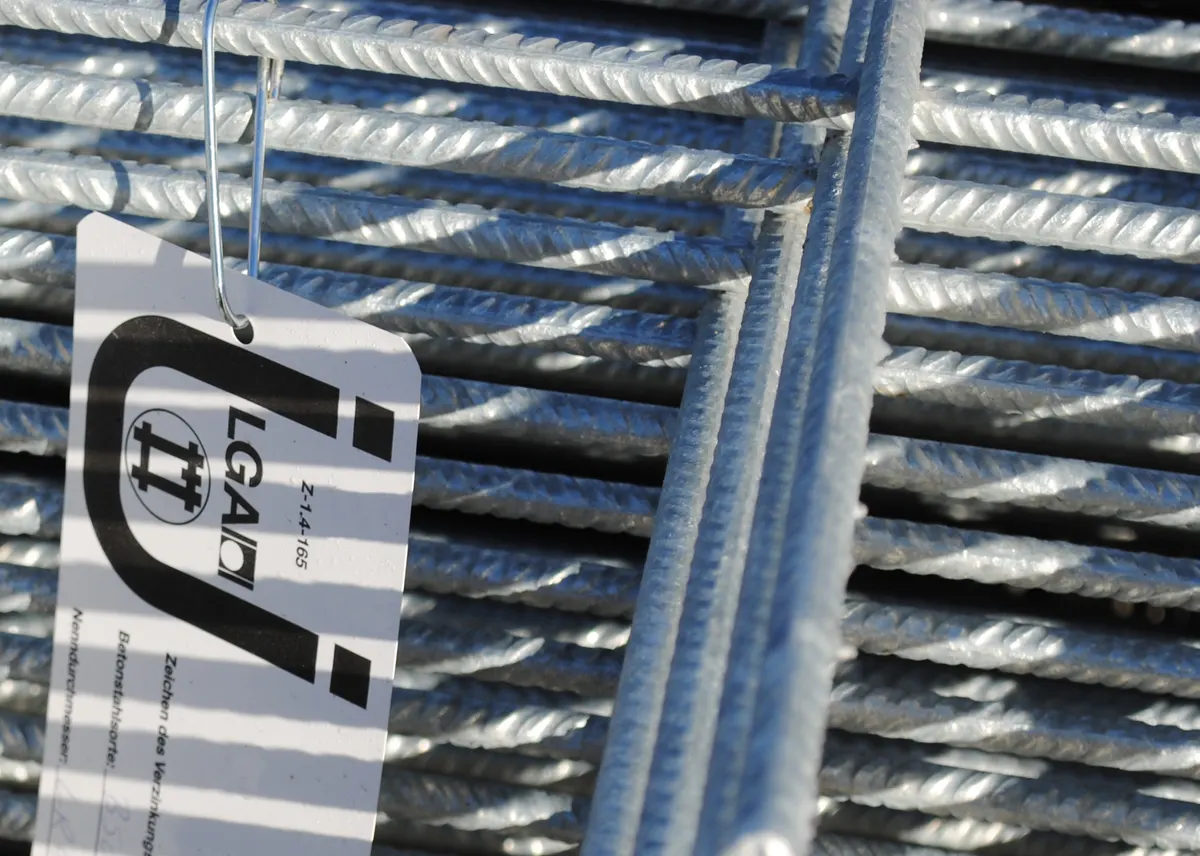
ASTM A767 covers hot-dip galvanising of reinforcing bars, plain and deformed, and excludes wire. According to the American Galvanizers Association (AGA), it sets two coating classes: Class I at 915 g/m² for No. 10 bars and 1,070 g/m² for No. 13 and larger, and Class II at 610 g/m² for No. 10 and larger. After leaving the zinc bath, bars are quenched in a chromate solution to limit the reaction between fresh zinc and wet concrete.
Bending is the main practical issue, and the AGA sets out both routes:
Bend, then galvanise. Bending before galvanising carries a risk of strain-age embrittlement, so bend diameters should be as large as possible and at least the minimum in the standard's table. If bars must be bent tighter, they can be stress relieved at 480 to 560 °C for one hour per inch of bar diameter.
Galvanise, then bend. Strain ageing is not a concern, coated stock can be held in inventory, and cages too big for the zinc kettle can be built. Thicker coatings, such as Class I, may crack or flake at the bend; ASTM A767 states that some cracking and flaking in the bend area is not grounds for rejection, and slower bending and larger radii reduce it.
Repair. Damaged areas are repaired to ASTM A780. The AGA advises against torch heating for zinc-solder repair at bends because the heat can strain-age the steel.
Do not mix metals. The AGA warns that galvanised and uncoated steel connected or close together in concrete can accelerate corrosion of the zinc. Its preference is to use galvanised bars for all the reinforcement; where that is impossible, isolate the two with tape, plastic sleeves, insulated ties or foam supports.
The AGA also points out that galvanised bars left exposed to the weather before casting show at a glance that they have not rusted and need no on-site repair. In the UAE, the federal rebar scheme lists ISO 1461 (hot-dip galvanized coatings) and ISO 2178 (coating thickness measurement) among its reference standards, so ask which standard the galvaniser certifies to and how thickness is measured.
GFRP rebar
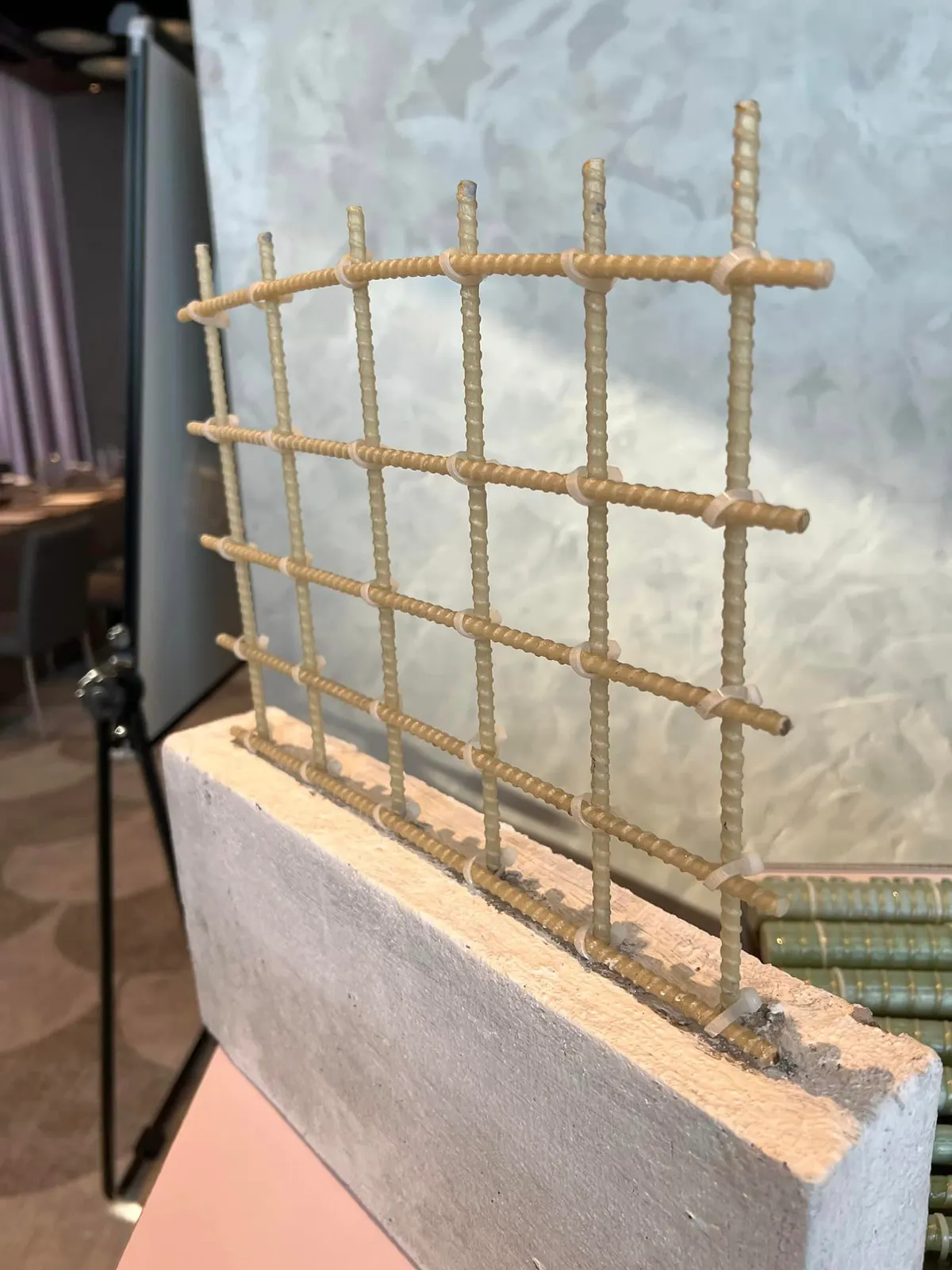
GFRP bars are made, like most commercial fibre-reinforced polymer rebar, from unidirectional fibres set in a thermoset polymer resin; glass-fibre types have low electrical conductivity and are non-magnetic. They are a different material from fibre-reinforced concrete, where short fibres are mixed into the concrete itself.
The design basis matters more than the bar. ACI CODE-440.11-22, the American Concrete Institute's building code for structural concrete reinforced with GFRP bars, applies to bars that conform to ASTM D7957-22. It covers strength, serviceability and durability, load factors, analysis, deflection limits, development and splicing, construction documents and field inspection, and it has a section on fire resistance and high service temperatures. It does not address diaphragms, plain concrete, anchoring to concrete, earthquake-resistant structures or strut-and-tie design, and it lists items out of scope including deep beams, shear friction and bundled bars. For bridges, FDOT cites the AASHTO LRFD Bridge Design Guide Specifications for GFRP-Reinforced Concrete (2nd edition, 2018) and ACI 440.1R-15.
FDOT's guidance is a useful picture of how a large owner uses GFRP:
Where. FDOT says GFRP bars should be considered for approach slabs, bridge decks, pier columns and caps, retaining and noise walls, traffic railings, bulkheads, MSE wall panels and drainage structures, with other locations considered case by case. Its project list includes bulkhead replacements and bridges.
Handling. Storage and handling rules are stricter than for steel, mainly because FRP can be damaged by prolonged UV exposure, improper cutting and rough handling.
Bending. FDOT publishes separate bar bending details for FRP (Index 415-010), so bent shapes are detailed separately from steel bends and ordered as such.
Cost. FDOT states that the initial cost of FRP reinforcing is often higher than steel, partly offset by reduced concrete cover, no need for corrosion-inhibiting admixtures and possibly lower life-cycle costs.
For a buyer the consequence is simple: GFRP is a design decision taken before tender. A GFRP bar cannot be swapped for steel of the same diameter, and steel cannot be swapped back, without a redesign.
Other options: stainless and corrosion-resistant steels
CRSI also lists stainless steel bars to ASTM A955 and low-carbon chromium bars to ASTM A1035 as corrosion-resistant options. Some mills make claims for their own grades: Tata Steel markets Tata Tiscon CRS550D as a corrosion-resistant rebar, and EMSTEEL (Emirates Steel Arkan) states that its ES600 high-strength bar shows corrosion resistance up to 35% better than conventional grades in ASTM B117 salt-spray testing. Treat such claims as product data for the designer to assess; they are not a substitute for the coating or material the specification names.
UAE and Saudi rules for coated and GFRP bars
Saudi Arabia. The SASO building materials regulation lists SASO ASTM A767 (galvanised bars), SASO ASTM A775 (epoxy-coated bars) and SASO ASTM A884 (epoxy-coated wire and welded wire reinforcement), alongside the plain bar standards. GFRP bars and ASTM D7957 are not on that list, so ask the importer how the product is being conformity-assessed for your HS code on SABER.
UAE. The federal scheme for steel bars for concrete reinforcement covers carbon steel bars and lists ISO 1461 and ISO 2178 for galvanising. It does not cover GFRP, so acceptance rests on the project specification and the consultant's approval of the bar's ASTM D7957 test evidence.
In both countries, the steel underneath an epoxy or zinc coating is still rebar, so it needs the mill's ECAS certificate or Saudi Quality Mark like any other bar.
Choosing and buying: RFQ checklist
Confirm the option and standard from the design: ASTM A775 or A934 epoxy, ASTM A767 class, or GFRP to ASTM D7957 under ACI CODE-440.11-22 or the bridge specification.
For coated bars, name the base bar standard and grade, the mill and its ECAS certificate or Saudi Quality Mark.
Ask for coating plant QC records: thickness, holiday testing and adhesion for epoxy; coating mass or thickness and chromate treatment for zinc.
Agree who fabricates and when: bend before or after coating, minimum bend diameters, and how cut ends are treated.
For GFRP, ask for D7957 test reports per lot and the bent-bar schedule, and check the supplier's storage advice on UV and handling.
Require repair materials and instructions with each delivery (two-part epoxy, or an ASTM A780 method for zinc).
Specify accessories that suit the bars: ties and supports agreed with the designer (the AGA suggests insulated ties where metals must be isolated), and couplers qualified for coated bars.
Plan handling and storage on site: separate stacks for coated, GFRP and plain bars, and protection of GFRP from prolonged sun.
GFRP rebar is a reinforcing bar made of glass fibres set in a thermoset polymer resin. It does not rust, is non-magnetic and has low electrical conductivity. In US practice the bars conform to ASTM D7957-22, and buildings are designed with ACI CODE-440.11-22, which does not address earthquake-resistant structures, diaphragms or strut-and-tie design.
Is GFRP rebar better than steel?
Not in general. GFRP is highly resistant to chloride attack, which suits marine and corrosive exposure, but it behaves differently from steel and needs its own design code. FDOT notes its initial cost is often higher than steel, partly offset by reduced cover, no corrosion-inhibiting admixtures and possibly lower life-cycle cost. The engineer decides.
Is GFRP more expensive than steel?
FDOT states that the initial cost of FRP reinforcing is often higher than traditional steel reinforcing. The comparison should include what changes in the design: FDOT lists reduced concrete cover, no need for corrosion-inhibiting admixtures and possibly lower life-cycle costs as offsets. Compare whole-element costs from a priced design, not bar prices per metre.
What is the difference between ASTM A775 and A934 epoxy-coated bars?
ASTM A775 covers epoxy-coated reinforcing steel bars; if they are bent after coating, bending must not damage the coating. ASTM A934, as its title says, covers epoxy-coated prefabricated bars, meaning bars fabricated first and coated after. Both need careful handling and two-part epoxy repair of cut ends and damage.
Can galvanised rebar be bent after galvanising?
Yes. The American Galvanizers Association notes that bending after galvanising avoids strain-age embrittlement, but thicker coatings may crack or flake at the bend. ASTM A767 states that some cracking and flaking in the bend area is not grounds for rejection. Larger bend radii and slower bending reduce it, and damage is repaired to ASTM A780.
Can galvanised and uncoated rebar be used together?
The American Galvanizers Association advises against it: connected or nearby galvanised and uncoated steel in concrete can accelerate corrosion of the zinc. Its preference is to galvanise all the reinforcement. Where mixing cannot be avoided, it recommends isolating the metals with tape, plastic sleeves, insulated ties or foam supports.
Is GFRP rebar approved in Saudi Arabia and the UAE?
Neither country's rebar regulation lists GFRP. Saudi Arabia's SASO building materials regulation lists epoxy-coated and galvanised steel bar standards but not ASTM D7957, and the UAE scheme covers carbon steel bars. GFRP is accepted through the project specification and consultant approval, so confirm conformity requirements for imports on SABER.
How to buy rebar in the UAE and Saudi Arabia: B500B and Grade 60 explained, UAE ECAS and Saudi Quality Mark rules, bar marks and mill certificates, the main Gulf mills, coated bars and pricing terms.
Metric rebar sizes and what Gulf mills roll, ASTM bar numbers in mm, what makes a bar deformed, reading the grade from ribs and rolled marks, what a delivery certificate must contain, and what CARES means.
When to use a rebar coupler instead of a lap, the main coupler types, ACI 318 Type 1 and Type 2 and other performance classes, how systems are approved and tested, and what to check on site.