Escalators and Moving Walks: Types, Sizing and Safety
How to specify escalators and moving walks (travelators) in the UAE and Saudi Arabia: step and pallet widths, inclination, capacity, outdoor duty, energy rules, EN 115-1 and SASO inspection.
An escalator is specified by step width, inclination, vertical rise, speed and duty; a moving walk (travelator) by pallet width, inclination and length. In Dubai, escalators between public floors in hotels and malls must have 1,000 mm steps and a 4,500 people per hour practical capacity at no more than 35 degrees (30 degrees above 6 m floor height), and moving walks for trolleys are capped at 12 degrees. Both are built to EN 115-1 and need lifelong elevator and escalator maintenance.
This explainer is for mall, airport, metro, hotel and office developers, MEP consultants and facility managers specifying or replacing escalators and moving walks in the UAE and Saudi Arabia. It covers types, sizing, capacity, outdoor and heat duty, energy rules, safety standards and inspection in each country. For lifts, the main makers and the wider rules, see our main guide to elevators and escalators in the UAE and Saudi Arabia. Product figures come from the makers' own pages; ListGCC did not test any unit.
Escalator, moving walk or lift: which one?
SASO's 2022 regulation defines an escalator as a power-driven, inclined, continuous moving stairway for raising or lowering people in which the carrying surface stays horizontal, and a moving walk as an installation whose surface stays parallel to the direction of travel and is uninterrupted. The choice between them follows the people and what they carry:
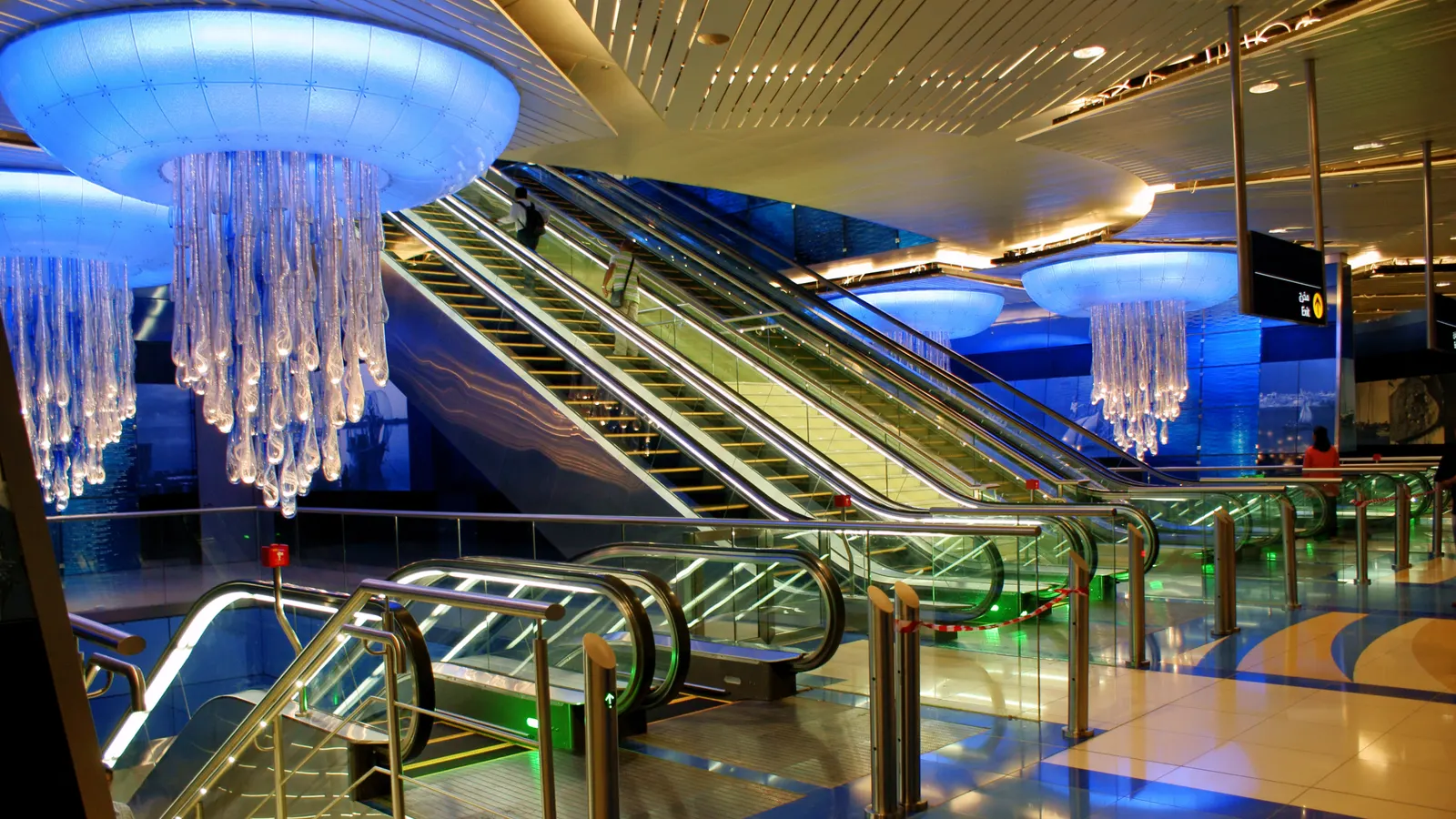
Escalators move large numbers between floors. The Dubai Building Code states that escalators are used by approximately 80 percent of people in retail centres.
Inclined moving walks are required in Dubai retail buildings where shopping trolleys will be used, instead of escalators. Where they are not feasible, elevators large enough for passengers with trolleys may be provided.
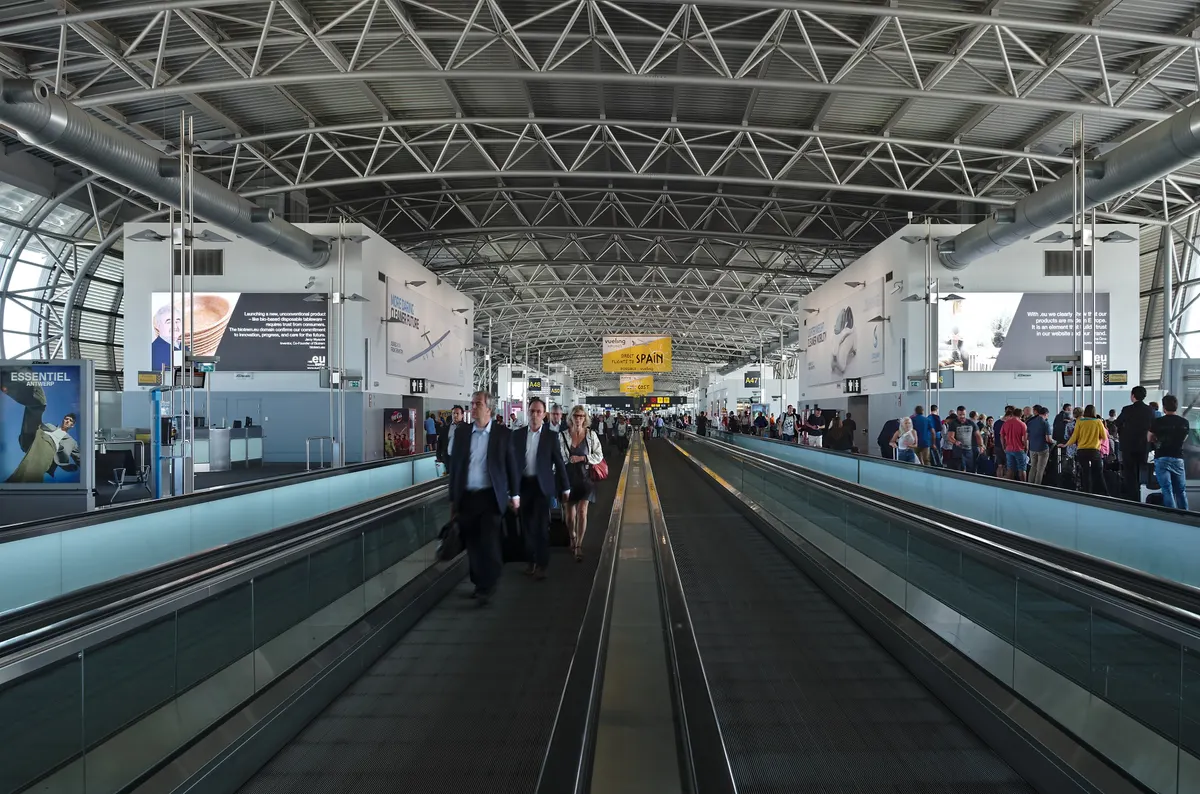
Horizontal moving walks shorten long walks in airports and metro interchanges.
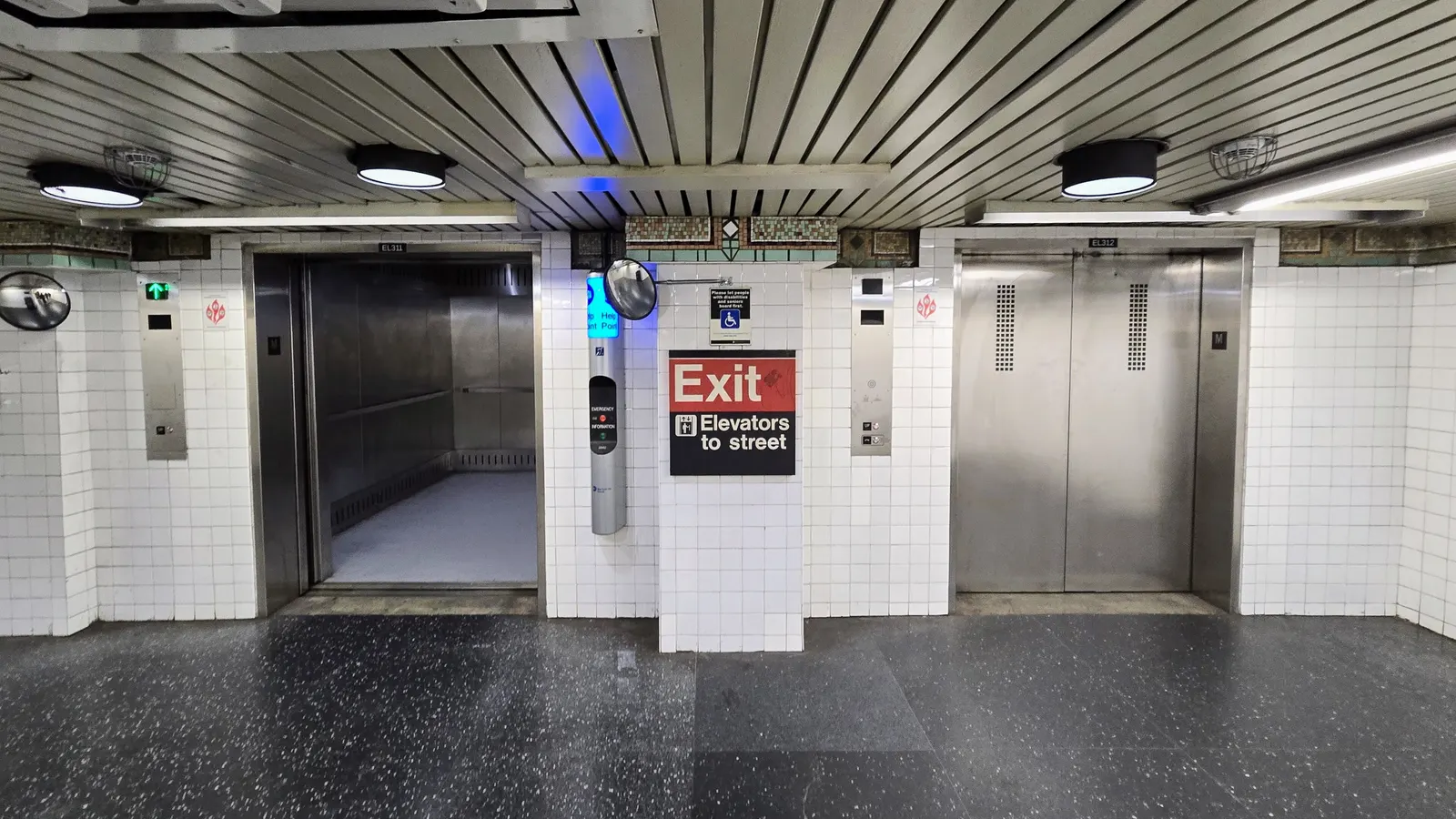
Elevators remain necessary: Dubai requires elevators next to escalators and moving walks in malls, with no more than 100 m between sets, and says escalators and moving walks shall not replace elevators for wheelchair users.
Three dimensions set most of an escalator's size, cost and capacity.
Step width. Standard ranges are 600, 800 and 1,000 mm: Schindler lists all three for the 9300 commercial escalator and KONE lists all three for the TravelMaster 110. Dubai's minimum for public floors in hotels, offices (between parking and office floors) and malls is 1,000 mm.
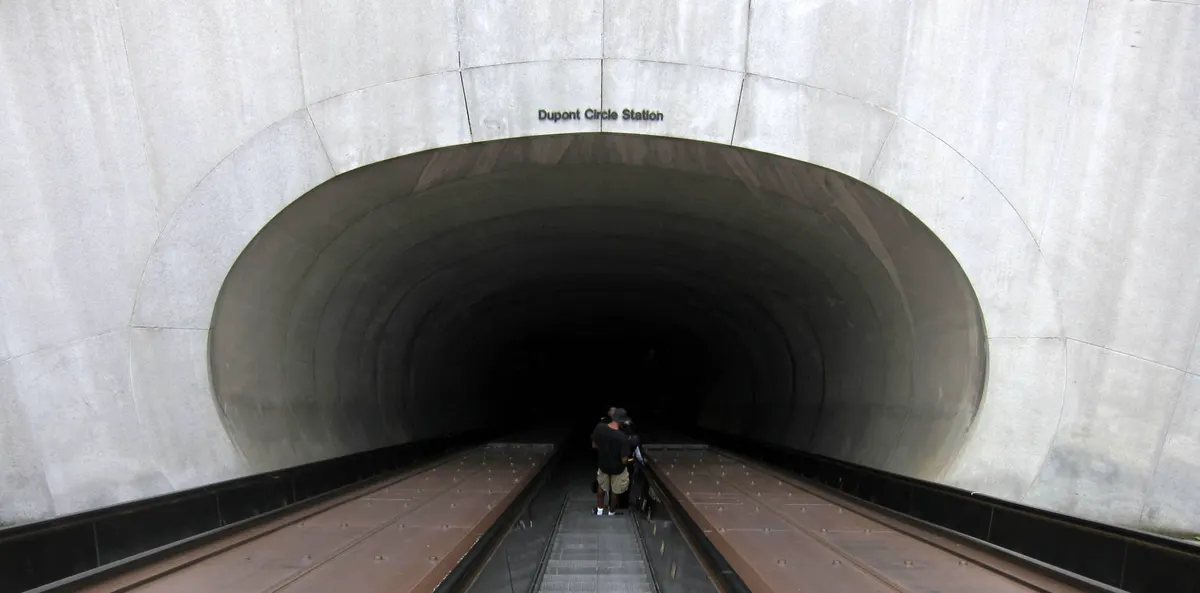
Inclination. Makers offer 30 and 35 degrees (KONE TravelMaster 110) and also 27.3 degrees (Schindler 9300). Dubai allows 35 degrees only where the floor height is 6 m or less and recommends 30 degrees; above 6 m the limit is 30 degrees.
Flat steps at the landings give users time to step on and off. Dubai sets a minimum of two flat steps for floor heights up to 6 m and three above, with three recommended in all cases.
Dubai Building Code minimums
Escalators (hotels, offices, malls)
Moving walks (retail)
Practical capacity
4,500 people per hour
3,600 people per hour
Width
1,000 mm steps
1,000 mm pallets minimum
Inclination
35 degrees max for floor height up to 6 m (30 recommended); 30 degrees above 6 m
12 degrees max; 10 or 11 degrees recommended
Flat steps
Two (up to 6 m) or three (above 6 m); three recommended
Three recommended
Dubai also sizes the number of units in malls by population (one person per 5 m2 of gross leasing and public circulation area): below 600 people escalators are optional, 600 to 4,500 needs one group, 4,501 to 8,000 two groups, and one more group for every additional 4,000.
Speed and rise
Escalator speeds on makers' Gulf pages are 0.5 m/s (KONE TravelMaster 110), 0.5 and 0.65 m/s (Schindler 9300 commercial) and up to 0.75 m/s for the public-transport version of the 9300. SASO's regulation requires that speeds not exceed the limits in the relevant standards. Rise sets the truss length and the type of unit: the TravelMaster 110 goes to 13 m, TK Elevator velino to 15 m, the Schindler 9300 to 20 m and TK Elevator's heavy-duty tugela from 2 to 22 m.
For moving walks, TK Elevator lists the orinoco at 0 to 6, 10 or 12 degrees, 800 to 1,600 mm pallets, 0.5 to 0.75 m/s, up to 200 m long and 9 m rise, with a maximum capacity of 8,200 people per hour. Schindler lists the 9500AE inclined walk for shopping malls and the 9500 horizontal walk for airports and subway stations.
Commercial or public-transport duty?
Duty is the number of hours a day and the load the unit runs at. Makers separate commercial and public-transport duty clearly: Schindler sells the 9300 in commercial and public-transport versions and the 9700 for mass transit; KONE sells TransitMaster 120 to 165 alongside the TravelMaster; TK Elevator lists a 12 to 16 hour duty cycle for velino and a 20-hour duty cycle for tugela, which it says is based on a public traffic load pattern. Ask each bidder for the design duty in hours per day and the load profile it assumes.
An escalator at a metro entrance, a podium or a waterfront is exposed to sun, dust, sand, humidity and salt. Specify the environment explicitly:
Ask for an outdoor rating, not just an "indoor/outdoor" catalogue tick. Schindler says the components of its public-transport 9300 are designed to withstand humidity, heat, ice, salt and sand, with an optional galvanised truss and components. KONE describes the TravelMaster 110 as built for challenging outdoor environments. TK Elevator lists velino, tugela and orinoco for indoor or outdoor use.
State the maximum ambient temperature and direct sun exposure, and ask how the drive, controller and handrail materials are rated.
Ask about sealing and drainage of the pit and truss, and the cleaning interval for steps, combs and tracks in sandy conditions.
Consider a canopy: it protects users and the equipment.
Safety standards and features
EN 115-1:2017, Safety of escalators and moving walks, Part 1: Construction and installation, applies to new escalators and pallet or belt moving walks and superseded EN 115-1:2008+A1:2010. EN 115-2 gives rules for improving the safety of existing units. Schindler states its 9300 meets EN 115-1 and ISO 8103-1.
SASO's regulation lists the safety functions buyers should see in the offer: a drive unit that operates only one escalator or moving walk, stopping by electrical safety devices, a braking system that brings the unit to rest with uniform deceleration and no intentional delay, and a device that monitors the brake after start-up. Dubai adds enhanced handrail protection at the entry to escalators and moving walks. SASO also defines emergency keys used to stop a unit instantly; ask where they are located on each unit.
Energy rules
The Dubai Building Code requires escalators and moving walks in new buildings to slow to a lower speed after no more than 3 minutes without detected activity, and to shut down after no more than 15 minutes, with soft-start technology and photocell detectors at the top and bottom landings. Makers rate energy under ISO 25745-3: KONE lists up to A+++ for the TravelMaster 110, and TK Elevator cites ISO 25745-3 certification for velino. TK Elevator also says its LED lighting is up to 80 percent more efficient than halogen and its operating modes can cut consumption by up to 90 percent, figures it does not tie to specific load cases. The Dubai code also recommends collecting vertical transportation status data from buildings, which is easiest if units connect to the building management system.
Saudi rules for escalators and moving walks
Escalators and moving walks are excluded from SASO's lift regulation and covered by SASO's Technical Regulation for Escalators and Moving Walkways (adopted 31 March 2022, published 20 May 2022). It requires:
A certificate of conformity from a notified body, following conformity assessment Type 1a under ISO/IEC 17067, and a technical file with the supplier declaration of conformity and risk assessment. Units with the Saudi Quality Mark are deemed compliant.
An inspection certificate from a SASO-accepted notified body after installation and before use.
Periodic inspection at least once a year, with proof fixed in a visible place showing the inspection date and the next inspection date.
Periodic maintenance, records kept by the maintenance entity, qualified maintenance staff and daily check-ups by the operating entity.
Labels in Arabic, optionally with another language.
The regulation's standards list includes SASO-EN 115-1, SASO-EN 115-2, SASO-ISO 14798 (risk assessment), SASO-ISO 9589 (building dimensions) and SASO-ISO 25740-1 (global essential safety requirements). Saudi buyers can find service providers under elevator and escalator maintenance in Saudi Arabia.
UAE rules for escalators and moving walks
In Dubai, Part D of the Dubai Building Code governs design (sizes, numbers, energy and handrail protection above), with design, installation, testing and maintenance to the suite of standards chosen for the project (ASME A17, or the BS EN suite, which for escalators includes BS EN 115-1). In Abu Dhabi, Civil Defence's maintenance contract rule was reported in August 2026 in relation to elevators. Ask the local authority which periodic inspection regime applies to escalators in your emirate.
Curved and spiral escalators
Where a curved escalator is wanted as an architectural feature, check which makers offer one. Mitsubishi Electric delivered what it describes as the world's first practical curved escalator in 1985 and lists spiral escalators in its range. Ask for the lead time, the maintenance access and the local service arrangements before designing around one.
Escalator and moving walk RFQ checklist
Location, floors connected, floor-to-floor height and available footprint (pit, truss supports, landings).
Step or pallet width, inclination, number of flat steps, speed, and for walks the length.
Expected traffic, daily operating hours and duty (commercial or public transport).
Indoor, semi-outdoor or outdoor, with maximum ambient temperature, sun, dust, sand and humidity.
Applicable minimums: Dubai Building Code tables, SASO regulation and EN 115-1.
Energy features: slow-down and stop on no traffic, soft-start, photocells, LED lighting, ISO 25745-3 class.
What is the difference between an escalator and a travelator?
An escalator is a moving stairway: inclined, with steps that stay horizontal, used to move people between floors. A travelator or moving walk has a flat surface of pallets or a belt that stays parallel to the direction of travel; it runs horizontally or at a gentle incline. Dubai caps inclined moving walks in retail at 12 degrees, and requires them instead of escalators where shoppers use trolleys.
What is the maximum incline of an escalator?
Makers offer 30 and 35 degrees, and Schindler also 27.3 degrees. The Dubai Building Code allows 35 degrees only where floor height is 6 m or less, recommending 30 degrees, and limits escalators to 30 degrees for floor heights above 6 m in hotels, offices and malls. Check the limits in EN 115-1 and the rise each maker allows at 35 degrees.
What step width should a mall escalator have?
In Dubai, 1,000 mm. The Dubai Building Code sets 1,000 mm steps and a practical capacity of 4,500 people per hour as the minimum for escalators between public floors in malls, hotels and office parking. Makers also sell 600 and 800 mm steps, which suit lower-traffic buildings where the code does not set a minimum.
Do escalators need annual inspection in Saudi Arabia?
Yes. SASO's Technical Regulation for Escalators and Moving Walkways requires an inspection certificate from a SASO-accepted notified body before a unit enters service and periodic inspections at least once a year. Proof of inspection, with the inspection date and the next inspection date, must be fixed in a clear and readable location.
Can escalators be installed outdoors in the Gulf?
Yes, if the unit is specified for it. Schindler says the components of its public-transport 9300 are designed to withstand humidity, heat, salt and sand, with an optional galvanised truss; KONE describes the TravelMaster 110 as built for challenging outdoor environments; TK Elevator lists velino, tugela and orinoco for indoor or outdoor use. State the maximum temperature, sun exposure and dust in the RFQ.
Which standard covers escalators and moving walks?
EN 115-1:2017, Safety of escalators and moving walks, Part 1: Construction and installation, for new units, and EN 115-2 for improving existing ones. Saudi Arabia lists both as SASO-EN 115-1 and 115-2 in its escalator regulation, and the Dubai Building Code lists BS EN 115-1 among its references.
Five elevator makers side by side for Gulf buyers: origin, product lines from villa lifts to super high-rise, escalators, UAE and Saudi entities, maintenance and modernisation offers.
How to choose a home lift for a villa in the UAE or Saudi Arabia: compact traction lifts versus platform lifts, shaft, pit and power needs, the rules that apply and what drives the cost.
A buyer guide to elevators and escalators in the UAE and Saudi Arabia: lift types, EN 81 and the 2026 EN ISO 8100 change, Dubai and SASO rules, firefighting lifts, the main makers and maintenance.