Elevators and Escalators in the UAE and Saudi Arabia: Brands, Codes and Maintenance
A buyer guide to elevators and escalators in the UAE and Saudi Arabia: lift types, EN 81 and the 2026 EN ISO 8100 change, Dubai and SASO rules, firefighting lifts, the main makers and maintenance.
To buy an elevator or escalator in the UAE or Saudi Arabia, fix three things before you compare brands. Work out the type the building needs (machine-room-less traction, hydraulic, home lift or escalator). Find the code that governs it: the Dubai Building Code and the UAE Fire and Life Safety Code in Dubai, the SASO lift and escalator regulations in Saudi Arabia. Then budget for elevator and escalator maintenance for as long as the unit runs, because both countries require an inspected, maintained installation.
This guide is for developers, MEP and fit-out contractors, facility managers and procurement teams buying new lifts, escalators and moving walks, or modernising old ones, for towers, malls, hotels, hospitals, villas and industrial buildings. It covers equipment types, the EN 81 and EN 115 standards and their 2026 changes, what Dubai, Abu Dhabi and Saudi Arabia require, firefighting lifts, the main manufacturers and their Gulf entities, maintenance, modernisation and an RFQ checklist. ListGCC did not test any equipment; product facts come from manufacturers' own pages and rules from the regulators' own documents.
Which type of elevator does the building need?
The short answer: height, traffic and use decide it. Machine-room-less (MRL) traction lifts cover low and mid rise (KONE lists its MonoSpace DX for up to 120 m of travel), high-speed traction lifts with optional double-deck cars cover towers, hydraulic lifts are pushed by a ram rather than hung on ropes, and villas use compact home lifts or platform lifts. The family a lift belongs to decides the shaft, the power supply and the maintenance it needs.
The core passenger lift standard covers three drive families. ISO 8100-1:2026, the international successor to EN 81-20, applies to permanently installed passenger and goods passenger lifts with traction, positive drive or hydraulic drive, an enclosed car, guide rails inclined no more than 15 degrees from the vertical and a rated speed above 0.15 m/s. Below 0.15 m/s you are in platform-lift territory, which has its own standard (EN 81-41).
Type
How it works
Where it fits
Example ranges on Gulf sites (makers' own data)
Machine-room-less traction
Ropes or belts over a traction sheave, with the machine inside the shaft
Residential and office buildings, hotels, low to mid rise
KONE MonoSpace DX: 1,275 to 2,500 kg, 1.75 to 3 m/s, up to 120 m travel. Schindler 3000: 400 to 1,150 kg, 1.0 to 1.75 m/s, up to 75 m
High-rise traction
Traction machine with higher speed and long travel, often destination dispatching
Towers, super high-rise, double-deck lobbies
Schindler 7000: up to 10 m/s and 500 m travel, double-deck option. KONE MiniSpace DX High-Rise and Double Deck
Hydraulic
A hydraulic ram pushes the car
Check each maker's travel and load limits
Covered by the same core standard as traction lifts
Home lift (EN 81-20 type)
Small traction lift for private houses
Villas with several floors
TK Elevator enta villa: 400 kg, 0.4 m/s, 18 m. KONE MonoSpace Home: up to 30 m and 6 floors
Platform lift
Slow (not above 0.15 m/s) platform on a guided path, carrier not fully enclosed
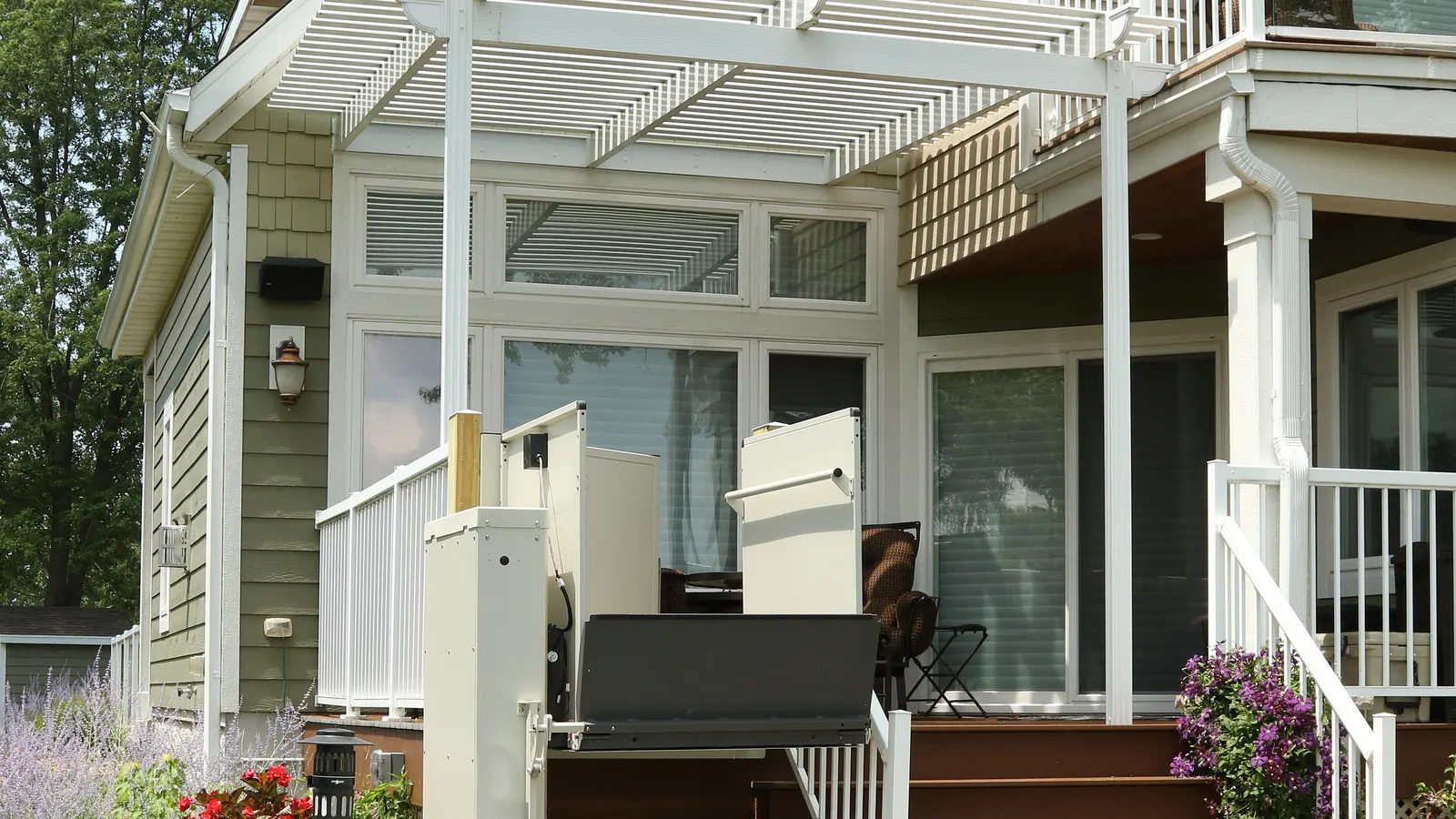
Accessibility in homes and public buildings, short rises
EN 81-41:2024 scope; TK Elevator homelifts
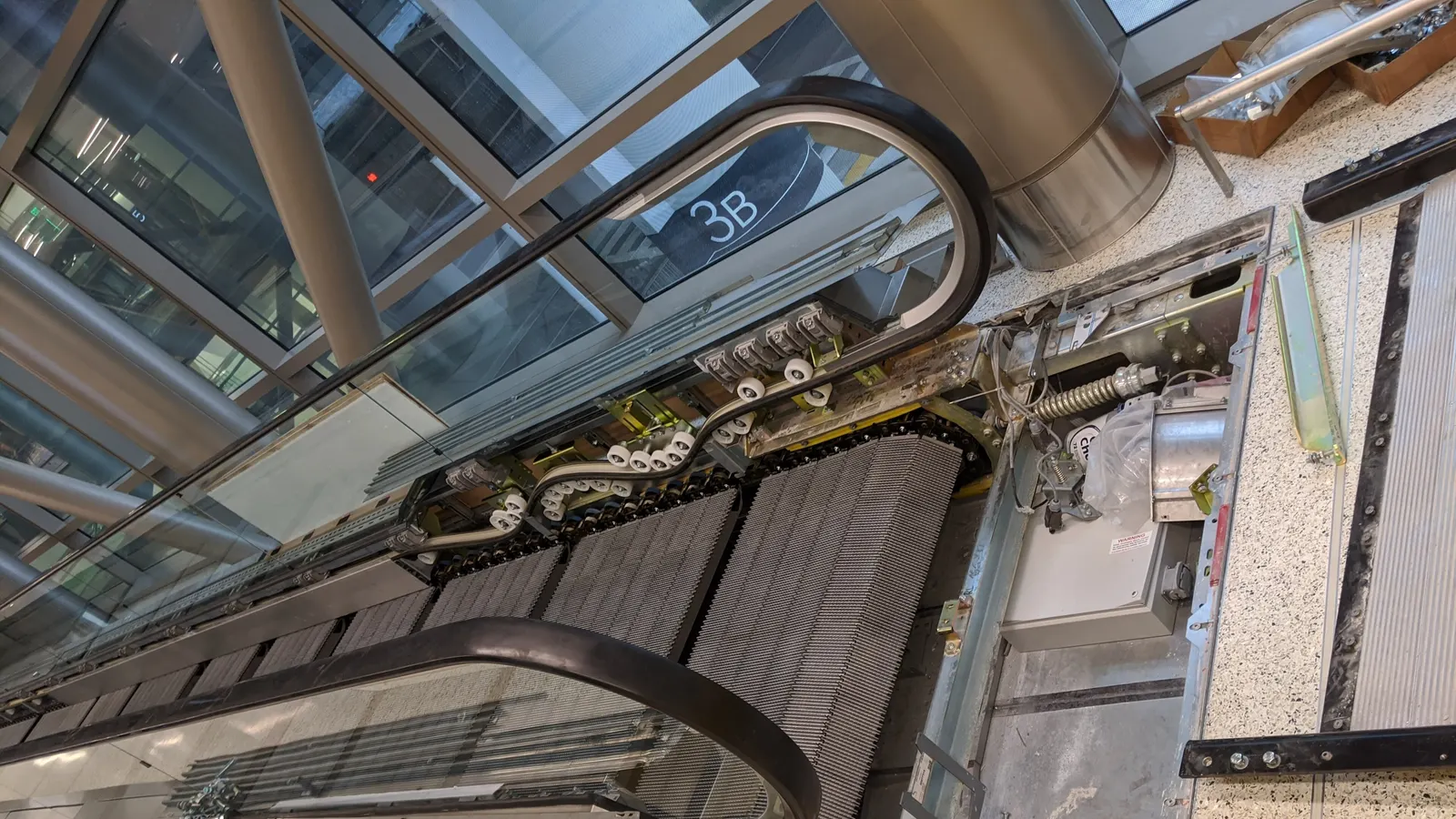
Escalator and moving walk
Continuous steps or pallets
Malls, metros, airports, offices with parking
Schindler 9300, KONE TravelMaster 110, TK Elevator velino and orinoco
Two Dubai rules shape the choice of drive. Part D of the Dubai Building Code requires AC variable voltage, variable frequency (VVVF) drives on non-hydraulic elevators in new buildings, lift lighting that switches off after no more than 5 minutes of inactivity with an average efficacy above 70 lumens per circuit watt, and a standby mode for off-peak periods. It also recommends regenerative drives where they are shown to save energy.
For a private villa, the choice is usually between a compact traction home lift and a platform lift; the trade-offs (pit, headroom, speed, single-phase power) are covered in our guide to home lifts for villas.
Both countries build on the European EN 81 suite. In 2026 its two core parts were replaced, which matters for any tender written now.
EN 81-20 and EN 81-50 are being replaced by EN ISO 8100-1 and EN ISO 8100-2. ISO published ISO 8100-1:2026 (safety rules for the construction and installation of passenger and goods passenger lifts) in March 2026, and the European adoption EN ISO 8100-1:2026 now lists EN 81-20:2020 as withdrawn. EN ISO 8100-2:2026 (design rules, calculations, verifications and tests of lift components) does the same for EN 81-50:2020. Lift certifier Liftinstituut wrote in March 2026 that a 36-month transition period was expected from publication, with certifications continuing on EN 81-20/-50 until then.
The Gulf has its own adoption. GSO EN 81-20:2025 was approved by the GCC Standardization Organization on 14 October 2025, and the Saudi lift regulation lists SASO-EN-81-20 and SASO-EN-81-50 in its annex.
Particular applications sit on top. EN 81-72:2020 covers firefighters lifts, EN 81-73 the behaviour of lifts in a fire, EN 81-70 accessibility (current edition EN 81-70:2021+A1:2022), EN 81-28 remote alarms and EN 81-77 seismic conditions. EN 81-80 and EN 81-82 cover improving the safety and accessibility of existing lifts.
Escalators and moving walks follow EN 115-1:2017, Safety of escalators and moving walks, Part 1: Construction and installation, with EN 115-2 for improving existing units.
Practical point: ask each bidder which edition their type certificate is issued against, and whether they will reissue under EN ISO 8100-1 if the project runs past the transition. Our spoke on elevator codes and approvals in the UAE and Saudi Arabia goes through each part and each approval step.
UAE rules: Dubai
Part D (Vertical transportation) of the Dubai Building Code, published by Dubai Municipality, is the main design rule. Its key requirements:
One suite of standards per project. Vertical transportation must be designed, installed, tested, commissioned and maintained to either the ASME A17 suite or the BS EN 81 suite. One suite is chosen per project and the two may not be mixed.
Firefighting elevators must also meet Section 2.9 of Chapter 2 and Section 3.9 of Chapter 3 of the UAE Fire and Life Safety Code (UAE FLSC, 2018), issued by the Ministry of Interior General Command of Civil Defence. The code requires at least one firefighting elevator in a mall, a multi-storey amusement park and any high-rise (23 m to 90 m), super high-rise (over 90 m) or high-depth building, and each must serve every floor.
Accessibility. At least one accessible elevator or lift platform is required in every building with more than one floor (with listed exemptions), with a minimum cabin of 1,200 x 1,500 mm and a recommended 1,500 x 1,500 mm.
Villas. Part K says that if elevators are provided in a villa, their design shall conform to D.5 and D.6 (the safety and energy clauses above).
For lifts in workplaces, Dubai Municipality's Health and Safety Department guideline DM-HSD-GU48-ECLA2 (version 5, issued 29 January 2025) requires cranes, hoists, lifts and other lifting equipment used in factories, construction sites, hotels and other workplaces to be tested and certified once every 12 months by a third party accredited by the Emirates International Accreditation Center (EIAC). The certificate is kept on site, and if the inspector finds the equipment unsafe the owner must stop using it and the inspector reports to the department.
UAE rules: Abu Dhabi and the other emirates
In August 2026 the Abu Dhabi Civil Defence Authority said building owners face a fine of AED 5,000 if an elevator has no maintenance contract with an accredited maintenance entity, citing Cabinet Resolution No. 24 of 2012. Gulf News and Khaleej Times reported that the rule covers existing buildings and those under construction, and excludes independent private houses. Firefighting lift design across the UAE follows the UAE FLSC. For other emirates, ask the local municipality and Civil Defence which inspection regime applies before you finalise the specification; our guide to UAE Civil Defence approval explains how that authority approves fire and life safety systems.
Saudi rules
In Saudi Arabia, the Saudi Standards, Metrology and Quality Organization (SASO) regulates lifts through the Technical Regulation for Electrical Lifts Used in Buildings and Facilities (05-07-17-161, published in the Official Gazette on 29 September 2017 and amended on 7 December 2018). Its main obligations:
The supplier must hold a Certificate of Conformity from an approved body for lifts and their safety components, with a technical file including a supplier declaration of conformity, a risk assessment and a certificate of origin. Components bearing the Saudi Quality Mark are deemed to comply.
Each installed lift needs an inspection certificate from an inspection body accredited to ISO 17020 and accepted by SASO, before it goes into service and then at least once a year. The certificate is posted on the ground floor outside the car.
The lift must be registered with the competent authority, with registration renewed annually after the periodic inspection, and it must stay under a maintenance contract for as long as it is in service.
Buildings more than 23 m above ground must have at least one firefighters and rescue lift at the main entrance, or as defined by the General Directorate of Civil Defense and the Saudi Building Code.
Labels and the user manual must be in Arabic, or Arabic and English.
Escalators and moving walks are excluded from the lift regulation and have their own: SASO's Technical Regulation for Escalators and Moving Walkways, published on 20 May 2022, which also requires a certificate of conformity, an inspection certificate before use and periodic inspection at least once a year. The way SASO certificates move through the SABER platform is explained in our guide to SASO and SABER certificates. Saudi buyers can find maintenance providers under elevator and escalator maintenance in Saudi Arabia.
What should you know about escalators and moving walks?
Escalators are sized by step width, inclination and rise. Dubai's code sets the floor: in hotels and malls, and between parking and office floors in offices, escalators must have 1,000 mm steps, a practical capacity of 4,500 people per hour and an inclination of no more than 35 degrees where the floor height is up to 6 m, or 30 degrees above 6 m. Where shoppers use trolleys, Dubai requires inclined moving walks (maximum 12 degrees) instead of escalators. Our spoke on escalators and moving walks covers sizing, outdoor units and heat.
Elevator companies in the UAE and Saudi Arabia: the main makers
Five international lift groups are covered below. They are listed alphabetically below with what their own sites say; this is not a ranking, and ListGCC did not test their products. The full side by side is in our comparison of Otis, KONE, Schindler, TK Elevator and Mitsubishi Electric.
TK Elevator UAE (established 1998); TK Elevator Saudi Arabia
enta, meta, zeta, enta villa, TWIN; velino, tugela; orinoco, iwalk
KONE
KONE is a Finnish company founded in 1910 with over 1.8 million units under maintenance at the end of 2025. Its UAE range runs from the MonoSpace Home villa lift and MonoSpace DX MRL lifts to MiniSpace DX for high rise, and in October 2025 it announced the Jeddah Tower order of 67 units, four of them using its carbon-fibre UltraRope hoisting.
Mitsubishi Electric
Mitsubishi Electric has made elevators and escalators since 1931, mainly at its Inazawa works (opened 1964), and delivered what it calls the world's first practical curved escalator in 1985. Since April 2022 the business runs as Mitsubishi Electric Building Solutions; the pages reviewed did not state a Gulf entity, so confirm who installs and maintains locally.
Otis
Otis was founded in 1853 in Yonkers, New York, and has been independent since its spin-off from United Technologies in April 2020. Its UAE site gives a Dubai head office, and a Sobha Realty order for 303 elevators in Dubai named Gen2, SkyRise, Arise and Gen2 Home units.
Schindler
Schindler, founded in 1874 in Switzerland, runs Schindler Middle East & North Africa from Dubai and trades in Saudi Arabia as Schindler Olayan Elevator Co. Ltd in Jeddah. Both sites list the Schindler 3000 to 7000 passenger lifts, 9300 and 9700 escalators and 9500 moving walks.
TK Elevator
TK Elevator is the former thyssenkrupp Elevator, independent since its acquisition by Advent International and Cinven and relaunched as TKE in February 2021. TK Elevator UAE (established 1998) and TK Elevator Saudi Arabia offer the enta, meta and zeta lifts, the enta villa, velino and tugela escalators and orinoco moving walks, and maintain all major brands.
Treat any other maker the same way: ask for the type-examination certificate, the Saudi Certificate of Conformity where relevant, and the local service network that will hold the maintenance contract.
Maintenance contracts
Maintenance is a legal duty, not an option. Saudi Arabia requires a maintenance contract for as long as a lift is in service and an annual inspection; Abu Dhabi fines buildings without an accredited maintenance contract; Dubai requires annual third-party certification of lifts in workplaces. Contracts range from basic preventive visits to full cover including repairs. Schindler's UAE site, for example, describes five levels (Assist, Basic, Alert, Cover and Complete), with Complete covering large repairs and an optional guaranteed availability of 98 to 99.5 percent a year. Our spoke on elevator maintenance contracts sets out what a good AMC covers. Facility teams that bundle lifts with other services can also compare building maintenance services and MEP maintenance services.
When should you modernise an elevator?
Modernisation replaces the controller, drive, door equipment, machine or the whole lift while keeping the shaft. The usual triggers are obsolete parts, poor reliability and energy use. Schindler positions its ReStore package for equipment 15 to 25 years old or past 2 million trips, and notes that the door system is the leading cause of elevator downtime and maintenance visits. EN 81-80 sets rules for improving the safety of existing lifts. In Saudi Arabia, the maintenance company must inform the competent authority of major modifications so the lift is re-inspected; plan that inspection into the shutdown.
Gulf conditions that change the specification
Heat in shafts and machine rooms. The Saudi regulation requires that if the machine temperature exceeds the installer's maximum, the lift completes its movement and refuses new commands. Ask for the drive and controller ambient rating and the ventilation the shaft needs.
Outdoor and semi-outdoor escalators. Specify a unit rated for outdoor use. Schindler says components of its public-transport 9300 are designed to withstand humidity, heat, salt and sand, with an optional galvanised truss; KONE describes the TravelMaster 110 as built for challenging outdoor environments, and TK Elevator lists its velino escalators and orinoco moving walks for indoor or outdoor use.
Energy. Dubai requires escalators to slow down after 3 minutes without traffic and stop after 15 minutes, with photocells at both landings, which matters in malls that open early and close late.
Backup power. The Saudi regulation requires the car's two-way communication and emergency lighting to work without the normal supply for long enough to carry out a rescue. Ask the fire engineer what standby supply the firefighting lift needs and coordinate it with the diesel generator and fire protection designers early.
What drives the cost of an elevator?
No regulator or manufacturer publishes Gulf price lists, so compare offers on the same scope. The main cost drivers are: rated load and speed; travel height and number of stops; MRL or machine room; car finishes and door type; destination control and monitoring; firefighting, accessibility or seismic features; the edition of the standard and the certificates required; shaft readiness and the scaffolding or installation lift needed; the warranty period; and the level and length of the maintenance contract bundled with the supply.
Buying checklist and RFQ
State the building type, height, floors served and population, and whether a vertical transportation consultant's traffic analysis or the Dubai Building Code tables set the number of lifts.
Name the standard suite (BS EN 81 or ASME A17 in Dubai; SASO-adopted EN 81 in Saudi Arabia) and ask which edition the type certificate follows, including EN ISO 8100-1 readiness.
List each lift: rated load (kg and persons), speed, travel, stops, entrances, car size and door size.
Identify firefighting, accessible, service and stretcher lifts, with their UAE FLSC or Saudi Civil Defence requirements.
For escalators and moving walks: step or pallet width, inclination, rise, speed, indoor or outdoor duty and daily operating hours.
Ask for energy features: VVVF, regenerative drive, lighting and standby controls, escalator slow-down and stop.
Ask for the Saudi Certificate of Conformity and technical file, or the UAE documents the authority will request.
Define the inspection: who arranges the first third-party inspection, and who renews it every 12 months.
Price the maintenance contract with the supply: level of cover, response times, entrapment response, parts included and remote monitoring.
Ask for the local office, service technicians in your city, spare parts holding and the warranty.
Ready to request quotes? Post your requirement on ListGCC and suppliers of lifts, escalators and maintenance in the UAE and Saudi Arabia can respond. For hoists and lifting gear outside buildings, see lifting equipment.
Is EN 81-20 still valid for new lifts in the UAE and Saudi Arabia?
Yes, for now. CEN has replaced EN 81-20:2020 with EN ISO 8100-1:2026, but a transition of 36 months was expected, and Liftinstituut said certifications would continue on EN 81-20/-50 until then. The Gulf adopted GSO EN 81-20:2025 in October 2025, and the Saudi lift regulation cites SASO-EN-81-20. Ask bidders which edition their certificate covers and whether they will update it.
How often must an elevator be inspected in Dubai and Saudi Arabia?
In Dubai, Dubai Municipality's guideline requires lifts and other lifting equipment in factories, construction sites, hotels and other workplaces to be tested and certified by an EIAC-accredited third party once every 12 months. In Saudi Arabia, SASO's lift regulation requires an approved inspection body to inspect each lift at least once a year, and registration with the competent authority is renewed annually after that inspection.
Which buildings need a firefighting lift?
In Dubai, the UAE Fire and Life Safety Code, as cited in the Dubai Building Code, requires at least one firefighting elevator in malls, multi-storey amusement parks and any high-rise, super high-rise or high-depth building, serving every floor. In Saudi Arabia, SASO's lift regulation requires at least one firefighters and rescue lift in buildings more than 23 m high, or as Civil Defense and the Saudi Building Code define.
Is a maintenance contract compulsory for an elevator?
In Saudi Arabia, yes: SASO's regulation says a lift must be subject to a maintenance contract as long as it is in service. In Abu Dhabi, Civil Defence fines owners AED 5,000 if a building lift has no contract with an accredited maintenance entity, though independent private houses are excluded. In Dubai, workplace lifts need annual certification, which in practice needs a maintainer to keep them compliant.
Can a villa elevator use a normal household power supply?
Some can. TK Elevator says its enta villa runs on a 220 V single-phase household supply, and KONE says its MonoSpace Home operates on standard household power. Check the maker's electrical requirements before the electrical design is fixed, and in Dubai the villa lift must still follow the Dubai Building Code's lift clauses.
Which elevator companies operate in the UAE and Saudi Arabia?
On their own sites, Otis lists a Dubai head office; Schindler lists Schindler Middle East & North Africa in Dubai and Schindler Olayan Elevator Co. in Jeddah; TK Elevator lists TK Elevator UAE and TK Elevator Saudi Arabia; KONE has a UAE site and announced the Jeddah Tower order. Mitsubishi Electric also makes lifts and escalators; confirm its local partner.
Five elevator makers side by side for Gulf buyers: origin, product lines from villa lifts to super high-rise, escalators, UAE and Saudi entities, maintenance and modernisation offers.
How to choose a home lift for a villa in the UAE or Saudi Arabia: compact traction lifts versus platform lifts, shaft, pit and power needs, the rules that apply and what drives the cost.
What to put in an elevator AMC in the UAE and Saudi Arabia: contract levels, legal maintenance and inspection duties, response times, spare parts, records, KPIs and handover terms.