Safety Shoes in the UAE and Saudi Arabia: Standards, Ratings and Brands
How to choose safety shoes for UAE and Saudi sites: what S3S, PL, SR, HRO and ESD mean, steel vs composite, Gulf heat, SASO and MoIAT conformity, brands, replacement and an RFQ checklist.
The right safety shoe for a site in the UAE or Saudi Arabia is the one whose EN ISO 20345 marking matches the hazards on that site, not the most familiar brand name. For most construction and industrial work that means an S3S or S3L shoe or boot with a slip-resistant sole; add HRO for hot surfaces and ESD for electronics. Start with safety shoes and boots suppliers in the UAE or in Saudi Arabia, then shortlist brands by rating, fit and certification.
This guide is for HSE managers, procurement officers and facility managers who buy safety footwear in bulk. It decodes the 2022 markings, compares toe cap and midsole materials, covers Gulf heat, the conformity rules in each country, replacement and brands, and ends with an RFQ checklist.
Which safety shoe rating do you need?
Every safety shoe sold to European rules is certified to EN ISO 20345, and the current version is EN ISO 20345:2022, amended in 2024 (A1:2024). The basic requirement for every class is a toe cap that survives a 200 joule impact and a 15 kilonewton compression test. uvex describes the impact as roughly a 20 kg weight dropped from about one metre. The class letters then add features on top of that baseline.
Class
What it adds
Typical Gulf use
SB
Toe cap only; heel may be open
Rarely suitable for site work
S1
Closed heel, antistatic, heel energy absorption
Warehouses, workshops and indoor maintenance with no nail risk
S1P, S1PS, S1PL
S1 plus a puncture-resistant midsole
Light industry and logistics where debris is possible, often in breathable trainer styles
S2
S1 plus an upper that resists water penetration and absorption
Indoor wet areas, food plants
S3, S3S, S3L
S2 plus puncture resistance and a cleated outsole
The default for construction, MEP, oil and gas and general outdoor work
S4, S5
All-rubber or all-polymer boots; S5 adds puncture resistance and a cleated sole
Wash-down areas, concrete pours, chemical handling
S6, S7 (S7S, S7L)
S2 or S3 with the whole shoe water resistant (WR)
Marine, port and wet maintenance work
S6 and S7 are new in 2022: uvex explains that S2 plus WR is now S6, and S3 plus WR is now S7.
P, PS and PL: what the puncture code tells you
In the 2011 edition, any puncture-resistant shoe was marked P. Now P means a metal midsole tested with a 4.5 mm nail. Non-metallic (textile) midsoles are marked PL if they pass with the same 4.5 mm nail, or PS if they pass with a thinner 3.0 mm nail. uvex notes that the thinner nail concentrates more pressure, so PS is the higher level of protection of the two textile options. Where loose screws, tie wire and nailed formwork are around, ask for S3S or S1PS.
Additional markings worth reading
Marking
Meaning
When to specify it
SR
Passed an extra slip test on ceramic tile with glycerol
Oily, greasy or polished floors: workshops, kitchens, plant rooms
HRO
Heat-resistant outsole for contact with hot surfaces
Asphalt and road works, hot plant, foundries, sun-baked steel decks
HI
Heat insulation of the sole complex (Elten lists the test as up to 150 °C for 30 minutes)
Standing on hot surfaces for long periods
CI
Cold insulation of the sole complex (Elten lists up to minus 17 °C for 30 minutes)
Cold stores and freezer warehouses
WR, WPA
WR: whole shoe water resistant. WPA: upper resists water penetration and absorption (replaces the old WRU)
Ladder grip: a transverse profile in the waist of the sole
Scaffold, ladder and rooftop work
SC
Scuff cap that resists abrasion
Kneeling trades such as tiling and flooring
A, C, ESD
Antistatic, conductive, or electrostatic dissipative
See the ESD section below
M, AN
Metatarsal (midfoot) protection, ankle protection
Heavy lifting, steel handling, uneven ground
The biggest change in 2022 is slip resistance. The old SRA, SRB and SRC marks are gone. All appropriate safety shoes must now pass a basic slip test on ceramic tile, and SR is the extra glycerol test, which uvex says replaces the old SRC level. FO also changed: in 2011 fuel oil resistance was part of every class above SB, but in 2022 it is an optional extra, so a shoe for a refinery or workshop should show FO explicitly on the label.
Old and new certificates on the same shelf
The 2022 edition was launched in March 2023. According to uvex, manufacturers could keep producing under valid 2011 certificates until 11 November 2024, and existing certificates then run to their own expiry dates, so buyers can meet shoes certified to either edition until November 2029. Ask which edition the certificate covers, because a 2011 "S3 SRC" shoe and a 2022 "S3S SR" shoe were tested differently.
Steel or composite toe cap?
Both must pass the same 200 joule and 15 kN tests, so neither is "safer" on paper. Safety Jogger says a toe cap made to European or ASTM standards will protect from almost every impact and compression injury, regardless of the material. The differences are practical:
Steel caps are thinner, so the shoe looks less bulky, and they are the cheaper option. They conduct heat and cold.
Composite caps are metal free, do not conduct heat and cold, and Safety Jogger puts them at about 30% lighter than steel. They are thicker, so the toe of the shoe is bulkier, and they cost more.
The 2022 edition also sets different flange widths for metallic and non-metallic toe caps, which uvex says stops a buyer receiving a mix of steel and composite caps in what should be the same model. For Gulf sites, composite caps suit workers who pass metal detectors, electrical teams who want a metal-free shoe, and anyone standing on hot ground, where a cap that does not conduct heat is more comfortable.
The same trade-off applies under the foot. Safety Jogger's comparison of steel and woven fabric (aramid) midsoles shows a steel plate is thinner but less flexible, conducts cold, heat and electricity, and leaves a few millimetres unprotected at the sides. A textile midsole is lighter and more flexible, covers the full bottom of the shoe, and does not conduct heat or electricity. Steel is still recommended against very sharp, fine objects.
Shoes or boots?
A shoe and an ankle boot can carry exactly the same S3 rating, because the class describes the sole, upper and protective parts, not the height. The choice depends on the ground and the climate. Boots support the ankle on uneven ground, rebar mats and excavations, and keep sand and debris out. Low shoes and trainer styles are cooler and lighter, which matters in summer on the Gulf. A common split is boots for civil and structural work and shoes for MEP fit-out, warehouses and facilities.
S1 and the classes built on it (S2, S3, S6 and S7) are antistatic, which protects the wearer. ESD shoes protect electronic components and are a narrower specification. uvex gives the ranges: antistatic shoes measure between 100 kilohm and 1 gigaohm, while ESD footwear under EN 61340-5-1 sits between 100 kilohm and 100 megohm. Bata Industrials gives the same ranges and adds that conductive shoes, below 0.1 megohm, are needed only for highly explosive work. Specify ESD for data centres and electronics work where the client runs an ESD control programme, and check the shoe carries both the EN ISO 20345 class and the ESD marking.
Gulf heat, sand and hot ground
Summer conditions change three things. First, comfort decides compliance: hot, heavy boots get swapped for non-safety shoes. Breathable linings, WPA rather than WR membranes where the work is dry, and composite caps and textile midsoles help. Our guide to PPE for heat stress on Gulf sites covers the midday work ban and the wider heat plan.
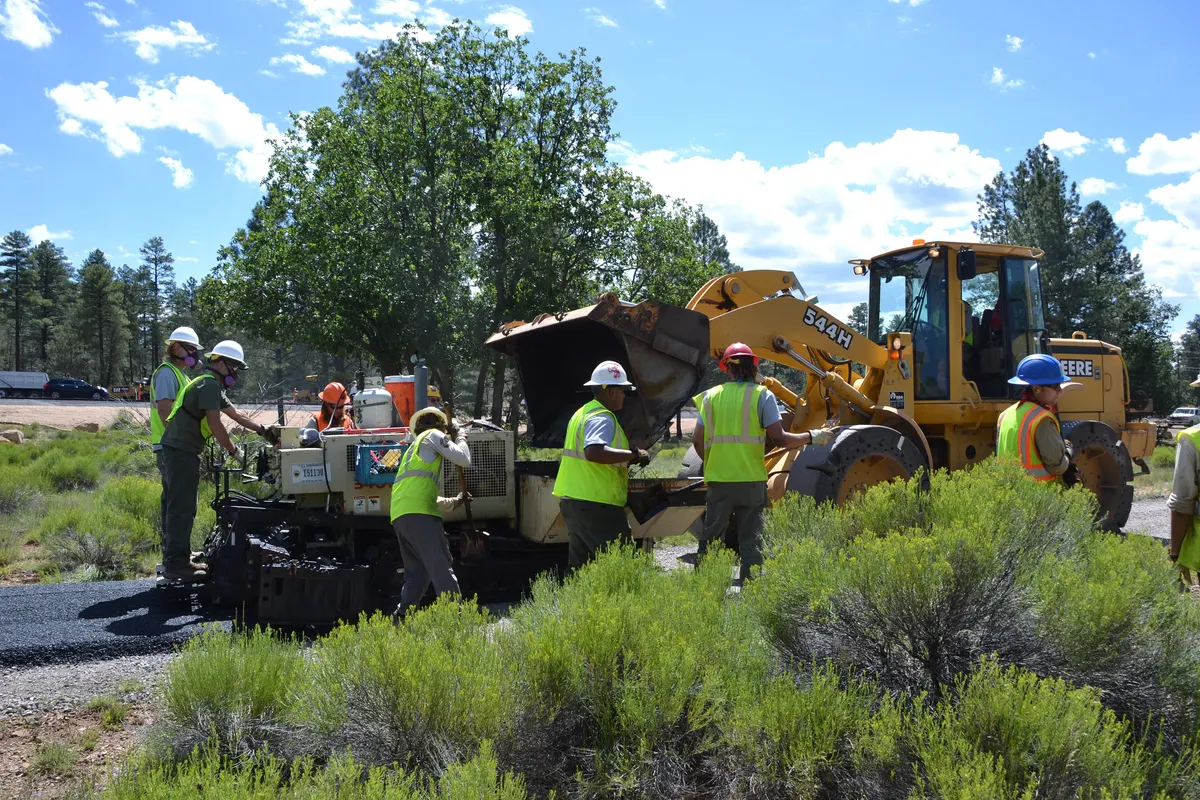
Second, the ground itself gets hot. Road and asphalt crews, roofers and people working near hot plant should have HRO soles, and HI where they stand on hot surfaces for long periods. Some makers sell ranges built for this: uvex lists an asphaltpro boot and heat-insulating boots in its uvex 3 range.
Third, heat ages footwear. BAAK notes that high temperatures make leather brittle and can cause adhesive bonds to come apart, and warns against drying shoes with direct heat. Do not store spare stock in containers left in the sun.
The employer pays. Gulf News, reporting the Ministry of Human Resources and Emiratisation's guidance, says the Occupational Health and Safety Manual requires employers to provide appropriate protective equipment, and that workers must wear protective footwear along with a helmet, safety vest, safety goggles and ear protection, in line with Federal Decree-Law No. 33 of 2021 on labour relations.
On the product side, the Ministry of Industry and Advanced Technology (MoIAT) lists personal protective equipment among its regulated products, under the UAE control system for personal protective equipment and occupational safety and health equipment (Cabinet Resolution No. 3 of 2016). The listed documents for the ECAS certificate are ISO/IEC 17025 accredited laboratory test reports to the applicable standard, test reports less than three years old, the product label, distributor ownership for traders, and registration on the MoIAT website. MoIAT's sheet does not list individual product types, so ask your supplier whether the footwear line falls in scope and, if it does, for its ECAS certificate number. Free zones, government entities and large clients such as utilities and national oil companies may add their own PPE specifications, so check the project HSE plan as well.
Saudi Arabia is more explicit. SASO's Technical Regulation for Personal Protective Equipment and Clothing (04-04-18-165), approved by SASO's board on 5 July 2018 and amended in January 2021, lists SASO-ISO-20345 (safety footwear), SASO-ISO-20346 (protective footwear) and SASO-ISO-20347 (occupational footwear) among its standards, together with EN 13832 parts 2 and 3 for chemical-resistant footwear, EN 50321 for electrically insulating footwear, SASO-ISO-17249 for chainsaw protection and SASO ASTM F2413:2020 for protective toe cap footwear. Footwear appears in its product list under HS code 6403.
What that means for a buyer:
The supplier placing the product on the market must hold a Certificate of Conformity from a SASO notified body (conformity assessment Type 3 under ISO/IEC 17067), recorded on the electronic conformity portal. The regulation points to the SABER platform for the current product and HS code list.
The label must show the supplier's name and commercial registration, the country of origin, and the product's designation and protection level.
User instructions must be in Arabic, or Arabic and English.
Saudi labour law puts the cost on the employer. On the Ministry of Human Resources and Social Development's labour law page, Article 122 says the employer may not charge workers or deduct from wages for this protection, and Article 123 says the employer shall provide appropriate personal protective equipment and train workers on its use. Article 124 requires workers to use and maintain it. Our guide to SASO and SABER certificates explains the certificate process in more detail. For Saudi projects, personal protective equipment suppliers in Saudi Arabia can usually quote footwear alongside other PPE.
Brands to know in the Gulf
The brands below are listed alphabetically and described by what their makers say they make; this is not a ranking.
Base
Base (Base Protection Srl, Barletta, Italy) positions its range as anti-fatigue work shoes. Its line-up includes i-OMEGA models for electrical hazard protection and HIPROFLEX models with metatarsal protection, a BOA fit-system partnership and a Scanfit app that makes a 3D scan of the feet to help choose a size. It suits long-shift workers in logistics, facilities and industry where comfort drives compliance.
Bata Industrials
Bata Industrials is the industrial footwear arm of Bata, a company founded in the Czech Republic in 1894. It is based in Best in the Netherlands, where it says a large part of its safety shoes are developed and produced. Its range covers safety shoes, safety boots and work sneakers in high, mid and low cuts, across classes from S1 to S7S, and it publishes clear guidance on antistatic and ESD footwear.
BICAP
BICAP is the brand of Calzaturificio 5BI, a footwear maker in Barletta, Italy. It makes safety footwear in work, trekking and outdoor styles, and highlights partner lines with Vibram and Michelin. It suits buyers looking for Italian-made hiker-style boots.
Cofra
Cofra, also from Barletta, describes itself as a safety specialist with a complete PPE offer: safety shoes and boots, including polyurethane and TPU Light Boots and a chainsaw-protective boot, as well as workwear, gloves, helmets, eyewear, respirators and fall arrest systems. It suits buyers who want footwear and the rest of the PPE kit from one brand.
Honeywell
Honeywell completed the sale of its personal protective equipment business to Protective Industrial Products (PIP) on 22 May 2025, after selling its lifestyle and performance footwear business to Rocky Brands in 2021. If your approved vendor list still names Honeywell safety footwear, ask the supplier who now manufactures and certifies the model you are quoting, and make sure the SASO or ECAS documents match that company.
Perf
Perf is run by Perf Italia, based in Arzignano, Italy, which describes its business as designing and distributing safety shoes for the B2B market and presents itself as the Italian division of the Rahman Group. It suits volume buyers who need a B2B supply partner rather than a retail brand.
Rock Fall
Rock Fall is based in Derbyshire, England, and says its footwear is engineered in the UK. Its range of safety boots, trainers and shoes includes fibreglass toe caps and composite midsoles for non-metallic protection, ESD certified, electrical hazard, antistatic and fully waterproof options. It suits utilities, oil and gas and electrical contractors who need metal-free or electrically rated footwear.
Uvex
Uvex is part of the uvex safety group, whose group companies are based in Fürth, Germany, and which lists an office at Dubai Silicon Oasis. Its footwear is organised into uvex 1 (sport, business and x-craft models), uvex 2 (including slip-resistant and fuel-resistant construction models) and uvex 3 (winter, foundry, welding, asphalt and heat-insulating boots), plus ESD shoes. It suits buyers who need specialist heat or ESD footwear as well as general site shoes. Saudi buyers can find it under Uvex suppliers in Saudi Arabia.
Why "CAT safety shoes" are a licence
CAT is one of the most searched safety footwear names in both countries, but Caterpillar does not make the shoes. Cat Footwear is a division of Wolverine World Wide and the official footwear licensee of Caterpillar. So the certificate, warranty and conformity documents come from the licensee: ask for them by model, not by brand. Other names Gulf buyers search for, such as Safety Jogger, Skechers Work, Vaultex and Workland, should be assessed the same way: by the certificate for the exact model and class.
Sizing, fit and replacement
Fit is a safety issue: a shoe that pinches gets loosened. Order a size run for trials, have workers try shoes with the socks they wear on shift, and allow wide fittings where the range offers them.
There is no fixed replacement interval in the standard. BAAK puts the average service life at 6 to 24 months, with guide figures of 6 to 12 months for daily construction site use, 9 to 15 months in industry and 12 to 18 months in logistics, and stresses that condition, not age, decides. Replace a pair immediately when:
the toe cap is visible through the upper after an impact (Delta Plus says the shoe must then be replaced);
a nail has pierced the sole;
the outsole tread is worn, or two or more wear indicators show on soles that have them;
the heel lining is torn or the insole and cushioning have collapsed;
heat or chemicals have damaged the material, or the sole is coming away from the upper.
Build a footwear check into toolbox talks, and budget for at least one pair a year per outdoor worker.
Safety footwear RFQ checklist
Quantities by size, with a size breakdown from a fitting trial, and the split between shoes and boots.
Standard and edition: EN ISO 20345:2022 (SASO-ISO-20345 for Saudi Arabia), or ASTM F2413 if the client specifies US-standard footwear.
Class and puncture level, for example S3S, S1PS or S7L, and toe cap material (steel or composite, metal-free if required).
Additional markings: SR, HRO, HI, FO, LG, WR or WPA, M, and ESD with the EN 61340 reference.
Conformity documents: SASO Certificate of Conformity and SABER record for Saudi Arabia; ECAS certificate or confirmation that the product is out of scope for the UAE; the EU-type examination certificate for the model.
Labelling: Arabic or Arabic and English instructions, supplier name and commercial registration, and country of origin.
Sample pairs for a two to four week wear trial on site before the bulk order.
Delivery schedule, call-off arrangements for replacement pairs, and a size exchange policy.
Each of these guides takes one question from this page further.
CAT Safety Shoes: Who Makes Them and Which Ratings to Check: CAT safety shoes are made under licence by Wolverine World Wide, not by Caterpillar. How to read the marking on a CAT model, spot uncertified stock and compare it with other brands.
S1P vs S3 vs S3S: Safety Shoe Ratings Explained: Every EN ISO 20345:2022 safety shoe class from SB to S7S, what S3S and S1PS really mean, how 2011 codes map to 2022, and which class suits construction, warehouses, oil and gas and wet areas.
Steel Toe vs Composite Toe Safety Shoes: Which to Choose: Steel and composite toe caps pass the same 200 joule test. The choice comes down to heat, weight, metal detectors, electrical work, bulk, cost and cap quality. A buyer's comparison for UAE and Saudi sites.
Safety Shoes for Women: Fit, Standards and Choosing in the Gulf: Ladies' safety shoes carry the same EN ISO 20345 ratings as men's. What a women's last changes, how to size and trial, which class suits healthcare, labs, logistics and sites, and what employers must provide.
No single brand is best for every job. Choose the rating first (S3S or S3L for most sites, with SR, HRO or ESD where the work needs them), then compare brands on fit, weight, certification and local stock. Uvex, Cofra, Bata Industrials, Rock Fall, Base and BICAP all make EN ISO 20345 footwear across several classes. Run a two to four week wear trial with two or three brands before standardising.
What does S3S mean on a safety shoe?
S3S is an EN ISO 20345:2022 class. S3 means a closed heel, antistatic properties, heel energy absorption, a water-resistant upper, puncture resistance and a cleated outsole, on top of the 200 joule toe cap. The final S means the puncture-resistant midsole is non-metallic and passed the test with a thin 3.0 mm nail. S3L means a non-metallic midsole tested with a 4.5 mm nail.
Are composite toe safety shoes as safe as steel toe shoes?
Yes, if both carry the same certification. Under EN ISO 20345 every toe cap, steel or composite, must pass a 200 joule impact test and a 15 kN compression test. Composite caps are metal free, lighter and do not conduct heat or cold, but are bulkier and cost more. Steel caps are thinner and cheaper. Pick by the work environment, not by assumed strength.
Do safety shoes need SASO certification in Saudi Arabia?
Yes. SASO's Technical Regulation for Personal Protective Equipment and Clothing covers safety, protective and occupational footwear (SASO-ISO-20345, 20346 and 20347). The supplier must hold a Certificate of Conformity from a SASO notified body, recorded on the conformity portal, and the label must show the supplier's name, commercial registration, country of origin and protection level. Instructions must be in Arabic, or Arabic and English.
Who pays for safety shoes in the UAE and Saudi Arabia?
The employer. In Saudi Arabia, the Labor Law says the employer shall provide appropriate personal protective equipment and may not charge workers or deduct from wages for it. In the UAE, MOHRE's Occupational Health and Safety Manual requires employers to provide appropriate protective equipment, and workers are required to wear protective footwear on site.
How often should safety shoes be replaced?
Replace them on condition, not on a calendar. BAAK gives an average service life of 6 to 24 months, with 6 to 12 months typical for daily construction site use. Replace a pair at once if the toe cap shows through after an impact, a nail has pierced the sole, the tread is worn smooth, or the sole is separating. Heat shortens service life on Gulf sites.
Is CAT a real safety shoe manufacturer?
CAT safety shoes are made under licence. Cat Footwear is a division of Wolverine World Wide and the official footwear licensee of Caterpillar. Judge a CAT model like any other: check its EN ISO 20345 or ASTM F2413 certificate, class and markings, and for Saudi Arabia its SASO Certificate of Conformity.
Ladies' safety shoes carry the same EN ISO 20345 ratings as men's. What a women's last changes, how to size and trial, which class suits healthcare, labs, logistics and sites, and what employers must provide.
Steel and composite toe caps pass the same 200 joule test. The choice comes down to heat, weight, metal detectors, electrical work, bulk, cost and cap quality. A buyer's comparison for UAE and Saudi sites.
The Saudi surveillance cameras law in practice: which spots must be covered, sensitivity classes and deadlines, the Public Security certificate, privacy masks, audio and thermal limits, recordings and fines.